 Preview
 Send
Send Share
Share
 Details

 Download
 Similars
 X-Ray
X-Ray Diaporama
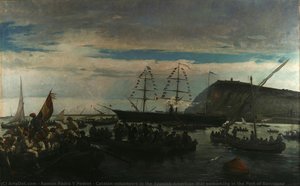
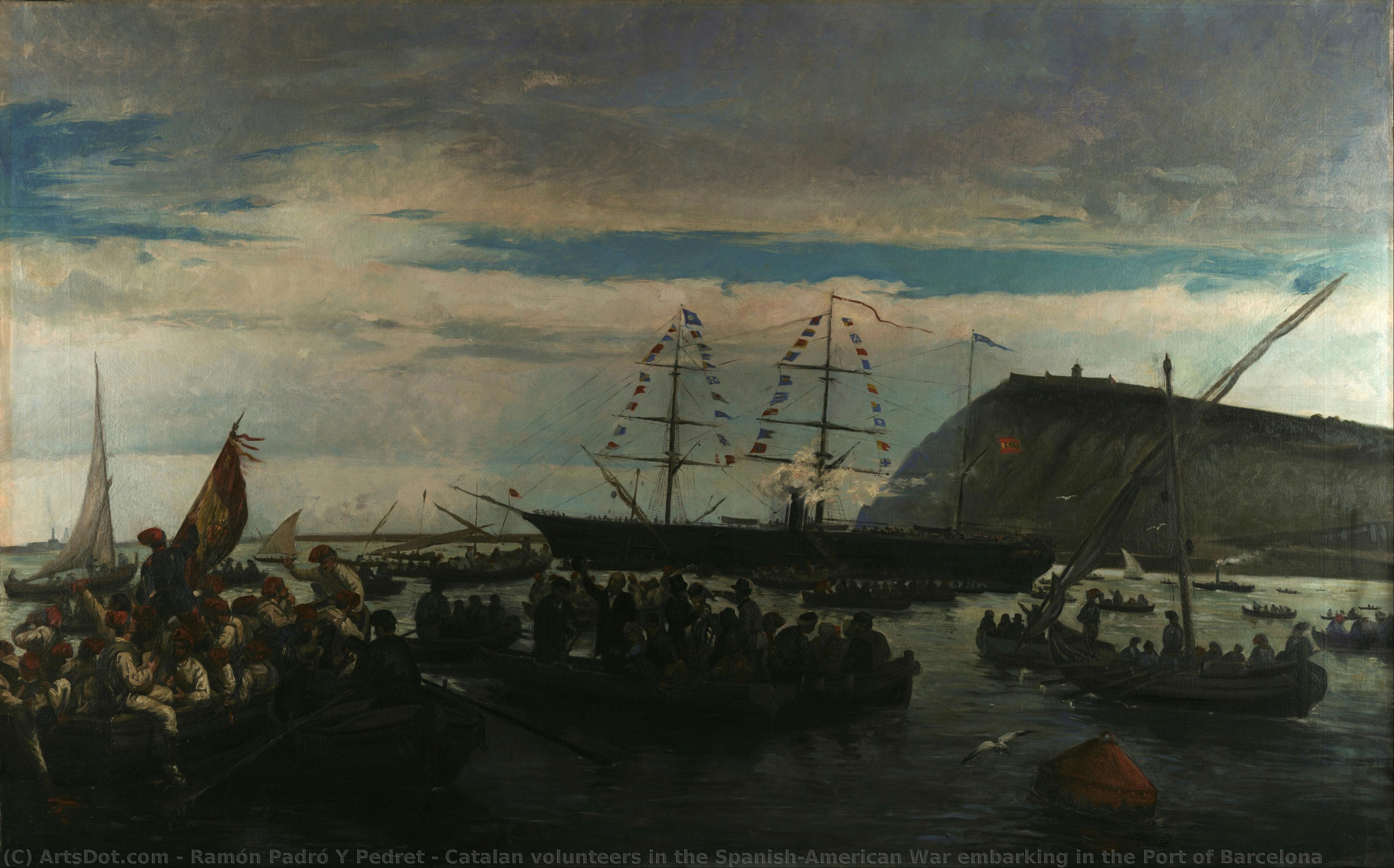
Catalan volunteers in the Spanish-American War embarking in the Port of Barcelona
 5.0 x 229.0 cm
 Maritime Museum of Barcelona
 Read More
Hand Made Oil Reproduction
Hand-painted oil on canvas in your size and frame, made to order by our artists. ( Buy Print Buy Image)




































Pick from our preset sizes that match the artwork's original proportions.

You may enter your own dimensions to fit a specific frame or space. If your selected size does not match the original image's proportions, we will either crop the artwork or extend the painting with additional hand-painted elements. A digital mockup will be sent for your approval before production begins.
Please note that the on-screen preview does not reflect the actual cropping or extension. Only the mockup will accurately show the final composition.
While custom sizes are available, we recommend selecting a dimension from the predefined list to preserve the original proportions.
After order, ArtsDot.com team will email client for instructions and provide a mockup preview
Worldwide Delivery () in 3/4 weeks instead of standard 5 weeks. (30 August). No compromise on quality.

Free Worldwide Express Shipping

High-Quality Linen Canvas

Full Shipping Insurance

Customs Tax Refund Guarantee

True Color Matching Guarantee

60-Day Return Policy (Defects Only)

100% Money-Back Guarantee

Bulk Discount Offer
 Glass option is only available in size under 110 CM

Catalan volunteers in the Spanish-American War embarking in the Port of Barcelona
Reproduction Medium
Reproduction Size
-


Total Price
$ 488
Related Artworks








Artist Biography
A Legacy of Light and History: The Life of Ramón Padró y Pedret
In the golden era of the Belle Époque, few artists captured the intersection of grand historical narrative and delicate decorative grace as masterfully as Ramón Padró y Pedret. Born in the vibrant cultural cradle of Barcelona in 1848, Padró was destined for a life steeped in the aesthetics of fine art. He was the son of the esteemed sculptor Ramón Padró i Pijoan, a man who gifted his son not only a genetic predisposition for talent but also a profound reverence for the meticulous precision required of true craftsmanship. This early immersion in the tactile world of sculpture instilled in Padró an eye for detail that would later allow him to render the most complex historical scenes with breathtaking clarity and emotional depth.
His artistic journey was shaped by the prestigious halls of Spain's most renowned academies. At the La Llotja School of Fine Arts in Barcelona, he refined his foundational skills under the guidance of Claudi Lorenzale, before moving to Madrid to study at the Real Academia de Bellas Artes de San Fernando. It was here that Padró’s world expanded through the influence of legendary mentors such as Federico de Madrazo and the brilliant Marià Fortuny. The latter, a titan of Spanish painting, acted as both a peer and a catalyst, encouraging Padró to look beyond the borders of the Iberian Peninsula. Driven by an insatiable curiosity, Padró embarked on transformative travels through Paris, London, Italy, and Egypt, absorbing the diverse light and cultural textures of Europe and the Orient.
The Chronicler of Grandeur and Detail
Padró’s career was defined by a remarkable ability to serve as both an artist and a visual historian. One of his most significant professional milestones arrived in 1869, when he was commissioned by the Spanish ministries to document the monumental inauguration of the Suez Canal. This task required more than mere technical skill; it demanded the ability to capture the sheer scale of global progress and the emotional weight of a moment that would change world trade forever. Through his brush, the ceremony became a living testament to human ambition, rendered with a precision that satisfied the rigorous demands of official record while maintaining the soul of fine art.
His repertoire was as diverse as his travels, spanning a wide array of subjects that showcased his versatility:
- Historical Narratives: He possessed a unique talent for recreating pivotal moments in Spanish and global history, imbuing them with a sense of drama and authenticity.
- Maritime and Cityscapes: His works often captured the bustling energy of ports and urban centers, such as his emblematic depiction of Catalan volunteers embarking from Barcelona, where the looming Montjuïc mountain provides a majestic backdrop to human departure.
- Portraiture: Padró was a sought-after portraitist, capable of capturing the dignity and character of his subjects, ranging from high-ranking officials to intimate photographic-style studies.
- Decorative Arts: Beyond the canvas, his sensibility for composition allowed him to contribute significantly to the decorative movements of his time, blending fine art with the ornamental elegance of the era.
An Enduring Artistic Significance
As the 19th century transitioned into the 20th, Padró y Pedret remained a steadfast figure in the Spanish art scene, bridging the gap between traditional academicism and the evolving tastes of a modernizing world. His work served as a bridge between the rigid structures of historical painting and the more fluid, atmospheric qualities that would define later movements. By documenting the triumphs and transitions of his age—from the opening of global waterways to the patriotic fervor of local volunteers—he provided a visual heartbeat for the Spanish identity during a period of profound change.
Though he passed away in 1915, the legacy of Ramón Padró y Pedret persists through the enduring power of his imagery. His ability to marry the technical rigor of his sculptural heritage with the luminous, sweeping narratives of history painting ensures his place in the pantheon of Catalan masters. To look upon a Padró work is to witness the Belle Époque not just as a period of time, but as a vivid, breathing spectacle of light, movement, and human destiny.
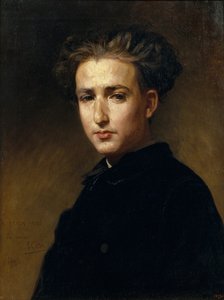
ramón padró y pedret
1848 - 1915 , Spain
Quick Facts
- Artistic Movement Or Style: Realism
- Date Of Birth: Barcelona, Spain (1848)
- Date Of Death: Madrid, Spain (1915)
- Full Name: ramón padró y pedret
- Nationality: Spanish
- Notable Artworks: ['Catalan volunteers in the spanish-american war embarking in the port of barcelona']
- Place Of Birth: Barcelona