 Preview
 Send
Send Share
Share
 Details

 Download
 Similars
 X-Ray
X-Ray Diaporama
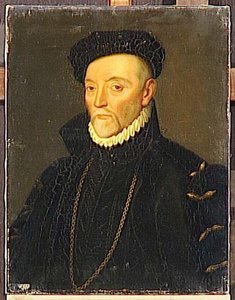
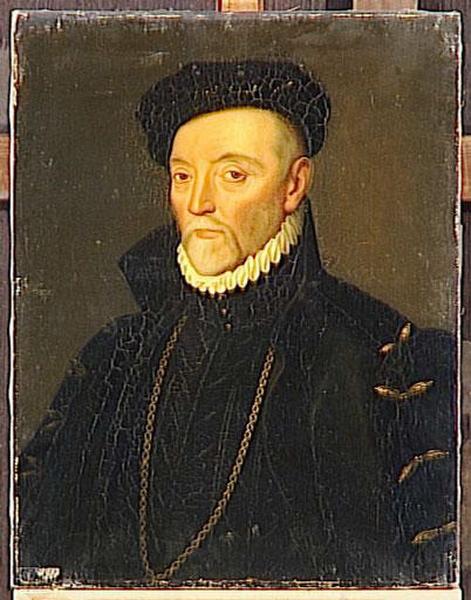
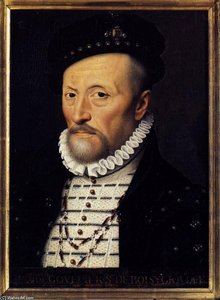
ARTHUS DE COSSE, MARECHAL DE FRANCE ( 1582)
 Read More
Hand Made Oil Reproduction
Hand-painted oil on canvas in your size and frame, made to order by our artists. ( Buy Print Buy Image)




































Pick from our preset sizes that match the artwork's original proportions.

You may enter your own dimensions to fit a specific frame or space. If your selected size does not match the original image's proportions, we will either crop the artwork or extend the painting with additional hand-painted elements. A digital mockup will be sent for your approval before production begins.
Please note that the on-screen preview does not reflect the actual cropping or extension. Only the mockup will accurately show the final composition.
While custom sizes are available, we recommend selecting a dimension from the predefined list to preserve the original proportions.
After order, ArtsDot.com team will email client for instructions and provide a mockup preview
Worldwide Delivery () in 3/4 weeks instead of standard 5 weeks. (29 August). No compromise on quality.

Free Worldwide Express Shipping

High-Quality Linen Canvas

Full Shipping Insurance

Customs Tax Refund Guarantee

True Color Matching Guarantee

60-Day Return Policy (Defects Only)

100% Money-Back Guarantee

Bulk Discount Offer
 Glass option is only available in size under 110 CM

ARTHUS DE COSSE, MARECHAL DE FRANCE ( 1582)
Reproduction Medium
Reproduction Size
-


Total Price
$ 263
Related Artworks




Artist Biography
The Soul of a Transition: The Life and Legacy of Vincent Raverat
In the grand tapestry of French art history, few threads are as intricately woven as those belonging to Vincent Raverat. A figure who stood at the precipice of shifting eras, Raverat embodied the profound transition from the disciplined, structured ideals of Neoclassicism to the emotive, swirling currents of Romanticism. Born into a lineage of artistic distinction—the son of a celebrated sculptor—his very existence was steeped in the language of form and shadow. While many of his contemporaries sought the rigid validation of formal academies, Raverat forged a path defined by independent observation. His early years were not merely spent in study, but in a deep, tactile engagement with the world around him, cultivating a prodigious talent that relied more on the keen eye of a witness than the rote instruction of a master.
The crucible of his artistic identity was forged amidst the smoke and thunder of the Napoleonic Wars. Serving as an officer in Napoleon’s army, Raverat did not merely observe history; he lived within its most dramatic movements. This period of military service provided him with an unparalleled vantage point, allowing him to sketch battle scenes with a visceral, unflinching realism. The chaos of the battlefield and the stark reality of military life instilled in his work a commitment to accuracy that would remain a cornerstone of his oeuvre. One can see the echoes of this era in his early mastery of composition, where the influence of Jacques-Louis David is palpable through a disciplined grasp of classical narrative and historical weight.
From Precision to Passion: An Evolving Aesthetic
As the political and cultural landscapes of France shifted, so too did the brushwork of Raverat. His early career was marked by a meticulous devotion to detail, a style that celebrated the clarity and grandeur reminiscent of Renaissance traditions. In works such as his depictions of military figures, there is a palpable sense of permanence and structural integrity. However, as the spirit of Romanticism began to permeate the European consciousness, Raver_at’s technique underwent a breathtaking metamorphosis. He moved away from the sharp, precise rendering of his youth toward a more fluid and atmospheric approach.
This evolution was characterized by several key artistic shifts:
- The Softening of Tone: A transition from high-contrast, dramatic lighting to more nuanced and subtle tonal palettes.
- The Liberation of the Brush: Moving from controlled, invisible strokes toward looser, more expressive applications of paint that captured movement and light.
- Emotional Resonance: A conscious effort to move beyond mere historical documentation to capture the sublime—the emotional essence and psychological depth of his subjects.
In this later stage, Raverat’s work began to mirror the aesthetic sensibilities of giants like Eugène Delacroix and Théodore Rousseau. He sought to convey not just the physical presence of a subject, but the ephemeral atmosphere surrounding them, allowing light and shadow to dance with a newfound spontaneity. This ability to bridge the gap between the structured past and the emotive future is precisely what renders his body of work so vital to the study of nineteenth-century art.
A Lasting Impression on the Canvas of History
The historical significance of Vincent Raverat lies in his role as a stylistic conduit. He was an artist who understood that progress does not require the total abandonment of tradition, but rather its thoughtful integration into new modes of expression. His ability to maintain the structural dignity of Neoclassicism while embracing the atmospheric freedom of Romanticism allowed him to create works that feel both timeless and contemporary to their era. Whether capturing the harrowing tension of a cavalry charge or the quiet, somber dignity of a religious figure, his hand remained guided by a profound respect for the truth of the subject.
Today, Raverat’s legacy survives in the dramatic realism and meticulous detail that continue to captivate collectors and historians alike. His life, marked by the duality of military duty and artistic introspection, serves as a testament to the power of the independent spirit. Through his eyes, we do not merely see the history of France; we feel the pulse of an era caught in the beautiful, turbulent act of becoming something new.
Quick Facts
- Artistic Movement Or Style: Romanticism
- Artists Or Movements Influenced By This Artist: ['Romanticism']
- Artists Who Influenced This Artist: ['Eugène Delacroix']
- Date Of Birth: 1770
- Date Of Death: 1838
- Full Name: Vincent Raverat
- Nationality: French
- Notable Artworks:
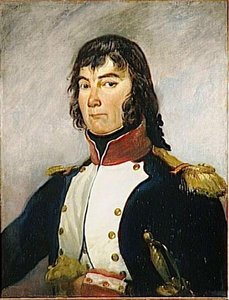
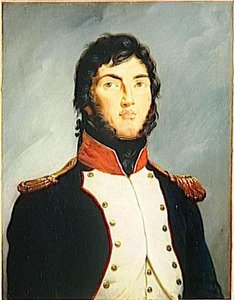
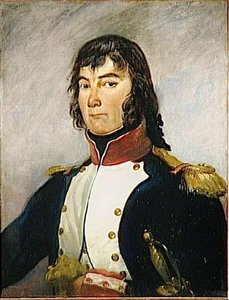
- Georges Mouton, Capitaine au 9e Bataillon de la Meurthe
- Arthus De Cosse, Marechal de France
- Prise de Furnes En Belgique Par Le Prince De Clermont
- Place Of Birth: Paris, France