 Preview
 Send
Send Share
Share
 Details

 Download
 Similars
 X-Ray
X-Ray Diaporama
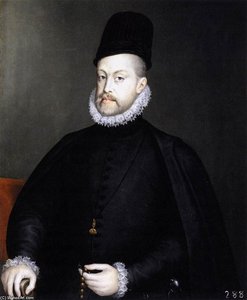
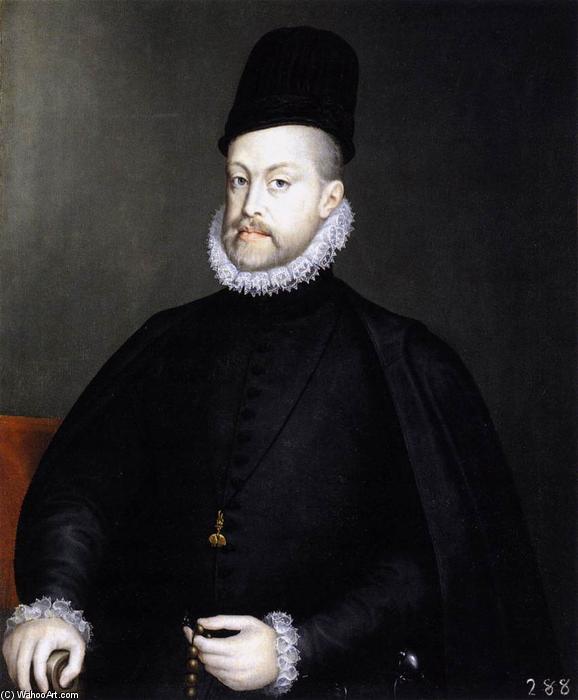
Philip II Holding a Rosary
 Oil On Canvas
- WallArt
- Renaissance
 1573
1573 88.0 x 72.0 cm
 Museo del Prado
 Read More
Hand Made Oil Reproduction
Hand-painted oil on canvas in your size and frame, made to order by our artists. ( Buy Print Buy Image)




P118B $10

P118H $10

P118W $10

P438Z $10

P508JH $12

P508YH $12

P805H $10

P805Z $10

P919BZ $10

P919G $10

P919XJ $10

P959ZH $10

P968JZ $12

W106C $8

W218G $10

W218JH $8

W218Y $10

W307PJ $10

W316G $10

W316PJ $8

W316Y $10

W398PJ $8

W4111J $10

W500HY $15

W500JH $15

W692G $12

W849H $8

W940BG $15

W953PJ $8




Pick from our preset sizes that match the artwork's original proportions.

You may enter your own dimensions to fit a specific frame or space. If your selected size does not match the original image's proportions, we will either crop the artwork or extend the painting with additional hand-painted elements. A digital mockup will be sent for your approval before production begins.
Please note that the on-screen preview does not reflect the actual cropping or extension. Only the mockup will accurately show the final composition.
While custom sizes are available, we recommend selecting a dimension from the predefined list to preserve the original proportions.
After order, ArtsDot.com team will email client for instructions and provide a mockup preview
Worldwide Delivery () in 3/4 weeks instead of standard 5 weeks. (16 August). No compromise on quality.

Free Worldwide Express Shipping

High-Quality Linen Canvas

Full Shipping Insurance

Customs Tax Refund Guarantee

True Color Matching Guarantee

60-Day Return Policy (Defects Only)

100% Money-Back Guarantee

Bulk Discount Offer
 Glass option is only available in size under 110 CM

Philip II Holding a Rosary
Reproduction Medium
Reproduction Size
-


Total Price
$ 263
Artwork Description
The Majesty of Authority: Alonso Sánchez Coello’s ‘Philip II Holding a Rosary’
Alonso Sánchez Coello's “Philip II Holding a Rosary,” painted in 1573, is more than just a portrait; it’s a meticulously crafted embodiment of royal power and deeply rooted religious devotion within the turbulent landscape of late 16th-century Spain. The painting immediately commands attention with its dramatic lighting – a stark chiaroscuro emanating from the upper left corner that sculpts Philip II's face, highlighting his prominent nose, thoughtful gaze, and the weighty folds of his velvet doublet. This masterful use of light isn’t merely aesthetic; it serves to elevate the king, casting him in a position of solemn authority against a subtly rendered, almost impenetrable background.
Coello, working within the established traditions of Flemish objectivity and Venetian sensuality – a synthesis he uniquely embodied – has created an image that is both strikingly realistic and imbued with symbolic weight. The subject’s attire—the rich black velvet, the lace cuffs, the elaborate brooch— speaks volumes about his status as ruler of a vast empire, reflecting the opulence and grandeur associated with the Spanish court. Yet, it's the central element – the rosary held in his hand – that anchors the portrait to a profound spiritual dimension. This isn’t simply an accessory; it represents Philip II’s commitment to Catholicism, a cornerstone of his reign and a vital tool for maintaining control over both his subjects and the Church itself.
A Masterclass in Renaissance Technique
The painting's execution reveals Coello’s exceptional skill as a painter. He employs a meticulous approach, utilizing layered brushstrokes to build texture and depth – particularly evident in the fabric of the doublet and the intricate details of the beard. The use of oil paints allows for subtle gradations of color and a remarkable level of realism, capturing not just the likeness of Philip II but also his personality—a sense of quiet contemplation and regal bearing. The sharp lines defining the face and clothing are balanced by softer transitions in the drapery, creating a harmonious blend of precision and fluidity. The composition is carefully balanced, with the figure occupying the central vertical axis, reinforcing his dominance within the frame.
- Medium: Oil on Canvas
- Size: 88 x 72 cm
- Date: 1573
Historical Context and Royal Symbolism
To fully appreciate “Philip II Holding a Rosary,” it’s crucial to understand the historical context in which it was created. Spain under Philip II was at the height of its imperial power, yet also grappling with internal challenges – religious conflict, economic instability, and the looming threat of external enemies. The king's unwavering commitment to Catholicism served as both a unifying force and a justification for his expansive empire. The rosary itself became a potent symbol of this faith, representing Philip II’s piety and his role as protector of the Catholic Church.
Furthermore, the portrait reflects the prevailing artistic trends of the Renaissance – a renewed interest in classical ideals combined with a fascination with humanism and realism. Coello's work exemplifies this synthesis, creating an image that is both aesthetically pleasing and intellectually stimulating. The inclusion of details like the Golden Fleece emblem on his hat further reinforces his status as a powerful ruler, linking him to the legacy of past monarchs and the grandeur of the Spanish Empire.
A Timeless Portrait of Power and Faith
“Philip II Holding a Rosary” is more than just a historical document; it’s a compelling work of art that continues to resonate with viewers today. The painting's dramatic composition, masterful technique, and profound symbolism combine to create an image of enduring power and beauty. It offers a glimpse into the mind of one of Spain’s most influential monarchs and provides a poignant reflection on the intersection of faith, authority, and artistic expression. Reproductions of this iconic portrait remain highly sought after by collectors and interior designers alike, offering a chance to bring a touch of Renaissance majesty into any space.
Related Artworks
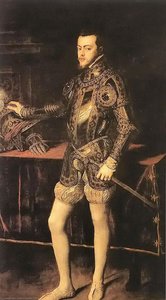
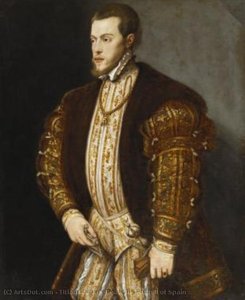
Artist Biography
Early Life and Training
- Born: Benifaió, Spain (1531)
- Spent childhood near Valencia until his father's death.
- Around 1541/42, moved to Portugal to live with his grandfather, a nobleman in service of the Portuguese monarchs.
- Studied with Anthonis Mor (Antonio Moro) in Flanders around 1550.
- Received patronage from Antoine de Granville, Bishop of Arras, also a patron of Mor.
Career at the Spanish Court
- Worked for the Portuguese royal family and later the court of João Manuel, Prince of Portugal.
- Moved to the Spanish court of Philip II in 1555, recommended by Juana, sister of Philip II.
- Became Court Painter in 1560.
- Married Louisa Reyaltes, daughter of a silversmith, around 1560/61.
- His daughter, Isabel Sánchez, also became a painter and assisted in his workshop.
- Moved with the court to Toledo and settled in Madrid in 1561.
Artistic Style and Influences
- Style: Combined Flemish objectivity with Venetian sensuality.
- Influences: Primarily influenced by Anthonis Mor and Titian.
- Learned precision from Mor.
- Incorporated Venetian gold tones, generous workmanship, and the use of light from Titian.
- Known for portraits marked by ease of pose, dignity, sobriety, and warmth of coloring.
Major Works and Achievements
- Produced both portraits and religious paintings.
- Religious works were conventional but demonstrate an austere style.
- Notable Portraits:
- Philip II Holding a Rosary (1573)
- Portraits of Infanta Isabel Clara Eugenia (1571)
- Series of paintings depicting the children of Philip II.
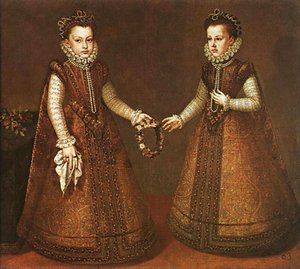
- Double portrait of the infantas Isabella Clara Eugenia and Catalina Micaela (1568–9).
- Painted religious works for El Escorial.
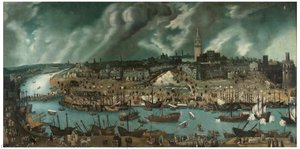
- Produced a topographical view of Seville's port.
Legacy and Historical Significance
- His reputation as a portraitist has been complicated by numerous copies and imitations.
- Considered a significant figure in Spanish Renaissance art, particularly for his court portraits.
- His work influenced later artists, including Velázquez, regarding the depiction of textures like armor and draperies.
- Died in Madrid on August 8, 1588.
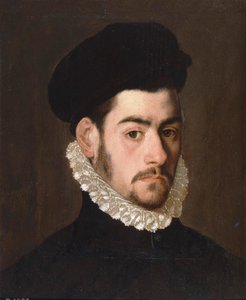
Alonso Sánchez Coello
1531 - 1588 , Spain
Quick Facts
- Artistic Movement Or Style: Spanish Renaissance
- Artists Or Movements Influenced By This Artist:
- Juan Pantoja de la Cruz
- Felipe de Liaño
- Artists Who Influenced This Artist:
- Anthonis Mor
- Titian
- Date Of Birth: c. 1531
- Date Of Death: 1588
- Full Name: Alonso Sánchez Coello
- Nationality: Iberian
- Notable Artworks:
- Philip II Holding a Rosary
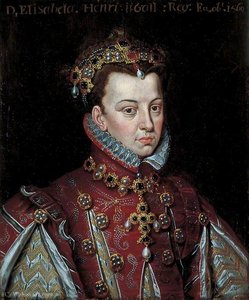
- Portrait of a Lady
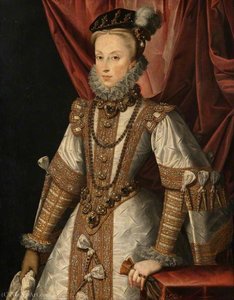
- Anne of Austria
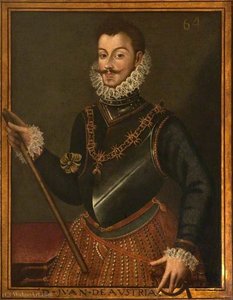
- Don John of Austria
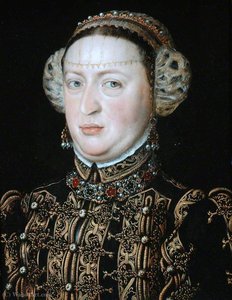
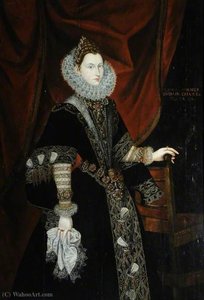
- Catherine of Austria, Queen
- Place Of Birth: Benifaió, Spain
Related Articles

The Golden Age Reforged: Dramatic Realism & Religious Zeal in Spanish Baroque Art
Explore the dramatic world of Spanish Baroque art! Discover masters like Zurbarán & the powerful influence of religious zeal on painting techniques – a guide for collectors and enthusiasts.
Rafael de Penagos: A Study in Spanish Portraiture & Artistic Identity
Explore the life & art of Rafael de Penagos, a leading Spanish Art Deco illustrator. Discover his iconic 'Penagos Woman', commercial work, and lasting legacy. Learn about this pivotal figure in 20th-century Spanish art history.
Prado Masterpieces: Explore 25 Iconic Artworks & Bring Spanish Beauty Home
Journey through 25 Prado Museum masterpieces! Explore Velázquez, Goya & El Greco's iconic Spanish art. Discover the stories behind these timeless paintings and find museum-quality reproductions for your home at ArtsDot.com.
José Gutiérrez Solana: A Chronicle of Spanish Society Through Expressionist Vision
Explore the captivating world of José Gutiérrez Solana, a pivotal Spanish Expressionist painter. Discover his haunting depictions of early 20th-century Spain, influenced by Goya & El Greco. Learn about his key works and lasting legacy.
Manuel Benedito Vives: A Study of Light, Color & Emotional Resonance in Contemporary Spanish Painting
Explore the captivating world of Manuel Benedito Vives, a celebrated Spanish painter influenced by Sorolla. Discover his masterful portraits, luminous landscapes & enduring legacy – a favorite of the Spanish Royal Family. Art collectors will appreciate this in-depth study.