 Preview
 Send
Send Share
Share
 Details

 Download
 Similars
 X-Ray
X-Ray Diaporama
 Stats
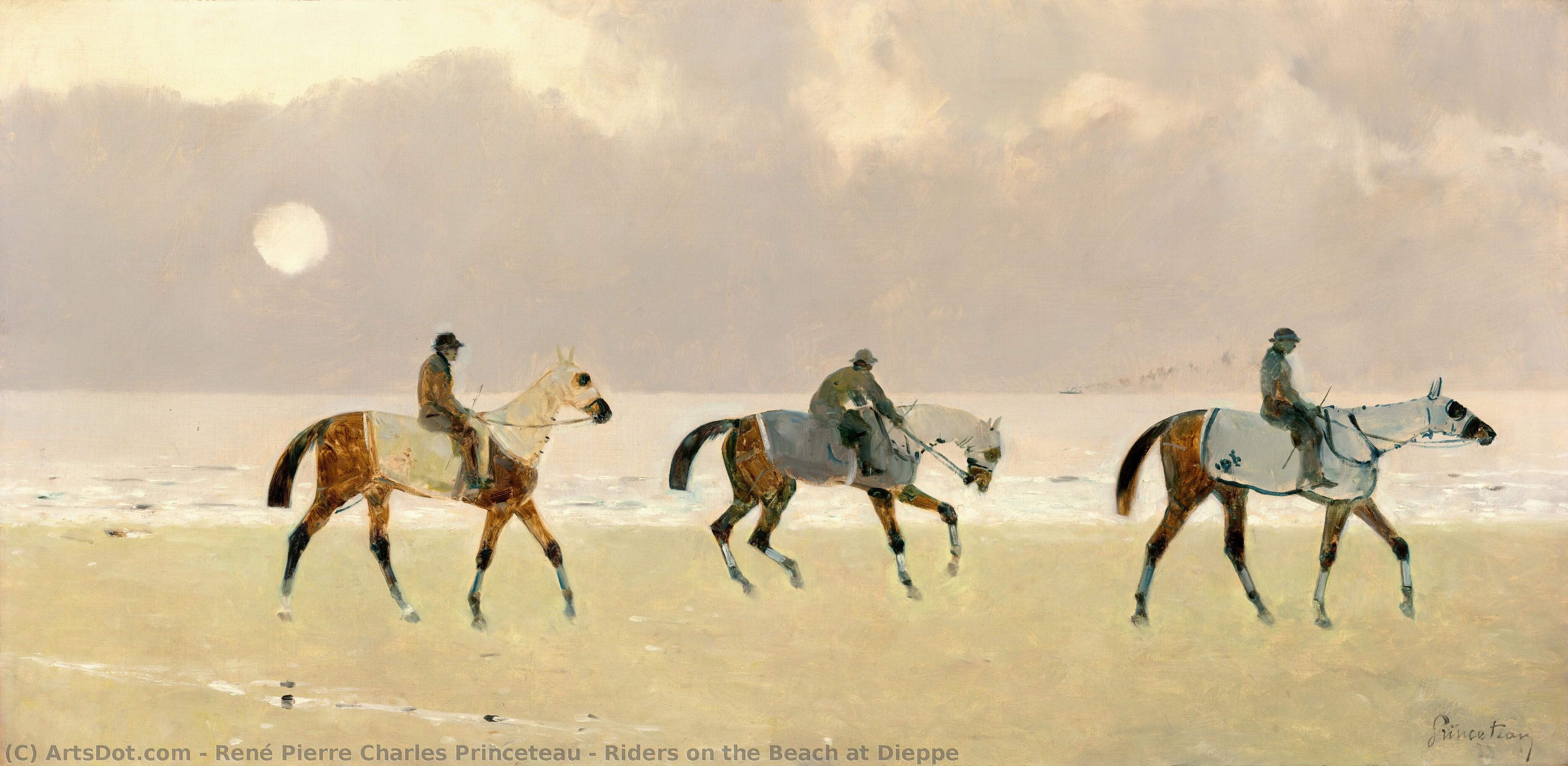
StatsRiders on the Beach at Dieppe
 1892
1892 61.0 x 121.0 cm
 Read More
Giclée / Art Print
Museum-quality giclée or canvas print with fast production and flexible finish options. ( Buy Hand Made Painting Switch to Digital Image)




































Pick from our preset sizes that match the artwork's original proportions.

You may enter your own dimensions to fit a specific frame or space. If your selected size does not match the original image's proportions, we will either crop the artwork or extend the image with a mirrored or solid-fill edge. A digital mockup will be sent for your approval before production begins.
Please note that the on-screen preview does not reflect the actual cropping or extension. Only the mockup will accurately show the final composition.
While custom sizes are available, we recommend selecting a dimension from the predefined list to preserve the original proportions.
Worldwide Delivery () in 2 weeks instead of standard 4/5 weeks. (12 September)

Free Worldwide Express Shipping

High-Quality Linen Canvas

Full Shipping Insurance

Customs Tax Refund Guarantee

True Color Matching Guarantee

100-Day Return Policy (Defects Only)

100% Money-Back Guarantee

Bulk Discount Offer
 Glass option is only available in size under 110 CM

Riders on the Beach at Dieppe
Giclée / Art Print
Reproduction Size
-


Total Price
$ 63
Related Artworks

Artist Biography
René Pierre Charles Princeteau: Life and Legacy
Early Life and Education
René Pierre Charles Princeteau was a French animal painter born in Libourne, France, in 1843. He came from a noble family but faced significant challenges from birth, being both deaf and mute. Despite these obstacles, he received an education at the Institut National de Jeunes Sourds de Paris. His artistic journey began with sculpture classes under Dominique Fortuné Maggesi before formally enrolling at the École Nationale Supérieure des Beaux-Arts in 1865, where he studied under the guidance of Auguste Dumont.
Artistic Development and Influences
Princeteau’s early artistic development was shaped by his formal training and exposure to the Parisian art scene. He established a studio at 233 rue du Faubourg Saint-Honoré, becoming part of a vibrant artistic community. A significant connection during this period was his friendship with Alphonse de Toulouse-Lautrec; he even tutored the younger artist in 1871. His experiences during the Franco-Prussian War, where he served in the artillery of the Army of the Loire, profoundly impacted him, filling his notebooks with sketches and observations that later informed his work.
Key Themes and Artistic Style
Princeteau rose to prominence in 1885 with his captivating horse paintings. His artistic focus centered around animal subjects, particularly horses, dogs, and hunting scenes. He masterfully depicted the energy and grace of equestrian life, as well as the thrill of the hunt. Later in his career, he expanded his repertoire to include landscapes and portraits, always maintaining a keen eye for detail and a sensitivity to the natural world.
- Equestrian Portraits: Celebrated for their realism and dynamic composition.
- Hunting Scenes: Vivid depictions of rural life and sporting pursuits.
- Rural Landscapes: Evocative portrayals of the French countryside.
Relocation to Libourne and Later Life
In 1883, Princeteau made a significant life change by returning to his hometown of Libourne. This move marked a turning point in his artistic career, inspiring him to create large-scale compositions celebrating rural life. He settled at the Château de Pontus near Fronsac, on the banks of the Isle river, where he continued to paint until his death in 1914.
Major Achievements and Historical Significance
Although not as widely recognized as some of his contemporaries, René Princeteau left a lasting mark with his specialized focus on animal painting. His works offer valuable insights into 19th-century French rural life and sporting culture. His ability to capture the essence of horses and hunting scenes established him as a respected artist within his niche. His influence can be seen in the work of artists who followed, particularly those interested in depicting animals and outdoor pursuits. His connection to Toulouse-Lautrec also adds to his historical significance, demonstrating his involvement in the broader artistic movements of the time.
Legacy
Today, Princeteau’s paintings are appreciated for their technical skill, evocative atmosphere, and historical value. They provide a window into a bygone era, offering viewers a glimpse of the beauty and dynamism of 19th-century France. His work continues to be exhibited and studied by art enthusiasts and scholars alike.

rené pierre charles princeteau
1843 - 1914 , France
Quick Facts
- Birth Date: 1843
- Birth Place: Libourne, France
- Death Date: 1914
- Influenced: Henri de Toulouse-Lautrec
- Influenced By: Auguste Dumont
- Movement: Animal painting
- Name: René Pierre Charles Princeteau
- Nationality: French
- Notable Works: Horse paintings, Hunting scenes, Equestrian portraits, Rural landscapes