 Preview
 Send
Send Share
Share
 Details

 Download
 Similars
 X-Ray
X-Ray Diaporama
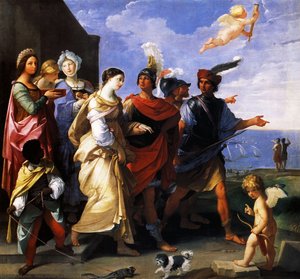
The Rape of Helena
 Oil On Canvas
- WallArt
- Baroque Classicism
 1626
1626- Early Modern
 253.0 x 265.0 cm
 The Louvre
 Read More
Hand Made Oil Reproduction
Hand-painted oil on canvas in your size and frame, made to order by our artists. ( Buy Print Buy Image)




P118B $10

P118H $10

P118W $10

P438Z $10

P508JH $12

P508YH $12

P805H $10

P805Z $10

P919BZ $10

P919G $10

P919XJ $10

P959ZH $10

P968JZ $12

W106C $8

W218G $10

W218JH $8

W218Y $10

W307PJ $10

W316G $10

W316PJ $8

W316Y $10

W398PJ $8

W4111J $10

W500HY $15

W500JH $15

W692G $12

W849H $8

W940BG $15

W953PJ $8




Pick from our preset sizes that match the artwork's original proportions.

You may enter your own dimensions to fit a specific frame or space. If your selected size does not match the original image's proportions, we will either crop the artwork or extend the painting with additional hand-painted elements. A digital mockup will be sent for your approval before production begins.
Please note that the on-screen preview does not reflect the actual cropping or extension. Only the mockup will accurately show the final composition.
While custom sizes are available, we recommend selecting a dimension from the predefined list to preserve the original proportions.
After order, ArtsDot.com team will email client for instructions and provide a mockup preview
Worldwide Delivery () in 3/4 weeks instead of standard 5 weeks. (16 August). No compromise on quality.

Free Worldwide Express Shipping

High-Quality Linen Canvas

Full Shipping Insurance

Customs Tax Refund Guarantee

True Color Matching Guarantee

60-Day Return Policy (Defects Only)

100% Money-Back Guarantee

Bulk Discount Offer
 Glass option is only available in size under 110 CM

The Rape of Helena
Reproduction Medium
Reproduction Size
-


Total Price
$ 263
Artwork Description
A Symphony of Baroque Elegance
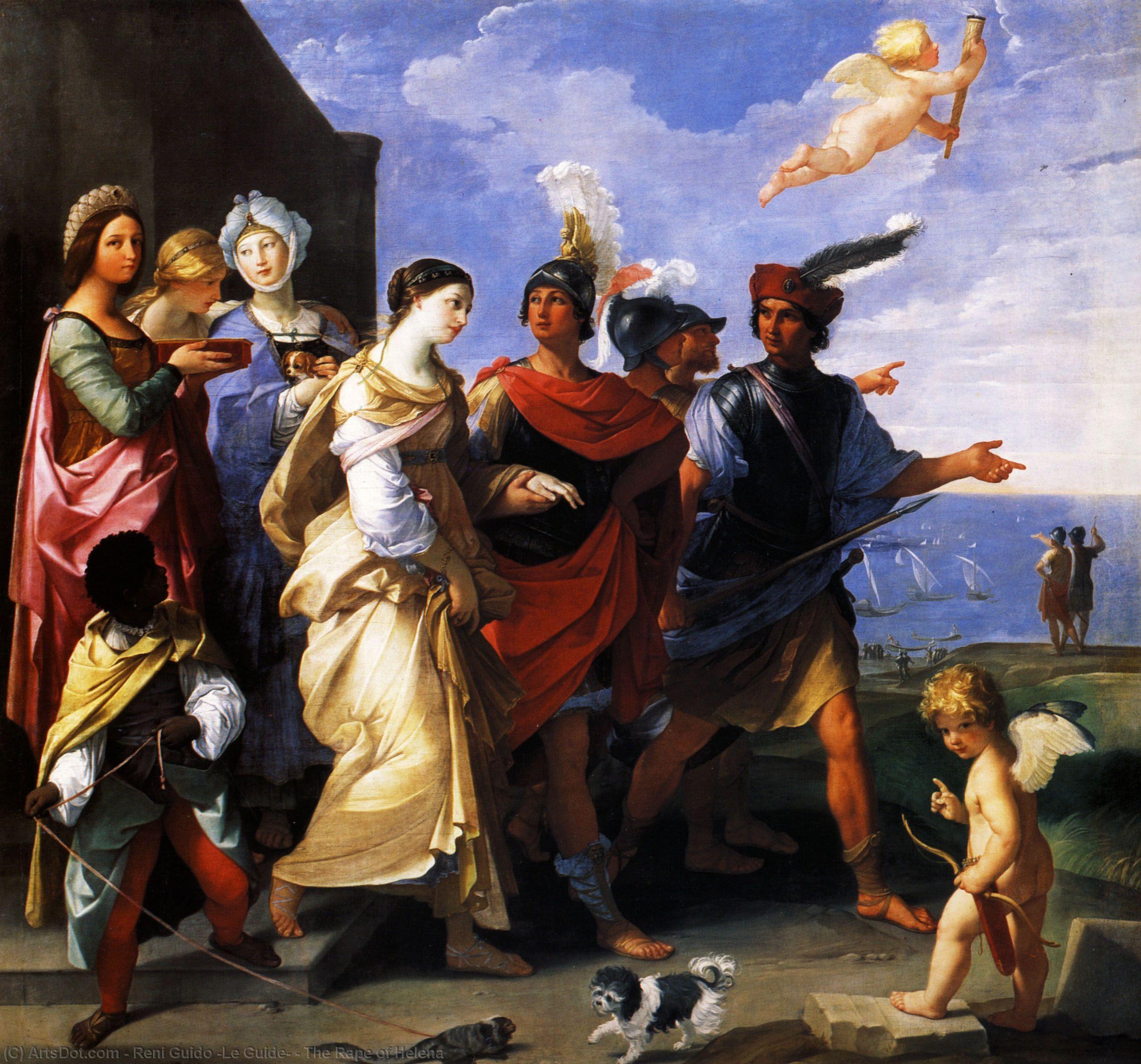
In the grand tapestry of the Bolognese Baroque, few works command the room with such poised intensity as Guido Reni’s “The Rape of Helena.” Painted between 1626 and 1629, this monumental oil on canvas is far more than a mere depiction of a mythological crisis; it is a masterclass in the art of controlled emotion. While the title suggests a scene of violent upheaval—the abduction of Helen of Troy by Paris—Reni transcends the brutality of the narrative to offer a vision of sublime grace. The viewer is not confronted with chaos, but rather invited into a carefully choreographed tableau where every gesture and gaze serves to elevate the human spirit above the earthly struggle.
The painting captures a pivotal moment in the epic Trojan saga, yet Reni’s brushwork prioritizes serenity over strife. As Paris, driven by the whims of Aphrodite, seeks to claim Helen, the artist focuses our attention on the psychological depth of the figures. We see the sorrowful, searching gaze of Helena contrasted against a sense of dignified composure. This delicate balance allows the artwork to function as both a dramatic historical record and an idealized exploration of beauty and virtue, making it a profound centerpiece for any collection dedicated to classical storytelling.
Mastery of Light and Form
To behold this work is to witness the pinnacle of disegno—the Italian tradition of meticulous drawing and anatomical precision. Reni employs a sophisticated use of chiaroscuro, utilizing the dramatic interplay between deep shadows and luminous highlights to sculpt the figures within the frame. This technique lends a palpable sense of volume and weight to the characters, making their presence feel almost three-dimensional against the canvas. The light does not merely illuminate; it directs the eye, tracing the soft contours of skin and the heavy folds of Roman attire with a rhythmic fluidity.
The artist’s palette is intentionally muted, favoring sophisticated tones that contribute to an atmosphere of solemn grandeur. This restraint ensures that the focus remains on the emotional resonance of the scene rather than being overwhelmed by color. For the discerning collector or interior designer, this subtle chromatic range offers incredible versatility, allowing the painting to integrate seamlessly into luxurious, classical environments or serve as a sophisticated focal point in modern, minimalist spaces. The texture of the oil on canvas, even in high-quality reproduction, captures that essential luminosity that defines Reni’s legendary "guide" to the Baroque style.
A Legacy for the Modern Collector
Beyond its aesthetic brilliance, “The Rape of Helena” carries a weight of historical significance that adds layers of value to the piece. Commissioned during a period of intense political maneuvering in Europe—linked to the Spanish crown and the papal court—the painting is steeped in the allegories of its time. It represents an era where art was used to communicate power, diplomacy, and divine intention. Owning a reproduction of such a work is not merely about decorating a wall; it is about preserving a fragment of the 17th-century's intellectual and artistic soul.
Whether you are an art historian captivated by its technical execution or an interior designer seeking to evoke a sense of timeless nobility, this masterpiece offers unparalleled inspiration. It stands as a testament to the enduring power of classical mythology to move the human heart across centuries. Bringing this piece into a home or gallery provides an immediate sense of depth, inviting guests to linger on its complex layers of light, shadow, and legend.
Related Artworks




Artist Biography
Guido Reni (Le Guide): Life and Legacy
Early Life and Training
Guido Reni, also known as Le Guide, was born in Bologna, Italy, in 1575. He was the only child of Daniele Reni, a musician, and Ginevra Pozzi, also from a musical family. This upbringing instilled in him an appreciation for harmony and form that would later influence his artistic style. At the young age of nine, Guido began his apprenticeship under Denis Calvaert, a Flemish painter working in Bologna. He studied alongside fellow aspiring artists Albani and Domenichino, forming a strong foundation in classical principles.
Artistic Career and Development
Reni’s artistic career spanned several Italian cities, including Rome, Naples, and his native Bologna. His early work showed the influence of Calvaert and the Carracci brothers, emphasizing anatomical accuracy and dramatic composition. However, Reni quickly developed a distinctive style characterized by its elegant classicism, refined technique, and emotional intensity. He became a dominant figure in the Bolognese School, known for its emphasis on academic training and idealized forms.
Key Influences
- Denis Calvaert: Reni’s initial teacher provided him with a strong foundation in Flemish painting techniques.
- The Carracci Family (Annibale, Agostino, Ludovico): Their emphasis on classical art and anatomical study profoundly impacted his artistic development.
- Raphael: Reni greatly admired Raphael’s gracefulness and harmonious compositions, which are evident in many of his works.
Major Works and Artistic Style
Reni's oeuvre encompasses a wide range of subjects, including religious scenes, mythological narratives, and allegorical representations. Some of his most celebrated works include:
- Apollo on the Sun Chariot (Albertina, Vienna): A dynamic drawing showcasing Reni’s mastery of Baroque style.
- Saint James the Greater: Demonstrates his skill in capturing religious fervor and human emotion.
- Atalanta and Hippomenes (Palace of Capodimonte, Naples): An example of his mythological paintings, characterized by graceful figures and dramatic storytelling.
- Saint Jerome: A testament to Reni’s ability to balance composition with emotional depth.
- Tarantella (Palace of Capodimonte, Naples): Illustrates his influence on Italian folk dance culture.
Reni's style is often described as eclectic classicism. He blended the precision of classical art with the dynamism and emotion of the Baroque period. His figures are typically idealized, possessing a serene beauty and graceful movement.
Historical Significance and Legacy
Guido Reni played a crucial role in shaping the development of High Baroque style in Italy. He influenced generations of artists with his refined technique, elegant compositions, and emotional depth. His work can be found in prominent museums worldwide, including the Palace of Capodimonte in Naples. Reni’s legacy extends beyond painting; he was also a poet and a respected intellectual figure in his time.
His art continues to inspire artists and art enthusiasts today, solidifying his place as one of the most important painters of the 17th century. His influence can be seen in subsequent Baroque artists who sought to emulate his gracefulness and emotional power.
Death
Guido Reni died in Bologna in 1642, leaving behind a rich artistic legacy that continues to captivate audiences centuries later.

reni guido (le guide)
1575 - 1642 , Italy
Quick Facts
- Birth Date: 1575
- Birth Place: Bologna, Italy
- Death Date: 1642
- Influenced By: Denis Calvaert
- Movement: High Baroque, Bolognese School
- Name: Guido Reni (Le Guide)
- Nationality: Italian
- Notable Works:
- Apollo on the Sun Chariot
- Saint James the Greater
- Atalanta and Hippomenes
- Saint Jerome
- Tarantella
Related Articles
Guido Reni: A Study in Baroque Classicism & Artistic Perfection
Explore the life & work of Guido Reni, a master of Baroque classicism. Discover his iconic religious & mythological paintings, and understand his enduring influence on art history. Expert analysis for collectors.
The Enduring Legacy of Classicism: Principles, Evolution & Influence in Western Art
Explore the enduring legacy of Classicism in Western art! Discover its historical context, key principles, iconic masterpieces & lasting influence. Learn about Renaissance and Neoclassical movements with ArtsDot.
Neo-Classicism's Greatest Hits: 10 Masterpieces for Your Home |
Journey through Neo-Classicism's finest! Explore 10 iconic masterpieces by David, Ingres & Canova. Discover art history, techniques & timeless beauty – perfect for inspiring your home decor. Find museum-quality reproductions at
Timeless Resonance: Exploring Classic Vibe in Art – A Historical & Aesthetic Analysis
Explore the rich history & enduring aesthetic of Classicism art! Discover key movements, iconic artists like Raphael & David, and its lasting influence on Western art. Deepen your appreciation today.
The Enduring Legacy of Classical Style: Form, Narrative & Influence in Art
Explore the enduring legacy of classical art – from ancient Greece & Rome to Neoclassicism. Discover key artists, philosophical roots & build a timeless collection with ArtsDot's expert guidance.