 Preview
 Send
Send Share
Share
 Details

 Download
 Similars
 X-Ray
X-Ray Diaporama
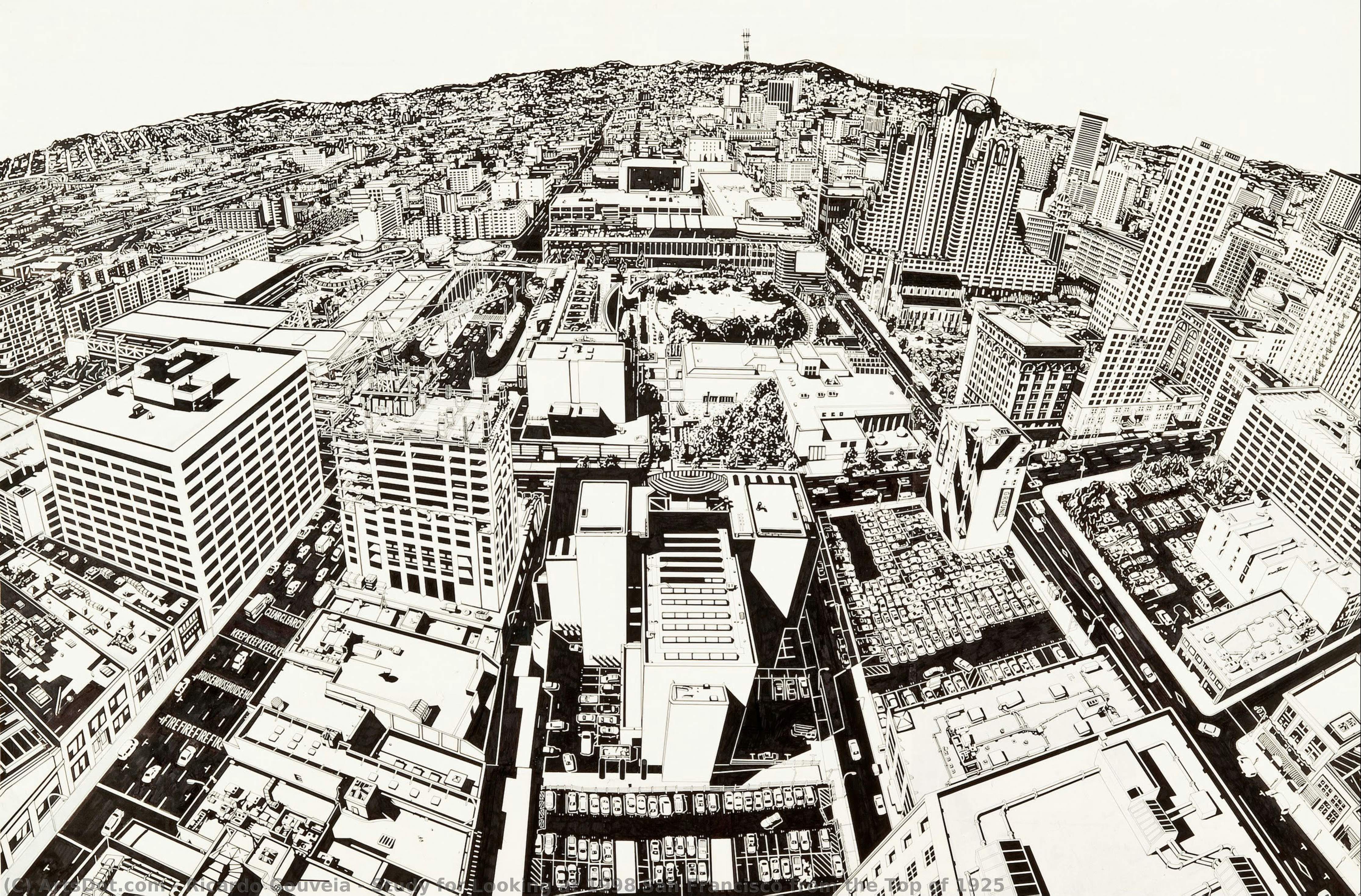
Study for Looking at 1998 San Francisco from the Top of 1925


 Read More
Hand Made Oil Reproduction
Hand-painted oil on canvas in your size and frame, made to order by our artists. ( Buy Print Buy Image)




P118B $10

P118H $10

P118W $10

P438Z $10

P508JH $12

P508YH $12

P805H $10

P805Z $10

P919BZ $10

P919G $10

P919XJ $10

P959ZH $10

P968JZ $12

W106C $8

W218G $10

W218JH $8

W218Y $10

W307PJ $10

W316G $10

W316PJ $8

W316Y $10

W398PJ $8

W4111J $10

W500HY $15

W500JH $15

W692G $12

W849H $8

W940BG $15

W953PJ $8




Pick from our preset sizes that match the artwork's original proportions.

You may enter your own dimensions to fit a specific frame or space. If your selected size does not match the original image's proportions, we will either crop the artwork or extend the painting with additional hand-painted elements. A digital mockup will be sent for your approval before production begins.
Please note that the on-screen preview does not reflect the actual cropping or extension. Only the mockup will accurately show the final composition.
While custom sizes are available, we recommend selecting a dimension from the predefined list to preserve the original proportions.
After order, ArtsDot.com team will email client for instructions and provide a mockup preview
Worldwide Delivery () in 3/4 weeks instead of standard 5 weeks. (20 August). No compromise on quality.

Free Worldwide Express Shipping

High-Quality Linen Canvas

Full Shipping Insurance

Customs Tax Refund Guarantee

True Color Matching Guarantee

60-Day Return Policy (Defects Only)

100% Money-Back Guarantee

Bulk Discount Offer
 Glass option is only available in size under 110 CM

Study for Looking at 1998 San Francisco from the Top of 1925
Reproduction Medium
Reproduction Size
-


Total Price
$ 263
Artwork Description
Study for Looking at 1998 San Francisco from the Top of 1925: A Chronicle in Graphite
Ricardo Gouveia’s “Study for Looking at 1998 San Francisco from the Top of 1925” is more than a depiction of a cityscape; it's a meticulously crafted meditation on time, progress, and the enduring spirit of a rapidly changing metropolis. Executed in 1998, this preparatory drawing – later expanded into a full mural – captures a pivotal moment in San Francisco’s South of Market district, a zone undergoing dramatic transformation reflected in Rigo 98's (now Rigo 23) keen observation from the vantage point of the Pacific Telephone & Telegraph Co. building’s apex. The artwork’s stark monochrome palette—a symphony of blacks, grays, and whites—immediately establishes a formal rigor reminiscent of early 20th-century documentary photography and architectural studies, lending it an undeniable historical weight.
- Composition & Perspective: The composition is dominated by the assertive geometry of Pflueger’s art deco skyscraper, its lines meticulously rendered to create a powerful sense of depth. Linear perspective—the careful convergence of receding lines towards a vanishing point—is expertly employed, drawing the viewer into the sprawling urban landscape and mirroring the artist's deliberate choice of viewpoint.
- Technique & Materials: Gouveia’s mastery is evident in his precise line work, utilizing hatching and cross-hatching with remarkable control to build up tonal variations and suggest texture. The medium—likely graphite or charcoal on paper—adds a tactile quality, inviting close inspection of the artist's hand.
- Symbolic Resonance: The choice of vantage point – atop the 1925 building – is profoundly symbolic. It represents a moment of optimism and new beginnings, contrasted with the inevitable flux of urban development. The artwork subtly questions our relationship to progress and the transient nature of human endeavors.
A Study in Form and Texture
The artist’s attention to detail is breathtaking. Buildings are not simply blocks of color; they are constructed from a complex interplay of lines, each contributing to the overall sense of solidity and architectural grandeur. The use of denser line work creates areas of deep shadow, emphasizing the textures of brick facades and window frames, while sparser areas suggest lighter surfaces or more distant structures. This deliberate manipulation of line density is key to the artwork’s expressive power, transforming a simple cityscape into a richly layered visual experience.
- Geometric Precision: The dominant shapes—rectangles, squares, and angular rooftops—are rendered with remarkable accuracy, reflecting the architectural style prevalent in San Francisco during that era.
- Line as Sculpture: Gouveia treats lines not merely as outlines but as sculptural elements, using them to define form and create a sense of three-dimensionality within the two-dimensional space.
Historical Context and Artistic Intent
"Study for Looking at 1998 San Francisco from the Top of 1925" is inextricably linked to Rigo 98’s broader project, a poignant commentary on the ongoing evolution of San Francisco's South of Market. The artwork serves as a visual record of a specific moment in time—a snapshot of a city poised between its rich history and an uncertain future. Gouveia’s choice of monochrome further amplifies this sense of historical distance, inviting viewers to contemplate the passage of time and the enduring power of urban landscapes.
Emotional Impact and Aesthetic Value
The artwork's stark beauty and meticulous detail evoke a powerful sense of nostalgia and contemplation. It is a testament to Gouveia’s skill as an observer and interpreter, transforming a familiar cityscape into a work of profound artistic significance. This study offers a unique window into San Francisco’s past, inviting viewers to reflect on the city's enduring spirit and its ongoing transformation.
Related Artworks




Artist Biography
John McKinstry: A Cornish Visionary of Tranquil Landscapes
Born in Hertfordshire, England, in 1966, John McKinstry’s artistic journey has been a deeply personal one, culminating in a distinctive style characterized by the serene beauty and evocative power of the British landscape. While his early life unfolded within the familiar green hills of Hertfordshire, it was the rugged coastline and dramatic vistas of Cornwall that ultimately shaped his vision and became the enduring subject of his work. McKinstry’s art isn't merely a representation of scenery; it’s an invitation to contemplate the quiet majesty of nature, a space for reflection and connection with the elemental forces that have sculpted this remarkable region.Early Influences and Artistic Development
McKinstry’s artistic path began with a grounding in traditional landscape painting techniques. He honed his skills through rigorous study and practice, absorbing the influence of masters such as Turner and Constable – artists who understood how to capture not just the appearance of a scene but also its mood and atmosphere. However, McKinstry quickly sought to transcend mere imitation, developing a unique approach rooted in observation and an intimate understanding of light and color. Crucially, his early exposure to Cornwall’s dramatic coastline ignited a passion for capturing the raw power and subtle beauty of the land – the interplay of light on granite cliffs, the restless dance of the sea, and the muted tones of heather-covered moorland. This formative period instilled in him a deep respect for the natural world and a desire to translate its essence onto canvas.Technique and Style: A Master of Light and Texture
McKinstry’s distinctive style is immediately recognizable through his masterful manipulation of light and texture. He employs a layered approach, building up translucent washes of color that evoke the atmospheric conditions of each scene – the hazy warmth of a summer afternoon, the brooding greys of an approaching storm, or the ethereal glow of dawn. His palette is predominantly muted, favoring subtle variations of blues, greens, browns, and ochres, creating a sense of depth and realism while simultaneously conveying a feeling of tranquility. He often works *en plein air*, directly on location, allowing him to capture the fleeting effects of light and weather with unparalleled immediacy. Furthermore, McKinstry’s use of texture is remarkable; he achieves this through meticulous layering of paint and incorporating subtle variations in brushstroke – sometimes deliberately visible, other times seamlessly blended – to mimic the rough surfaces of stone, the yielding softness of heather, and the shimmering expanse of water.Themes and Symbolism: The Language of Nature
At the heart of McKinstry’s work lies a profound appreciation for the natural world and its inherent beauty. His paintings are not simply depictions of landscapes; they are meditations on themes of solitude, resilience, and the enduring power of nature. The often-isolated figures that occasionally appear within his compositions – shepherds tending their flocks, fishermen casting their nets – serve as reminders of humanity’s connection to the land and its rhythms. The vastness of the landscape itself symbolizes a sense of timelessness and permanence, inviting viewers to contemplate their place within the grand scheme of things. The recurring motifs of stone, water, and sky—elements that have shaped Cornwall for millennia—suggest an underlying continuity and a deep respect for the geological forces that continue to mold the region’s character.Recognition and Legacy
John McKinstry's work has garnered significant recognition within the contemporary art world. His paintings are exhibited in galleries across the United Kingdom and internationally, attracting collectors who appreciate his unique vision and technical skill. He is increasingly recognized as a leading figure in British landscape painting, embodying a tradition of observation, sensitivity, and artistic integrity. McKinstry’s legacy extends beyond individual artworks; he represents a vital link between the past and present, carrying forward a deep-rooted connection to the land and its enduring beauty—a connection that resonates powerfully with viewers seeking solace and inspiration in the face of an increasingly complex world. His work stands as a testament to the transformative power of art and the profound beauty found within the quiet corners of the British countryside.
ricardo gouveia
1966 - , Portugal
Quick Facts
- Artistic Movement Or Style: Landscape artist
- Date Of Birth: 1966
- Full Name: John McKinstry
- Nationality: British
- Notable Artworks: ['Tranquil landscapes']
- Place Of Birth: Hertfordshire, UK
Related Articles

Goya's Masterpieces: Explore 25 Iconic Paintings & Art Prints | ArtsDot
Delve into the world of Francisco Goya with ArtsDot. Explore 25 iconic paintings – from 'The Third of May' to his haunting Black Paintings. Discover the stories, techniques & emotions behind these Spanish masterpieces. Find museum-quality art reproductions for your home at ArtsDot.com!

Giclée Prints: Archival Quality & Aesthetic Nuances for the Discerning Collector
Explore the world of giclée prints with ArtsDot. Learn about archival quality, aesthetic nuances & investment potential. Expert guidance for discerning art collectors seeking museum-quality reproductions and lasting value.

The Enduring Legacy of Fine Art Prints: Technique, History & Aesthetic Impact
Explore the rich history & techniques of fine art prints. Discover investment potential, assess authenticity, and learn how to preserve your collection with expert guidance. Trusted insights for discerning collectors.

Echoes of Time: Exploring the Enduring Appeal & Historical Context of Vintage Art Prints
Explore the captivating world of vintage art prints! Discover their history, collecting tips & enduring appeal. Expert insights on chromolithography and building a legacy collection with ArtsDot.

The Enduring Legacy of Printmaking: Techniques, Themes & Artistic Innovation Across Centuries
Explore the rich history of printmaking with ArtsDot. Discover techniques from intaglio to lithography, learn about collecting valuable prints & find museum-quality reproductions. Expert insights for art enthusiasts and collectors.