 Preview
 Send
Send Share
Share
 Details

 Download
 Similars
 X-Ray
X-Ray Diaporama
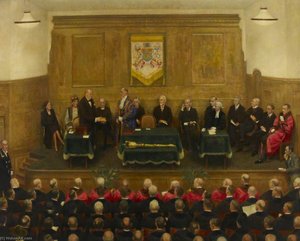
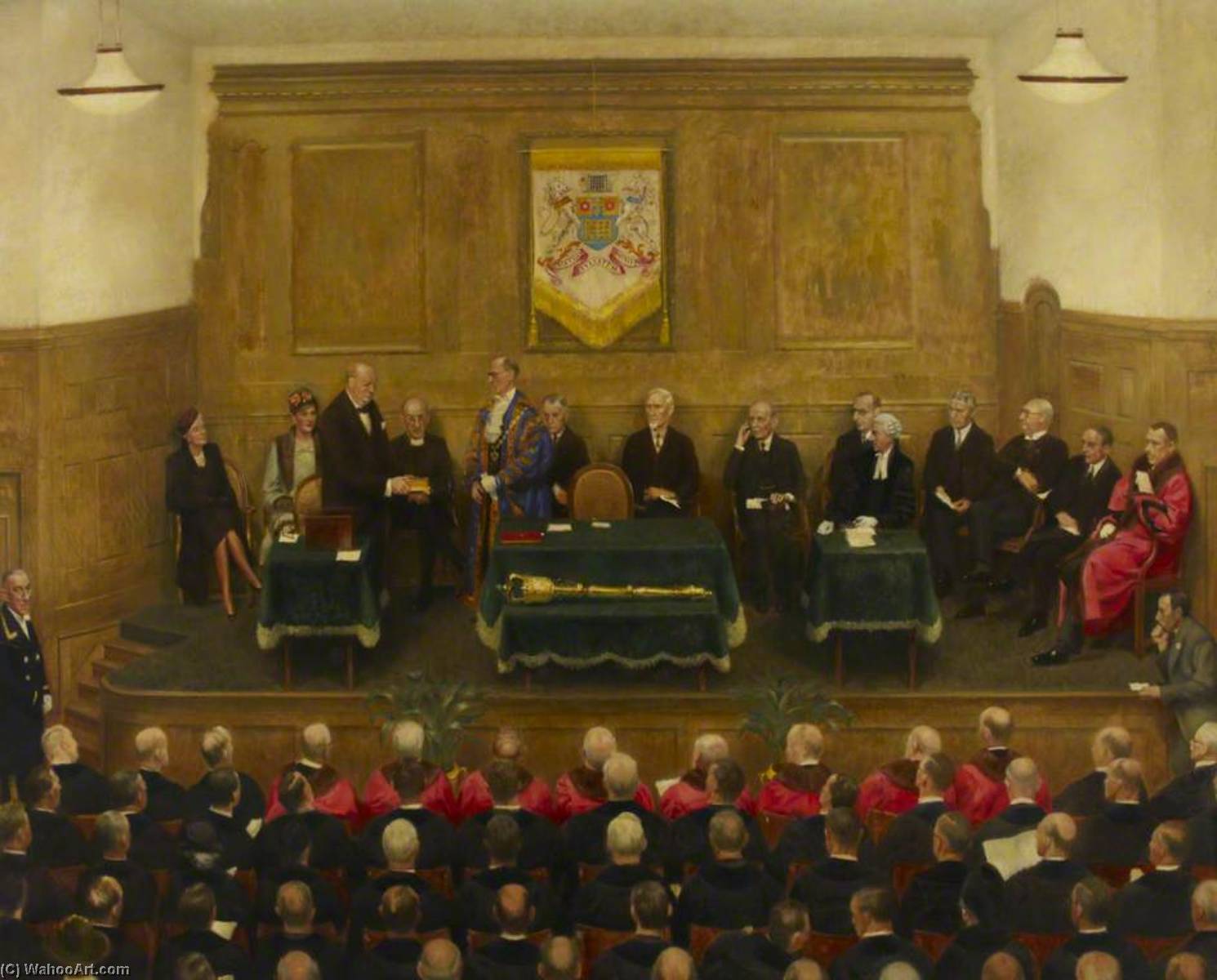
Freedom of the City of Westminster Given to Winston Churchill
 Oil On Canvas
- WallArt
- Contemporary Realism
 1947
1947- Modern
 85.0 x 112.0 cm
 City of Westminster Archives Centre
 Read More
Giclée / Art Print
Museum-quality giclée or canvas print with fast production and flexible finish options. ( Buy Hand Made Painting Buy Image)




P118B $10

P118H $10

P118W $10

P438Z $10

P508JH $12

P508YH $12

P805H $10

P805Z $10

P919BZ $10

P919G $10

P919XJ $10

P959ZH $10

P968JZ $12

W106C $8

W218G $10

W218JH $8

W218Y $10

W307PJ $10

W316G $10

W316PJ $8

W316Y $10

W398PJ $8

W4111J $10

W500HY $15

W500JH $15

W692G $12

W849H $8

W940BG $15

W953PJ $8




Pick from our preset sizes that match the artwork's original proportions.

You may enter your own dimensions to fit a specific frame or space. If your selected size does not match the original image's proportions, we will either crop the artwork or extend the image with a mirrored or solid-fill edge. A digital mockup will be sent for your approval before production begins.
Please note that the on-screen preview does not reflect the actual cropping or extension. Only the mockup will accurately show the final composition.
While custom sizes are available, we recommend selecting a dimension from the predefined list to preserve the original proportions.
Worldwide Delivery () in 2 weeks instead of standard 4/5 weeks. (6 September)

Free Worldwide Express Shipping

High-Quality Linen Canvas

Full Shipping Insurance

Customs Tax Refund Guarantee

True Color Matching Guarantee

100-Day Return Policy (Defects Only)

100% Money-Back Guarantee

Bulk Discount Offer
 Glass option is only available in size under 110 CM

Freedom of the City of Westminster Given to Winston Churchill
Giclée / Art Print
Reproduction Size
-


Total Price
$ 63
A Moment Frozen in History: The Weight of Honor
In the grand tapestry of twentieth-century history, few moments possess the gravity and solemnity captured by Richard Ernst Eurich in his 1947 masterpiece, Freedom of the City of Westminster Given to Winston Churchill. This evocative oil on canvas serves as more than a mere documentation of a civic ceremony; it is a profound meditation on leadership, legacy, and the shared breath of a nation recovering from the shadows of war. Through his masterful command of light and composition, Eurich invites the viewer into a hushed chamber where the air feels thick with the significance of the occasion. The painting depicts a gathering of distinguished men, their formal attire and focused expressions reflecting the weight of the responsibility being bestowed upon one of Britain's most iconic figures.
The scene is anchored by a central assembly of gentlemen seated around a table, their silhouettes framed beneath a commanding coat of arms that looms like a silent witness to the proceedings. Eurich utilizes a meticulous approach to realism, likely influenced by his scientific upbringing, to render the textures of heavy fabrics, the sheen of polished wood, and the delicate edges of official documents. There is a palpable sense of ceremony in the way the figures are arranged; some lean forward in attentive silence, while others stand in the periphery, creating a layered depth that draws the eye through the room. This careful orchestration of figures suggests a community bound by shared values and a collective memory of resilience.
The Mastery of Light and Narrative Depth
Technically, the work showcases Eurich’s unique ability to blend narrative clarity with an undercurrent of atmospheric mystery. As an artist who famously captured the harrowing beauty of wartime scenes, Eurich brings a seasoned eye to this post-war commemorative piece. The lighting within the composition does not merely illuminate; it dramatizes. Soft light falls across the table, highlighting the papers and books that represent the legal and historical foundations of the city’s freedom, while deeper shadows pool in the corners of the room, lending an air of timelessness to the event. This interplay of light and shadow—a hallmark of his evocative style—transforms a formal meeting into a cinematic moment of profound emotional resonance.
For the discerning collector or interior designer, this painting offers a sophisticated focal point that commands attention through its historical prestige rather than mere spectacle. The muted, dignified palette of the work allows it to integrate seamlessly into stately libraries, executive offices, or classic living spaces, providing an anchor of intellectual and cultural depth. To possess a reproduction of such a piece is to invite a conversation about courage, civic duty, and the enduring spirit of humanity into one's environment. It is a work that does not just decorate a wall; it enriches the very atmosphere of a room with the quiet, powerful echoes of a monumental historical milestone.
Related Artworks


Artist Biography
A Life Painted in Wonder: The World of Richard Ernst Eurich
Richard Ernst Eurich, born in Bradford in 1903 and passing in 1992, was a painter whose work often feels suspended between worlds—a realm where meticulous realism gives way to an undercurrent of mystery and profound emotional resonance. He wasn’t one to chase the prevailing artistic winds; instead, he forged his own path, becoming particularly celebrated for his dramatic seascapes and poignant depictions of wartime experiences as an official Admiralty artist during World War II. His story is not simply that of a skilled technician, but of a visionary who imbued everyday scenes with a sense of wonder, setting him apart from many of his contemporaries. Eurich’s early life was shaped by intellectual curiosity; his father, Dr. Friederich Wilhelm Eurich, was a renowned professor of forensic medicine and bacteriologist, instilling in the young Richard a rigorous approach to observation and detail. This scientific grounding would later inform his artistic practice, lending an almost photographic quality to many of his works. After attending St George’s School and Bradford Grammar School, he pursued formal training at the Bradford School for Arts and Crafts and then the prestigious Slade School of Art in London under Professor Henry Tonks, a formative experience that honed his technical skills and exposed him to a diverse range of artistic influences.From Coastal Ports to Wartime Shores
The 1930s saw Eurich gravitating towards the allure of the sea, spending considerable time in small fishing ports along England’s south coast. This period was crucial in shaping his signature style—panoramic views capturing the raw power and subtle beauty of the marine environment. He settled in Hythe, Hampshire, in 1934, a location that provided endless inspiration for his paintings of Southampton Water and the surrounding coastline. These weren't merely topographical depictions; they were imbued with an atmosphere of quiet contemplation, often hinting at hidden narratives within the vastness of the sea. The outbreak of World War II dramatically altered Eurich’s artistic trajectory. Recognizing his talent for capturing both detail and drama, the War Artists’ Advisory Committee (WAAC) commissioned him to document the conflict. His painting of the Dunkirk evacuation, created alongside Charles Cundall's interpretation of the same event, catapulted him to national recognition in 1940. It wasn’t just a depiction of historical events; it was an emotionally charged portrayal of courage and desperation, capturing the scale of the operation with breathtaking scope. This success led to a full-time commission from the Admiralty, where he spent the remainder of the war documenting naval operations, shipyards, and the lives of sailors.A Unique Vision Within the Canon
Eurich’s wartime paintings are particularly noteworthy for their diversity. He didn't limit himself to heroic battle scenes; he also depicted quieter moments—the resilience of fishermen continuing their work amidst conflict, the harrowing experiences of survivors clinging to lifeboats, and the meticulous reconstruction of naval raids. His access to operations rooms during events like the Dieppe raid allowed him to create remarkably informed and detailed reconstructions, while his willingness to travel aboard destroyers patrolling the Straits of Dover ensured a level of authenticity rarely seen in war art. However, it was his painting *Survivors From a Torpedoed Ship*, depicting exhausted men clinging to an overturned lifeboat, that truly showcased his artistic courage. Though lauded by Winston Churchill himself, WAAC briefly withdrew the work from public display fearing its potentially demoralizing effect on merchant navy recruitment—a testament to the raw emotional power of Eurich’s vision. After the war, Eurich continued to paint, accepting a variety of commissions while maintaining his distinctive style. He took on projects ranging from illustrating Evelyn Waugh's *The Pleasures of Travel* to documenting the Queen’s Coronation and creating murals for hospitals and industrial sites.Legacy and Lasting Influence
Richard Ernst Eurich was elected an Associate of the Royal Academy in 1942, becoming a full Academician in 1953, solidifying his position within the British art establishment. He remained largely independent from prevailing artistic movements, choosing instead to refine his own unique approach—a blend of meticulous realism, atmospheric perspective, and narrative depth. His work stands as a powerful reminder that art can be both technically masterful and emotionally resonant, capable of capturing not just what is seen but also what is felt. While perhaps not as widely celebrated as some of his contemporaries, Eurich’s paintings continue to captivate viewers with their quiet intensity and enduring sense of wonder. He left behind a substantial body of work that offers a compelling glimpse into the 20th century—a world marked by both conflict and beauty, faithfully rendered through the eyes of an artist who dared to paint what he loved, regardless of passing fashions. His paintings are held in numerous public collections across Britain, ensuring his legacy will continue to inspire generations of artists and art lovers alike. He was a master of atmosphere, a chronicler of courage, and a painter whose work continues to speak volumes about the human condition.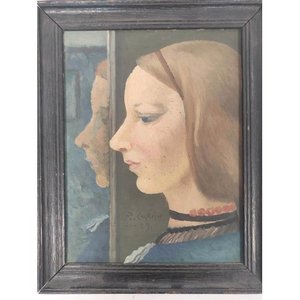
Richard Ernst Eurich
1903 - 1992 , United Kingdom
Quick Facts
- Artistic Movement Or Style: Figurative, seascape
- Artists Who Influenced This Artist:
- Edward Marsh
- Christopher Wood
- Eric Gill
- Date Of Birth: March 14, 1903
- Date Of Death: June 6, 1992
- Full Name: Richard Ernst Eurich
- Nationality: British
- Notable Artworks:
- Dunkirk beaches
- Survivors From a Torpedoed Ship
- Boats at Lyme Regis
- Place Of Birth: Bradford, UK
Related Articles
Max Ernst's Masterpieces: 25 Surreal Visions for Art Lovers & Home Decor
Journey into the surreal world of Max Ernst! Explore 25 iconic paintings, from Dada to abstract expressionism. Discover the stories behind his masterpieces & find museum-quality art reproductions for your home decor at ArtsDot.com.

The Enduring Legacy of Oil on Canvas: Technique, History & Aesthetic Impact
Explore the rich history & techniques of oil painting – from Renaissance masters to Impressionism. Discover pigments, layering methods, and why this timeless medium endures. Expert insights for artists & art enthusiasts.

Oil on Canvas: A Historical & Technical Exploration of a Timeless Artistic Medium
Explore the rich history & enduring techniques of oil painting on canvas. Discover the science behind its longevity, conservation practices, and contemporary relevance. Expert insights for art enthusiasts.

The Enduring Power of Painting: A Historical & Contemporary Exploration of Form and Emotion
Explore the rich history & enduring techniques of oil painting with ArtsDot. Discover masterpieces, learn about art collecting, and find authentic handmade reproductions crafted by skilled artists.

The Enduring Legacy of Oil on Canvas: Technique, History & Contemporary Practice
Explore the rich history & enduring techniques of oil painting on canvas. Discover the science behind its longevity, conservation practices, and contemporary relevance. Expert insights for art enthusiasts.