 Send
Send Share
Share
 Details

 Download
 Similars
 Diaporama
Ensemble with Kimono-styled Jacket - exhibition graphic


 Read More
Giclée / Art Print
Museum-quality giclée or canvas print with fast production and flexible finish options. ( Buy Hand Made Painting Buy Image)




































Pick from our preset sizes that match the artwork's original proportions.

You may enter your own dimensions to fit a specific frame or space. If your selected size does not match the original image's proportions, we will either crop the artwork or extend the image with a mirrored or solid-fill edge. A digital mockup will be sent for your approval before production begins.
Please note that the on-screen preview does not reflect the actual cropping or extension. Only the mockup will accurately show the final composition.
While custom sizes are available, we recommend selecting a dimension from the predefined list to preserve the original proportions.
Worldwide Delivery () in 2 weeks instead of standard 4/5 weeks. (17 August)

Free Worldwide Express Shipping

High-Quality Linen Canvas

Full Shipping Insurance

Customs Tax Refund Guarantee

True Color Matching Guarantee

60-Day Return Policy (Defects Only)

100% Money-Back Guarantee

Bulk Discount Offer
 Glass option is only available in size under 110 CM

Ensemble with Kimono-styled Jacket - exhibition graphic
Giclée / Art Print
Reproduction Size
-


Total Price
$ 63
Collectible Description
A Study in Glamour and Isolation: Richard Puhlmann’s “Ensemble with Kimono-styled Jacket”
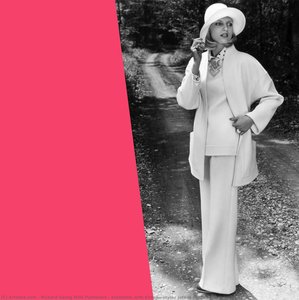
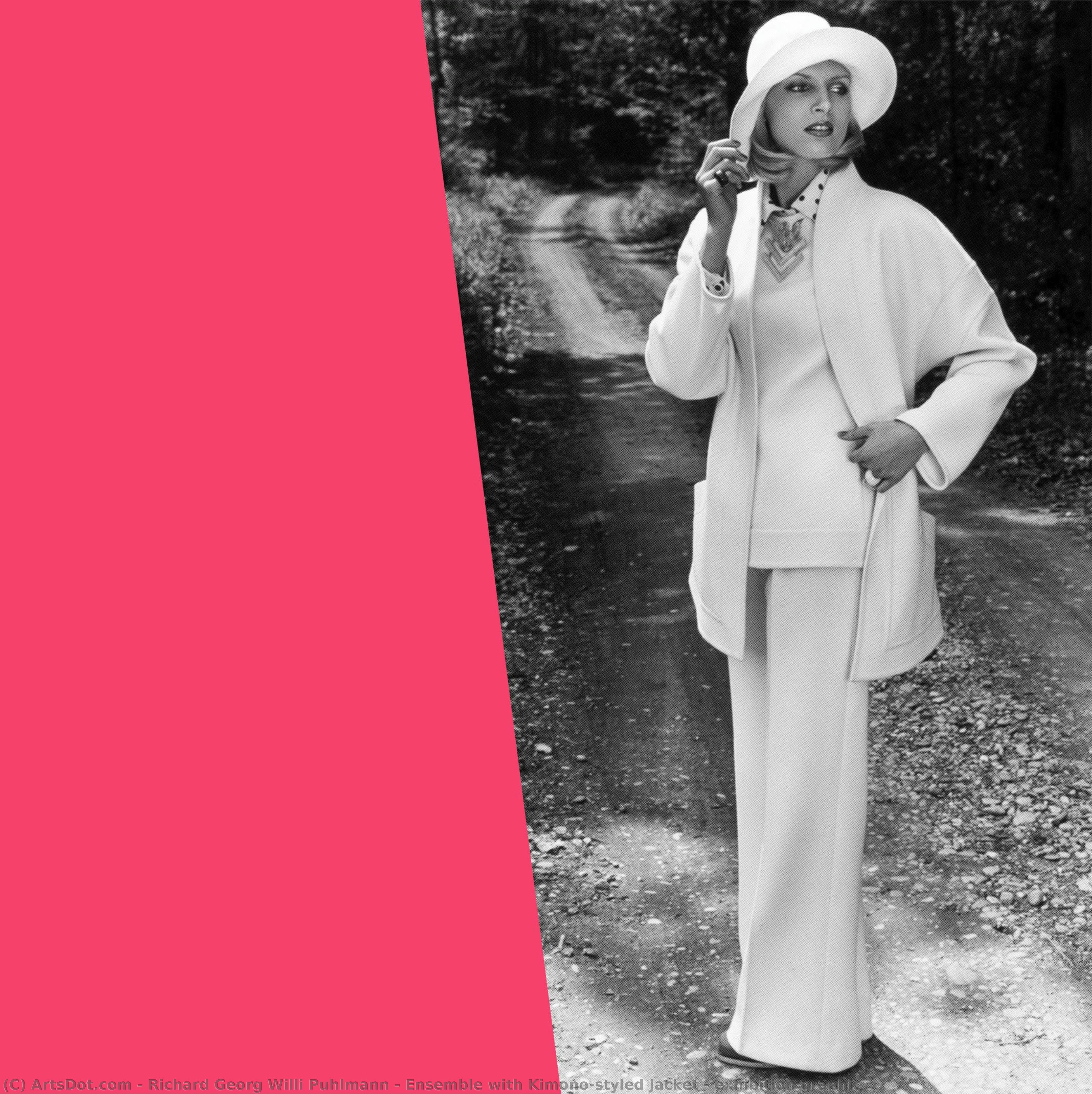
Richard Georg Willi Puhlmann's "Ensemble with Kimono-styled Jacket" is a captivating study in timeless elegance, a photograph that transcends the simple documentation of fashion to become a poignant meditation on beauty, isolation, and the allure of classic Hollywood. Executed in stark black and white, the image immediately draws the viewer into a world of quiet confidence and subtle detachment, qualities expertly conveyed through the subject’s poised stance and distant gaze. The composition, centered around a woman dressed in a meticulously crafted white ensemble – jacket, pants, hat, and scarf – evokes a sense of deliberate artistry, reminiscent of high fashion editorials yet imbued with a distinctly cinematic quality.
- The Figure: The subject’s posture, hand casually resting on her hip while looking off into the distance, speaks volumes. It's a pose that suggests both self-assuredness and a slight remove, inviting speculation about her thoughts and experiences. This deliberate framing contributes significantly to the photograph’s emotional impact.
- Setting and Context: The dirt road leading into the background establishes a sense of journey or transition, further enhancing the narrative potential of the image. The blurred foliage in the distance adds depth without distracting from the central figure, creating a carefully constructed space that feels both expansive and intimate.
Technical Mastery and Photographic Legacy
Puhlmann’s technical skill is immediately apparent in the photograph's execution. Employing traditional film photography techniques – evidenced by the subtle graininess – he masterfully manipulates light and shadow to sculpt the subject’s form, creating a sense of depth and dimensionality that elevates the image beyond a mere snapshot. The use of negative space, particularly within the bold red rectangles framing the composition, is a deliberate stylistic choice, drawing attention to the central figure while simultaneously adding an element of surrealism. The materials – photographic paper and silver gelatin printing – speak to a dedication to craft and a respect for the inherent qualities of the medium.
- Film Photography: The grainy texture is not a flaw but a testament to the era's photographic processes, adding character and authenticity to the image.
- Compositional Elements: The strategic use of negative space and framing contributes significantly to the photograph’s visual impact and narrative power.
Symbolism and Evocative Power
"Ensemble with Kimono-styled Jacket" resonates with powerful symbolic associations. The white ensemble, reminiscent of classic Hollywood glamour, evokes a sense of timeless elegance and aspiration. The setting – a solitary road leading into the unknown – suggests a journey of self-discovery or transformation. The stark black and white palette amplifies these themes, stripping away any distractions and focusing attention on the core elements of beauty, isolation, and perhaps even melancholy. Puhlmann’s background as a child actor, appearing in “Front Theatre,” undoubtedly informed his artistic sensibilities, allowing him to capture moments of profound emotional resonance.
A Collector's Perspective
This photograph represents more than just a beautiful image; it is a testament to Richard Georg Willi Puhlmann’s visionary approach to fashion photography. Its enduring appeal lies in its ability to evoke a sense of timeless glamour and quiet contemplation. A hand-painted reproduction offers an unparalleled opportunity to bring this iconic work into your home or studio, allowing you to appreciate the artistry and technical mastery that define Puhlmann's legacy. The image’s evocative power makes it a compelling addition to any collection, offering both aesthetic pleasure and intellectual stimulation.
Related Artworks
Artist Biography
The Visionary Lens of Rico Puhlmann
Born in the transformative atmosphere of Berlin in 1934, Richard Georg Willi Puhlmann—known to the world by his evocative moniker, Rico Puhlmann—emerged as a defining voice in the golden age of fashion photography. His journey into the visual arts began not with a camera, but through the dramatic lens of performance; as a child actor appearing in Front Theatre in 1942, he developed an early, profound understanding of narrative and presence. This foundational connection to storytelling would later become the heartbeat of his photographic work, allowing him to transform static fashion plates into cinematic moments of profound emotion and grace.
Puhlmann’s formal artistic evolution took shape at the Berlin University of the Arts between 1951 and 1955. During these formative years, he immersed himself in the disciplines of fashion illustration and art history, honing a meticulous eye for line, form, and composition. Before he became a master of light and shadow, he was a celebrated graphic designer, contributing his illustrative talents to prominent European publications such as Constanze, Burda, and Vogue Paris. This period of graphic experimentation proved vital, as it instilled in him a sophisticated grasp of negative space and structural balance that would later distinguish his photographic compositions from the mere documentation of clothing.
A Master of Light and Surrealism
As Puhlmann transitioned from illustration to photography, his style blossomed into a unique synthesis of German Expressionism and the high-glamour aesthetic of French Vogue. His work was never merely about the garment; it was about the atmosphere surrounding it. He possessed an uncanny ability to blend stark realism with dreamlike, almost surrealist imagery, utilizing dramatic lighting to sculpt his subjects. By embracing unconventional compositions and a masterful use of shadow, he elevated fashion photography into a fine art form that captured the psychological depth of his models.
His career reached new heights of international prestige following his move to New York in 1970. In the bustling heart of the global fashion capital, Puhlmann became a permanent fixture in the pages of the world's most influential magazines, including:
- Harper’s Bazaar
- Glamour
- GQ
- The New York Times
- Vogue
Through these platforms, he shaped the visual language of several decades. His lens captured the essence of icons such as Isabella Rossellini, Cindy Crawford, Naomi Campbell, and Cheryl Tiegs, imbuing their portraits with a sense of timeless sophistication. Beyond editorial work, his influence extended into the realm of high-end advertising, where he directed legendary campaigns for prestigious fashion houses such as Fendi, Emanuel Ungaro, Calvin Klein, and Donna Karan.
Legacy and Eternal Elegance
The historical significance of Rico Puhlmann lies in his ability to bridge the gap between the commercial and the avant-garde. He did not simply photograph trends; he documented the cultural shifts of the mid-to-late 20th century, capturing the transition from the structured elegance of the post-war era to the bold, pop-art influences of the 1960s and beyond. His work remains a vital archive of fashion history, reflecting the changing silhouettes, textures, and social energies of his time.
Tragically, Puhlmann’s life was cut short in 1996 when he perished in a plane crash while en route to Paris on assignment. Yet, his artistic spirit remains undiminished. Through the preservation of his extensive archive, his vision continues to inspire new generations of photographers and historians alike. His legacy is one of unparalleled beauty—a testament to a man who saw the world not just as it was, but as a canvas for the extraordinary.
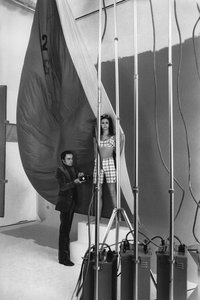
richard georg willi puhlmann
1934 - 1996 , Germany
Quick Facts
- Artistic Movement Or Style: Fashion photography
- Artists Or Movements Influenced By This Artist: ['Fashion Illustration']
- Artists Who Influenced This Artist:
- German Expressionism
- French Vogue
- American Harper's Bazaar
- Date Of Birth: June 25, 1934
- Date Of Death: July 17, 1996
- Full Name: Richard Georg Willi Puhlmann
- Nationality: German
- Notable Artworks:
- Autumn ensemble - exhibition graphic
- Shot of uli richter men’s fashion for the magazine Constanze Mode
- Ensemble with kimono-styled jacket - exhibition graphic
- Place Of Birth: Berlin, Germany
Related Articles

Monochrome Visions: Exploring the Aesthetic & Historical Significance of Black & White Photography
Explore the rich history & artistic power of black and white photography. From early techniques to iconic masters like Ansel Adams, discover why monochrome continues to captivate art lovers today. Expert insights for collectors.

White on Canvas: 10 Masterpieces & Timeless Elegance for Your Home Decor
Explore 10 iconic white paintings by Monet, Whistler & Rothko! Discover the stories behind these serene masterpieces and their impact on art history. Find museum-quality reproductions for your home decor at .

Beyond the Lens: Photography's Enduring Influence on Modern & Contemporary Art
Explore photography's pivotal role in shaping modern & contemporary art. Discover key movements, influential artists like Stieglitz, and expert collecting advice from ArtsDot.

Dark Masterpieces: 10 Iconic Paintings Dominated by Black Tones |
Explore 10 iconic paintings dominated by black tones, from Rembrandt’s chiaroscuro to Goya's dark expressions. Discover the stories behind these masterpieces & find museum-quality art reproductions for your home at .

Pictorialism: A Search for Artistic Photography's Soul – Aesthetics, Techniques & Legacy
Explore the captivating world of Pictorialism – a pivotal movement that transformed photography into fine art. Discover key artists like Stieglitz & Käsebier, techniques, and collecting tips from experts.