

 Preview
 Send
Send Share
Share
 Details

 Download
 Similars
 X-Ray
X-Ray Diaporama
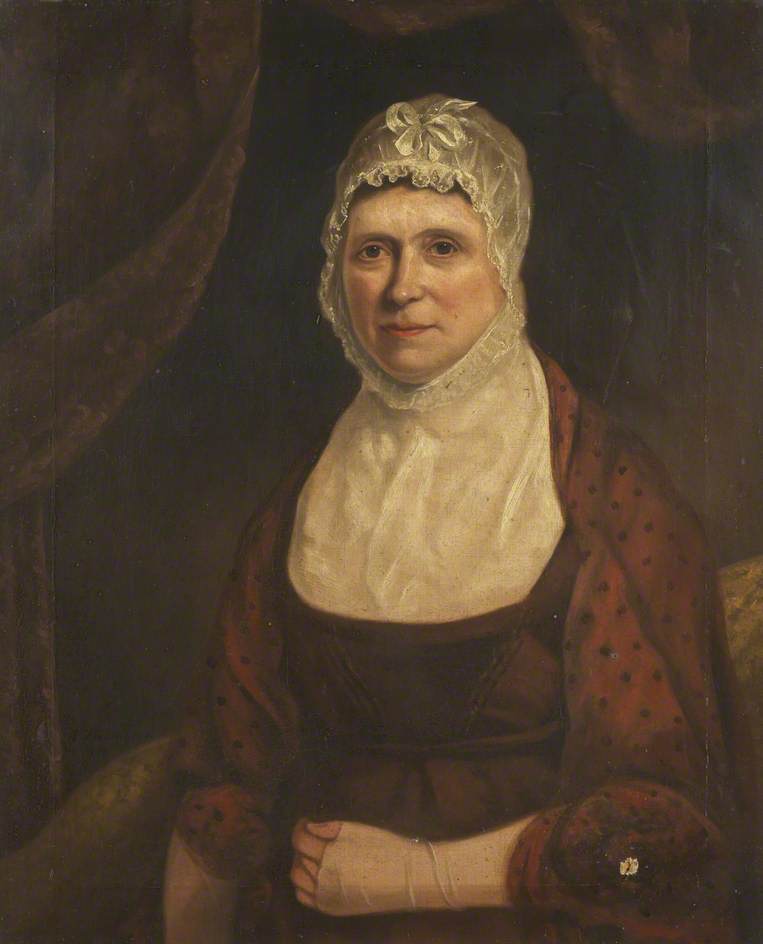
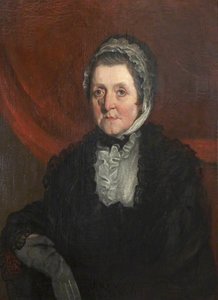
Mrs Fawcett
 Romanticism
 1811
1811 77.0 x 64.0 cm
 Abbot Hall Art Gallery
 Read More
Purchase a high-resolution, enhanced digital image, far superior to the online preview.
Each file is meticulously prepared by our in-house specialists using advanced tools and expert manual retouching. We ensure every image has exceptional clarity, precise color accuracy, and fine detail.
The final file is delivered via email within 72 hours, optimized for immediate use in professional, editorial, and print environments. This is the same quality trusted by top-tier design studios, publishers, and galleries.
Digital Image
Download a high-resolution file for personal display, printing, and creative projects. ( Buy Print Buy Hand Made Painting)
Included in Every Digital Image Order
Expert Digital Delivery, Guaranteed
When you choose ArtsDot.com, you're not just getting an image - you're receiving a professionally enhanced digital artwork, crafted with precision and backed by a satisfaction guarantee. Here's everything that comes with your order, automatically:

Fast Email Delivery
Your high-resolution digital image file will be emailed to you within 72 hours of ordering - ready for immediate use.

AI-Enhanced Digital File
Your artwork is professionally optimized using advanced AI tools and manual editing, ensuring maximum detail, clarity, and color accuracy.

Free Lifetime Re-Delivery
Accidentally deleted or lost your file? No worries - we'll resend it to you anytime, free of charge.

No Import Fees - Ever
Enjoy your artwork instantly with zero customs, duties, or delivery fees - digital downloads are always tax-free.

Color Accuracy Guarantee
We ensure your digital image reflects the original colors as closely as possible using professional tools and color management.

60-Day Satisfaction Guarantee
If you're not satisfied with your digital image, we'll revise it or refund 100% within 60 days - no questions asked.

100% Money-Back Guarantee
Not satisfied? Get a full refund within 60 days of receiving your digital file - no questions asked.

Bulk Order Discounts
Buy 3 images, save 10% - Buy 5, save 15% - Buy 10+, save 20%. Great for creative projects, galleries, and agencies.
Related Artworks


Artist Biography
A Fleeting Brilliance: The Life and Art of Richard Parkes Bonington
Richard Parkes Bonington, a name that resonates with a poignant sense of unrealized potential within the annals of Romantic painting, remains an artist whose brief career cast a long shadow across both British and French artistic landscapes. Born on October 25th, 1802, in Arnold, Nottinghamshire, England, his path to recognition was uniquely shaped by a blend of familial encouragement and geographical circumstance. His father, Richard Bonington senior, possessed a diverse skillset – gaoler, drawing master, and lace-maker – providing an unconventional yet stimulating upbringing for his son. It was from him that young Richard received his earliest instruction in watercolor painting, a talent quickly recognized and nurtured. Even as a boy of eleven, he exhibited work at the Liverpool Academy, signaling the emergence of a remarkable artistic sensibility.
This early promise propelled him towards a destiny increasingly intertwined with the vibrant art world of France. In 1817, the Bonington family relocated to Calais seeking opportunity in the lace trade, but for Richard, this move proved transformative on an entirely different level. He came under the tutelage of François Louis Thomas Francia, a watercolorist deeply influenced by English masters like Thomas Girtin. Francia instilled in Bonington a profound appreciation for light and atmosphere – qualities that would become hallmarks of his distinctive style. The family subsequently moved to Paris in 1818, immersing Richard in the heart of French artistic life. Here, he forged a crucial friendship with Eugène Delacroix, a relationship that proved profoundly influential. He enrolled at the École des Beaux-Arts under Baron Antoine-Jean Gros, further honing his skills and absorbing the prevailing artistic currents.
The Synthesis of Styles: English Sensibility & French Technique
Bonington’s early work beautifully reflects this synthesis of English watercolor traditions and French academic training. He didn't simply adopt techniques; he *absorbed* them, creating a style characterized by luminous landscapes and a delicate touch. His mastery of light was particularly striking, reminiscent of Girtin but infused with a distinctly Romantic sensibility. He excelled at capturing the fleeting effects of weather and the subtle nuances of nature, imbuing his scenes with an emotional resonance that went beyond mere representation. This ability to evoke feeling, rather than simply record observation, set him apart from many of his contemporaries.
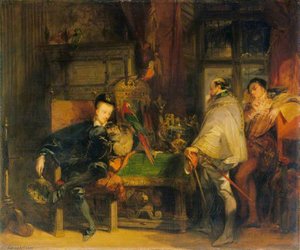
His landscapes often depicted coastal views or the serene beauty of Normandy, imbued with a sense of atmospheric perspective and masterful handling of light. Works like “Scene in Normandy” (1823) showcase this ability to capture the ephemeral qualities of nature. He didn’t merely depict what he saw; he evoked a feeling, an emotional response to the landscape. Simultaneously, Bonington ventured into historical painting, creating dramatic compositions such as "Charles V. visits François Ier after the Battle of Pavia" (c. 1827). These works reveal his fascination with narrative and his ability to translate historical events onto canvas with vibrant color and dynamic energy.
A Rising Star: Recognition & Innovation
Bonington’s success was swift and undeniable. In 1824, he shared a gold medal at the Paris Salon alongside John Constable and Anthony Vandyke Copley Fielding – a testament to his burgeoning reputation. This recognition wasn't merely for technical skill; it acknowledged an innovative approach to color and composition that resonated with audiences and critics alike. He was lauded for his ability to blend English Romantic sensibilities with French academic rigor, creating something entirely new.
His work also extended into lithography, illustrating Baron Taylor’s *Voyages pittoresques dans l'ancienne France* and his own architectural series *Restes et Fragmens*. This demonstrated a versatility that further solidified his position as a rising star in the art world. He was not confined to one medium or subject matter; he embraced experimentation and pushed the boundaries of artistic expression.
A Legacy Cut Short: Influence & Enduring Appeal
Tragically, Richard Parkes Bonington succumbed to tuberculosis on September 23rd, 1828, bringing an abrupt end to a career brimming with potential. Despite his short life, his influence on the development of both British and French Romanticism was considerable. Delacroix himself paid tribute to Bonington’s talent, praising his “lightness of touch” and recognizing his innovative approach to color and composition. His work inspired a generation of artists, bridging the gap between English landscape traditions and the burgeoning Romantic movement in France.
Today, his paintings are held in prestigious collections worldwide, including the Louvre and the Wallace Collection, which houses an impressive group of thirty-five works. In his hometown of Arnold, a theatre and primary school bear his name, while a statue at Nottingham School of Art serves as a lasting memorial to this exceptional artist. Bonington’s legacy endures not only through his captivating paintings but also as a symbol of artistic brilliance extinguished too soon, leaving an indelible mark on the history of art.
Key Works & Lasting Recognition
- Rouen, Normandy (c. 1823): A quintessential example of Bonington’s atmospheric landscapes, capturing the essence of the Norman countryside.
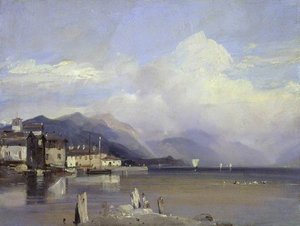
- View of the Lagoon near Venice (1827): Demonstrates his ability to depict light and water with remarkable sensitivity, showcasing a Venetian scene filled with romantic allure.
- Charles V. visits François Ier after the Battle of Pavia (c. 1827): A dynamic historical painting that exemplifies his skill in narrative composition and vibrant color palette.
- Gold Medal at the Paris Salon (1824): Shared with esteemed artists like John Constable, marking a significant milestone in his career.
- Delacroix’s Tribute: Eugène Delacroix's posthumous praise of Bonington’s “lightness of touch” solidified his reputation as an innovative and influential artist.
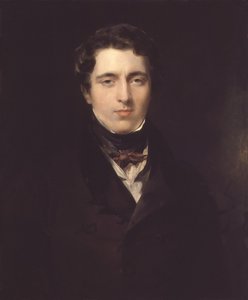
Richard Parkes Bonington
1802 - 1828 , United Kingdom
Quick Facts
- Artistic Movement Or Style: Romanticism
- Artists Or Movements Influenced By This Artist:
- Delacroix
- British Romanticism
- Artists Who Influenced This Artist:
- Thomas Girtin
- Eugène Delacroix
- Date Of Birth: October 25, 1802
- Date Of Death: September 23, 1828
- Full Name: Richard Parkes Bonington
- Nationality: British
- Notable Artworks:
- Scene in Normandy
- Venice Lagoon View
- Charles V visits Francis I
- Place Of Birth: Arnold, UK

