 Preview
 Send
Send Share
Share
 Details

 Download
 Similars
 X-Ray
X-Ray Diaporama
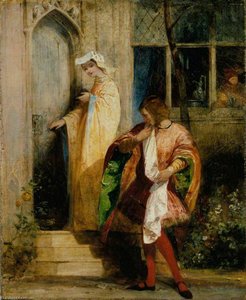
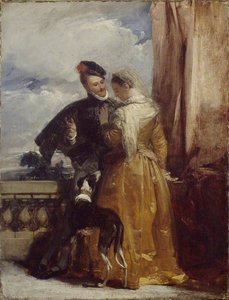
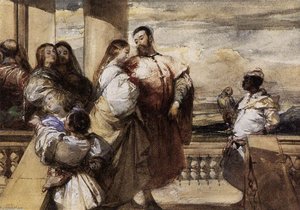
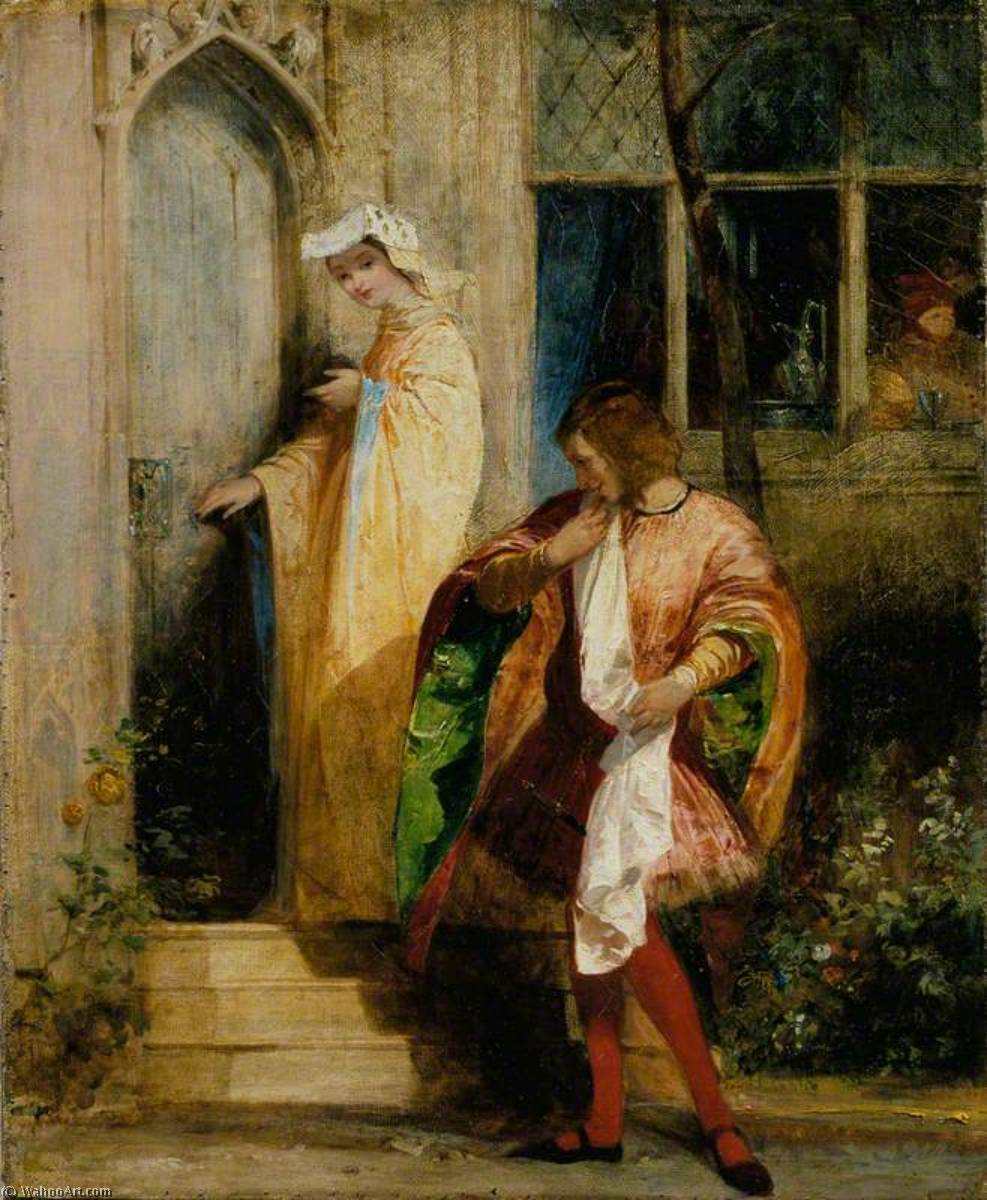
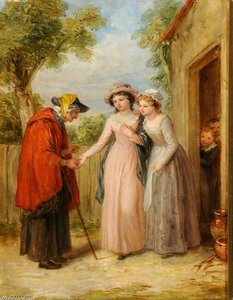
Anne Page and Slender
 Acrylic On Canvas
- WallArt
- Romanticism
 1825
1825 46.0 x 38.0 cm
 The Wallace Collection
 Read More
Hand Made Oil Reproduction
Hand-painted oil on canvas in your size and frame, made to order by our artists. ( Buy Print Buy Image)




P118B $10

P118H $10

P118W $10

P438Z $10

P508JH $12

P508YH $12

P805H $10

P805Z $10

P919BZ $10

P919G $10

P919XJ $10

P959ZH $10

P968JZ $12

W106C $8

W218G $10

W218JH $8

W218Y $10

W307PJ $10

W316G $10

W316PJ $8

W316Y $10

W398PJ $8

W4111J $10

W500HY $15

W500JH $15

W692G $12

W849H $8

W940BG $15

W953PJ $8




Pick from our preset sizes that match the artwork's original proportions.

You may enter your own dimensions to fit a specific frame or space. If your selected size does not match the original image's proportions, we will either crop the artwork or extend the painting with additional hand-painted elements. A digital mockup will be sent for your approval before production begins.
Please note that the on-screen preview does not reflect the actual cropping or extension. Only the mockup will accurately show the final composition.
While custom sizes are available, we recommend selecting a dimension from the predefined list to preserve the original proportions.
After order, ArtsDot.com team will email client for instructions and provide a mockup preview
Worldwide Delivery () in 3/4 weeks instead of standard 5 weeks. (17 August). No compromise on quality.

Free Worldwide Express Shipping

High-Quality Linen Canvas

Full Shipping Insurance

Customs Tax Refund Guarantee

True Color Matching Guarantee

60-Day Return Policy (Defects Only)

100% Money-Back Guarantee

Bulk Discount Offer
 Glass option is only available in size under 110 CM

Anne Page and Slender
Reproduction Medium
Reproduction Size
-


Total Price
$ 263
Artwork Description
A Moment Frozen in Time: Richard Parkes Bonington’s “Anne Page and Slender”
Richard Parkes Bonington's "Anne Page and Slender," painted around 1825, isn’t merely a portrait; it’s a carefully constructed tableau of domestic intimacy imbued with an undercurrent of subtle tension. The painting depicts two figures – Anne Page and her unnamed companion – engaged in conversation within the shadowed doorway of what appears to be a modest home. Bonington, a pivotal figure bridging the styles of English Romanticism and burgeoning French plein air painting, masterfully captures a fleeting moment, imbuing it with an atmosphere both inviting and slightly unsettling.
Bonington’s technique is immediately striking. He eschews the stark realism favored by earlier portraitists, opting instead for a luminous, almost atmospheric approach. The palette is dominated by muted earth tones – ochres, browns, and greys – creating a sense of subdued light and shadow. This isn't a brightly lit studio scene; rather, it’s rendered as if viewed through the diffused glow of late afternoon. Notice how he employs loose brushstrokes, particularly in the rendering of fabric and drapery, lending a sense of movement and immediacy to the figures. The subtle variations in tone – the darker shadows emphasizing the depth of the doorway, the brighter highlights catching the sheen on Anne’s dress – contribute significantly to the painting's overall realism and its captivating quality.
The Shakespearean Echo and Domestic Life
“Anne Page and Slender” is directly inspired by a scene from William Shakespeare’s *Merry Wives of Windsor*, specifically Act 1, Scene 1. The painting depicts Anne Page, the wife of the witty lawyer Sir John Falstaff, engaged in a clandestine meeting with her lover, Slender. Bonington cleverly avoids literal representation, instead focusing on capturing the essence of their conversation – the shared glance, the subtle gestures that hint at unspoken desires and carefully constructed deception. This choice allows the viewer to project their own interpretations onto the scene, fostering a deeper engagement with the artwork.
However, the painting transcends its literary source. It’s not simply a depiction of a romantic rendezvous; it's a portrait of domestic life – a snapshot of everyday interactions within a private space. The doorway itself acts as a symbolic threshold, suggesting both entrance and exit, concealment and revelation. The potted plant in the foreground adds an element of rustic charm, grounding the scene in a tangible reality while simultaneously hinting at the complexities of human relationships.
Symbolism and Emotional Resonance
Beyond its narrative content, “Anne Page and Slender” is rich in symbolic detail. Anne’s posture – her hand resting lightly on the companion's arm – suggests a delicate balance between affection and restraint. The companion’s averted gaze speaks to a carefully guarded secret, while his slightly hesitant stance reveals a vulnerability beneath his outward composure. Bonington masterfully uses these subtle cues to evoke a sense of emotional ambiguity.
The painting’s overall mood is one of quiet contemplation – a moment suspended in time. It invites the viewer to consider not just what is depicted, but also what lies beneath the surface. The subdued lighting and muted colors contribute to this atmosphere of mystery, while the figures' expressions convey a complex interplay of desire, deception, and perhaps even regret. It’s a testament to Bonington’s skill that he can create such a powerful emotional impact with such understated means.
A Legacy of Light and Shadow
Richard Parkes Bonington’s “Anne Page and Slender” stands as a remarkable example of Romantic portraiture. It demonstrates his ability to seamlessly blend English and French artistic influences, creating a style that is both technically sophisticated and emotionally resonant. His innovative use of light and shadow, coupled with his keen observation of human behavior, cemented his place as one of the most important artists of his generation. Reproductions of this captivating work continue to resonate with viewers today, offering a glimpse into a world of hidden desires and carefully constructed illusions – a timeless exploration of the complexities of human connection.
Related Artworks
![The Saint Anne Altarpiece: Saint Anne With The Virgin And Child [middle Panel] — Gerard David, Northern Renaissance](/media/artworks/images/thumbnails/e2/1c/e21ca3303d454e04bcb9bea47ca89561.jpg)
Artist Biography
A Fleeting Brilliance: The Life and Art of Richard Parkes Bonington
Richard Parkes Bonington, a name that resonates with a poignant sense of unrealized potential within the annals of Romantic painting, remains an artist whose brief career cast a long shadow across both British and French artistic landscapes. Born on October 25th, 1802, in Arnold, Nottinghamshire, England, his path to recognition was uniquely shaped by a blend of familial encouragement and geographical circumstance. His father, Richard Bonington senior, possessed a diverse skillset – gaoler, drawing master, and lace-maker – providing an unconventional yet stimulating upbringing for his son. It was from him that young Richard received his earliest instruction in watercolor painting, a talent quickly recognized and nurtured. Even as a boy of eleven, he exhibited work at the Liverpool Academy, signaling the emergence of a remarkable artistic sensibility.
This early promise propelled him towards a destiny increasingly intertwined with the vibrant art world of France. In 1817, the Bonington family relocated to Calais seeking opportunity in the lace trade, but for Richard, this move proved transformative on an entirely different level. He came under the tutelage of François Louis Thomas Francia, a watercolorist deeply influenced by English masters like Thomas Girtin. Francia instilled in Bonington a profound appreciation for light and atmosphere – qualities that would become hallmarks of his distinctive style. The family subsequently moved to Paris in 1818, immersing Richard in the heart of French artistic life. Here, he forged a crucial friendship with Eugène Delacroix, a relationship that proved profoundly influential. He enrolled at the École des Beaux-Arts under Baron Antoine-Jean Gros, further honing his skills and absorbing the prevailing artistic currents.
The Synthesis of Styles: English Sensibility & French Technique
Bonington’s early work beautifully reflects this synthesis of English watercolor traditions and French academic training. He didn't simply adopt techniques; he *absorbed* them, creating a style characterized by luminous landscapes and a delicate touch. His mastery of light was particularly striking, reminiscent of Girtin but infused with a distinctly Romantic sensibility. He excelled at capturing the fleeting effects of weather and the subtle nuances of nature, imbuing his scenes with an emotional resonance that went beyond mere representation. This ability to evoke feeling, rather than simply record observation, set him apart from many of his contemporaries.
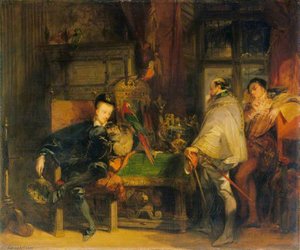
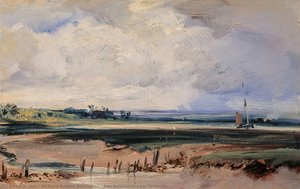
His landscapes often depicted coastal views or the serene beauty of Normandy, imbued with a sense of atmospheric perspective and masterful handling of light. Works like “Scene in Normandy” (1823) showcase this ability to capture the ephemeral qualities of nature. He didn’t merely depict what he saw; he evoked a feeling, an emotional response to the landscape. Simultaneously, Bonington ventured into historical painting, creating dramatic compositions such as "Charles V. visits François Ier after the Battle of Pavia" (c. 1827). These works reveal his fascination with narrative and his ability to translate historical events onto canvas with vibrant color and dynamic energy.
A Rising Star: Recognition & Innovation
Bonington’s success was swift and undeniable. In 1824, he shared a gold medal at the Paris Salon alongside John Constable and Anthony Vandyke Copley Fielding – a testament to his burgeoning reputation. This recognition wasn't merely for technical skill; it acknowledged an innovative approach to color and composition that resonated with audiences and critics alike. He was lauded for his ability to blend English Romantic sensibilities with French academic rigor, creating something entirely new.
His work also extended into lithography, illustrating Baron Taylor’s *Voyages pittoresques dans l'ancienne France* and his own architectural series *Restes et Fragmens*. This demonstrated a versatility that further solidified his position as a rising star in the art world. He was not confined to one medium or subject matter; he embraced experimentation and pushed the boundaries of artistic expression.
A Legacy Cut Short: Influence & Enduring Appeal
Tragically, Richard Parkes Bonington succumbed to tuberculosis on September 23rd, 1828, bringing an abrupt end to a career brimming with potential. Despite his short life, his influence on the development of both British and French Romanticism was considerable. Delacroix himself paid tribute to Bonington’s talent, praising his “lightness of touch” and recognizing his innovative approach to color and composition. His work inspired a generation of artists, bridging the gap between English landscape traditions and the burgeoning Romantic movement in France.
Today, his paintings are held in prestigious collections worldwide, including the Louvre and the Wallace Collection, which houses an impressive group of thirty-five works. In his hometown of Arnold, a theatre and primary school bear his name, while a statue at Nottingham School of Art serves as a lasting memorial to this exceptional artist. Bonington’s legacy endures not only through his captivating paintings but also as a symbol of artistic brilliance extinguished too soon, leaving an indelible mark on the history of art.
Key Works & Lasting Recognition
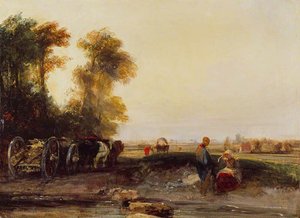
- Rouen, Normandy (c. 1823): A quintessential example of Bonington’s atmospheric landscapes, capturing the essence of the Norman countryside.
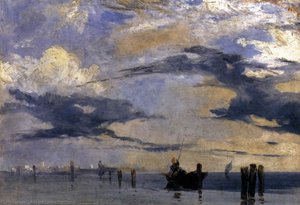
- View of the Lagoon near Venice (1827): Demonstrates his ability to depict light and water with remarkable sensitivity, showcasing a Venetian scene filled with romantic allure.
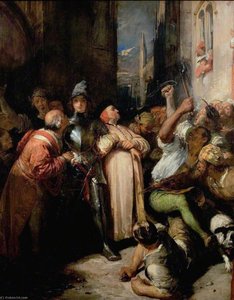
- Charles V. visits François Ier after the Battle of Pavia (c. 1827): A dynamic historical painting that exemplifies his skill in narrative composition and vibrant color palette.
- Gold Medal at the Paris Salon (1824): Shared with esteemed artists like John Constable, marking a significant milestone in his career.
- Delacroix’s Tribute: Eugène Delacroix's posthumous praise of Bonington’s “lightness of touch” solidified his reputation as an innovative and influential artist.
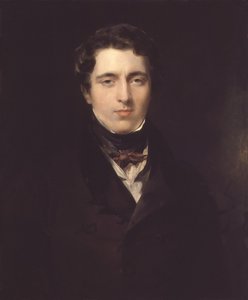
Richard Parkes Bonington
1802 - 1828 , United Kingdom
Quick Facts
- Artistic Movement Or Style: Romanticism
- Artists Or Movements Influenced By This Artist:
- Delacroix
- British Romanticism
- Artists Who Influenced This Artist:
- Thomas Girtin
- Eugène Delacroix
- Date Of Birth: October 25, 1802
- Date Of Death: September 23, 1828
- Full Name: Richard Parkes Bonington
- Nationality: British
- Notable Artworks:
- Scene in Normandy
- Venice Lagoon View
- Charles V visits Francis I
- Place Of Birth: Arnold, UK
Related Articles

The Enduring Legacy of Oil on Canvas: Technique, History & Aesthetic Impact
Explore the rich history & techniques of oil painting – from Renaissance masters to Impressionism. Discover pigments, layering methods, and why this timeless medium endures. Expert insights for artists & art enthusiasts.

Oil on Canvas: A Historical & Technical Exploration of a Timeless Artistic Medium
Explore the rich history & enduring techniques of oil painting on canvas. Discover the science behind its longevity, conservation practices, and contemporary relevance. Expert insights for art enthusiasts.

The Enduring Power of Painting: A Historical & Contemporary Exploration of Form and Emotion
Explore the rich history & enduring techniques of oil painting with ArtsDot. Discover masterpieces, learn about art collecting, and find authentic handmade reproductions crafted by skilled artists.

The Enduring Legacy of Oil on Canvas: Technique, History & Contemporary Practice
Explore the rich history & enduring techniques of oil painting on canvas. Discover the science behind its longevity, conservation practices, and contemporary relevance. Expert insights for art enthusiasts.
The Enduring Legacy of Likeness: Commissioning Oil Portraits as Vessels of Memory and Emotional Connection
Commission a timeless oil portrait with ArtsDot.com! Expert artists capture your legacy & emotions in museum-quality paintings. Preserve family history – explore our bespoke services today.