 Preview
 Send
Send Share
Share
 Details

 Download
 Similars
 X-Ray
X-Ray Diaporama
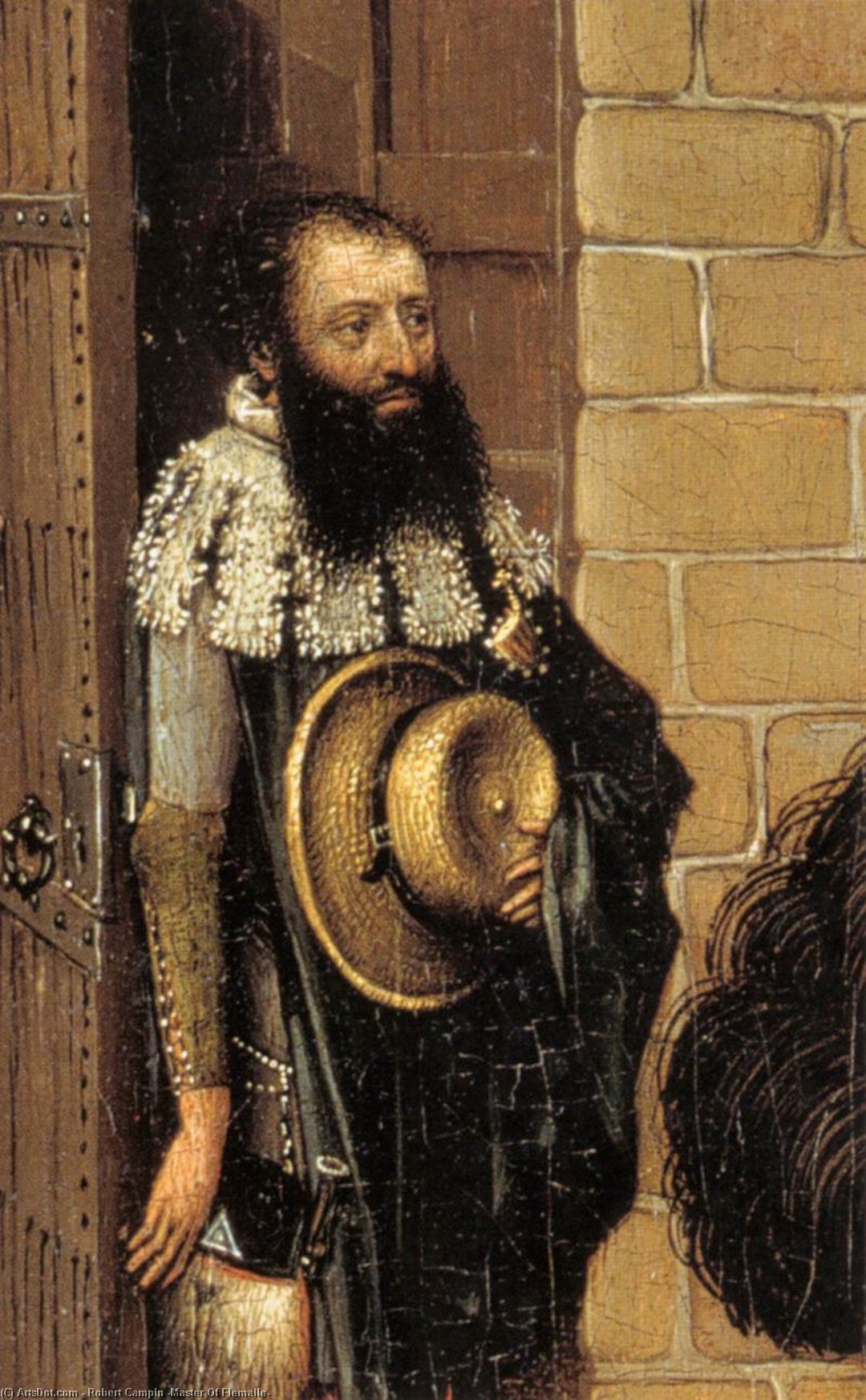
Mérode Altarpiece (detail) (8)


 Read More
Giclée / Art Print
Museum-quality giclée or canvas print with fast production and flexible finish options. ( Buy Hand Made Painting Buy Image)




P118B $10

P118H $10

P118W $10

P438Z $10

P508JH $12

P508YH $12

P805H $10

P805Z $10

P919BZ $10

P919G $10

P919XJ $10

P959ZH $10

P968JZ $12

W106C $8

W218G $10

W218JH $8

W218Y $10

W307PJ $10

W316G $10

W316PJ $8

W316Y $10

W398PJ $8

W4111J $10

W500HY $15

W500JH $15

W692G $12

W849H $8

W940BG $15

W953PJ $8




Pick from our preset sizes that match the artwork's original proportions.

You may enter your own dimensions to fit a specific frame or space. If your selected size does not match the original image's proportions, we will either crop the artwork or extend the image with a mirrored or solid-fill edge. A digital mockup will be sent for your approval before production begins.
Please note that the on-screen preview does not reflect the actual cropping or extension. Only the mockup will accurately show the final composition.
While custom sizes are available, we recommend selecting a dimension from the predefined list to preserve the original proportions.
Worldwide Delivery () in 2 weeks instead of standard 4/5 weeks. (16 August)

Free Worldwide Express Shipping

High-Quality Linen Canvas

Full Shipping Insurance

Customs Tax Refund Guarantee

True Color Matching Guarantee

60-Day Return Policy (Defects Only)

100% Money-Back Guarantee

Bulk Discount Offer
 Glass option is only available in size under 110 CM

Mérode Altarpiece (detail) (8)
Giclée / Art Print
Reproduction Size
-


Total Price
$ 63
Collectible Description
A Glimpse into Burgundian Life: The Mérode Altarpiece Detail
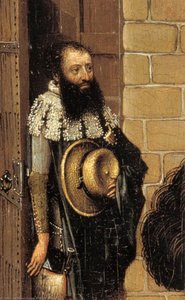
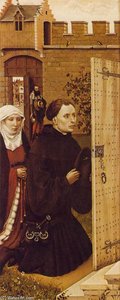
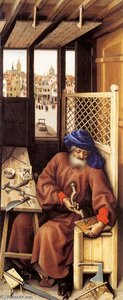
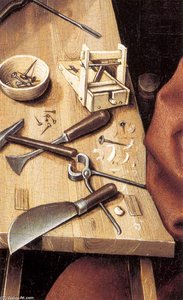
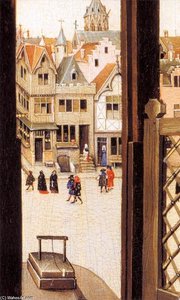
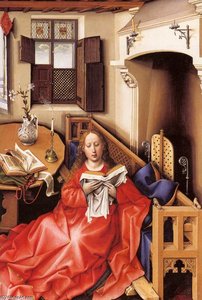
To stand before a detail from Robert Campin's Mérode Altarpiece is not merely to observe paint on wood; it is to step directly into the meticulously rendered, richly textured world of early Netherlandish life. This segment captures a moment of quiet contemplation amidst apparent domesticity, yet every fold of fabric and gleam of metal whispers tales of status, piety, and the burgeoning mercantile wealth of the 15th century. The scene, executed with the characteristic precision that defined Northern Renaissance art, invites the viewer to become an intimate observer in a private chamber.
Mastery of Materiality: Technique and Detail
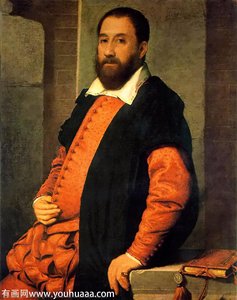
Campin’s genius shines through in his unparalleled ability to render texture. Observe the man's attire: the sumptuous weight suggested by the fur trimmings, the delicate lacework around the collar—these are not just garments; they are studies in material science translated into pigment. The background itself contributes to this illusionistic depth. The brick wall and wooden door are rendered with such painstaking accuracy that one almost hears the faint creak of the wood or smells the cool mortar. This commitment to verisimilitude, a hallmark of Campin’s technique, elevates the portrait from mere depiction to immersive reality.
The Symbolism of Status and Piety
The figure himself is a fascinating study in social standing. His full beard and mustache speak of maturity and established means, while the purse held casually in one hand serves as a tangible marker of his worldly success—he is clearly a man of considerable means. Yet, this material wealth is juxtaposed with the object he holds: a hat adorned with a feather. In Renaissance iconography, such items were potent symbols; they spoke not only of fashion but also of rank and perhaps even spiritual readiness. The entire composition balances the earthly trappings of commerce against the underlying currents of religious devotion that permeated daily life.
Echoes for the Modern Collector
For those who appreciate art that speaks to both history and enduring elegance, this detail offers profound resonance. It is a piece that grounds grand narratives in human experience—the quiet moment before action, the weight of expectation carried by a single gesture. Owning a high-quality reproduction allows one to bring this sophisticated blend of portraiture, architectural study, and symbolic narrative into a contemporary space. It serves not just as decoration, but as a thoughtful conversation piece, inviting admiration for the sheer technical brilliance of Robert Campin.
Related Artworks
Artist Biography
The Dawn of Netherlandish Realism: The Legacy of Robert Campin
In the misty, burgeoning landscape of the fifteenth-century Low Countries, a transformative vision began to take shape, forever altering the trajectory of Western art. At the heart of this revolution stood Robert Campin, an artist whose name is now inextricably linked with the Master of Flémalle. Born around 1375 in Valenciennes, France, Campin emerged from a period of transition, bridging the gap between the stylized elegance of the International Gothic and the profound, tactile realism that would define the Northern Renaissance. While much of his early life remains veiled by the shadows of history, his presence in Tournai for over three decades established him as a titan of the Flemish tradition, a master whose brushwork breathed life into the divine through the lens of the everyday.
The evolution of Campin’s artistry was not merely a personal journey but a technical conquest. He was among the earliest and most daring pioneers to embrace the medium of oil painting, moving away from the flatter, more opaque qualities of tempera. This mastery of oil allowed him to achieve an unprecedented luminosity, capturing the way light dances across polished brass, settles into the heavy folds of velvet, or glimmers upon a single drop of water. Through this innovation, Campin did not just paint subjects; he sculpted them with light and shadow, creating a sense of weight and presence that felt startlingly immediate to his contemporary viewers.
Symbolism Within the Domestic Sphere
What truly distinguishes the work of Robert Campin is his ability to weave the sacred into the seemingly mundane. To look upon a masterpiece like the Mérode Altarpiece is to enter a world where every object carries a whispered prayer. In his hands, a domestic interior—a quiet room filled with the familiar clutter of middle-class life—becomes a stage for profound theological truths. This technique, often referred to as disguised symbolism, invites the viewer to look closer, finding the miraculous hidden within the ordinary.
In these sacred narratives, nothing is accidental:
- The Annunciation: Within a contemporary Flemish parlor, the arrival of the Angel Gabriel is marked by subtle cues, where light streaming through a window serves as a metaphor for divine grace.
- Everyday Objects: A simple basin of water or a clean towel represents purity, while the flickering candle or the humble flora in a vase speaks to the omnipresence of the Holy Spirit.
- Texture and Detail: The meticulous rendering of wooden furniture, heavy drapery, and ceramic vessels grounds the spiritual event in a tangible, human reality that resonates with emotional depth.
A Lasting Influence on the Northern Renaissance
The historical significance of Robert Campin cannot be overstated. Alongside contemporaries like Jan van Eyck, he laid the foundational stones for the development of Early Netherlandish painting. While Van Eyck is often celebrated for his ethereal perfection, Campin provided a more robust, grounded realism—a style that emphasized the physical presence and psychological weight of his figures. His influence rippled through the workshops of Tournai and beyond, shaping the next generation of painters, including Jacques Daret, who carried forward the traditions of Flemish precision.
Though some of his works were once attributed to the anonymous "Master of Flémalle," modern scholarship has largely unified these identities, recognizing the singular, powerful voice behind the panels. His ability to marry the spiritual with the material created a visual language that would dominate Northern Europe for decades. Today, when we gaze upon his surviving altarpieces and devotional panels, we are not merely looking at relics of the past; we are witnessing the very moment when art learned to see the world with new, unblinking eyes, finding the eternal within the ephemeral beauty of human existence.
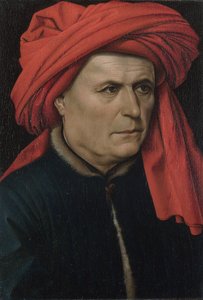
robert campin (master of flemalle)
1375 - 1444 , France
Quick Facts
- Artistic Movement Or Style: Early Netherlandish Painting
- Artists Who Influenced This Artist: ['Jan van Eyck']
- Date Of Birth: ca. 1375 Valenciennes
- Date Of Death: 1444 Tournai
- Full Name: Robert Campin
- Nationality: Flemish
- Notable Artworks:
- Mérode Altarpiece
- Portrait of a Man
- Place Of Birth: Tournai, Belgium
Related Articles
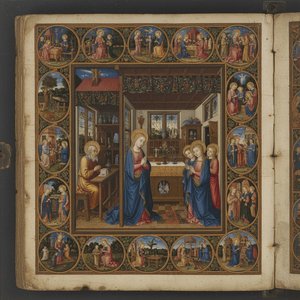
Robert Campin: Pioneering Realism & Spiritual Depth in Early Netherlandish Painting
Explore the revolutionary work of Robert Campin, a pioneer of Early Netherlandish painting. Discover his naturalistic style, religious symbolism in masterpieces like the Mérode Altarpiece, and lasting influence on art history.

Early Netherlandish Masters: 10 Paintings That Revolutionized Art & Decor
Journey into the world of Early Netherlandish painting! Explore 10 masterpieces by Jan van Eyck, Rogier van der Weyden & more. Discover stunning detail, symbolism & Renaissance art for your home decor. Find museum-quality reproductions on ArtsDot.com
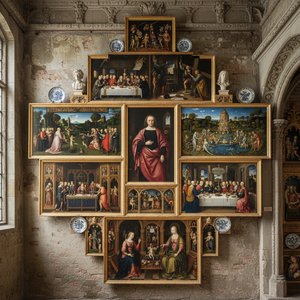
Early Netherlandish Masters: 10 Paintings That Revolutionized Art & Decor
Journey into the Early Netherlandish Renaissance! Explore 10 iconic paintings by Jan van Eyck, Rogier van der Weyden & more. Discover stunning detail, symbolism, and oil painting techniques. Find museum-quality art reproductions for your home at ArtsDot.com.
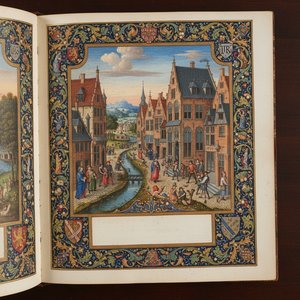
Illuminating Realism: Early Netherlandish Painting (15th-16th Centuries)
Explore the captivating world of Early Netherlandish painting! Discover Jan van Eyck, Hans Memling & more. Uncover symbolism, techniques & the legacy of these Flemish masters. A comprehensive guide for art enthusiasts.
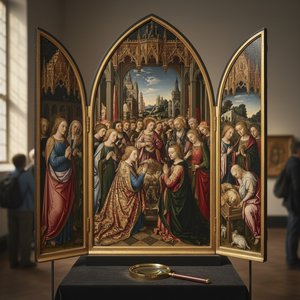
Illuminating Realism: A Comprehensive Exploration of the Early Netherlandish Renaissance Movement
Explore the captivating world of Early Netherlandish painting! Discover Jan van Eyck & other Flemish masters, their revolutionary techniques, hidden symbolism, and lasting legacy. A comprehensive guide for art enthusiasts.