 Preview
 Send
Send Share
Share
 Details

 Download
 Similars
 X-Ray
X-Ray Diaporama
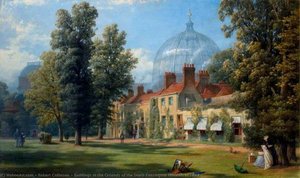
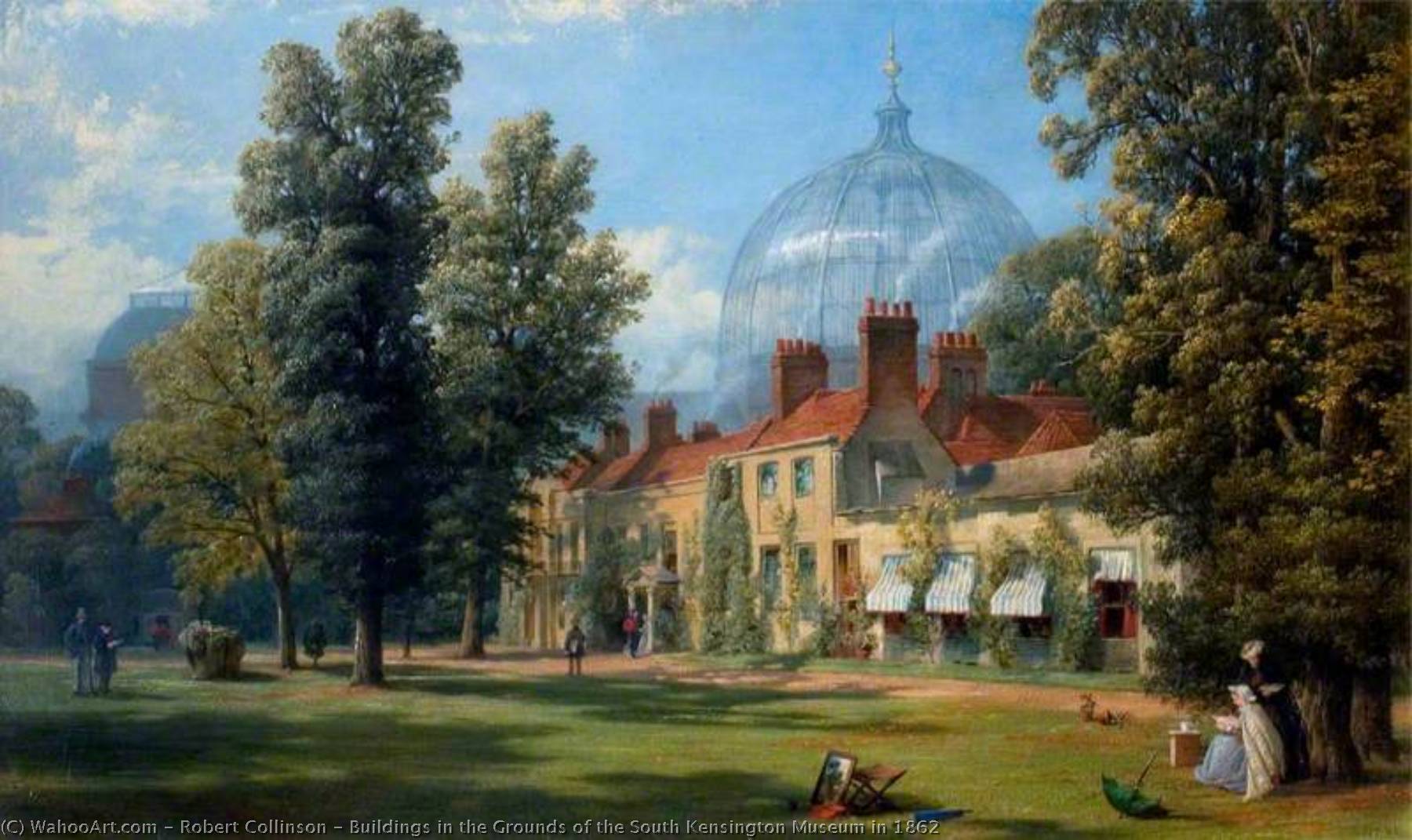
Buildings in the Grounds of the South Kensington Museum in 1862
 Romantic Landscape Painting
 1862
1862 36.0 x 59.0 cm
 Read More
Hand Made Oil Reproduction
Hand-painted oil on canvas in your size and frame, made to order by our artists. ( Buy Print Buy Image)




































Pick from our preset sizes that match the artwork's original proportions.

You may enter your own dimensions to fit a specific frame or space. If your selected size does not match the original image's proportions, we will either crop the artwork or extend the painting with additional hand-painted elements. A digital mockup will be sent for your approval before production begins.
Please note that the on-screen preview does not reflect the actual cropping or extension. Only the mockup will accurately show the final composition.
While custom sizes are available, we recommend selecting a dimension from the predefined list to preserve the original proportions.
After order, ArtsDot.com team will email client for instructions and provide a mockup preview
Worldwide Delivery () in 3/4 weeks instead of standard 5 weeks. (29 August). No compromise on quality.

Free Worldwide Express Shipping

High-Quality Linen Canvas

Full Shipping Insurance

Customs Tax Refund Guarantee

True Color Matching Guarantee

60-Day Return Policy (Defects Only)

100% Money-Back Guarantee

Bulk Discount Offer
 Glass option is only available in size under 110 CM

Buildings in the Grounds of the South Kensington Museum in 1862
Reproduction Medium
Reproduction Size
-


Total Price
$ 313
Related Artworks
Artist Biography
The Visionary Brush of Robert Collinson
In the heart of the Victorian era, a period defined by both industrial upheaval and a profound romanticism toward the natural world, Robert Collinson emerged as a master of atmospheric storytelling. His work serves as a window into a bygone Britain, capturing not merely the topography of the landscape but the very soul of the countryside and the heavy weight of historical moment. While his name may not resonate with the same immediate fame as some of his contemporaries, his ability to weave meticulous detail with deep emotional resonance marks him as a pivotal figure in British art history. His journey was one of disciplined academic rigor met with an expansive, imaginative spirit that allowed him to transcend the boundaries of simple representation.
The foundations of Collinson’s artistry were laid through a rigorous education that balanced technical precision with the study of great masters. Trained at the Slade School of Fine Art in London, he mastered the complex conventions of academic oil painting, yet he was never a prisoner to them. His early influences were diverse and profound; he drew inspiration from the intricate printmaking techniques of Albert Dürer and the raw, unvarnished realism of Gustave Courbet. This unique blend of influences allowed him to develop a style that could pivot seamlessly between the delicate, luminous textures of a tranquil garden and the dramatic, heavy-handed gravity of a military farewell. Under the guidance of the celebrated watercolorist William Collins, Collinson also learned the vital importance of tonal harmony and atmospheric perspective, techniques that would later define his ability to evoke weather, light, and time within a single canvas.
A Mastery of Landscape and Human Emotion
Collinson’s oeuvre is perhaps most celebrated for its profound connection to the British landscape. He possessed an uncanny ability to capture the grandeur of the countryside, yet he avoided the trap of mere topographical documentation. Instead, his landscapes function as psychological spaces. In works such as “Buildings in the Grounds of the South Kensington Museum” (1862), one finds a breathtaking rendering of Victorian serenity. Through a masterful use of color gradation and textured brushwork, he invites the viewer into a world of quiet contemplation, where the light seems to linger on every leaf and stone, creating a sense of timelessness that feels almost sacred.
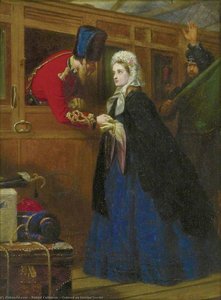
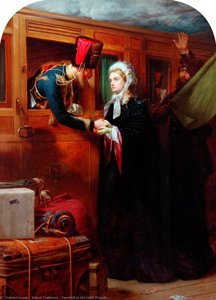
However, the artist’s range extended far beyond the pastoral. Collinson held a remarkable talent for capturing the human drama inherent in historical and military events. His monumental canvas, “Farewell to the Light Brigade” (1870), stands as a testament to his ability to handle large-scale compositions filled with poignant emotion and symbolic weight. In this work, he captures the heavy atmosphere of departure and duty, utilizing light and shadow to underscore the gravity of the moment. Similarly, in “Ordered on Foreign Service” (1863), he demonstrates a keen eye for the intimate details of human interaction—the subtle exchange between figures in uniform and civilian life, enriched by the inclusion of everyday objects that add layers of narrative complexity to the scene.
Legacy and Artistic Significance
The historical significance of Robert Collinson lies in his ability to bridge the gap between the rigid traditions of academic art and the burgeoning interest in realism and emotional expressionism. His work remains a vital record of the Victorian psyche, reflecting both the era's fascination with progress and its deep-seated nostalgia for the natural world. To study his paintings is to experience the textures of 19th-century life:
- Technical Precision: His unwavering commitment to detail and the mastery of oil on canvas created a sense of depth and tactile reality.
- Atmospheric Depth: His use of light and shadow transformed landscapes into emotive, living entities.
- Narrative Complexity: He successfully integrated historical weight with personal, intimate human moments.
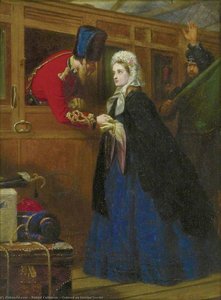
Quick Facts
- Artistic Movement Or Style: Romanticism
- Artists Or Movements Influenced By This Artist:
- Victorian Landscape Art
- Romantic Painting Style
- Artists Who Influenced This Artist:
- William Collinson
- John Ruskin
- Date Of Birth: 1860
- Date Of Death: 1923
- Full Name: Robert Collinson
- Nationality: British
- Notable Artworks:
- Farewell to the Light Brigade
- Ordered on Foreign Service
- Buildings in the Grounds of the South Kensington Museum
- Place Of Birth: London, England
Related Articles

Evocations of Place: A Historical Journey Through Landscape Art
Explore the rich history of landscape art with ArtsDot. Discover renowned artists, movements like Impressionism & Romanticism, and expert guidance for collecting timeless pieces. Find your perfect serene escape today!

Romantic Landscapes: 10 Masterpieces for Your Home | ArtsDot
Journey through 10 Romantic landscape masterpieces by Friedrich, Turner & Cole. Explore emotional art, sublime nature scenes & iconic 19th-century paintings. Find museum-quality reproductions for your home at ArtsDot.com – discover the full collection online!
Hubert Robert: Picturing Ruins, Preserving Memory – A Study of Romantic Antiquarianism & Artistic Innovation
Explore the captivating world of Hubert Robert, master of Romantic landscape painting & 'capriccio' ruins. Discover his historical context, artistic innovations, and collecting insights with ArtsDot.
Evocations of Place: A Historical Journey Through Landscape Art
Explore the rich history of landscape art with ArtsDot. Discover renowned artists, movements like Impressionism & tonalism, and expert guidance for collecting timeless pieces. Find your perfect serene escape today!

John Constable's Masterpieces: Explore 25 Iconic Landscapes for Your Home
Journey through John Constable's 25 most celebrated landscapes. Explore Romanticism, Dedham Vale & his masterful use of light in iconic paintings like 'Hay Wain'. Find museum-quality art reproductions and elevate your home decor on ArtsDot.com.