 Preview
 Send
Send Share
Share
 Details

 Download
 Similars
 X-Ray
X-Ray Diaporama
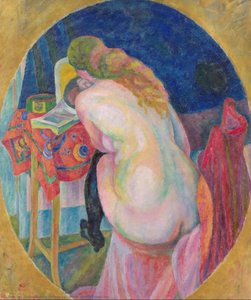
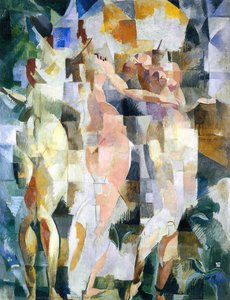
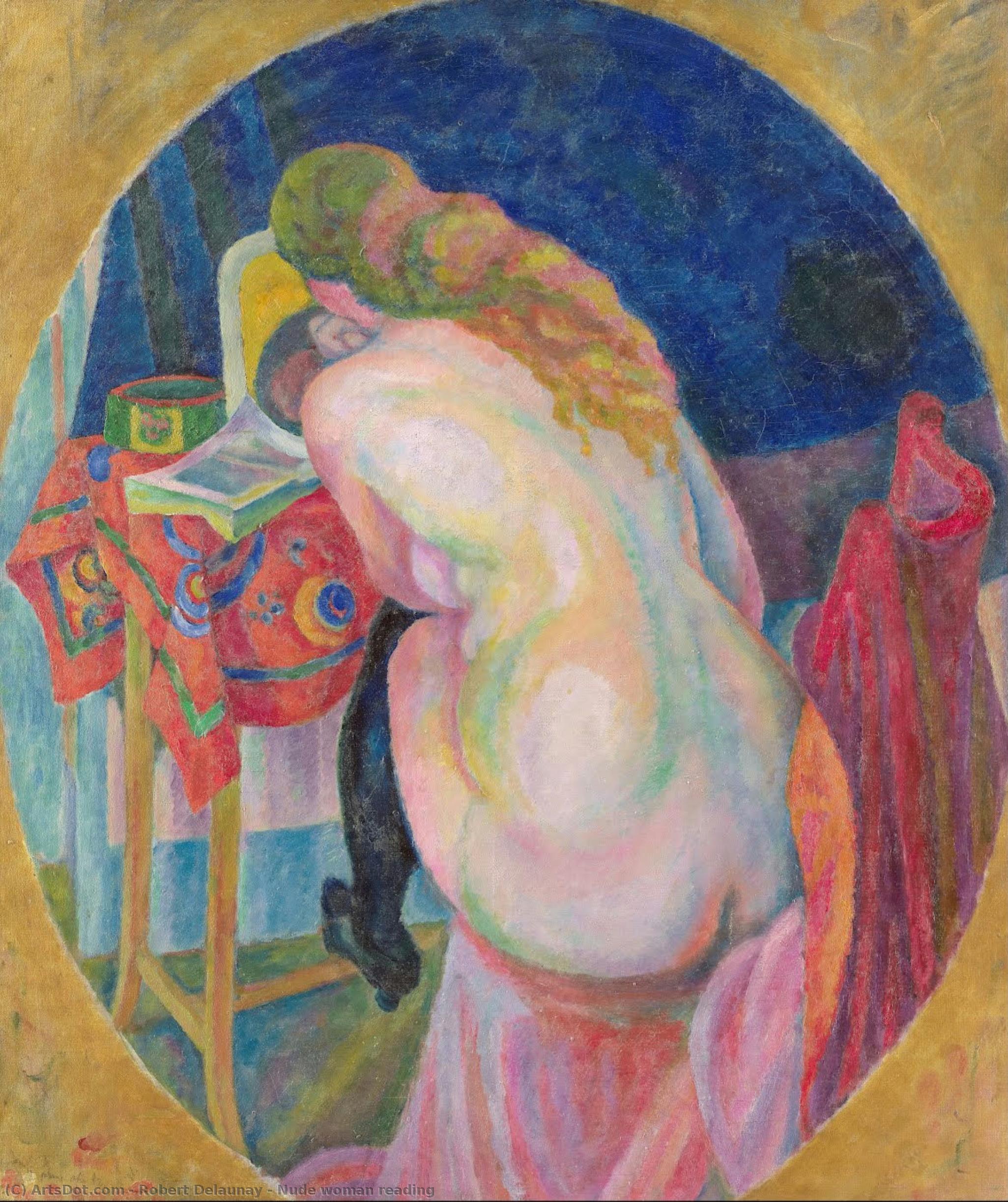
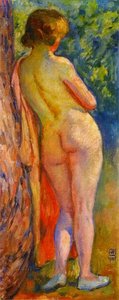
Nude woman reading
 Acrylic On Canvas
- WallArt
- Cubism
 1915
1915 86.0 x 72.0 cm
 National Gallery of Victoria
 Read More
Giclée / Art Print
Museum-quality giclée or canvas print with fast production and flexible finish options. ( Buy Hand Made Painting Buy Image)




P118B $10

P118H $10

P118W $10

P438Z $10

P508JH $12

P508YH $12

P805H $10

P805Z $10

P919BZ $10

P919G $10

P919XJ $10

P959ZH $10

P968JZ $12

W106C $8

W218G $10

W218JH $8

W218Y $10

W307PJ $10

W316G $10

W316PJ $8

W316Y $10

W398PJ $8

W4111J $10

W500HY $15

W500JH $15

W692G $12

W849H $8

W940BG $15

W953PJ $8




Pick from our preset sizes that match the artwork's original proportions.

You may enter your own dimensions to fit a specific frame or space. If your selected size does not match the original image's proportions, we will either crop the artwork or extend the image with a mirrored or solid-fill edge. A digital mockup will be sent for your approval before production begins.
Please note that the on-screen preview does not reflect the actual cropping or extension. Only the mockup will accurately show the final composition.
While custom sizes are available, we recommend selecting a dimension from the predefined list to preserve the original proportions.
Worldwide Delivery () in 2 weeks instead of standard 4/5 weeks. (16 August)

Free Worldwide Express Shipping

High-Quality Linen Canvas

Full Shipping Insurance

Customs Tax Refund Guarantee

True Color Matching Guarantee

60-Day Return Policy (Defects Only)

100% Money-Back Guarantee

Bulk Discount Offer
 Glass option is only available in size under 110 CM

Nude woman reading
Giclée / Art Print
Reproduction Size
-


Total Price
$ 63
Collectible Description
A Symphony of Color and Curve: Exploring Robert Delaunay’s Nude Woman Reading
The painting “Nude Woman Reading,” executed by Robert Delaunay in 1915, stands as a cornerstone of Orphism—a movement that irrevocably altered the trajectory of European art. More than just a portrait, it's an embodiment of Delaunay’s groundbreaking approach to abstraction, prioritizing color and form over realistic representation to convey emotion and dynamism. Examining this artwork reveals not only artistic innovation but also a profound engagement with the intellectual currents shaping the era.The Genesis of Orphism: Challenging Artistic Boundaries
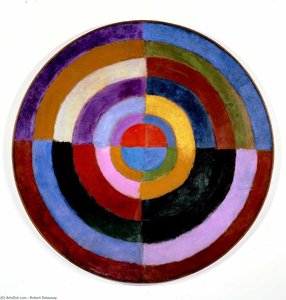
Delaunay's artistic evolution began in Impressionism, where he skillfully captured fleeting moments of light and atmosphere. However, disillusioned by what he perceived as limitations within this style, he sought to liberate painting from its constraints—a quest that culminated in the formation of Orphism alongside Sonia Delaunay. Rejecting traditional perspective and anatomical accuracy, Orphists aimed for a visual experience akin to music, prioritizing color harmonies and geometric shapes to stimulate the senses and evoke feelings rather than simply depicting what was seen. This radical departure signaled a decisive break from academic conventions and paved the way for subsequent developments in abstract expressionism.Chromatic Harmony: Delaunay’s Color Theories
Central to understanding “Nude Woman Reading” is grasping Delaunay's pioneering color theories—specifically his exploration of complementary colors. He believed that juxtaposing hues like red and green, or blue and orange, created a visual tension that generated energy and vibrancy. This principle is brilliantly applied in the painting’s palette: muted shades of ochre and beige dominate the background, providing a grounding counterpoint to the luminous blues and greens employed for the woman's dress and hair. The careful orchestration of color isn’t merely decorative; it actively contributes to the artwork’s emotional impact—suggesting serenity alongside subtle movement.Geometric Forms: Shaping Perception
The composition itself is meticulously crafted, utilizing geometric shapes—primarily circles and ovals—to sculpt the image space. Delaunay deliberately avoids depicting the human figure in detail, opting instead for simplified forms that emphasize curves and contours. The oval format of the canvas echoes and amplifies the gentle curve of the woman’s torso, creating a visual rhythm that draws the eye inward. Furthermore, the subtle repetition of curvilinear shapes—evident in the drapery and even the pattern on the dressing table—reinforces this sense of fluidity and harmony. These forms aren't merely stylistic choices; they actively shape our perception of the subject matter, inviting contemplation and fostering an immersive experience.Symbolism Beyond Representation
While Delaunay eschewed explicit narrative content, “Nude Woman Reading” possesses a rich symbolic dimension. The woman’s posture—seated calmly amidst domestic surroundings—represents intellectual engagement and introspection. Reading symbolizes knowledge, contemplation, and the pursuit of understanding – concepts deeply valued during the period. The inclusion of the dressing table and vase adds layers of meaning, referencing notions of beauty, femininity, and ritualistic care. Ultimately, Delaunay invites us to consider not just what is visible but also what lies beneath—the unspoken emotions and ideas that permeate the artwork’s visual language.Emotional Resonance: A Moment Frozen in Time
“Nude Woman Reading” transcends mere aesthetic pleasure; it communicates a palpable sense of tranquility and contemplation. The harmonious color palette, combined with the deliberate geometric forms, creates an atmosphere of understated elegance—a testament to Delaunay's ability to distill complex ideas into a powerfully evocative image. It’s a painting that speaks to the viewer on a subconscious level, capturing not just a visual scene but also the psychological state of its subject. This enduring appeal underscores the significance of Delaunay’s contribution to modern art and confirms his place as one of the pioneers of abstract expressionism.Related Artworks
Artist Biography
A Pioneer of Abstract Color: The Life and Art of Robert Delaunay
Robert Delaunay, born in Paris in 1885, emerged as a pivotal figure in the radical artistic shifts of the early twentieth century. Though initially drawn to more traditional forms of painting, his journey led him toward an exploration of color and light that would ultimately define his legacy and contribute significantly to the birth of abstract art. Delaunay wasn’t merely interested in *representing* the world; he sought to capture its very essence through a vibrant language of geometric shapes and luminous hues, co-founding the Orphism movement with his wife, Sonia Delaunay, and others who shared their vision. His early life was marked by a degree of instability – his parents divorced when he was young, and he was raised by relatives – but this perhaps fostered an independent spirit that would serve him well in challenging artistic conventions. He initially pursued decorative arts, but quickly gravitated towards painting, exhibiting at the Salon des Indépendants as early as 1904, demonstrating a burgeoning talent and ambition.From Divisionism to the Dawn of Orphism
Delaunay’s artistic development was characterized by constant experimentation. He initially engaged with Neo-Impressionism, or Divisionism, absorbing its principles of applying small, distinct dots of color to create a shimmering effect. However, he soon moved beyond simply replicating optical phenomena; he began to investigate the expressive potential of color itself. A crucial friendship with Jean Metzinger proved formative during this period, as they explored the possibilities of fragmented forms and mosaic-like compositions. These early collaborations laid groundwork for their later involvement in Cubism, though Delaunay would ultimately diverge from its more analytical approach. He wasn’t interested in dissecting objects into geometric components; rather, he sought to synthesize them into dynamic arrangements of color and light. This shift culminated in the development of Orphism – a term coined by the poet Guillaume Apollinaire – which aimed to create a purely abstract art that evoked emotional responses through its chromatic intensity. Simultaneous Contrasts: Sun and Moon, exemplifies this approach, showcasing Delaunay’s masterful manipulation of color to convey a sense of energy and movement.The Power of ‘Simultanéité’ and Artistic Influence
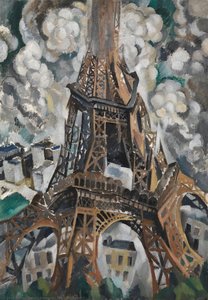
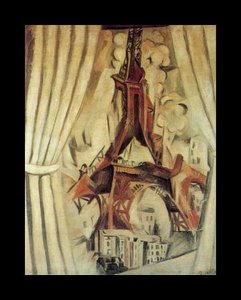
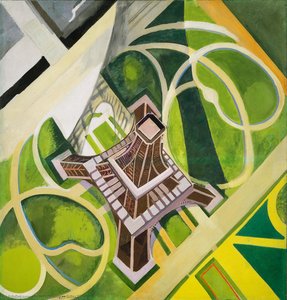
Central to Delaunay's artistic philosophy was the concept of “simultanéité” – the idea that colors interact with each other, creating new sensations and perceptions. He believed that color wasn’t merely a descriptive element but an active force capable of shaping our experience of reality. This belief informed his series of paintings depicting the Eiffel Tower, where he deconstructed the iconic structure into a network of intersecting planes and vibrant hues. These weren't depictions *of* the tower, but rather explorations of how light and color transformed its appearance. Delaunay’s theories resonated deeply with other artists of his time, influencing figures like Paul Klee, Franz Marc, August Macke, and even Russian avant-garde movements. His emphasis on abstraction and the expressive power of color helped pave the way for a new generation of artists who rejected representational conventions in favor of purely visual forms. He wasn’t simply creating paintings; he was developing a theoretical framework for understanding the relationship between color, light, and perception.Later Years and Enduring Legacy
The outbreak of World War I forced Delaunay and his wife to seek refuge in Spain and Portugal, where they continued to work and exhibit. After returning to Paris in the 1920s, he explored a range of subjects, including portraits and figurative scenes, but always remained committed to his core principles of color and abstraction. In his later years, Delaunay revisited earlier themes, creating increasingly complex and dynamic compositions. He also undertook ambitious projects such as designing large-scale colored reliefs for the 1937 Paris International Exposition, demonstrating his ability to translate his artistic vision into architectural contexts. Robert Delaunay’s untimely death in 1941 marked a loss for the art world, but his influence continues to be felt today. His pioneering work laid the foundation for many subsequent developments in abstract art, and his exploration of color remains a source of inspiration for artists across disciplines. His legacy is not merely one of aesthetic innovation, but also of intellectual inquiry – a testament to the power of art to transform our understanding of the world around us.Notable Works
- The Eiffel Tower (1909-1911)
- Simultaneous Contrasts: Sun and Moon (1913)
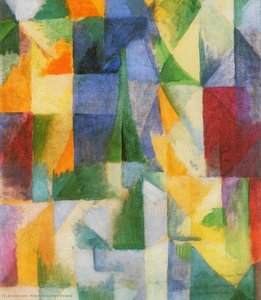
- Windows Open Simultaneously, 1st Part, 3rd Motif (1912)
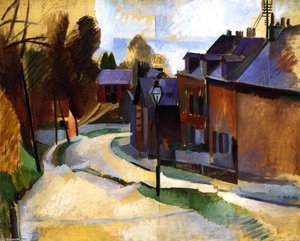
- Road in Laon (1910)
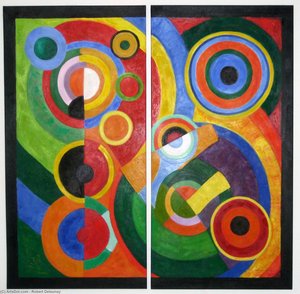
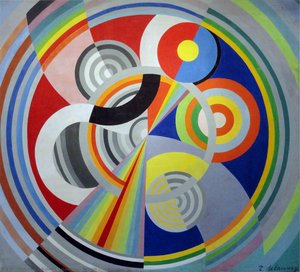
- Rhythms (1934)
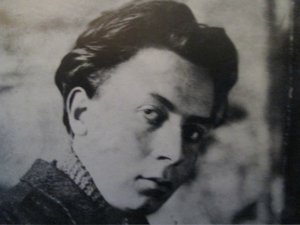
Robert Delaunay
1885 - 1941 , France
Quick Facts
- Artistic Movement Or Style: Orphism, Cubism
- Artists Or Movements Influenced By This Artist:
- Stanton Macdonald-Wright
- Sonia Delaunay
- Der Blaue Reiter
- Artists Who Influenced This Artist: ['Paul Klee']
- Date Of Birth: April 12, 1885
- Date Of Death: 1941
- Full Name: Robert Delaunay
- Nationality: French
- Notable Artworks:
- Eiffel Tower
- Simultaneous Contrasts
- Windows Open Simultaneously
- Place Of Birth: Paris, France
Related Articles

Geometric Abstraction's 10 Defining Masterpieces | Art for Your Home - ArtsDot
Explore 10 defining masterpieces of Geometric Abstraction! Discover Kandinsky, Mondrian & Malevich’s iconic works. Find museum-quality art reproductions and curated decor ideas to elevate your home at ArtsDot.com.
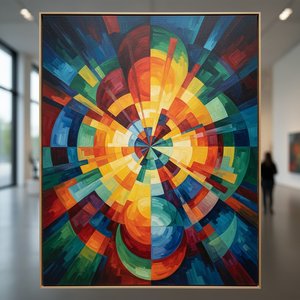
Orphism: A Symphony of Color and Form – Exploring the Abstract Roots of Modern Art
Explore Orphism, the vibrant abstract art movement pioneered by Robert & Sonia Delaunay. Discover its unique color theory, lasting influence on modern art, and how to bring this 'symphony of color' into your home with ArtsDot.
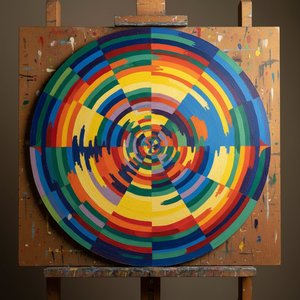
Sonia Delaunay: A Life in Color – Exploring the Rhythms of Abstraction and Synesthesia
Explore the vibrant world of Sonia Delaunay, a pioneer of abstract art and co-founder of Orphism. Discover her revolutionary use of color, geometric forms, and influence on modern design. A deep dive into her life & legacy.
Beyond Form & Color: Geometric Abstraction's Evolution in 20th/21st Century Art
Explore the evolution of geometric abstraction from Cubism to contemporary art. Discover key artists like Malevich & Mondrian, investment insights, and expert collecting advice at ArtsDot.
Kandinsky's Masterpieces: 25 Paintings That Define Abstract Art | ArtsDot
Journey through Wassily Kandinsky's 25 most iconic abstract paintings. Explore his revolutionary use of color, form & spiritual expressionism. Find museum-quality Kandinsky reproductions and elevate your home decor with ArtsDot.com. Discover all masterpieces on ArtsDot.com!