 Preview
 Send
Send Share
Share
 Details

 Download
 Similars
 X-Ray
X-Ray Diaporama
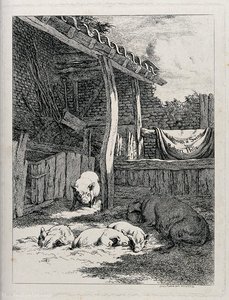
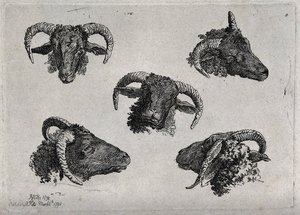
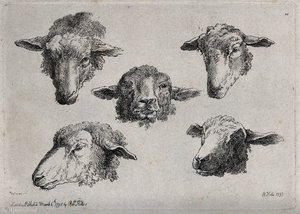
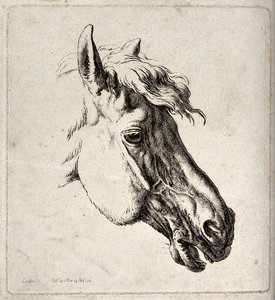
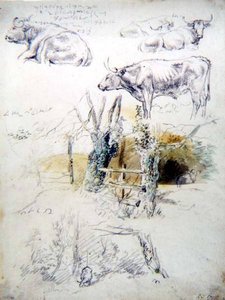
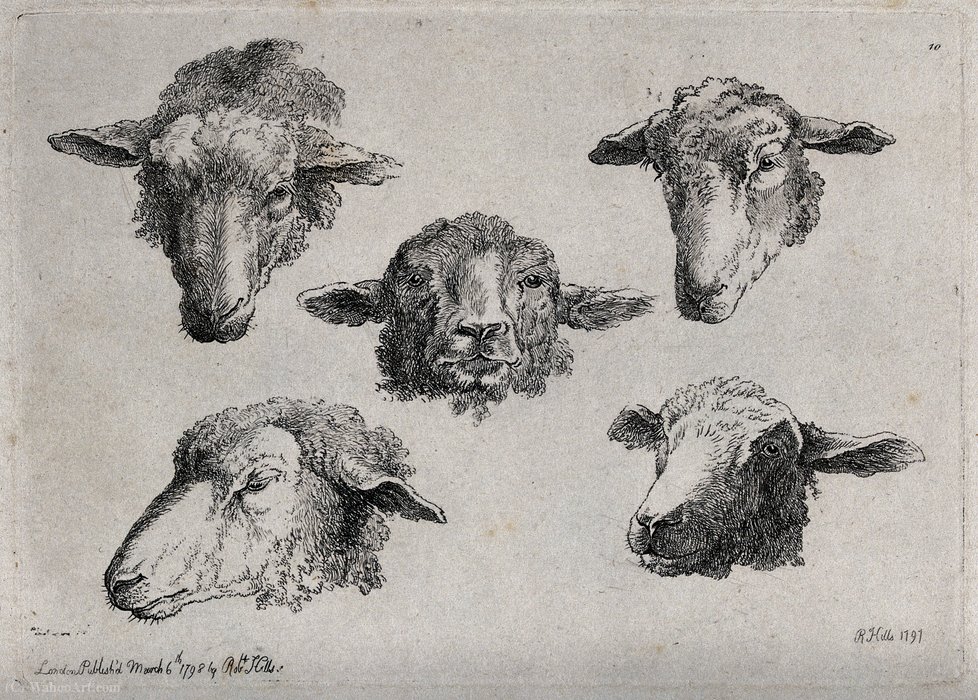
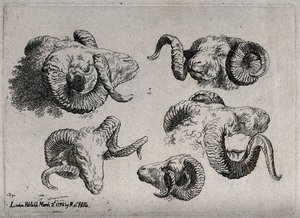
A sheeps's head
 Read More
Hand Made Oil Reproduction
Hand-painted oil on canvas in your size and frame, made to order by our artists. ( Buy Print Buy Image)




































Pick from our preset sizes that match the artwork's original proportions.

You may enter your own dimensions to fit a specific frame or space. If your selected size does not match the original image's proportions, we will either crop the artwork or extend the painting with additional hand-painted elements. A digital mockup will be sent for your approval before production begins.
Please note that the on-screen preview does not reflect the actual cropping or extension. Only the mockup will accurately show the final composition.
While custom sizes are available, we recommend selecting a dimension from the predefined list to preserve the original proportions.
After order, ArtsDot.com team will email client for instructions and provide a mockup preview
Worldwide Delivery () in 3/4 weeks instead of standard 5 weeks. (18 August). No compromise on quality.

Free Worldwide Express Shipping

High-Quality Linen Canvas

Full Shipping Insurance

Customs Tax Refund Guarantee

True Color Matching Guarantee

60-Day Return Policy (Defects Only)

100% Money-Back Guarantee

Bulk Discount Offer
 Glass option is only available in size under 110 CM

A sheeps's head
Reproduction Medium
Reproduction Size
-


Total Price
$ 363
Related Artworks
Artist Biography
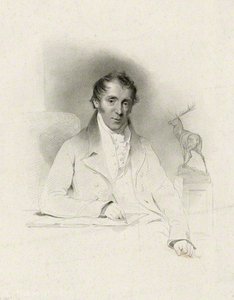
The Soul of the Pastoral: The Life and Legacy of Robert Hills
In the quiet, rhythmic pulse of the English countryside, there exists a profound beauty that often escapes the gaze of those preoccupied with the grandiosity of myth or the drama of history. It was this very essence—the unadorned, breathing reality of rural life—that Robert Hills sought to immortalize. Born in Islington in 1769, Hills emerged as a pioneer of British animal studies, a master who looked past the idealized landscapes of his contemporaries to find the profound dignity in a grazing sheep or the sturdy grace of a working ox. His journey was one of meticulous observation, rooted in an era where the boundaries between art and scientific inquiry were beautifully blurred by the light of the Enlightenment.
Hills’ artistic foundation was built upon rigorous discipline and a deep-seated reverence for natural truth. After initial studies under John Alexander Gresse, he entered the prestigious Royal Academy of Arts in 1788, an environment that would refine his technical prowess. His education at Eton College had already instilled in him an appreciation for classical precision, but it was his immersion in the burgeoning field of zoology and anatomical study that truly defined his vision. He did not merely paint animals; he understood them. Every curve of a ram's horn and every ripple of muscle beneath a cow's hide was rendered with a dedication to anatomical accuracy that spoke of a lifetime spent studying the skeletal and muscular structures of his subjects.
A Master of Realism and Texture
The brilliance of Hills’ technique lies in his ability to marry the clinical precision of an illustrator with the emotive warmth of a Romantic painter. Utilizing smooth brushstrokes and subtle tonal gradations, he achieved a level of realism that allowed his subjects to leap from the canvas. His work often features a soft, atmospheric quality—a hallmark of British Academic painting—that lends a sense of atmosphere and time to his rural scenes. Whether working in oil or through the delicate medium of etching and aquatint, Hills possessed an uncanny ability to capture the tactile nature of his subjects: the coarseness of wool, the dampness of a field after rain, and the heavy, rhythmic breathing of livestock.
His contributions extended beyond the solitary canvas into the realm of published works, most notably in his 1816 publication, Sketches in Flanders and Holland. In this collection, he showcased his mastery of aquatint, bringing a sense of depth and light to his travels through Europe. This period of his career demonstrated that his eye for detail was not limited to the English pastoral but was part of a broader, more expansive curiosity about the natural world across borders. His ability to integrate himself into the works of other notable artists, such as George Barret, Jr., further underscores his reputation as a versatile and highly respected craftsman within the London art scene.
The Enduring Resonance of the Pastoral
While many artists of the Regency period sought the sublime in ruins or the epic in mythology, Robert Hills found it in the everyday. His historical significance lies in his role as a precursor to the widespread acceptance of animal portraiture as a serious and emotionally resonant genre. He elevated the "lowly" subjects of the farmyard to the status of fine art, imbuing them with a psychological depth that forced the viewer to confront the vitality of the natural world. His paintings serve as poignant windows into a bygone era of British agriculture, capturing a sense of community and abundance that feels both nostalgic and timeless.
Today, the legacy of Robert Hills lives on through the collections of institutions such as the British Museum and the Tate, where his studies of cows, sheep, and horses continue to inspire awe. His work remains a testament to the power of looking closely—to finding the extraordinary within the ordinary. Through his lens, the simple act of a herd moving across a landscape becomes a profound meditation on life, structure, and the enduring beauty of the earth.
robert hills
1769 - 1844 , United Kingdom
Quick Facts
- Artistic Movement Or Style: Romanticism
- Date Of Birth: London, United Kingdom (1769)
- Date Of Death: 1844
- Full Name: Robert Hills
- Nationality: British
- Notable Artworks:
- Harvest Field
- Cattle Studies
- Place Of Birth: London