 Preview
 Send
Send Share
Share
 Details

 Download
 Similars
 X-Ray
X-Ray Diaporama
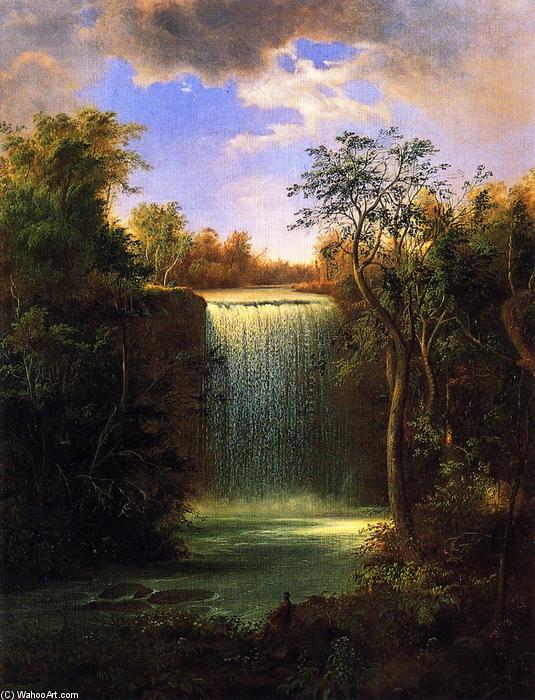
Falls of Minnehaha


 Read More
Hand Made Oil Reproduction
Hand-painted oil on canvas in your size and frame, made to order by our artists. ( Buy Print Buy Image)




































Pick from our preset sizes that match the artwork's original proportions.

You may enter your own dimensions to fit a specific frame or space. If your selected size does not match the original image's proportions, we will either crop the artwork or extend the painting with additional hand-painted elements. A digital mockup will be sent for your approval before production begins.
Please note that the on-screen preview does not reflect the actual cropping or extension. Only the mockup will accurately show the final composition.
While custom sizes are available, we recommend selecting a dimension from the predefined list to preserve the original proportions.
After order, ArtsDot.com team will email client for instructions and provide a mockup preview
Worldwide Delivery () in 3/4 weeks instead of standard 5 weeks. (17 August). No compromise on quality.

Free Worldwide Express Shipping

High-Quality Linen Canvas

Full Shipping Insurance

Customs Tax Refund Guarantee

True Color Matching Guarantee

60-Day Return Policy (Defects Only)

100% Money-Back Guarantee

Bulk Discount Offer
 Glass option is only available in size under 110 CM

Falls of Minnehaha
Reproduction Medium
Reproduction Size
-


Total Price
$ 263
Artwork Description
A Glimpse of Nature’s Majesty: Robert Duncanson’s *Falls of Minnehaha*
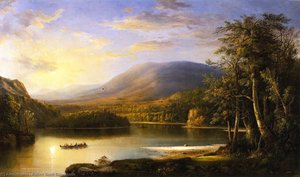
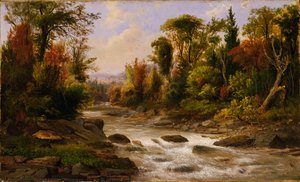
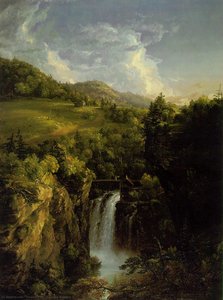
Robert Scott Duncanson’s Falls of Minnehaha (1862) is a captivating landscape painting that transports viewers to the serene beauty of Minnesota's iconic waterfall. This work exemplifies the Hudson River School style, celebrated for its romantic depictions of American landscapes and their ability to evoke a sense of awe and wonder in nature.
Subject & Style: Romantic Landscape Tradition
- The Scene: The painting centers on the dramatic cascade of Minnehaha Falls, skillfully rendered with attention to detail. Lush trees frame the waterfall, creating depth and perspective within the composition. Two figures are subtly included, providing a sense of scale and inviting viewers into the scene.
- Hudson River School Influence: Duncanson’s work aligns strongly with the Hudson River School movement, which flourished in the mid-19th century. This style emphasized detailed realism combined with an idealized view of nature, often imbued with spiritual or emotional significance. Like his contemporaries such as Thomas Cole, Duncanson sought to capture not just a visual representation but also the sublime power and beauty of the natural world.
- Romanticism: The painting embodies Romantic ideals by prioritizing emotion and imagination over strict adherence to classical rules. It aims to evoke feelings of tranquility, awe, and connection with nature.
Technique & Historical Context
- Oil on Canvas: Duncanson employed oil paints on canvas, allowing for rich color saturation and subtle gradations in tone. His technique demonstrates a mastery of light and shadow, enhancing the realism and depth of the scene.
- Antebellum America: Created in 1862, during the lead-up to the American Civil War, *Falls of Minnehaha* reflects a yearning for peace and harmony amidst societal tensions. Duncanson's success as a Black artist operating within this context is remarkable; he skillfully navigated elite cultural circles in America and Europe, utilizing abolitionist support to promote his work.
- Ohio River Valley Tradition: Duncanson played a key role in developing the Ohio River Valley landscape tradition, bringing a unique perspective to the genre.
Symbolism & Emotional Impact
Beyond its aesthetic appeal, *Falls of Minnehaha* carries layers of potential symbolism. The waterfall itself can be interpreted as representing the relentless passage of time or the purifying power of nature. The inclusion of figures suggests humanity's relationship with the natural world – a sense of reverence and belonging.
- Tranquility & Awe: The painting evokes a profound sense of tranquility and awe, inviting viewers to escape into a peaceful natural setting.
- Sublime Beauty: Duncanson’s skillful rendering of light and shadow creates a feeling of the sublime – that overwhelming yet beautiful experience of encountering nature's grandeur.
- Racial Significance (Potential): As noted by art historians, there is ongoing debate regarding whether Duncanson subtly incorporated racial metaphors into his work, reflecting the complexities of his identity as a free Black man in antebellum America. This adds another layer of depth and intrigue to the painting's interpretation.
*Falls of Minnehaha* remains a testament to Robert Duncanson’s artistic talent and a valuable window into 19th-century American landscape painting, offering both visual beauty and thought-provoking historical context.
Related Artworks
Artist Biography
A Pioneer of the American Landscape
Robert Seldon Duncanson, a name that resonates with both artistic brilliance and historical significance, emerged as a pivotal figure in 19th-century American art. Born around 1821 in Fayetteville, New York, to parents of European and African descent—his father, John Dean Duncanson, a free Black tradesman who instilled the values of diligence and learning—Duncanson navigated a world fraught with racial prejudice while simultaneously achieving international acclaim as a landscape painter. His journey was one of self-education, unwavering dedication, and a profound connection to the natural world, ultimately establishing him as the first African American artist to gain widespread recognition on both sides of the Atlantic. The family’s relocation to Monroe, Michigan, saw young Robert apprenticed in carpentry and painting, revealing an early aptitude for art that would soon define his life's path.From Portraiture to Panoramic Vistas
Duncanson’s artistic development began with portraiture, a practical means of establishing himself as a professional artist. However, the burgeoning cultural scene of Cincinnati, Ohio—a city known as the “Athens of the West”—beckoned him in 1840, offering opportunities for growth and exposure that were unavailable elsewhere. Largely self-taught, Duncanson honed his skills through diligent study of prints and engravings, sketching directly from nature, and meticulously copying the works of established masters. This rigorous approach allowed him to develop a keen eye for detail and a remarkable technical proficiency despite lacking formal training. It was in Cincinnati that he began his transition towards landscape painting, drawn by the romantic ideals and sublime beauty of the American wilderness. The influence of the Hudson River School became increasingly apparent in his work, particularly the evocative compositions of Thomas Cole, whose dramatic depictions of nature resonated deeply with Duncanson’s own artistic sensibilities. He wasn't merely replicating scenes; he was interpreting them through a uniquely personal lens, imbuing his canvases with a sense of tranquility and spiritual connection.A European Sojourn and International Recognition
A turning point in Duncanson’s career arrived in 1853-1854 with an extended tour of Europe. This journey provided him with invaluable exposure to the works of European masters, broadening his artistic horizons and refining his technique. He studied the Old Masters, absorbing their approaches to light, color, and composition, which he then integrated into his own distinctive style. Upon his return, Duncanson’s work demonstrated a newfound sophistication and maturity, attracting attention not only in America but also in England, Scotland, and Canada. Exhibitions followed, solidifying his reputation as an artist of considerable talent and vision. He became a key figure in developing the Ohio River Valley landscape tradition, capturing the serene beauty of the region with remarkable skill. His paintings weren’t simply representations of place; they were expressions of mood, atmosphere, and the sublime power of nature.Legacy and Historical Significance
Robert Seldon Duncanson's legacy extends far beyond his artistic achievements. He broke down barriers for African American artists during a period marked by pervasive racial discrimination, serving as an inspiration for future generations. His success challenged prevailing societal norms and demonstrated the power of art to transcend prejudice. While art historians continue to debate the extent to which his race influenced his artistic expression—some suggesting subtle symbolic representations of racial themes within his landscapes—there is no denying that Duncanson’s life story is a testament to resilience, talent, and the enduring human spirit. For many years, his work was unjustly overlooked, but recent scholarship and exhibitions have brought renewed attention to his contributions to American art history.A Lasting Impression
Duncanson's paintings offer more than just aesthetic pleasure; they invite contemplation on themes of nature, spirituality, and the human condition. His masterful use of color, meticulous detail, and evocative compositions create a sense of immersion, drawing viewers into the tranquil beauty of his landscapes. He died unexpectedly in 1872 while preparing for an exhibition in Detroit, possibly due to lead poisoning from the paints he used. Today, Robert Seldon Duncanson stands as a pioneering figure—a testament to the power of art to overcome adversity and leave an indelible mark on the world. His serene vistas continue to captivate audiences, reminding us of the enduring beauty of nature and the remarkable talent of an artist who dared to dream beyond the limitations imposed upon him by his time.- Major Themes: Landscape painting, Romanticism, Hudson River School influence, spiritual connection with nature.
- Notable Works: “Landscape with Sheep,” “Roses Still Life,” and numerous depictions of the Ohio River Valley.
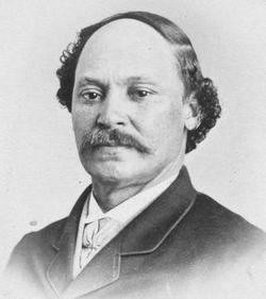
Robert Seldon Duncanson
1821 - 1872 , United States of America
Quick Facts
- Artistic Movement Or Style: Hudson River School
- Artists Or Movements Influenced By This Artist: ['Ohio River Valley tradition']
- Artists Who Influenced This Artist: ['Thomas Cole']
- Date Of Birth: c. 1821
- Date Of Death: December 21, 1872
- Full Name: Robert Seldon Duncanson
- Nationality: American
- Notable Artworks:
- Landscape with Sheep
- Roses Still Life
- Place Of Birth: Fayetteville, USA
Related Articles
Hudson River School: 10 Masterpieces That Capture America's Wild Beauty | ArtsDot
Journey through America's breathtaking landscapes with our guide to the Top 10 Hudson River School masterpieces. Explore Thomas Cole, Frederic Church & more! Find museum-quality art reproductions and elevate your home decor at ArtsDot.com.
Robert Seldon Duncanson: Landscape, Abolitionism & Shaping American Identity
Discover Robert Seldon Duncanson, the first internationally acclaimed African American landscape artist. Explore his connection to the Hudson River School, abolitionism, and enduring legacy through serene vistas & powerful symbolism.
The Sublime Landscape: Exploring the Hudson River School Movement
Explore the captivating world of the Hudson River School! Discover the history, artists, and defining characteristics of this iconic American art movement. Learn about Romanticism's influence & find inspiration for your collection.
Robert Spencer: Luminism, Narrative & the American Landscape Tradition
Explore the captivating world of Luminism & the Hudson River School with our expert analysis. Discover the history, artists, and enduring beauty of 19th-century American landscape painting. Find museum-quality reproductions at ArtsDot.
Echoes of Arcadia: Nostalgia & Transformation in Vintage Landscape Art
Explore the evocative world of vintage landscape art! Discover the history, artists & emotional power behind masterpieces from the Hudson River School & beyond. Expert insights for collectors & enthusiasts.