 Preview
 Send
Send Share
Share
 Details

 Download
 Similars
 X-Ray
X-Ray Diaporama
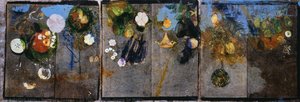
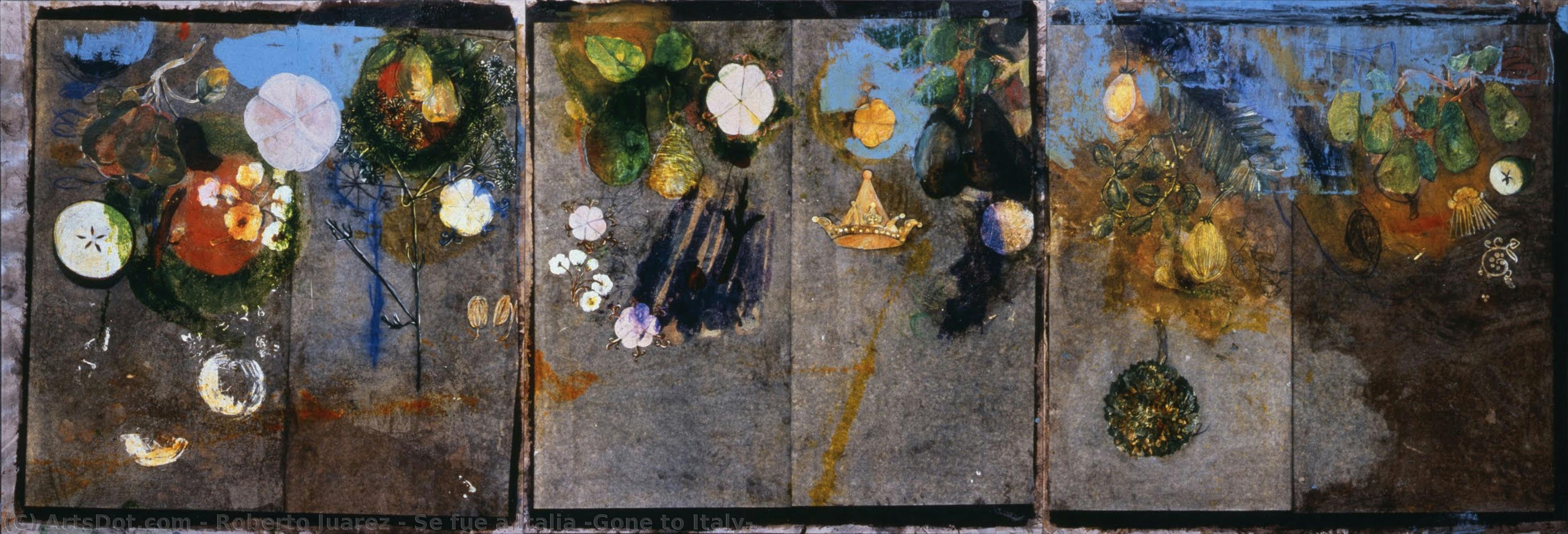
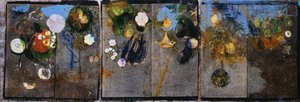
Se fue a Italia (Gone to Italy)


 Read More
Hand Made Oil Reproduction
Hand-painted oil on canvas in your size and frame, made to order by our artists. ( Buy Print Buy Image)




































Pick from our preset sizes that match the artwork's original proportions.

You may enter your own dimensions to fit a specific frame or space. If your selected size does not match the original image's proportions, we will either crop the artwork or extend the painting with additional hand-painted elements. A digital mockup will be sent for your approval before production begins.
Please note that the on-screen preview does not reflect the actual cropping or extension. Only the mockup will accurately show the final composition.
While custom sizes are available, we recommend selecting a dimension from the predefined list to preserve the original proportions.
After order, ArtsDot.com team will email client for instructions and provide a mockup preview
Worldwide Delivery () in 3/4 weeks instead of standard 5 weeks. (30 August). No compromise on quality.

Free Worldwide Express Shipping

High-Quality Linen Canvas

Full Shipping Insurance

Customs Tax Refund Guarantee

True Color Matching Guarantee

60-Day Return Policy (Defects Only)

100% Money-Back Guarantee

Bulk Discount Offer
 Glass option is only available in size under 110 CM

Se fue a Italia (Gone to Italy)
Reproduction Medium
Reproduction Size
-


Total Price
$ 263
Related Artworks

Artist Biography
The Ethereal Bloom: The Artistic Journey of Roberto Juarez
Born in the vibrant cultural landscape of Chicago in 1952, Roberto Juarez carries within his lineage the rich, storied traditions of his Puerto Rican and Mexican heritage. His artistic odyssey began with a formal foundation at the San Francisco Art Institute, where he earned his BFA in 1977, followed by advanced explorations into the cinematic realms of television and film at UCLA. This unique intersection of fine art training and a deep understanding of visual storytelling would later become a cornerstone of his practice. After completing his graduate thesis in Paris in 1978, Juarez found himself drawn to the electric energy of New York City. In the early 1980s, he became a notable figure in the legendary East Village art scene, famously maintaining a studio in a former garage provided by the La MaMa Experimental Theatre Club—a space that, despite its lack of modern amenities, served as a crucible for his burgeoning creative vision.
The heart of Juarez’s oeuvre lies in his profound fascination with the floral motif, a theme he employs not merely as decoration, but as a complex language of symbolism. Drawing inspiration from Hispanic and non-Western painting traditions, he utilizes botanical forms to meditate on the delicate balance between fragility and resilience. His early work in the 1980s and 90s focused heavily on the branching, organic structures of trees and flowers, creating landscapes that feel both intimately observed and surrealistically imagined. As his career progressed through a period living in Miami, his technical approach underwent a fascinating evolution; he began to integrate tactile, natural elements such as peat moss and rice paper into his canvases, adding a physical dimension to the dreamlike atmospheres he sought to create.
Evolution of Form and Technique
Juarez’s mastery is defined by a sophisticated command of color and texture. He often employs a technique of layering thin, translucent washes of pigment—a process known as glazing—to build luminous surfaces that seem to glow from within. This method allows him to capture the subtle, shifting nuances of light and shadow, imbuing his flora with an ethereal, almost celestial quality. While his earlier works leaned toward the lushly organic, his move back to New York around the year 2000 signaled a shift toward a more abstract, geometric language. This period saw him exploring systems of form where the softness of muted, transparent grounds met the strength of bold, geometric-organic motifs, creating a captivating tension between the fluid and the structured.
The significance of his contribution to contemporary art is reflected in both his technical innovation and his ability to bridge diverse cultural aesthetics. His work transcends simple representation, inviting viewers into immersive, meditative environments that evoke deep emotional responses. This mastery has earned him a permanent place in some of the world's most prestigious institutions, ensuring his legacy as a vital voice in the continuum of American visual art.
Legacy and Recognition
The impact of Roberto Juarez’s vision is documented through an extensive history of exhibitions and inclusion in premier museum collections. His ability to weave together disparate influences—from Impressionism and Surrealism to the cinematic eye—has resulted in a body of work that remains both timeless and contemporary. Notable achievements and recognitions include:
- Prestigious Museum Collections: His paintings are held in the permanent collections of the Metropolitan Museum of Art, the Brooklyn Museum, El Museo del Barrio, the Los Angeles County Museum of Art (LACMA), and the Denver Art Museum, among others.
- Public Art Contributions: Beyond the gallery walls, Juarez has left a lasting mark on the public landscape through significant murals at the Miami International Airport, Grand Central Terminal, and various university campuses.
- Cultural Synthesis: He is widely celebrated for his ability to integrate non-Western botanical traditions into the dialogue of contemporary American painting, creating a unique, cross-cultural aesthetic.
Roberto Juarez
1952 - , United States of America
Quick Facts
- Artistic Movement Or Style: Painterly Floral Motifs
- Artists Or Movements Influenced By This Artist: ['Contemporary Hispanic Art']
- Artists Who Influenced This Artist:
- Hispanic Painting Traditions
- Non-western Painting
- Date Of Birth: 1952
- Full Name: Roberto Juarez
- Nationality: American
- Notable Artworks:
- Se fue a Italia
- Pez ángel besador
- Place Of Birth: Chicago, United States of America
Related Articles

The Enduring Legacy of Oil on Canvas: Technique, History & Aesthetic Impact
Explore the rich history & techniques of oil painting – from Renaissance masters to Impressionism. Discover pigments, layering methods, and why this timeless medium endures. Expert insights for artists & art enthusiasts.

Oil on Canvas: A Historical & Technical Exploration of a Timeless Artistic Medium
Explore the rich history & enduring techniques of oil painting on canvas. Discover the science behind its longevity, conservation practices, and contemporary relevance. Expert insights for art enthusiasts.

The Enduring Power of Painting: A Historical & Contemporary Exploration of Form and Emotion
Explore the rich history & enduring techniques of oil painting with ArtsDot. Discover masterpieces, learn about art collecting, and find authentic handmade reproductions crafted by skilled artists.

The Enduring Legacy of Oil on Canvas: Technique, History & Contemporary Practice
Explore the rich history & enduring techniques of oil painting on canvas. Discover the science behind its longevity, conservation practices, and contemporary relevance. Expert insights for art enthusiasts.
Oil on Board Masters: 10 Paintings That Redefined Art | ArtsDot
Explore 10 legendary 'Oil on Board' masterpieces by Van Gogh, Monet & more! Discover art history, iconic styles like Impressionism, and find museum-quality reproductions to elevate your home decor. Explore the full collection online at ArtsDot.com.