

 Preview
 Send
Send Share
Share
 Details

 Download
 Similars
 X-Ray
X-Ray Diaporama
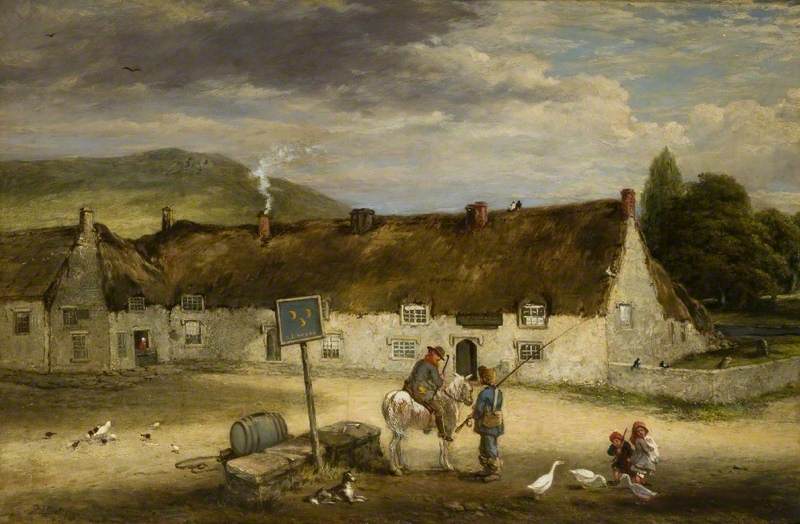
'The Three Half Moons', Rothbury, Northumberland
 Realism
 1887
1887 61.0 x 92.0 cm
 South Shields Museum And Art Gallery
 Read More
Purchase a high-resolution, enhanced digital image, far superior to the online preview.
Each file is meticulously prepared by our in-house specialists using advanced tools and expert manual retouching. We ensure every image has exceptional clarity, precise color accuracy, and fine detail.
The final file is delivered via email within 72 hours, optimized for immediate use in professional, editorial, and print environments. This is the same quality trusted by top-tier design studios, publishers, and galleries.
Digital Image
Download a high-resolution file for personal display, printing, and creative projects. ( Buy Print Buy Hand Made Painting)
Included in Every Digital Image Order
Expert Digital Delivery, Guaranteed
When you choose ArtsDot.com, you're not just getting an image - you're receiving a professionally enhanced digital artwork, crafted with precision and backed by a satisfaction guarantee. Here's everything that comes with your order, automatically:

Fast Email Delivery
Your high-resolution digital image file will be emailed to you within 72 hours of ordering - ready for immediate use.

AI-Enhanced Digital File
Your artwork is professionally optimized using advanced AI tools and manual editing, ensuring maximum detail, clarity, and color accuracy.

Free Lifetime Re-Delivery
Accidentally deleted or lost your file? No worries - we'll resend it to you anytime, free of charge.

No Import Fees - Ever
Enjoy your artwork instantly with zero customs, duties, or delivery fees - digital downloads are always tax-free.

Color Accuracy Guarantee
We ensure your digital image reflects the original colors as closely as possible using professional tools and color management.

60-Day Satisfaction Guarantee
If you're not satisfied with your digital image, we'll revise it or refund 100% within 60 days - no questions asked.

100% Money-Back Guarantee
Not satisfied? Get a full refund within 60 days of receiving your digital file - no questions asked.

Bulk Order Discounts
Buy 3 images, save 10% - Buy 5, save 15% - Buy 10+, save 20%. Great for creative projects, galleries, and agencies.
Related Artworks

Artist Biography
Robinson Elliott: A Portraitist of Victorian England
Robinson Elliott (1814-1894) stands as a quietly significant figure in 19th-century British art, a master of portraiture whose meticulous detail and subtle psychological insight captured the essence of his subjects – often prominent figures within the social fabric of his time. Unlike some of his more flamboyant contemporaries, Elliott’s legacy isn't defined by grand gestures or revolutionary techniques; rather, it resides in the quiet dignity and profound observation evident in each carefully rendered brushstroke. Born in Newcastle upon Tyne, he developed a keen eye for detail early on, an attribute that would become central to his artistic practice.
Elliott’s formative years were spent amidst the industrial landscape of northern England, a region undergoing rapid transformation. This environment undoubtedly shaped his aesthetic sensibility – a sensitivity to texture, light, and shadow, coupled with a deep appreciation for the nuances of human character. He initially pursued studies in law but quickly realized that his true calling lay in capturing the world around him through art. His early works focused primarily on landscapes of Northumberland, showcasing a remarkable ability to depict the rugged beauty of the region with atmospheric precision. However, it was his foray into portraiture that truly cemented his reputation and established him as a respected artist within the British art scene.
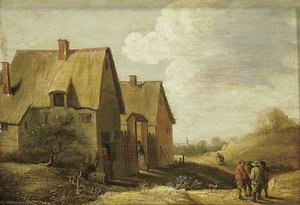
Elliott’s portraits are not merely likenesses; they are carefully constructed narratives. He possessed an extraordinary talent for revealing character through subtle gestures, expressions, and the arrangement of clothing. His subjects – mayors, judges, clergymen, and other prominent members of society – were presented with a dignified reserve that reflected their social standing while simultaneously hinting at inner complexities. Consider “The Three Half Moons,” a captivating depiction of a Northumberland village scene, where the light dances across the weathered stone walls and the figures are rendered with an almost photographic realism. This work exemplifies Elliott’s ability to imbue even seemingly mundane subjects with a sense of quiet beauty and profound observation.
A significant portion of Elliott's oeuvre is dedicated to portraiture of notable individuals, including Dr Thomas Masterman Winterbottom, a somber depiction reflecting the man's intellectual pursuits. His portraits of figures like Mr John P. Elliott demonstrate his skill in capturing not just physical appearance but also the subtle nuances of personality and social status. These works are often imbued with a sense of melancholy or introspection, suggesting that Elliott was more interested in exploring the inner lives of his subjects than simply presenting them as idealized representations.
Elliott’s artistic development can be traced through his engagement with various art institutions and exhibitions. He exhibited regularly at the Royal Academy, the British Institution, and the Royal Society of British Artists, gaining recognition for his meticulous technique and insightful portraits. His work was also featured in prestigious publications such as *The Art Journal*, further solidifying his position within the artistic community. Notably, he contributed significantly to documenting local history through his paintings, preserving a visual record of Northumberland’s social and cultural landscape.
The Influence of Victorian Portraiture
Elliott's work is firmly rooted in the conventions of Victorian portraiture, yet he transcends mere imitation. He absorbed the prevailing emphasis on formality, dignity, and social hierarchy but infused his portraits with a distinctly personal touch. The influence of artists like Sir Thomas Lawrence, whose idealized depictions of royalty and nobility set the standard for portraiture during the early 19th century, is evident in Elliott’s meticulous attention to detail and his careful composition. However, unlike Lawrence's often overtly flattering style, Elliott favored a more restrained approach, allowing his subjects’ personalities to emerge through subtle gestures and expressions.
Furthermore, Elliott was influenced by the burgeoning interest in psychological realism that characterized Victorian art. Artists like John Everett Millais, known for his evocative depictions of rural life, sought to capture not just outward appearances but also the inner emotions of their subjects. Elliott followed this trend, employing a nuanced understanding of human psychology to create portraits that resonated with viewers on a deeper level. His ability to convey a sense of quiet contemplation and understated emotion is a hallmark of his distinctive style.
Technique and Style
Elliott’s technical skill was exceptional, particularly in his rendering of texture and light. He employed a meticulous layering technique, building up the image through countless thin glazes of paint – a method that allowed him to achieve remarkable depth and luminosity. His brushwork is remarkably subtle, almost invisible, yet it conveys an astonishing level of detail. He paid particular attention to capturing the nuances of fabric, skin tones, and the play of light on surfaces.
Elliott’s color palette was restrained but effective, favoring muted earth tones and subtle gradations of gray. He avoided bright, artificial colors, opting instead for a more naturalistic approach that reflected the subdued lighting conditions of his studio. His compositions are typically balanced and symmetrical, reflecting the formal conventions of Victorian portraiture. However, he occasionally introduced asymmetrical elements to create visual interest and dynamism.
Legacy and Historical Significance
Robinson Elliott’s contribution to British art is often overlooked, overshadowed by more flamboyant figures of his era. Yet, his portraits offer a valuable glimpse into the social and cultural landscape of Victorian England. His meticulous attention to detail, coupled with his insightful psychological understanding, elevates his work beyond mere likenesses; they are windows into the lives and minds of those who shaped the nation.
Elliott’s legacy extends beyond his individual works. He played a crucial role in establishing the importance of portraiture as a means of documenting social history. His portraits provide invaluable insights into the customs, values, and aspirations of Victorian society. His work continues to be studied by art historians and scholars, offering a rich source of information about the 19th century.
Today, Elliott’s paintings can be found in prominent museums and private collections throughout Britain and beyond. His portraits remain remarkably fresh and engaging, reminding us of the enduring power of art to capture the essence of human experience.
robinson elliott
1814 - 1894
Quick Facts
- Artistic Movement Or Style: Portraiture
- Artists Or Movements Influenced By This Artist: ['']
- Artists Who Influenced This Artist: ['']
- Date Of Birth: 1814
- Date Of Death: 1894
- Full Name: Robinson Elliott
- Nationality: British
- Notable Artworks:
- The Three Half Moons
- Dr Thomas Winterbottom
- Place Of Birth: Newcastle, England

