 Preview
 Send
Send Share
Share
 Details

 Download
 Similars
 X-Ray
X-Ray Diaporama
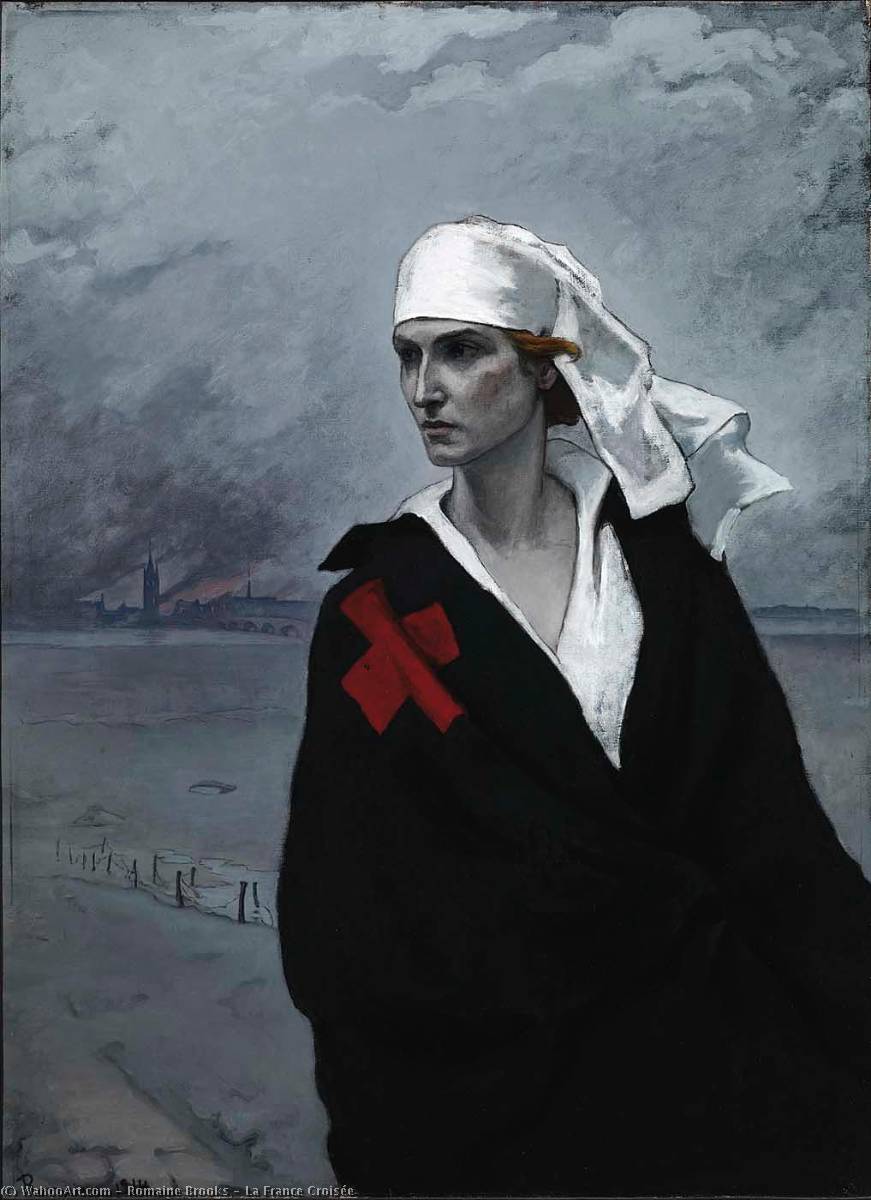
La France Croisée
 Oil On Canvas
- WallArt
 1914
1914- 19th Century
 116.0 x 85.0 cm
 Read More
Hand Made Oil Reproduction
Hand-painted oil on canvas in your size and frame, made to order by our artists. ( Buy Print Buy Image)




P118B $10

P118H $10

P118W $10

P438Z $10

P508JH $12

P508YH $12

P805H $10

P805Z $10

P919BZ $10

P919G $10

P919XJ $10

P959ZH $10

P968JZ $12

W106C $8

W218G $10

W218JH $8

W218Y $10

W307PJ $10

W316G $10

W316PJ $8

W316Y $10

W398PJ $8

W4111J $10

W500HY $15

W500JH $15

W692G $12

W849H $8

W940BG $15

W953PJ $8




Pick from our preset sizes that match the artwork's original proportions.

You may enter your own dimensions to fit a specific frame or space. If your selected size does not match the original image's proportions, we will either crop the artwork or extend the painting with additional hand-painted elements. A digital mockup will be sent for your approval before production begins.
Please note that the on-screen preview does not reflect the actual cropping or extension. Only the mockup will accurately show the final composition.
While custom sizes are available, we recommend selecting a dimension from the predefined list to preserve the original proportions.
After order, ArtsDot.com team will email client for instructions and provide a mockup preview
Worldwide Delivery () in 3/4 weeks instead of standard 5 weeks. (17 August). No compromise on quality.

Free Worldwide Express Shipping

High-Quality Linen Canvas

Full Shipping Insurance

Customs Tax Refund Guarantee

True Color Matching Guarantee

60-Day Return Policy (Defects Only)

100% Money-Back Guarantee

Bulk Discount Offer
 Glass option is only available in size under 110 CM

La France Croisée
Reproduction Medium
Reproduction Size
-


Total Price
$ 263
Artwork Description
La France Croisée: A Portrait of Resilience and Remembrance
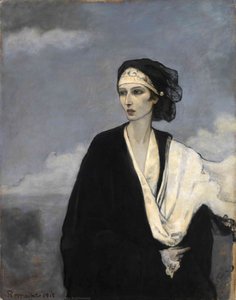
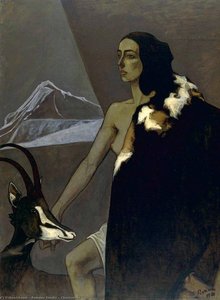
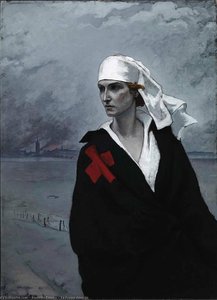
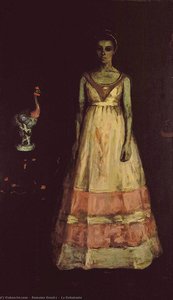
Romaine Brooks’s “La France Croisée,” painted in 1914, is more than just a portrait; it's a potent visual statement born from the turmoil of World War I. This arresting black-and-white image, measuring 116 x 85 cm, depicts Ida Rubinstein, the celebrated Russian ballet dancer and Brooks’s lover at the time, transformed into an emblem of France itself – a figure both vulnerable and fiercely resolute. The painting immediately draws the viewer in with its stark contrasts, the deep shadows hinting at devastation while the carefully rendered details—Rubinstein's elegant posture, the flowing fabric of her dress, and the determined gaze—speak to an unwavering spirit.
Brooks’s choice of subject is crucial. Rubinstein, a prominent figure in Parisian society and a passionate advocate for the Red Cross, became a powerful symbol during this period. The artist deliberately positioned her model against the backdrop of Ypres, one of the most brutal battlefields of the war, rendered with a haunting realism that underscores the human cost of conflict. The distant cityscape, subtly suggested through architectural forms, adds to the sense of scale and emphasizes the immense scope of the devastation.
A Symbol of Defiance: Style and Technique
Brooks’s style is immediately recognizable – characterized by a restrained palette, meticulous attention to detail, and a focus on psychological depth. She employs a technique reminiscent of Walter Sickert and James McNeill Whistler, favoring tonal gradations and subtle modeling to create a sense of atmosphere and mood. The use of black and white amplifies the drama, eliminating any distractions from the central figures and intensifying the emotional impact. Note the precise rendering of Rubinstein’s features – her brow furrowed in contemplation, her lips slightly parted as if offering a silent plea—these details elevate the portrait beyond mere representation.
The composition itself is carefully constructed. The diagonal lines created by the cityscape and Rubinstein's posture contribute to a dynamic sense of movement, mirroring the chaos and upheaval of war. The inclusion of two birds in flight – a recurring motif in Brooks’s work – adds an element of hope and resilience amidst the darkness, suggesting that even in the face of unimaginable suffering, beauty and freedom can endure.
Historical Context & Gabriele D'Annunzio’s Vision
"La France Croisée" was created during a pivotal moment in European history. The First World War raged across the continent, transforming social and political landscapes. Brooks, deeply affected by the conflict, used her art as a vehicle for expressing her opposition to the war and raising funds for relief organizations. The painting’s immediate impact was amplified by Gabriele D'Annunzio’s accompanying sonnets, which were displayed alongside the artwork during its initial exhibition in Paris. D’Annunzio’s evocative verses – quoted within the painting itself – further cemented Rubinstein’s role as a symbol of French heroism and sacrifice.
The inclusion of the Cross of the Legion of Honor on Rubinstein's lapel is particularly significant, reflecting Brooks’s own efforts to support the war effort. This detail underscores the artist’s commitment to her adopted country and highlights the intersection between art, activism, and national identity during a time of profound crisis. The painting’s subsequent sale as a benefit for the Red Cross demonstrates its immediate impact in supporting humanitarian causes.
A Legacy of Shadow and Grace
Romaine Brooks' “La France Croisée” remains a powerful testament to her artistic vision and her engagement with the social and political issues of her time. It’s a portrait that transcends mere representation, offering a glimpse into the complexities of human experience—vulnerability, resilience, and the enduring power of hope. A hand-painted reproduction offers an unparalleled opportunity to own a piece of this significant artwork, allowing you to contemplate its timeless themes and appreciate Brooks' masterful technique for generations to come.
Related Artworks
Artist Biography
A Life Forged in Shadow and Grey
Romaine Brooks, born Beatrice Romaine Goddard in Rome in 1874, was an artist whose life echoed the muted palette she so masterfully employed on canvas. Her story is not one of conventional artistic blossoming, but rather a testament to resilience, defiance, and the forging of a unique aesthetic vision from the crucible of personal hardship. From a fractured childhood marked by parental neglect and emotional turmoil, Brooks emerged as a painter who dared to look beyond societal expectations, capturing the complexities of human experience with an unflinching gaze. The early years were far from idyllic; her father’s abandonment and her mother's instability cast a long shadow, punctuated by a particularly traumatic period spent in a New York City tenement at age seven when her mother disappeared, leaving payments unpaid. This instilled within her a fierce independence and a profound understanding of vulnerability—qualities that would permeate both her life and her art. Though financially supported by her maternal grandfather, Isaac S. Waterman Jr., the emotional landscape of her upbringing remained barren, fostering a spirit of self-reliance and a rejection of conventional norms.Parisian Bohemia and the Cultivation of Style
In 1893, at nineteen, Brooks decisively turned her back on familial chaos and embarked for Paris, initially pursuing vocal training before discovering her true calling in painting. She studied art in Rome, notably becoming the sole female student in her life class—a testament to her determination in a deeply patriarchal environment. It was during this period that she first encountered the pervasive harassment faced by women artists, further solidifying her independent spirit and fueling her resolve to carve out her own path. Paris became her sanctuary, a haven where she immersed herself in the vibrant artistic circles of Montparnasse and Capri. Rejecting the burgeoning avant-garde movements like Cubism and Fauvism, Brooks instead sought inspiration from artists such as Charles Conder and Walter Sickert, developing a distinctive style characterized by its restrained palette of greys, ochres, and subtle reds. This wasn’t merely an aesthetic choice; it was a deliberate attempt to create a mood of introspection and melancholy, reflecting the emotional complexities she had experienced firsthand. Her subjects were drawn from the bohemian milieu she inhabited—artists, writers, intellectuals, and individuals who existed on the fringes of society—often possessing an ambiguous or androgynous quality that challenged conventional notions of identity.The Language of Grey: Portraits of a Lost Generation
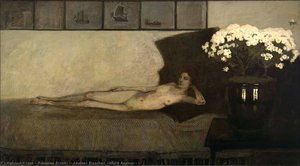
Brooks’s signature style is immediately recognizable for its atmospheric use of grey tones. This wasn't a limitation, but rather a deliberate artistic statement—a means of stripping away superficiality and revealing the inner lives of her subjects. Her portraits are not celebrations of wealth or status; they are psychological studies, capturing moments of vulnerability, defiance, and quiet desperation. Jeune Fille Anglaise Yeux et Rubans Verts (1910), with its captivating depiction of youthful beauty rendered in muted tones, exemplifies her ability to evoke emotion through subtle nuances of color and composition. Azalées Blanches (White Azaleas) (1914), a nude reclining figure, drew comparisons to Goya and Manet but distinguished itself with its distinctly female perspective on the traditionally male gaze. Perhaps most revealing are her self-portraits, created throughout her career, which offer glimpses into a complex personality marked by both confidence and vulnerability. In these works, she confronts the viewer directly, challenging them to see beyond the surface and acknowledge the complexities within. She wasn’t simply painting faces; she was capturing souls—often those haunted by secrets or burdened by societal constraints.Defiance, Recognition, and a Lasting Legacy
Brooks' personal life was as unconventional as her art. Her brief marriage in 1903 to John Ellingham Brooks, an unsuccessful pianist, ended quickly amidst conflict and separation. She then embarked on a decades-long relationship with Natalie Clifford Barney, the American writer and salonnière, finding both intellectual companionship and romantic fulfillment. Throughout her life, she traveled extensively, eventually settling in Florence during World War II. She documented her tumultuous experiences in her memoir, No Pleasant Memories, offering a raw and unflinching account of her struggles. Despite achieving some recognition during her lifetime, Brooks’s work was largely overlooked for several decades after her death in 1970. However, in the late 20th century, with the rise of feminist art history, her contribution to the artistic landscape began to be re-evaluated. She is now celebrated as a pioneer—an artist who defied convention, challenged societal norms, and explored themes of gender, sexuality, and identity at a time when such topics were rarely addressed openly in art. Her paintings stand as powerful testaments to the resilience of the human spirit and the enduring power of artistic expression.Major Works
- Jeune Fille Anglaise Yeux et Rubans Verts (1910)
- Azalées Blanches (White Azaleas) (1914)
- Self-Portrait (various iterations throughout her career)
- La Veste en Soie Verte
- La Jaquette Rouge
- The Charwoman
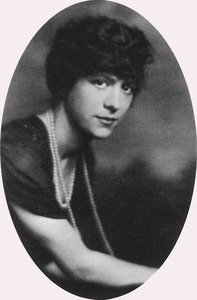
Romaine Brooks
1874 - 1970 , Italy
Quick Facts
- Artistic Movement Or Style: Symbolism
- Artists Who Influenced This Artist:
- Charles Conder
- Walter Sickert
- Date Of Birth: 1874
- Date Of Death: 1970
- Full Name: Romaine Brooks
- Nationality: American
- Notable Artworks:
- Jeune Fille Anglaise...
- Azalées Blanches
- Self-Portraits
- Place Of Birth: Rome, Italy
Related Articles

Dark Masterpieces: 10 Iconic Paintings Dominated by Black Tones |
Explore 10 iconic paintings dominated by black tones, from Rembrandt’s chiaroscuro to Goya's dark expressions. Discover the stories behind these masterpieces & find museum-quality art reproductions for your home at .
La Biennale's Masterpieces: 25 Artworks to Inspire Your Home | ArtsDot
Explore 25 iconic artworks from La Biennale di Venezia! Discover the stories behind masterpieces of Italian art, modernism & Renaissance paintings. Find museum-quality reproductions and elevate your home decor with ArtsDot.com. Explore the full collection online.
Mars Black Masterpieces: 10 Iconic Paintings & Timeless Art Decor Ideas
Delve into the power of 'Mars Black' with 10 iconic paintings by masters like Rembrandt & Caravaggio. Explore dramatic chiaroscuro, gothic art, and timeless beauty. Find museum-quality reproductions & elevate your home decor on .
Ivory Black Masters: 10 Paintings That Define Dramatic Art |
Delve into the power of 'Ivory Black' with 10 iconic paintings by masters like Rembrandt & Caravaggio. Explore dramatic chiaroscuro, gothic moods & timeless art history. Find museum-quality reproductions and elevate your home decor at
Roger de la Fresnaye: Cubism, Tradition & the Search for Order in Early 20th-Century French Painting
Explore the captivating world of Roger de la Fresnaye, a pivotal French Cubist painter. Discover his unique blend of tradition & modernity, influences, and lasting legacy with ArtsDot.