 Preview
 Send
Send Share
Share
 Details

 Download
 Similars
 X-Ray
X-Ray Diaporama
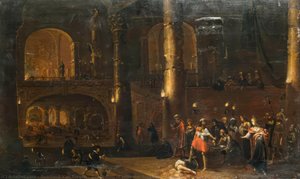
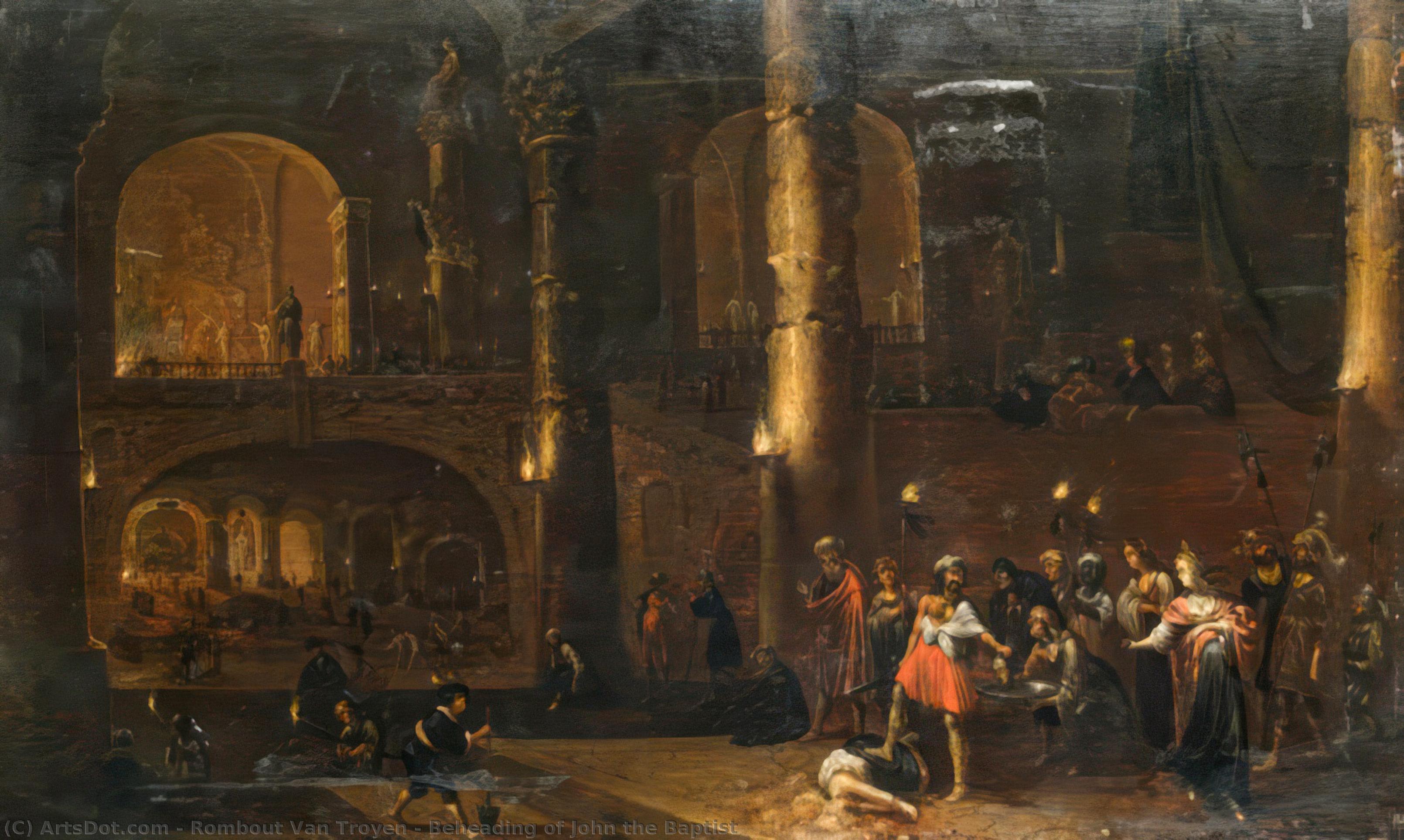
Beheading of John the Baptist
 Acrylic On Canvas
- WallArt
- Baroque Classicising Style
 36.0 x 58.0 cm
 Hermitage Museum
 Read More
Hand Made Oil Reproduction
Hand-painted oil on canvas in your size and frame, made to order by our artists. ( Buy Print Buy Image)




P118B R$10

P118H R$10

P118W R$10

P438Z R$10

P508JH R$12

P508YH R$12

P805H R$10

P805Z R$10

P919BZ R$10

P919G R$10

P919XJ R$10

P959ZH R$10

P968JZ R$12

W106C R$8

W218G R$10

W218JH R$8

W218Y R$10

W307PJ R$10

W316G R$10

W316PJ R$8

W316Y R$10

W398PJ R$8

W4111J R$10

W500HY R$15

W500JH R$15

W692G R$12

W849H R$8

W940BG R$15

W953PJ R$8




Pick from our preset sizes that match the artwork's original proportions.

You may enter your own dimensions to fit a specific frame or space. If your selected size does not match the original image's proportions, we will either crop the artwork or extend the painting with additional hand-painted elements. A digital mockup will be sent for your approval before production begins.
Please note that the on-screen preview does not reflect the actual cropping or extension. Only the mockup will accurately show the final composition.
While custom sizes are available, we recommend selecting a dimension from the predefined list to preserve the original proportions.
After order, ArtsDot.com team will email client for instructions and provide a mockup preview
Worldwide Delivery () in 3/4 weeks instead of standard 5 weeks. (16 August). No compromise on quality.

Free Worldwide Express Shipping

High-Quality Linen Canvas

Full Shipping Insurance

Customs Tax Refund Guarantee

True Color Matching Guarantee

60-Day Return Policy (Defects Only)

100% Money-Back Guarantee

Bulk Discount Offer
 Glass option is only available in size under 110 CM

Beheading of John the Baptist
Reproduction Medium
Reproduction Size
-


Total Price
R$ 1341
Artwork Description
A Dramatic Encounter: Rombout Van Troyen’s Beheading of John the Baptist
The Beheading of John the Baptist by Rombout Van Troyen stands as a testament to 17th-century artistic ambition, blending Caravaggio's theatrical lighting with classical ideals to create an image that continues to resonate with viewers centuries later. Executed in 1617, shortly after Van Troyen’s relocation from Verona to Rome, this oil on panel painting – measuring precisely 36 x 58 cm – resides within the hallowed halls of The Hermitage Museum in St. Petersburg, Russia, offering a rare glimpse into a pivotal moment in artistic history.- Style & Influences: While often erroneously attributed to Caravaggio’s immediate followers due to its masterful use of chiaroscuro – dramatic contrasts between light and dark – Van Troyen's approach reveals a profound engagement with classical aesthetics. Unlike Gerrit van Honthorst, who focused on similar nocturnal scenes, Van Troyen drew inspiration from Annibale Carracci’s Pietà (Museo di Capodimonte, Naples), adopting the artist’s deliberate pose and idealized depiction of the human form. This conscious borrowing underscores a desire to elevate the subject matter beyond mere realism, aiming for an emotionally impactful portrayal.
- Composition & Technique: The painting depicts John the Baptist's gruesome demise with unflinching detail. A man wielding a sword dominates the scene, poised to decapitate another figure kneeling in submission on the ground. Surrounding him are several additional individuals – some positioned closer to the viewer, others receding into the background – contributing to a palpable sense of tension and violence. Van Troyen skillfully employs slate as his support, enhancing the dramatic effect of the illumination.
- Historical Context: Created during the height of the Baroque period, “Beheading of John the Baptist” reflects the broader artistic trends of its time—a fascination with theatrical spectacle combined with a revival of classical ideals. Notably, there’s evidence suggesting attribution to Annibale Carracci himself in an inventory taken in 1700 at the Borghese collection, highlighting the painting's enduring influence and prompting ongoing scholarly debate about stylistic connections.
- Symbolism & Emotional Impact: Beyond its technical prowess, the artwork carries significant symbolic weight. The decapitation itself represents sacrifice and martyrdom—a central theme within Christian iconography—while the positioning of the figures evokes notions of humility and submission. Van Troyen’s masterful manipulation of light and shadow amplifies these themes, creating an emotionally charged scene that compels contemplation on mortality and faith.
Related Artworks
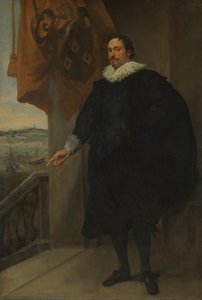
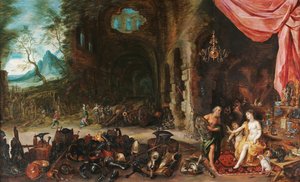
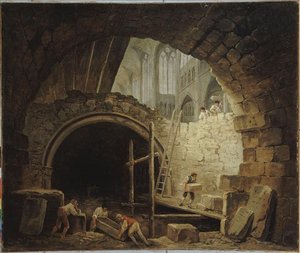
Artist Biography
A Master of Ruin and Shadow: The Life and Art of Rombout van Troyen
Rombout van Troyen, a name perhaps less instantly recognizable than some of his Dutch Golden Age contemporaries, nevertheless occupies a fascinating niche within the pantheon of 17th-century painters. Born around 1605 in Amsterdam, Van Troyen dedicated his career to crafting evocative landscapes and architectural scenes—a curious pursuit for an artist who, as historical accounts suggest, never actually set foot in Italy, the very source of inspiration for his most celebrated works. His paintings are not depictions of observed reality but rather meticulously constructed fantasies, born from a deep study of other artists’ interpretations of the Italian countryside and a remarkable talent for atmospheric effect.Early Training and Artistic Development
Van Troyen's artistic journey began around 1615 with a seven-year apprenticeship under Jan Pynas, a respected painter in Amsterdam known for his landscapes and history paintings. This formative period proved crucial to Van Troyen’s development. Pynas introduced him to the traditions of Adam Elsheimer, a German artist whose small-scale, intensely detailed landscapes had a profound impact on Dutch painting. Elsheimer's influence is visible in Van Troyen’s early works—a penchant for dramatic lighting and a focus on classical ruins as symbols of time’s passage and human mortality. However, while Pynas provided the initial foundation, Van Troyen quickly began to forge his own distinctive style, moving beyond simple imitation towards a more complex and emotionally resonant vision. He absorbed influences from other sources too, developing a unique blend that would define his oeuvre.The Italianate Landscape: A World Imagined
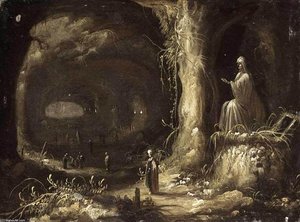
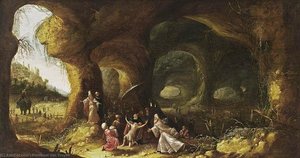
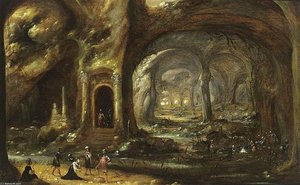
Van Troyen specialized in what became known as the “Italianate landscape”—scenes depicting the rolling hills, crumbling palaces, and sun-drenched grottos of Italy. These paintings were immensely popular during the Dutch Golden Age, appealing to a growing merchant class eager to display their sophistication and worldliness. Yet, Van Troyen’s approach differed from many of his contemporaries. He wasn't interested in recreating specific Italian locations; instead, he constructed idealized visions—landscapes populated with classical architecture, often bathed in a melancholic light. His scenes are frequently characterized by a sense of drama and mystery, achieved through the skillful use of chiaroscuro – the dramatic contrast between light and shadow. The Burning of Troy, for example, exemplifies this approach, depicting a historical event within a shadowy, expansive setting that heightens tension and emotion. His compositions often feature numerous figures engaged in various activities, adding narrative depth to his landscapes.Technique and Style: A Masterful Hand
Van Troyen’s technical skill was undeniable. He worked primarily with oil on panel, employing a meticulous brushstroke and a keen eye for detail. His paintings are characterized by their rich color palettes, often dominated by warm earth tones and subtle gradations of light. He possessed an exceptional ability to create atmospheric perspective—the illusion of depth achieved through the blurring of distant objects—which contributed significantly to the sense of realism in his landscapes. Chiaroscuro was central to his style; he used it not merely as a technical device but as a means of conveying mood and emotion. The dramatic interplay of light and shadow often draws the viewer’s eye to specific focal points within the composition, while simultaneously creating a sense of mystery and intrigue. His works are also notable for their intricate architectural details—crumbling columns, arched doorways, and overgrown ruins—which add a layer of historical depth and symbolic resonance.Legacy and Historical Significance
Despite facing financial difficulties in his later years – records indicate he relocated to Friesland in the 1650s – Rombout van Troyen left behind a significant body of work that continues to captivate art enthusiasts today. While often overshadowed by more famous Dutch masters, his paintings offer a unique perspective on the Italianate landscape tradition and demonstrate a remarkable talent for atmospheric effect and narrative storytelling. His ability to create compelling scenes from imagination rather than direct observation sets him apart, revealing a sophisticated artistic sensibility and a deep understanding of classical symbolism. Recent scholarship has begun to shed new light on Van Troyen’s life and career, solidifying his place as an important figure within the Dutch Golden Age and a master of ruin and shadow.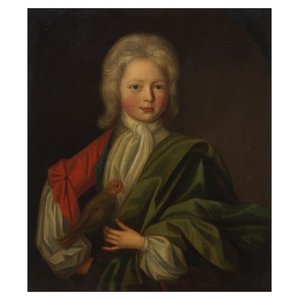
rombout van troyen
1605 - 1655 , Netherlands
Quick Facts
- Artistic Movement Or Style: Dutch Golden Age painting
- Artists Who Influenced This Artist:
- Annibale Carracci
- Jan Pynas
- Date Of Birth: c 1605
- Date Of Death: 1655
- Full Name: Rombout van Troyen
- Nationality: Dutch
- Notable Artworks: ['Beheading of John the Baptist']
- Place Of Birth: Amsterdam, Netherlands
Related Articles
Van Gogh's Masterpieces: Explore 25 Iconic Paintings & Art for Your Home
Journey through Vincent van Gogh's 25 most iconic paintings! Explore 'Starry Night', 'Sunflowers,' and more—discover the stories, techniques & emotions behind these Post-Impressionist masterpieces. Find museum-quality art reproductions for your home at ArtsDot.com.

Rembrandt's Masterpieces: Explore 25 Iconic Paintings & Prints | ArtsDot
Journey through Rembrandt van Rijn's 25 most iconic paintings & etchings. Explore Dutch Golden Age masterpieces, dramatic chiaroscuro, and timeless portraits. Find museum-quality art reproductions to elevate your home decor on ArtsDot.com.

John Singer Sargent's 25 Masterpieces: Portraits & Beyond | ArtsDot
Explore 25 iconic John Singer Sargent paintings – from dazzling portraits to Impressionist landscapes. Discover the stories behind Madame X, El Jaleo & more! Find museum-quality art reproductions and elevate your home decor with ArtsDot.com.

John Constable's Masterpieces: Explore 25 Iconic Landscapes for Your Home
Journey through John Constable's 25 most celebrated landscapes. Explore Romanticism, Dedham Vale & his masterful use of light in iconic paintings like 'Hay Wain'. Find museum-quality art reproductions and elevate your home decor on ArtsDot.com.
Adriaen van Ostade: A Master of Dutch Genre Painting & Social Commentary
Explore the life & work of Adriaen van Ostade, a leading Dutch Golden Age painter. Discover his realistic genre scenes, social commentary, and lasting influence on art history. Learn more at ArtsDot.