Preview
 Send
Send Share
Share
 Details

 Download
 Similars
 X-Ray
X-Ray Diaporama
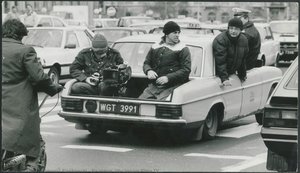
Na planie zdjęciowym filmu TV
 Contemporary Realism
 1988
1988 15.0 x 24.0 cm
 Contemporary Art Foundation In Situ
 Read More
Giclée / Art Print
Museum-quality giclée or canvas print with fast production and flexible finish options. ( Buy Hand Made Painting Buy Image)




P118B $10

P118H $10

P118W $10

P438Z $10

P508JH $12

P508YH $12

P805H $10

P805Z $10

P919BZ $10

P919G $10

P919XJ $10

P959ZH $10

P968JZ $12

W106C $8

W218G $10

W218JH $8

W218Y $10

W307PJ $10

W316G $10

W316PJ $8

W316Y $10

W398PJ $8

W4111J $10

W500HY $15

W500JH $15

W692G $12

W849H $8

W940BG $15

W953PJ $8




Pick from our preset sizes that match the artwork's original proportions.

You may enter your own dimensions to fit a specific frame or space. If your selected size does not match the original image's proportions, we will either crop the artwork or extend the image with a mirrored or solid-fill edge. A digital mockup will be sent for your approval before production begins.
Please note that the on-screen preview does not reflect the actual cropping or extension. Only the mockup will accurately show the final composition.
While custom sizes are available, we recommend selecting a dimension from the predefined list to preserve the original proportions.
Worldwide Delivery () in 2 weeks instead of standard 4/5 weeks. (24 August)

Free Worldwide Express Shipping

High-Quality Linen Canvas

Full Shipping Insurance

Customs Tax Refund Guarantee

True Color Matching Guarantee

60-Day Return Policy (Defects Only)

100% Money-Back Guarantee

Bulk Discount Offer
 Glass option is only available in size under 110 CM

Na planie zdjęciowym filmu TV
Giclée / Art Print
Reproduction Size
-


Total Price
$ 63
Related Artworks
Artist Biography
Romuald Pieńkowski: Capturing the Ephemeral Dance of Film
Romuald Pieńkowski, a name perhaps less familiar to the general public than some of his contemporaries, stands as a quietly profound observer of modern life. Born in Drohiczyn, Poland, in 1927, he dedicated his artistic career to documenting the fleeting moments and vibrant energy of film sets and television studios – spaces often unseen by the casual viewer yet brimming with creative intensity. Pieńkowski’s work isn't about grand narratives or heroic figures; instead, it offers intimate glimpses into the process of creation, revealing the human drama unfolding behind the camera lens.
His early life was shaped by a strong family tradition in art and photography. While details remain somewhat sparse, it is known that he initially pursued studies in architecture before gravitating towards visual arts. This background undoubtedly informed his meticulous approach to composition and his keen eye for detail – qualities that would become hallmarks of his distinctive style. Pieńkowski’s career truly took off during the 1960s and 70s, a period of significant artistic experimentation and social change in Poland. He quickly established himself as a reliable and insightful photographer on numerous film productions, including landmark works like Jerzy Hoffman's ‘The Deluge’ (1974) and ‘Colonel Wołodyjowski’ (1969).
A World Within a Frame: The Subject Matter of Pieńkowski’s Work
Pieńkowski’s photographs are not simply snapshots; they're carefully constructed narratives. He wasn’t interested in the finished product, but rather in the raw energy and collaborative spirit of the filmmaking process. His subjects were the crew – the directors, cinematographers, actors, assistants, and technicians – immersed in their work, caught in moments of intense concentration, playful banter, or quiet anticipation. He frequently photographed scenes during setup, rehearsals, and even on set during filming, capturing the atmosphere of a production as it unfolded. The resulting images are rich with texture, light, and shadow, reflecting both the technical aspects of filmmaking and the human element at its core.
A recurring motif in Pieńkowski’s work is the use of black and white photography. This choice lends an immediacy and timelessness to his images, stripping away distractions and focusing attention on form, light, and emotion. The stark contrast emphasizes the physicality of the subjects – their hands, faces, and clothing – creating a powerful visual impact. His photographs often evoke a sense of nostalgia, transporting the viewer back to a specific time and place—typically mid-20th century Poland—while simultaneously capturing the universal experience of creative endeavor.
The Influence of ‘The Deluge’ and Beyond
Pieńkowski's contribution to Jerzy Hoffman’s adaptation of Henryk Sienkiewicz’s epic novel, 'The Deluge,' is particularly noteworthy. The film itself was a challenging undertaking, beset by production difficulties and critical scrutiny. Pieńkowski’s photographs, however, offer a compelling counterpoint to the finished product, revealing the behind-the-scenes struggles and triumphs of the filmmaking team. His images document the intense debates, creative compromises, and sheer determination required to bring such an ambitious project to life.
Beyond ‘The Deluge,’ Pieńkowski continued to work on numerous film productions throughout his career, documenting a wide range of genres and styles. His photographs provide invaluable insights into the history of Polish cinema, offering a visual record of the people and processes that shaped its evolution. His ability to capture the essence of a moment—the quiet intensity of an actor’s gaze, the focused concentration of a director at work—makes his images enduringly captivating.
A Legacy of Observation
Romuald Pieńkowski passed away in 1995, leaving behind a remarkable body of work that offers a unique perspective on the world of film. His photographs are not merely technical records; they’re intimate portraits of human creativity and collaboration. They remind us that even in the most complex and demanding environments, there is always beauty to be found—in the fleeting moments of connection, the shared passion for art, and the enduring spirit of those who bring stories to life on screen.
His work continues to be exhibited and studied, solidifying his place as a significant figure in Polish photography and a keen observer of the human drama unfolding behind the camera lens. Pieńkowski’s legacy lies not only in the images he captured but also in the way he invited us to see—and appreciate—the unseen world of filmmaking.
romuald pieńkowski
Poland
Quick Facts
- Artistic Movement Or Style: Contemporary visual art
- Full Name: Romuald Pieńkowski
- Nationality: Polish
- Notable Artworks: ['Na planie zdjęciowym filmu TV']
- Place Of Birth: Drohiczyn, Poland
Related Articles

Monochrome Visions: Exploring the Aesthetic & Historical Significance of Black & White Photography
Explore the rich history & artistic power of black and white photography. From early techniques to iconic masters like Ansel Adams, discover why monochrome continues to captivate art lovers today. Expert insights for collectors.
White on Canvas: 10 Masterpieces & Timeless Elegance for Your Home Decor
Explore 10 iconic white paintings by Monet, Whistler & Rothko! Discover the stories behind these serene masterpieces and their impact on art history. Find museum-quality reproductions for your home decor at .
Beyond the Lens: Photography's Enduring Influence on Modern & Contemporary Art
Explore photography's pivotal role in shaping modern & contemporary art. Discover key movements, influential artists like Stieglitz, and expert collecting advice from ArtsDot.
Timeless & Chic: Elevating Your New Home with the Sophistication of Black and White Photography
Transform your new home with the timeless allure of black and white photography. ArtsDot.com specializes in elegant monochrome decor and custom hand-painted wedding portraits that turn cherished milestones into lasting, soulful masterpieces. Elevate your space with ease.
Pictorialism: A Search for Artistic Photography's Soul – Aesthetics, Techniques & Legacy
Explore the captivating world of Pictorialism – a pivotal movement that transformed photography into fine art. Discover key artists like Stieglitz & Käsebier, techniques, and collecting tips from experts.