 Preview
 Send
Send Share
Share
 Details

 Download
 Similars
 X-Ray
X-Ray Diaporama
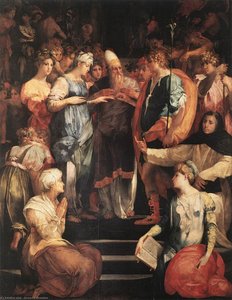
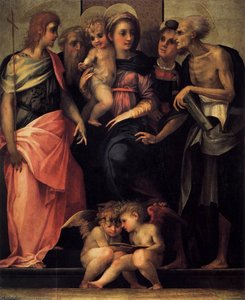
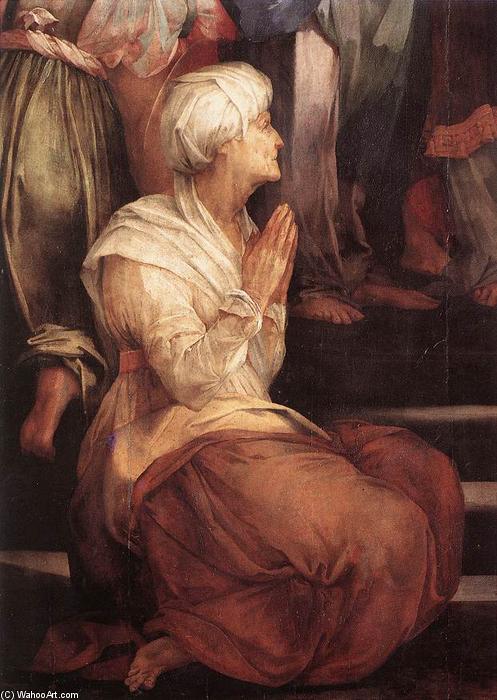
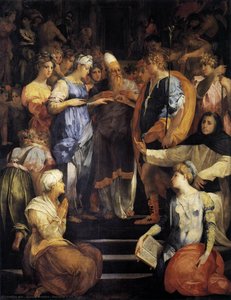
Marriage of the Virgin (detail)


 Read More
Hand Made Oil Reproduction
Hand-painted oil on canvas in your size and frame, made to order by our artists. ( Buy Print Buy Image)




P118B $10

P118H $10

P118W $10

P438Z $10

P508JH $12

P508YH $12

P805H $10

P805Z $10

P919BZ $10

P919G $10

P919XJ $10

P959ZH $10

P968JZ $12

W106C $8

W218G $10

W218JH $8

W218Y $10

W307PJ $10

W316G $10

W316PJ $8

W316Y $10

W398PJ $8

W4111J $10

W500HY $15

W500JH $15

W692G $12

W849H $8

W940BG $15

W953PJ $8




Pick from our preset sizes that match the artwork's original proportions.

You may enter your own dimensions to fit a specific frame or space. If your selected size does not match the original image's proportions, we will either crop the artwork or extend the painting with additional hand-painted elements. A digital mockup will be sent for your approval before production begins.
Please note that the on-screen preview does not reflect the actual cropping or extension. Only the mockup will accurately show the final composition.
While custom sizes are available, we recommend selecting a dimension from the predefined list to preserve the original proportions.
After order, ArtsDot.com team will email client for instructions and provide a mockup preview
Worldwide Delivery () in 3/4 weeks instead of standard 5 weeks. (31 August). No compromise on quality.

Free Worldwide Express Shipping

High-Quality Linen Canvas

Full Shipping Insurance

Customs Tax Refund Guarantee

True Color Matching Guarantee

60-Day Return Policy (Defects Only)

100% Money-Back Guarantee

Bulk Discount Offer
 Glass option is only available in size under 110 CM

Marriage of the Virgin (detail)
Reproduction Medium
Reproduction Size
-


Total Price
$ 263
The Marriage of the Virgin (detail): A Renaissance Echo of Faith and Symbolism
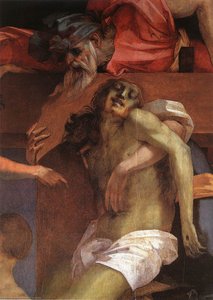
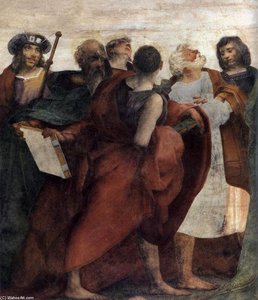
Rosso Fiorentino’s “Marriage of the Virgin,” housed within the Basilica of San Lorenzo in Florence, stands as a cornerstone of Early Renaissance art—a testament to humanist ideals intertwined with profound religious contemplation. Completed around 1523, this monumental altarpiece isn't merely a depiction of biblical narrative; it’s an exquisitely crafted meditation on grace and divine providence, rendered with meticulous attention to detail and imbued with layers of symbolic significance.
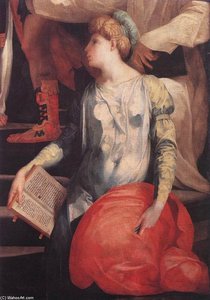
The central focus is undeniably Mary kneeling before the altar, her posture conveying unwavering devotion. Her hands clasped together in prayer—a gesture universally recognized as representing humility and supplication—draws the viewer’s gaze inward, prompting reflection on spiritual aspiration. The drapery surrounding Mary is rendered with masterful realism, capturing the subtle folds and textures of fabric to convey a sense of palpable presence.
- Style: Florentine Renaissance – Characterized by balanced compositions, idealized figures, and an emphasis on clarity and elegance.
- Technique: Rosso Fiorentino employed oil paint on oak panel, utilizing glazing techniques—thin layers of translucent pigment—to achieve luminous effects and create depth within the painting’s surface. This method allowed for subtle gradations of color and enhanced the overall visual impact.
- Historical Context: Created during a period of artistic flourishing in Florence under Lorenzo de Medici, “Marriage of the Virgin” reflects the humanist revival that championed classical learning alongside Christian faith. It embodies the Renaissance desire to represent human experience with accuracy and beauty.
Symbolism Within Sacred Space
Beyond its formal artistry, the painting is rich in symbolic iconography. The altar itself represents Christ’s sacrificial offering—the cornerstone of Christian theology—while the surrounding figures embody various saints and prophets who intercede for Mary's salvation. Notably, the inclusion of Saint John the Baptist—often depicted as a youthful ascetic—symbolizes purity and spiritual enlightenment.
The muted palette—primarily earthy tones accented by delicate reds—contributes to the painting’s solemn atmosphere. However, the radiant white robe worn by Mary serves as a beacon of divine grace, visually elevating her figure above the earthly realm. This deliberate use of color underscores the importance of faith and spiritual aspiration within Renaissance artistic discourse.
A Legacy of Luminosity and Emotion
"Marriage of the Virgin" continues to captivate viewers centuries after its creation due to Rosso Fiorentino’s masterful manipulation of light and shadow—a technique known as chiaroscuro—that imbues the scene with dramatic intensity. The artist skillfully employs highlights to illuminate Mary's face and hands, emphasizing her expression of piety and conveying a sense of palpable emotion.
More than just an artistic achievement, “Marriage of the Virgin” represents a pivotal moment in Renaissance art history—a synthesis of humanist ideals and religious devotion that solidified Florence’s position as Europe’s cultural epicenter. Its enduring beauty lies not only in its technical brilliance but also in its ability to evoke profound contemplation on themes of faith, humility, and divine grace.
Related Artworks
Artist Biography
A Life Painted in Fire: The Dramatic World of Rosso Fiorentino
Giovanni Battista di Jacopo, known to the world as Rosso Fiorentino – “The Red Florentine” – was a name whispered with both admiration and a touch of unease during the Italian Renaissance. Born in Florence on March 8th, 1495, his very nickname alluded to the fiery spirit that would come to define not only his appearance but also his intensely emotional and innovative art. Rosso wasn’t merely a painter; he was a harbinger of change, a pivotal figure bridging the High Renaissance's classical ideals with the burgeoning complexities of Mannerism. His journey, marked by artistic exploration, political upheaval, and ultimately, a premature death in Fontainebleau in 1540, left an indelible mark on the landscape of European art.Formative Years and Florentine Foundations
Rosso’s artistic education began within the esteemed workshop of Andrea del Sarto, one of Florence's leading masters. This environment proved crucial, placing him alongside another rising star, Pontormo. The two artists shared a space for experimentation, fostering a creative rivalry that pushed both to explore beyond conventional boundaries. The influence of the Florentine school was deeply ingrained during these formative years; however, even early works reveal Rosso’s distinct inclination towards dramatic intensity and an expressive use of color – qualities that would set him apart. He absorbed the lessons of perspective and anatomical accuracy but quickly began to imbue his figures with a psychological depth rarely seen in earlier Renaissance art. Early paintings like the *Holy Family with the Infant Saint John the Baptist* demonstrate this emerging style, hinting at the emotional turbulence that would characterize his mature work.The Roman Interlude and the Seeds of Mannerism
In 1523, Rosso ventured to Rome, a city brimming with artistic energy and the monumental achievements of Michelangelo and Raphael. This period proved transformative. He was profoundly impacted by Michelangelo’s powerful figures and dynamic compositions, as well as Raphael's refined grace. However, rather than simply imitating these masters, Rosso synthesized their influences into something uniquely his own. The Sack of Rome in 1527 brought chaos and destruction, forcing Rosso to flee the city and marking a turning point in his career. This traumatic event seems to have intensified the emotional undercurrents within his art, pushing him further away from the High Renaissance’s emphasis on harmony and towards the more unsettling aesthetic of Mannerism.French Patronage and Lasting Legacy
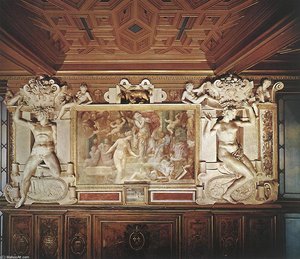
Rosso's journey eventually led him to France in 1530, where he entered the service of King Francis I. This marked a new chapter, as he became a key figure in the decoration of the Château de Fontainebleau, alongside other prominent artists. Here, he was given considerable freedom to experiment and develop his style further. The *Gallery of Francis I* at Fontainebleau stands as a testament to his skill, showcasing allegorical scenes filled with elongated figures, vibrant colors, and complex symbolism. He also created works like *Elephant*, demonstrating an ability to capture the essence of his subjects with remarkable detail. Sadly, Rosso’s time in France was cut short by illness; he died in 1540 at the age of forty-five. Despite his relatively brief career, Rosso Fiorentino's influence resonated throughout Europe. His style profoundly impacted artists like Francesco Primaticcio, who succeeded him at Fontainebleau, and helped to solidify Mannerism as a dominant force in art for decades to come. His paintings, now found in museums worldwide – including the Galleria Nazionale d'Arte Moderna e Contemporanea in Rome, the Pinacoteca Comunale in Volterra, and the Duomo in Città di Castello – continue to captivate viewers with their dramatic power and emotional depth, ensuring that the “Red Florentine” remains a vital and compelling figure in art history.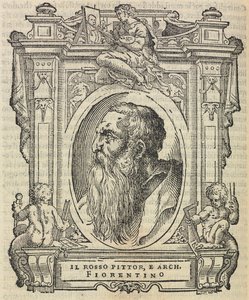
Rosso Fiorentino
1495 - 1540 , Italy
Quick Facts
- Artistic Movement Or Style: Mannerism
- Artists Or Movements Influenced By This Artist: ['Francesco Primaticcio']
- Artists Who Influenced This Artist:
- Michelangelo
- Raphael
- Date Of Birth: March 8, 1495
- Date Of Death: November 14, 1540
- Full Name: Giovanni Battista di Jacopo
- Nationality: Italian
- Notable Artworks:
- The Deposition
- Elephant
- Moses and Jethro's Daughters
- Place Of Birth: Florence, Italy
Related Articles
Uffizi's 25 Masterpieces: Renaissance Art & Timeless Decor Inspiration
Journey through the Uffizi Gallery's 25 most iconic Renaissance artworks! Explore Botticelli, Leonardo da Vinci & Michelangelo’s masterpieces. Find museum-quality art reproductions and curated decor ideas to bring timeless Italian beauty into your home. Discover all masterpieces on ArtsDot.com
Fra Angelico's Masterpieces: 25 Renaissance Paintings for Your Home | ArtsDot
Explore 25 breathtaking masterpieces by Fra Angelico, a Renaissance master. Discover the stories behind his iconic frescoes, Annunciations & religious art. Find museum-quality reproductions and elevate your home decor with ArtsDot.com.
Renaissance Mannerism: Style, Subtlety & the Transition from Harmony to Artifice
Explore the captivating world of Renaissance Mannerism! Discover its key characteristics, pioneering artists like Pontormo & Bronzino, and its pivotal role in art history. Expert insights & museum-quality reproductions at ArtsDot.
The Enduring Legacy of Masterpieces: Exploring Artistic Influence & Timeless Appeal
Explore the enduring legacy of Renaissance masterpieces with ArtsDot. Discover the historical context, humanist ideals, and lasting influence of iconic artists like Michelangelo & Raphael. Elevate your collection today.

Giotto's Masterpieces: 25 Renaissance Artworks for Your Home | ArtsDot
Explore 25 breathtaking artworks by Giotto di Bondone, a Renaissance master. Discover the stories behind iconic frescoes & paintings like the Scrovegni Chapel cycle. Find museum-quality Giotto reproductions and elevate your home decor with ArtsDot.com.