 Preview
 Send
Send Share
Share
 Details

 Download
 Similars
 X-Ray
X-Ray Diaporama
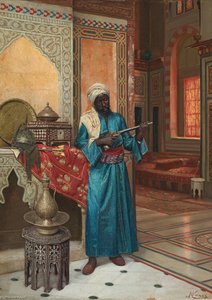
The Palace Guard

 Read More
Hand Made Oil Reproduction
Hand-painted oil on canvas in your size and frame, made to order by our artists. ( Buy Print Buy Image)




































Pick from our preset sizes that match the artwork's original proportions.

You may enter your own dimensions to fit a specific frame or space. If your selected size does not match the original image's proportions, we will either crop the artwork or extend the painting with additional hand-painted elements. A digital mockup will be sent for your approval before production begins.
Please note that the on-screen preview does not reflect the actual cropping or extension. Only the mockup will accurately show the final composition.
While custom sizes are available, we recommend selecting a dimension from the predefined list to preserve the original proportions.
After order, ArtsDot.com team will email client for instructions and provide a mockup preview
Worldwide Delivery () in 3/4 weeks instead of standard 5 weeks. (17 August). No compromise on quality.

Free Worldwide Express Shipping

High-Quality Linen Canvas

Full Shipping Insurance

Customs Tax Refund Guarantee

True Color Matching Guarantee

60-Day Return Policy (Defects Only)

100% Money-Back Guarantee

Bulk Discount Offer
 Glass option is only available in size under 110 CM

The Palace Guard
Reproduction Medium
Reproduction Size
-


Total Price
$ 263
Artwork Description
The Palace Guard: A Glimpse into Imperial Grandeur
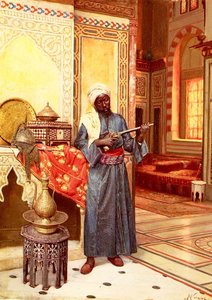
Rudolf Weisse's "The Palace Guard" is a captivating portrait that transports viewers to the opulent world of 19th-century imperial courts. The painting depicts a solitary guard standing attentively within an elaborately decorated room, exuding an aura of authority and vigilance. This piece exemplifies Weisse’s skill in capturing historical scenes with meticulous detail and a touch of realism.
Subject and Composition
The central figure is a man dressed in a striking blue robe, suggesting his high rank within the palace hierarchy. He appears to be holding a rifle or gun, emphasizing his role as protector. The setting itself is richly detailed: an ornate room with a red carpet, two benches (one centrally located and another to the right), a table adorned with a vase and bowl, all contributing to a sense of grandeur and luxury. The composition is carefully balanced, drawing the viewer's eye to the guard while still appreciating the surrounding environment.
Style and Technique
Weisse’s style in "The Palace Guard" aligns with 19th-century realism, characterized by its attention to detail and accurate representation of form. The artist demonstrates a mastery of light and shadow, creating depth and volume within the scene. The brushwork appears smooth and controlled, contributing to the overall sense of refinement. While the exact medium is not explicitly stated in available resources, it's likely oil on panel, given similar works by Weisse.
Historical Context and Orientalism
The painting’s context reveals a fascinating connection to the artistic movement known as Orientalism. Popular during the 19th century, Orientalist art depicted scenes from the Middle East and North Africa, often reflecting European perceptions of these regions. While "The Palace Guard" doesn't explicitly portray an Eastern setting, it shares stylistic elements with Orientalist works, particularly in its focus on figures of authority within lavish environments. Research suggests Weisse himself may have visited Cairo, further hinting at his engagement with this artistic trend.
Symbolism and Emotional Impact
Beyond the surface depiction of a palace guard, the painting evokes feelings of solemnity, duty, and perhaps even a hint of isolation. The guard's unwavering gaze suggests vigilance and dedication to his role. The opulent surroundings contrast with the guard’s stoic presence, creating a subtle tension that adds depth to the work. "The Palace Guard" is more than just a portrait; it's a window into a bygone era, inviting viewers to contemplate themes of power, responsibility, and the enduring allure of imperial grandeur.
Related Artworks
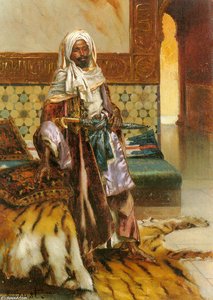
Artist Biography
The Chronicles of Vienna: Rudolf Weisse and the Art of Imperial Remembrance
Rudolf Weisse, a name resonating within the halls of Austrian art history, stands as a compelling chronicler of 19th-century Vienna. While not always a household name like some of his contemporaries, Weisse’s dedication to capturing the essence of imperial life, historical moments, and dignified portraiture secures his place as a master of realism and court art. Born in an era defined by both tradition and burgeoning modernity, Weisse navigated these currents with a distinctive style that blended meticulous detail with a romantic sensibility. His work offers a fascinating glimpse into the social fabric, political climate, and artistic tastes of Vienna during a period of significant transformation. Though biographical details remain somewhat sparse, the power of his paintings speaks volumes about his dedication to preserving the visual memory of an empire.A Brush with History: Early Life and Artistic Development
The precise circumstances surrounding Rudolf Weisse’s early life are shrouded in some mystery; however, it is understood he received formal artistic training within Vienna itself. The city at this time was a vibrant hub for artistic innovation, steeped in the legacy of masters like David and Ingres, yet also embracing emerging trends such as Biedermeier realism. It's likely Weisse’s early education focused on classical techniques – drawing from life, mastering anatomy, and developing a keen eye for perspective. This foundation is readily apparent in his later works, characterized by their precise rendering of form and space. He quickly gravitated towards historical painting, recognizing the power of art to not only depict events but also to shape narratives and reinforce cultural values. His early influences likely included artists who specialized in grand-scale compositions and detailed depictions of court life, a genre that would become his signature style. The meticulous attention to detail evident in his paintings suggests an apprenticeship or close study of established historical painters working within the Viennese artistic circles.The Imperial Canvas: Themes and Techniques
Weisse’s oeuvre is dominated by scenes of Vienna's imperial past, particularly those surrounding Duke Rudolf IV, a pivotal figure in Austrian history known for his ambition and efforts to elevate Austria’s status within Europe. Paintings depicting the life and reign of Rudolf IV are not merely historical recreations; they are imbued with a sense of grandeur and reverence. Weisse meticulously researched costumes, architecture, and customs to ensure accuracy, yet he wasn't simply a documentarian. He skillfully employed light and shadow to create dramatic effects, drawing attention to key figures and moments within the composition. His portraits, often commissioned by members of the aristocracy, share this same dedication to detail and psychological insight. Weisse possessed an ability to capture not just the likeness of his subjects but also their character and social standing. He favored a realistic style, eschewing overly idealized representations in favor of portraying individuals with dignity and authenticity. His technique often involved layering glazes to achieve rich colors and subtle gradations of tone. The use of impasto – applying paint thickly to the canvas – added texture and depth to his works, further enhancing their visual impact.Preserving a Legacy: Major Achievements and Historical Significance
While pinpointing specific landmark exhibitions or awards proves challenging due to limited documentation, Weisse’s enduring legacy lies in the body of work he created that captured the spirit of Vienna's imperial past. His paintings served as powerful symbols of national pride and cultural identity, adorning the walls of aristocratic homes and public institutions. His depictions of St. Stephen's Cathedral, a central landmark of Vienna, are particularly noteworthy for their architectural accuracy and atmospheric quality. These works not only showcase his technical skill but also demonstrate his deep connection to the city he called home. Weisse’s contribution extends beyond mere artistic representation; he played a role in shaping the collective memory of Austria. By immortalizing key historical figures and events, he helped reinforce national narratives and cultural values. In an era marked by political upheaval and social change, his paintings offered a sense of continuity and stability, reminding viewers of their shared heritage. His work provides invaluable insight into the artistic tastes and social conventions of 19th-century Vienna, making him a significant figure in Austrian art history.A Continuing Resonance: Weisse’s Art Today
Today, Rudolf Weisse's paintings continue to captivate audiences with their meticulous detail, historical accuracy, and romantic sensibility. While perhaps not as widely recognized as some of his more famous contemporaries, his work is increasingly appreciated for its unique contribution to Austrian art history.- His paintings offer a valuable glimpse into the social fabric and political climate of 19th-century Vienna.
- The enduring appeal of his portraits lies in their ability to capture not just likeness but also character and dignity.
- Weisse’s dedication to preserving the visual memory of an empire secures his place as a master of realism and court art.
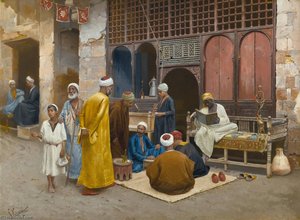
Related Articles
Romantic Realism's Finest: 10 Masterpieces for Your Home | ArtsDot
Explore 10 defining masterpieces of Romantic Realism! Discover Courbet, Millet & Daumier's powerful paintings—capturing emotion and social realities. Find museum-quality reproductions for your home at ArtsDot.com.
Academic Realism's Finest: 10 Masterpieces for Art Lovers & Home Decor
Explore 10 defining Academic Realism masterpieces by Bouguereau, Gérôme & Cabanel. Discover the stories behind these iconic paintings and bring timeless art into your home with museum-quality reproductions from ArtsDot.com. Explore the full collection online!

Echoes of Society: Exploring Social Realism's Enduring Legacy in Art
Explore the powerful world of Social Realism art! Discover key artists, masterpieces & its profound social commentary. Expert insights into this influential movement's history and enduring legacy.

Ernst Fuchs: A Visionary of Fantastic Realism & His Enduring Legacy
Explore the captivating world of Ernst Fuchs & the Vienna School of Fantastic Realism. Discover his unique 'mischtechnik', iconic symbolism, and lasting influence on visionary art. Expert insights for collectors.
The Poetic Truth of Observation: Exploring 19th-Century Realism in Painting
Explore the captivating world of 19th-century Realism! Discover key artists like Courbet & Millet, masterpieces, and the powerful social commentary behind this influential art movement. Expert insights at ArtsDot.