 Preview
 Send
Send Share
Share
 Details

 Download
 Similars
 X-Ray
X-Ray Diaporama
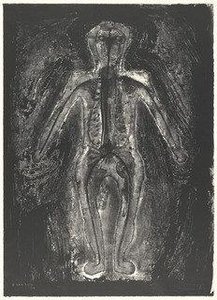
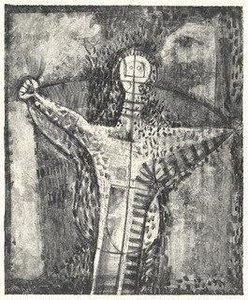
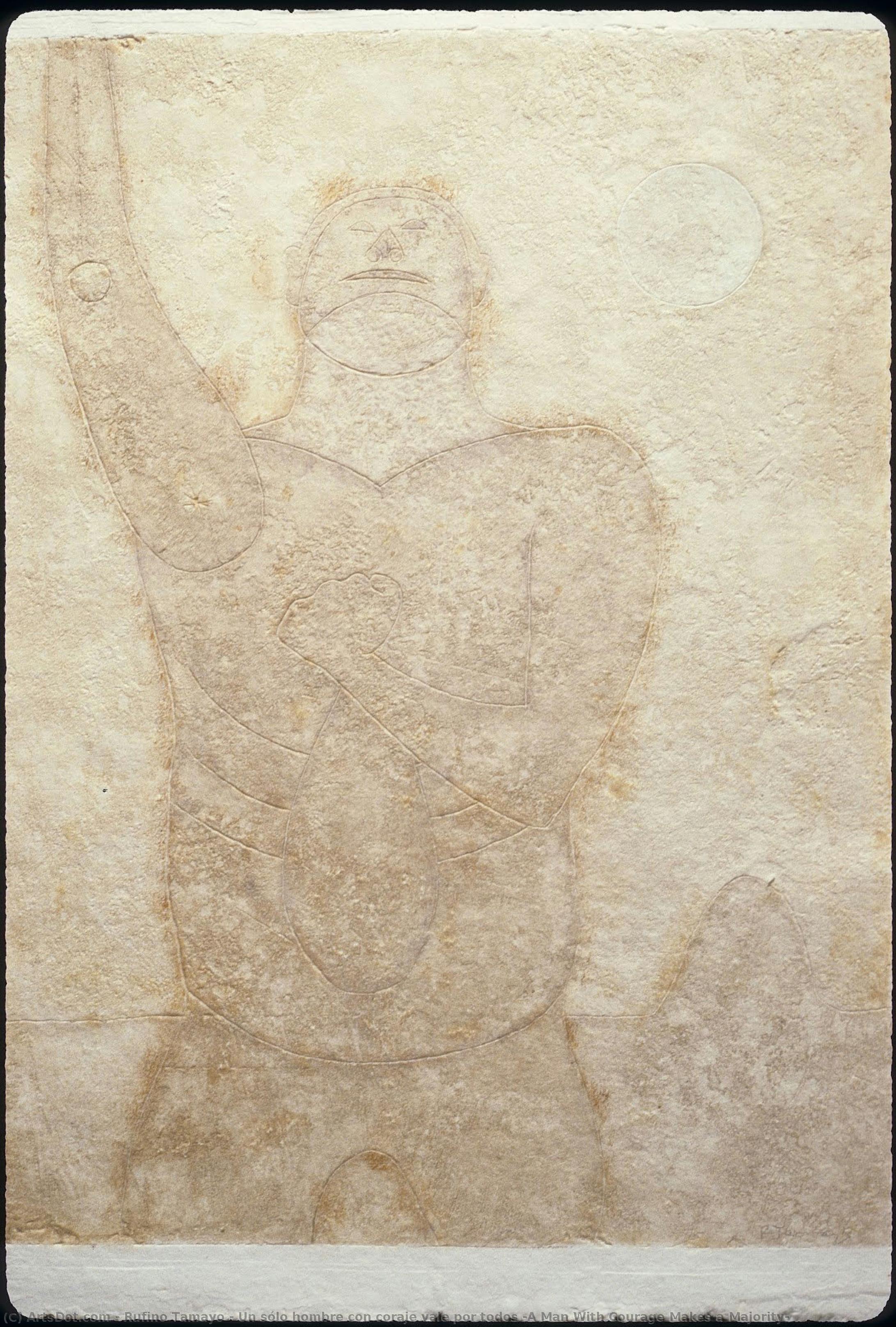
Un sólo hombre con coraje vale por todos (A Man With Courage Makes a Majority)


 Read More
Giclée / Art Print
Museum-quality giclée or canvas print with fast production and flexible finish options. ( Buy Hand Made Painting Buy Image)




P118B $10

P118H $10

P118W $10

P438Z $10

P508JH $12

P508YH $12

P805H $10

P805Z $10

P919BZ $10

P919G $10

P919XJ $10

P959ZH $10

P968JZ $12

W106C $8

W218G $10

W218JH $8

W218Y $10

W307PJ $10

W316G $10

W316PJ $8

W316Y $10

W398PJ $8

W4111J $10

W500HY $15

W500JH $15

W692G $12

W849H $8

W940BG $15

W953PJ $8




Pick from our preset sizes that match the artwork's original proportions.

You may enter your own dimensions to fit a specific frame or space. If your selected size does not match the original image's proportions, we will either crop the artwork or extend the image with a mirrored or solid-fill edge. A digital mockup will be sent for your approval before production begins.
Please note that the on-screen preview does not reflect the actual cropping or extension. Only the mockup will accurately show the final composition.
While custom sizes are available, we recommend selecting a dimension from the predefined list to preserve the original proportions.
Worldwide Delivery () in 2 weeks instead of standard 4/5 weeks. (31 August)

Free Worldwide Express Shipping

High-Quality Linen Canvas

Full Shipping Insurance

Customs Tax Refund Guarantee

True Color Matching Guarantee

60-Day Return Policy (Defects Only)

100% Money-Back Guarantee

Bulk Discount Offer
 Glass option is only available in size under 110 CM

Un sólo hombre con coraje vale por todos (A Man With Courage Makes a Majority)
Giclée / Art Print
Reproduction Size
-


Total Price
$ 63
A Bold Statement of Resilience: Exploring Rufino Tamayo’s “Un Sólo Hombre Con Coraje Vale Por Todos”
Rufino Tamayo's "Un Sólo Hombre Con Coraje Vale Por Todos" (A Man With Courage Makes a Majority) transcends mere visual representation; it embodies the spirit of Mexican identity and artistic innovation. Created in 1982, this mixograph print stands as a testament to Tamayo’s masterful blending of indigenous influences with modernist aesthetics—a dialogue between tradition and experimentation that continues to resonate today. Collaborating closely with Luis Remba, founder of Taller de Gráfica Mexicana, Tamayo pioneered “mixografía,” a revolutionary printing process that captures the textural nuances of his original artwork with remarkable fidelity.The Technique: Mixografía – A Dialogue Between Relief and Texture
Mixografía distinguishes itself from conventional printmaking through its ingenious method of transferring an image onto a copper plate. Artists meticulously draw directly into a soft wax mold, creating a bas-relief surface that mirrors the contours of their vision. This intricate process is then transferred to the plate, followed by printing on thick cotton pulp—a material chosen specifically for its ability to preserve the three-dimensional qualities and subtle surface irregularities achieved during etching. The resulting print isn’t simply reproduced; it's reimagined, imbued with a palpable physicality that speaks volumes about Tamayo’s artistic intent.Symbolism: Courage Amidst Uncertainty
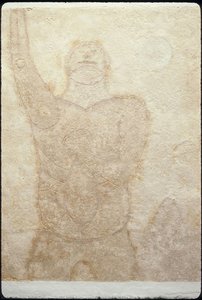
The central figure in “Un Sólo Hombre Con Coraje Vale Por Todos” commands immediate attention—a solitary man raised arms defiantly against the backdrop of a textured wall. This posture isn't merely defensive; it conveys an assertion of strength and conviction, representing Tamayo’s belief that individual courage possesses transformative power within a collective context. The monochromatic palette amplifies this symbolic resonance, stripping away extraneous detail to focus on the core message: unwavering resolve in the face of adversity. As Tamayo himself eloquently stated, “I am interested in Man,” highlighting his preoccupation with portraying human resilience and dignity—themes deeply rooted in Mexican cultural heritage.Historical Context: Nationalism and Artistic Expression
Produced during a period marked by fervent nationalism within Mexico, "Un Sólo Hombre Con Coraje Vale Por Todos" reflects Tamayo’s commitment to articulating the enduring spirit of indigenous culture alongside the burgeoning influence of modern art movements. The artwork's stylistic choices—particularly its textural surface achieved through mixografía—were deliberately designed to honor pre-Columbian traditions while simultaneously engaging with contemporary artistic discourse. This duality underscores Tamayo’s pioneering role in shaping Mexican visual culture and establishing a distinctive aesthetic voice that continues to inspire artists globally.Emotional Impact: A Timeless Reflection on Human Spirit
Ultimately, “Un Sólo Hombre Con Coraje Vale Por Todos” transcends its formal elements to evoke profound emotional responses. The image's stark simplicity—the solitary figure against the textured wall—captures a moment of defiant courage—a visual embodiment of resilience and triumph. It serves as an enduring reminder that individual conviction can galvanize collective action, cementing Tamayo’s legacy as one of artistic integrity and unwavering devotion to portraying the human condition with sensitivity and insight.Related Artworks
![Mexican Landscape \n[paisaije Mexicano] — José Clemente Orozco, Mexican Muralism](/media/artworks/images-thumb/1b/4f/1b4fb08c1150706f7451e9f7b5673180.jpg)
Artist Biography
A Life Rooted in Mexico: The Early Years of Rufino Tamayo
Rufino del Carmen Arellanes Tamayo, born in Oaxaca City, Mexico, in 1899, emerged as a pivotal figure in 20th-century Mexican art—a painter who dared to forge his own path amidst the fervent nationalism and political fervor of his time. His Zapotec heritage deeply informed his artistic vision, instilling within him a profound connection to pre-Columbian traditions and a sensitivity to the enduring spirit of Mexico’s indigenous cultures. Tragedy marked Tamayo's early life; the loss of both parents propelled a young Rufino into the bustling heart of Mexico City, where he lived with an aunt and supported himself working in her fruit markets. This formative experience—the vibrant colors, textures, and everyday dramas of market life—would later permeate his canvases, becoming recurring motifs imbued with symbolic weight. In 1917, Tamayo enrolled at the Escuela Nacional de Artes Plásticas at San Carlos, a prestigious institution that exposed him to European artistic movements like Cubism, Impressionism, and Fauvism. However, he soon found himself chafing against the academy’s constraints, seeking instead an independent course of study that would allow him to synthesize these influences with his uniquely Mexican sensibility.Navigating Modernity: Artistic Development and a Distinct Voice
Tamayo's artistic journey was one of constant exploration and refinement. His early career saw him working at the Department of Ethnographic Drawings under José Vasconcelos, eventually rising to head the department—a position that deepened his engagement with Mexico’s cultural heritage. While contemporaries like Diego Rivera, José Clemente Orozco, and David Alfaro Siqueiros were consumed by creating large-scale murals brimming with overt political messages, Tamayo charted a different course. He believed that art should transcend immediate political concerns, seeking instead to capture the essence of Mexican identity through universal themes and symbolic language. This divergence often placed him at odds with the dominant muralist movement, earning him both criticism and admiration. A sojourn in New York City from 1926 to 1929 proved transformative. Feeling stifled by the artistic climate in Mexico, Tamayo sought a broader perspective, organizing a solo exhibition that garnered attention but ultimately reaffirmed his desire to return home. Upon his return, he was met with renewed recognition, his second solo show in 1929 receiving widespread acclaim and solidifying his position as a rising star in the Mexican art world. A decade later, Tamayo and his wife, Olga, embarked on an extended stay in Paris, immersing themselves in the European avant-garde and further refining their artistic vision.Figurative Abstraction and the Language of Symbols
Rufino Tamayo’s style is instantly recognizable—a captivating blend of figurative abstraction, surrealist undertones, and a vibrant color palette deeply rooted in Mexican traditions. He masterfully balanced recognizable forms with abstract elements, creating compositions that are both evocative and enigmatic. His paintings often feature distorted figures, dreamlike landscapes, and symbolic objects—animals, fruits, masks—that resonate with layers of meaning. The influence of his Zapotec heritage is palpable in the recurring motifs and a profound connection to Mexican cosmology and mythology. Tamayo’s use of color is particularly striking; he employed bold, expressive hues to convey emotion, create atmosphere, and imbue his works with a sense of vitality. He frequently depicted women in his paintings, often exploring their struggles and resilience through nuanced portrayals and carefully chosen colors. His wife, Olga, served as a frequent model and muse, her image appearing in numerous canvases—a testament to their deep connection and shared artistic journey.The Innovation of Mixografia: A Lasting Legacy
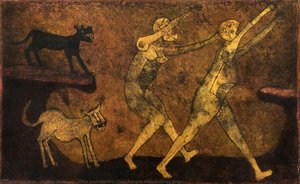
Beyond his paintings, Rufino Tamayo made significant contributions to the field of graphic arts through the development of “Mixografia,” a unique fine art printing process he pioneered with Mexican painter and engineer Luis Remba. This groundbreaking technique allowed for prints with three-dimensional texture, registering volume and enabling the use of diverse materials—a departure from traditional printmaking methods. Mixografia involved etching a design onto a metal plate, then covering it with ink and cotton fiber pulp before applying pressure, resulting in prints that possessed a tactile quality and remarkable depth of color. Tamayo created approximately 80 original Mixographs using this technique, each one a testament to his innovative spirit and artistic vision. “Dos Personajes Atacados por Perros” (Two Characters Attacked by Dogs) stands as a particularly celebrated example of his Mixografia prints—a powerful and symbolic work that exemplifies the medium’s unique capabilities.A Defining Voice in Mexican Art
Rufino Tamayo's legacy extends far beyond his individual artworks; he played a pivotal role in defining 20th-century Mexican art, offering an alternative perspective to the dominant muralist movement and establishing himself as a significant figure in modern art internationally. His work gained recognition across the globe, exhibited in prestigious museums and galleries worldwide. In Mexico City, the Museo Rufino Tamayo stands as a testament to his enduring influence—a space dedicated to showcasing his extensive collection and promoting contemporary art. Tamayo’s innovative techniques, unique artistic vision, and unwavering commitment to exploring universal themes continue to inspire artists today. He demonstrated that modern Mexican art could be both deeply rooted in its cultural heritage and universally relevant, paving the way for future generations of artists to embrace their own voices and explore new creative horizons. His contribution lies not just in what he painted, but in how he expanded the possibilities of artistic expression itself.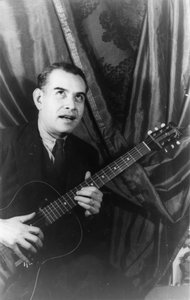
Rufino Tamayo
1899 - 1991 , Mexico
Quick Facts
- Artistic Movement Or Style: Figurative Abstraction, Surrealism
- Artists Or Movements Influenced By This Artist: Contemporary Mexican artists
- Artists Who Influenced This Artist:
- Henri Matisse
- Georges Braque
- Pablo Picasso
- Date Of Birth: August 25, 1899
- Date Of Death: June 24, 1991
- Full Name: Rufino del Carmen Arellanes Tamayo
- Nationality: Mexican
- Notable Artworks:
- Composición
- Las flechadoras
- Mask
- Dos Personajes Atacados por Perros
- Place Of Birth (City And Country): Oaxaca City, Mexico
Related Articles

Giclée Prints: Archival Quality & Aesthetic Nuances for the Discerning Collector
Explore the world of giclée prints with ArtsDot. Learn about archival quality, aesthetic nuances & investment potential. Expert guidance for discerning art collectors seeking museum-quality reproductions and lasting value.

The Enduring Legacy of Fine Art Prints: Technique, History & Aesthetic Impact
Explore the rich history & techniques of fine art prints. Discover investment potential, assess authenticity, and learn how to preserve your collection with expert guidance. Trusted insights for discerning collectors.

Echoes of Time: Exploring the Enduring Appeal & Historical Context of Vintage Art Prints
Explore the captivating world of vintage art prints! Discover their history, collecting tips & enduring appeal. Expert insights on chromolithography and building a legacy collection with ArtsDot.
Bold Strokes & Powerful Visions: 10 Artworks That Command Attention | ArtsDot
Experience art's raw power! Explore 10 iconic paintings – Van Gogh, Kahlo & more – that define 'bold'. Discover the stories behind these expressive masterpieces and find museum-quality reproductions for your home at ArtsDot.com.
The Enduring Legacy of Printmaking: Techniques, Themes & Artistic Innovation Across Centuries
Explore the rich history of printmaking with ArtsDot. Discover techniques from intaglio to lithography, learn about collecting valuable prints & find museum-quality reproductions. Expert insights for art enthusiasts and collectors.