 Preview
 Send
Send Share
Share
 Details

 Download
 Similars
 X-Ray
X-Ray Diaporama
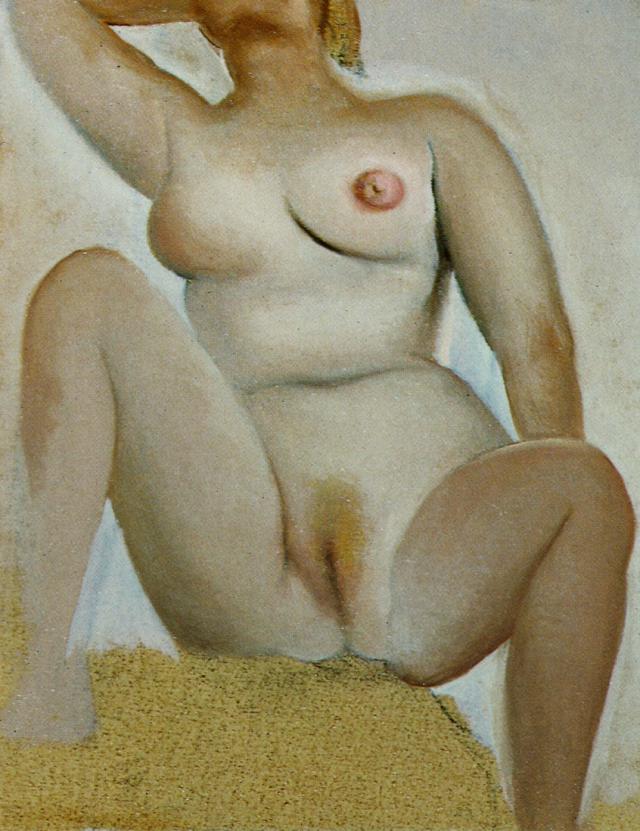
Female Seated Nude, circa 1960

 Read More
Giclée / Art Print
Museum-quality giclée or canvas print with fast production and flexible finish options. ( Buy Hand Made Painting Buy Image)




P118B $10

P118H $10

P118W $10

P438Z $10

P508JH $12

P508YH $12

P805H $10

P805Z $10

P919BZ $10

P919G $10

P919XJ $10

P959ZH $10

P968JZ $12

W106C $8

W218G $10

W218JH $8

W218Y $10

W307PJ $10

W316G $10

W316PJ $8

W316Y $10

W398PJ $8

W4111J $10

W500HY $15

W500JH $15

W692G $12

W849H $8

W940BG $15

W953PJ $8




Pick from our preset sizes that match the artwork's original proportions.

You may enter your own dimensions to fit a specific frame or space. If your selected size does not match the original image's proportions, we will either crop the artwork or extend the image with a mirrored or solid-fill edge. A digital mockup will be sent for your approval before production begins.
Please note that the on-screen preview does not reflect the actual cropping or extension. Only the mockup will accurately show the final composition.
While custom sizes are available, we recommend selecting a dimension from the predefined list to preserve the original proportions.
Worldwide Delivery () in 2 weeks instead of standard 4/5 weeks. (25 August)

Free Worldwide Express Shipping

High-Quality Linen Canvas

Full Shipping Insurance

Customs Tax Refund Guarantee

True Color Matching Guarantee

60-Day Return Policy (Defects Only)

100% Money-Back Guarantee

Bulk Discount Offer
 Glass option is only available in size under 110 CM

Female Seated Nude, circa 1960
Giclée / Art Print
Reproduction Size
-


Total Price
$ 63
Collectible Description
Female Seated Nude, circa 1960 – A Study in Quiet Contemplation
Salvador Dalí’s “Female Seated Nude,” created around 1960, stands as a testament to the artist's enduring fascination with the human form and his masterful manipulation of Surrealist principles. This striking black-and-white painting embodies the spirit of Post-Impressionism while retaining the distinctive visual language that cemented Dalí’s place among the most influential figures in 20th-century art.
- Subject Matter: The artwork centers on a nude female figure positioned gracefully upon the ground. Her posture exudes serenity and repose, inviting viewers to contemplate the beauty of stillness and vulnerability.
- Style & Technique: Dalí’s approach aligns with Post-Impressionism, prioritizing expressive color palettes—though absent here—and capturing subtle nuances of texture and form. The artist employs meticulous brushwork to render the figure's contours with remarkable precision, creating a sense of sculptural solidity despite its monochrome presentation.
- Historical Context: Produced during Dalí’s later career, “Female Seated Nude” reflects a shift away from the overtly fantastical imagery characteristic of his Surrealist heyday. Instead, it demonstrates a return to classical artistic traditions—particularly sculpture—influenced by Michelangelo and Bernini—a deliberate homage to monumental art forms.
- Symbolism: The nude figure itself carries significant symbolic weight within Dalí’s oeuvre. Often interpreted as representing feminine strength and purity amidst the anxieties of the era, it serves as a counterpoint to the turbulent political landscape of the time. The seated position reinforces this notion of contemplation and inner peace.
- Emotional Impact: Despite its lack of color, “Female Seated Nude” possesses an undeniable emotional resonance. The artist’s skillful use of light and shadow sculpts the figure's form, creating a luminous effect that draws attention to the delicate curves of her body—a visual celebration of femininity and artistic mastery.
Further research into Dalí’s artistic trajectory reveals his profound engagement with sculptural ideals, mirroring the grandeur of Michelangelo’s David and Bernini’s Apollo Belvedere. This deliberate stylistic choice underscores Dalí's ambition to elevate painting beyond mere representation, transforming it into a conduit for conveying psychological depth and aesthetic beauty.
The artwork’s enduring appeal lies in its ability to evoke contemplation and admiration—a quiet masterpiece that speaks volumes about the artist’s vision and his unwavering commitment to exploring the complexities of human experience. Its monochrome palette enhances the dramatic impact of form and texture, solidifying Dalí's legacy as a pioneer of Surrealist technique.
Related Artworks
Artist Biography
A Life Submerged in Dreams: The World of Salvador Dalí
Salvador Domingo Felipe Jacinto Dalí i Domènech, a name synonymous with surrealism, was born on May 11, 1904, in the sun-drenched town of Figueres, Spain. His existence was destined to be anything but ordinary, a life meticulously crafted as a performance, an exploration of the subconscious rendered visible through startling imagery and technical brilliance. The shadow of loss loomed early; his older brother, also named Salvador, had died just nine months before Dalí’s birth, a trauma that would permeate his art with themes of duality and replacement. This formative experience, coupled with a complex relationship with his stern yet pragmatic father and the indulgent affection of his mother, shaped a personality both flamboyant and deeply introspective. From a young age, Dalí demonstrated an exceptional artistic talent, nurtured through formal training at the San Fernando Academy of Fine Arts in Madrid. However, it was a pivotal encounter with modern painting – particularly the works of Impressionists and Renaissance masters – that ignited within him a fervent desire to break from tradition and forge his own unique path.
The Crucible of Paris and the Birth of a Surrealist Vision
A journey to Paris in 1926 proved transformative, immersing Dalí in the heart of the avant-garde movement. He found himself drawn to the rebellious spirit of Dadaism, its rejection of logic and embrace of absurdity resonating with his own burgeoning artistic inclinations. More importantly, it was in Paris that he fully embraced Surrealism, connecting with key figures like André Breton, Pablo Picasso – whom Dalí deeply revered – and Joan Miró. This encounter wasn’t merely an adoption of a style; Dalí revolutionized the movement itself. He developed what he termed the “paranoiac-critical method,” a self-induced state of paranoia designed to unlock the hidden imagery of the subconscious mind. This technique allowed him to translate dreams, anxieties, and deeply personal symbols onto canvas with startling clarity and meticulous detail. The result was a world populated by melting clocks, elongated shadows, distorted figures, and bizarre juxtapositions – hallmarks of his instantly recognizable style. The Persistence of Memory, completed in 1931, remains perhaps his most iconic work, encapsulating the Surrealist exploration of time’s fluidity, the fragility of memory, and the inevitability of decay.
Beyond the Canvas: A Prolific and Multifaceted Artist
Dalí's creative output extended far beyond painting. He was a remarkably prolific artist, venturing into sculpture, film – notably collaborations with Alfred Hitchcock in Spellbound and Walt Disney – graphic arts, jewelry design, and even stage sets. His fascination wasn’t limited to traditional artistic mediums; he explored the boundaries of commercial art, designing advertisements and window displays. Recurring motifs permeated his work: ants symbolizing decay, eggs representing pre-natal life and hope, crutches signifying support and fragility, drawers hinting at hidden secrets, and melting objects embodying the instability of reality. These symbols weren’t arbitrary; they were deeply personal, rooted in his own anxieties, desires, and memories. Works like Juliet's Tomb, a poignant exploration of loss, Mannequin (Barcelona Mannequin), reflecting an obsession with artificiality and identity, and Landscape with Flies, a disturbing depiction of mortality, demonstrate the breadth and depth of his thematic concerns. His meticulous technique, honed through years of practice, allowed him to render these fantastical visions with photographic realism, further amplifying their unsettling power.
Eccentricity, Legacy, and Enduring Influence
Throughout his life, Dalí cultivated a persona as flamboyant and eccentric as his art. He embraced self-promotion, understanding the power of spectacle in capturing public attention. His marriage to Gala Éluard in 1934 was pivotal, not only personally but artistically; she became his muse, business manager, and unwavering supporter. While his later years were marked by increasing commercial ventures and a sometimes controversial embrace of the Francoist regime, his artistic legacy remains immense. He died on January 23, 1989, leaving behind a body of work that continues to challenge, provoke, and inspire. The Salvador Dalí Museum in St. Petersburg, Florida, stands as a testament to his enduring appeal, housing an extensive collection that allows visitors to immerse themselves in the world of this extraordinary artist. Dalí transcended the boundaries of art, becoming a cultural icon whose influence can be seen in fashion, film, advertising, and popular culture. He remains one of the most recognizable and influential artists of the 20th century—a true visionary who dared to explore the depths of the subconscious and translate its mysteries onto canvas for all the world to see.
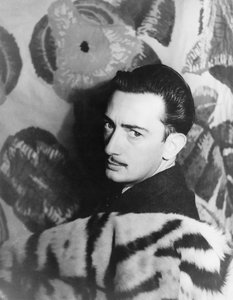
Salvador Dalí
1904 - 1989 , Spain
Quick Facts
- Artistic Movement Or Style: Surrealism
- Artists Or Movements Influenced By This Artist:
- Pop art
- Contemporary artists
- Artists Who Influenced This Artist:
- Cubism
- Dada
- Pablo Picasso
- Date Of Birth: May 11, 1904
- Date Of Death: January 23, 1989
- Full Name: Salvador Domingo Felipe Jacinto Dalí i Domènech
- Nationality: Spanish
- Notable Artworks:
- Persistence of Memory
- Juliet's Tomb
- Mannequin
- Landscape with Flies
- The Angelus of Gala
- Place Of Birth (City And Country): Figueres, Spain
Related Articles
Salvador Dalí's Masterpieces: 25 Surrealist Visions for Your Home | ArtsDot
Journey into the surreal world of Salvador Dalí! Explore 25 iconic paintings—from 'The Persistence of Memory' to his boldest creations. Discover the stories behind these masterpieces & find museum-quality art reproductions for your home at ArtsDot.com.

Salvador Dalí: Surrealism, Subconscious Exploration & Artistic Innovation
Explore the captivating world of Salvador Dalí! Discover his surrealist masterpieces, profound connection to Freud's theories, and lasting impact on art & culture. A deep dive into a visionary artist.

Surrealism's Visionaries: 10 Masterpieces for Your Home | ArtsDot
Journey into the dreamlike world of Surrealism! Explore 10 masterpieces by Dali, Magritte & Miró that redefined art. Discover their stories & find museum-quality reproductions to elevate your home decor on ArtsDot.com.

Decoding Dalí: The Secrets of the Paranoiac-Critical Method and Surrealist Symbols
Unlock the mysteries of Salvador Dalí. Explore the profound secrets behind his Paranoiac-Critical Method and decode the surrealist symbols that define his legendary dreamscapes in this expert art history guide.
Beyond Light & Color: Impressionism vs. Post-Impressionism for the Discerning Collector
Explore the nuances of Impressionism & Post-Impressionism with . Expert insights for collectors on style, investment, and acquiring museum-quality reproductions.