The Architect of Dreams: An Introduction to Dalí’s Surrealist Vision
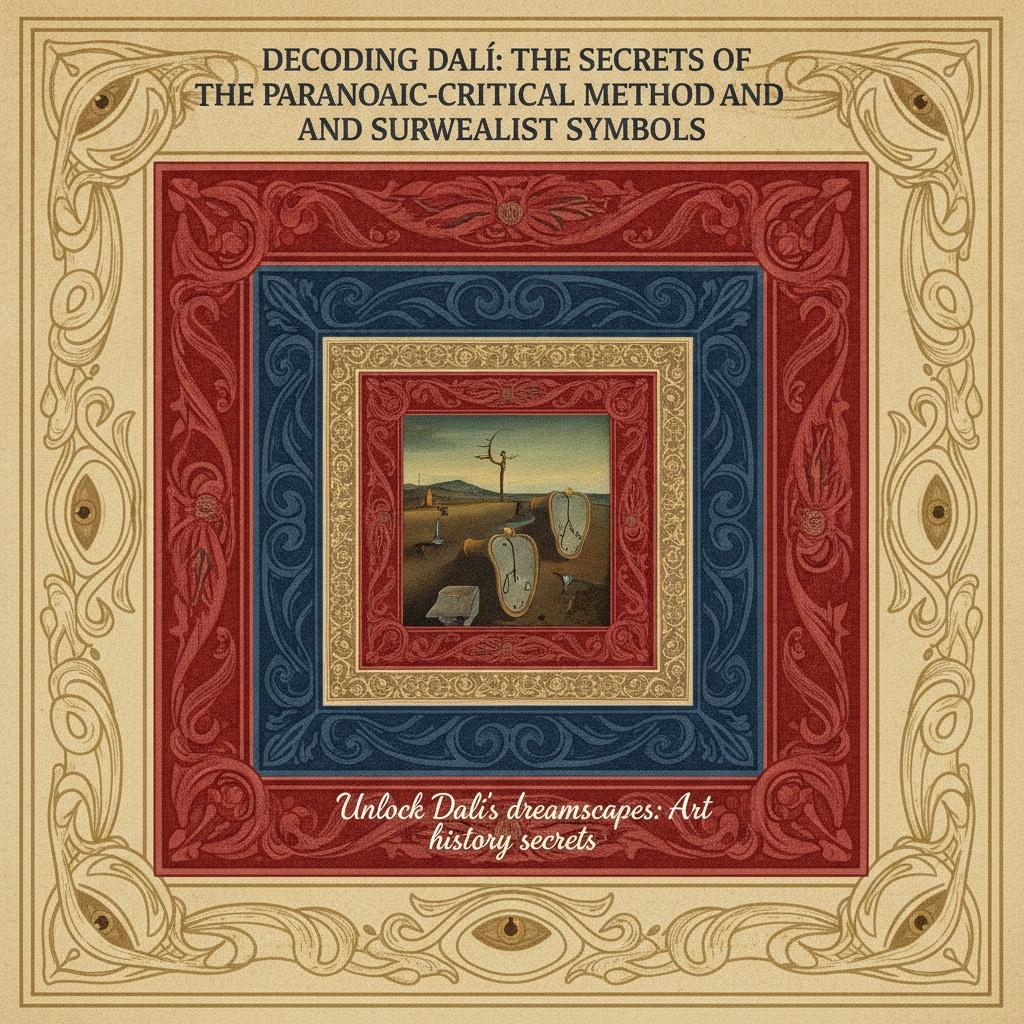
 Decoding Dalí: The Paranoiac-Critical Method and Surrealist Symbols Explained
The Architect of Dreams: An Introduction to Salvador Dalí and Surrealism To step into the world of Salvador Dalí is to abandon the safety of the waking mind and surrender to a landscape where logic dissolves like wax under a summer sun. Born in 1904,...
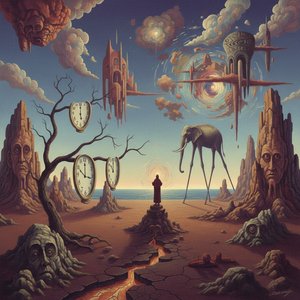
To encounter the work of Salvador Dalí is not merely to view a painting, but to step through a threshold into a realm where the boundaries of reality and hallucination dissolve. Born in 1904 in the sun-drenched town of Figueres, Spain, Dalí emerged as far more than a mere participant in the Surrealist movement; he was its most formidable architect and provocateur. His existence, shaped by early shadows of loss and a complex relationship with his lineage, was meticulously crafted as a performance—an exploration of the subconscious rendered visible through startling imagery and unparalleled technical brilliance. While many of his contemporaries sought to capture the spontaneous flow of thought through simple automatism, Dalí pursued a more structured, almost clinical approach to the irrational. He transformed the canvas into a window where logic dissolves like wax under a summer sun, inviting us to abandon the safety of the waking mind and surrender to a landscape of breathtaking form and profound psychological depth.
The Paranoiac-Critical Method: Mastering the Art of Controlled Hallucination
Paranoiac-critical methodThe paranoiac-critical method is a surrealist technique developed by Salvador Dalí in the early 1930s. He employed it in the production of paintings and other artworks, especially those that involved optical illusions and other multiple images. The t...
At the heart of Dalí’s revolutionary impact lies his self-developed technique known as the paranoiac-critical method. Developed in the early 1930s, this was not a descent into madness, but rather a deliberate, disciplined cultivation of a hallucinatory state. Dalí sought to invoke a form of paranoia—the sensation that the self is being manipulated or that hidden connections exist between unrelated objects—to unlock the latent imagery of the subconscious. This method allowed him to perceive links between things which, rationally, are not linked, creating works filled with optical illusions and multiple images. By employing this active process of the mind, he could visualize complex, irrational associations and then translate them onto canvas with an almost unsettling, photographic clarity. The result was a deconstruction of identity itself, where subjectivity became the primary essence of the artwork, turning the act of seeing into a profound psychological investigation.
Decoding the Canvas: A Guide to Dalí’s Most Iconic Symbols
 Decoding Dalí: The Paranoiac-Critical Method and Surrealist Symbols Explained
The Architect of Dreams: An Introduction to Dalí’s Surrealist Vision To encounter the work of Salvador Dalí is not merely to view a painting, but to step through a threshold into a realm where the boundaries of reality and hallucination dissolve. As ...
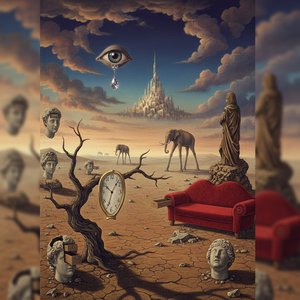
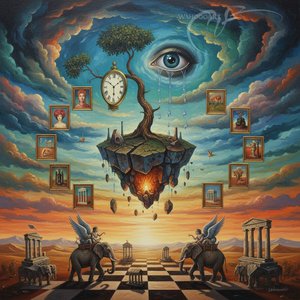
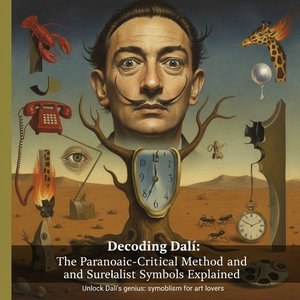
To navigate a Dalí masterpiece is to learn a new, dream-based language. His canvases are populated by a recurring lexicon of symbols that serve as portals into his complex psyche. Perhaps most famous are the melting watches, which challenge our very perception of time and its fluidity within the dream state. We encounter ants, often signifying decay and the fleeting nature of life, and crutches, which provide necessary support to the fragile structures of reality and identity. His work frequently features distorted facial features and unexpected juxtaposability, where a landscape might morph into a human form or a piece of furniture might appear to cling to a ceiling. These are not random eccentricities; they are carefully placed keys designed to unlock the viewer's own unconscious associations. Through these symbols, Dalí invites us to question the stability of the physical world and explore the deeper, often unsettling, truths hidden beneath the surface of our perceptions.
Duality and Trauma: The Psychological Roots of His Imagery
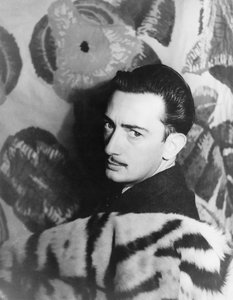 Salvador Dalí
A Life Submerged in Dreams: The World of Salvador Dalí Salvador Domingo Felipe Jacinto Dalí i Domènech, a name synonymous with surrealism, was born on May 11, 1904, in the sun-drenched town of Figueres, Spain. His existence was destined to be anythin...
The surrealist landscapes we admire are deeply rooted in the personal traumas and dualities that defined Dalí’s early life. A profound sense of loss loomed over him from infancy, as his older brother, also named Salvador, had passed away just months before his birth. This formative experience instilled in his art a recurring theme of duality, replacement, and the haunting presence of the "other." His relationship with his father, characterized by a tension between stern pragmatism and artistic rebellion, further fueled his explorations of authority and repression. These psychological undercurrents manifest in works that grapple with the boundaries between life and death, the real and the imagined, and the self and the shadow. By projecting these internal conflicts onto the external world, Dalí created a bridge between personal neurosis and universal human anxiety, making his deeply introspective visions resonate across cultures and generations.
From Tradition to Subversion: Blending Renaissance Mastery with Surrealist Chaos
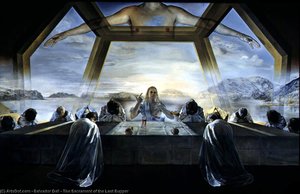 The Sacrament of the Last Supper
Introduction to Salvador Dalí and Surrealism Salvador Dalí (1904-1989) was a Spanish surrealist artist, renowned for his striking and bizarre images. In the 1920s, he became a leading figure in the surrealist movement, which sought to explore the unc...
Despite his reputation for irrationality, Dalí’s technical foundation was rooted in the profound traditions of the past. His formal training at the San Fernando Academy of Fine Arts in Madrid provided him with a mastery of precise draftsmanship and classical composition. He held a deep reverence for the Renaissance masters and the luminous techniques of the Impressionists, and he frequently utilized these traditional methods to render his most bizarre subjects. This striking juxtaposition—using the meticulous, academic style of the Old Masters to depict melting clocks or distorted bodies—is precisely what gives his work its haunting power. In masterpieces like
The Sacrament of the Rasa Supper, we see a masterful blend of Christian iconography and surrealist innovation. By applying classical precision to the illogical, Dalí achieved a sense of "hyper-reality," making the impossible appear undeniably tangible and forcing the viewer to confront the dream as if it were a physical truth.
Bringing the Dream Home: Curating Surrealist Masterpieces in Modern Interiors
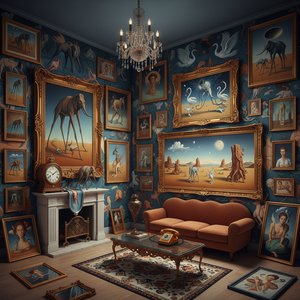 Salvador Dalí's Masterpieces: 25 Surrealist Visions for Your Home | ArtsDot
Introduction To embark on a journey through the top 25 artworks of Salvador Dalí is to enter a realm where dreams and reality intertwine, logic dissolves into absurdity, and the subconscious takes breathtaking form. These paintings are not merely ima...
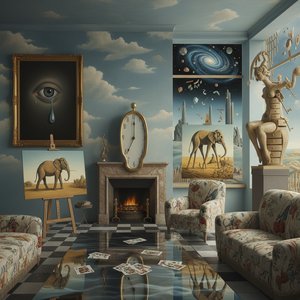
Integrating the spirit of Surrealism into a contemporary home offers a unique opportunity to infuse a space with mystery, intellect, and conversation. Much like the way an interior designer uses color and texture to evoke mood, selecting a piece inspired by Dalí allows you to introduce a sense of wonder and psychological depth to your surroundings. Whether it is a large-scale canvas that serves as a focal point in a minimalist living room or a smaller, more intimate print in a study, these works act as windows into an infinite imagination. When decorating with such profound imagery, consider the balance of the room; the striking, often chaotic energy of Surrealism pairs beautifully with clean lines and neutral palettes, allowing the artwork to command the space without overwhelming it. By embracing the irrationality of Dalí, you transform a mere living space into a curated sanctuary of thought and discovery.
Discovering art should be an inspiring journey, not a daunting one. At ArtsDot.com, we believe that every home deserves the soul-stirring presence of a masterpiece. Whether you are looking to explore the vibrant textures of a hand-painted oil reproduction or seeking a custom transformation of your own memories through our professional digital mockups, we are here to guide you. From fine art prints to bespoke commissions that bring historical styles into your modern life, our mission is to make the extraordinary accessible. Explore our collections by color, mood, or room type today and begin building your personal gallery.