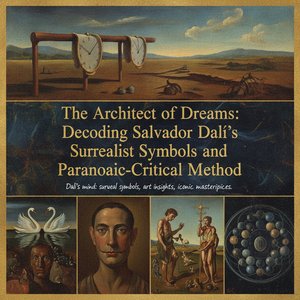
The Architect of Dreams: An Introduction to Dalí’s Surrealist Vision
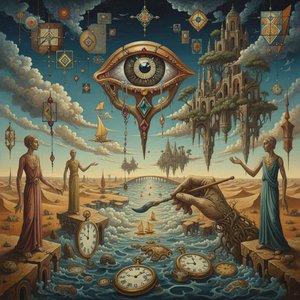
To encounter the work of Salvador Dalí is not merely to view a painting, but to step through a threshold into a realm where the boundaries of reality and hallucination dissolve. As one of the most formidable titans of the twentieth century, Dalí did not simply participate in the Surrealist movement; he redefined its very architecture. His canvases serve as windows into a meticulously constructed dreamscape, where the familiar is rendered alien and the impossible is presented with an almost unsettling clarity. For the discerning collector, understanding Dalí requires more than an appreciation of his technical virtuosity—it requires an immersion into a psyche that sought to map the uncharted territories of the human subconscious. His vision was characterized by a profound tension between hyper-realistic precision and irrational subject matter. This juxtaposition creates a sense of the uncanny, a feeling that while the light, shadow, and texture are undeniably real, the logic governing them is entirely fractured. Through his mastery of oil on canvas, Dalí captured the ephemeral nature of thought, transforming fleeting anxieties and erotic desires into permanent, monumental icons of art history. To study his oeuvre is to embark on a journey through the labyrinth of the mind, where every brushstroke serves as a guide through the shadows of the soul.The Paranoiac-Critical Method: Decoding the Mechanics of Delusion
At the heart of Dalí’s creative engine lay a revolutionary cognitive tool he termed the Paranoiac-Critical Method. Unlike the passive "automatic writing" practiced by early Surrealists, which relied on a trance-like state to bypass consciousness, Dalí’s approach was active, deliberate, and intensely intellectual. He described it as a spontaneous method of irrational knowledge based on the critical and systematic exploitation of delirious phenomena. In essence, he sought to cultivate a controlled formity of paranoia, allowing him to perceive multiple, overlapping realities within a single image. This method allowed for the creation of "double images"—optical illusions where one form can be seen as another through a shift in perspective or mental focus. By training his mind to see the connections between seemingly unrelated objects, Dalí could manifest complex, multi-layered narratives that challenge the viewer's perception. This was not mere trickery; it was an attempt to simulate the way the paranoid mind finds patterns and significance in chaos. For the connoisseur, recognizing this method is key to unlocking the true depth of his work, revealing how a landscape might simultaneously function as a face, or a still life as a profound psychological portrait.A Lexicon of the Subconscious: InterpreInterpreting Iconic Dalínian Symbols
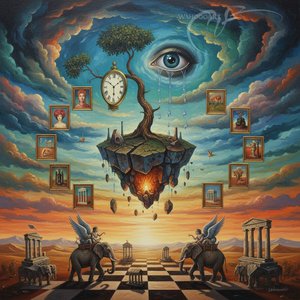
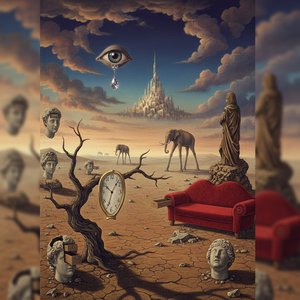
The brilliance of Dalí’s iconography lies in its ability to communicate universal truths through highly personal symbols. To navigate his work, one must learn his visual language, a lexicon where every element carries a heavy psychological weight. Consider the ubiquitous presence of melting watches, as seen in masterpieces like The Persistence of Memory; these are not merely objects, but profound meditations on the fluidity and decay of time itself. They represent the collapse of the rigid, Newtonian universe in the face of the subjective experience of duration. Other recurring motifs demand equally rigorous interpretation. The ants, often swarming over objects or figures, serve as potent symbols of decay, mortality, and the relentless passage of life. Crutches, frequently supporting limp or distorted limbs, suggest the fragility of the ego and the necessity of external supports to maintain our constructed identities. Even the presence of eggs—symbols of prenatal life and hope—serves to balance the darker themes of death and disintegration. By decoding these symbols, the viewer moves beyond mere aesthetic appreciation into a profound dialogue with the artist's deepest preoccupations.From Melting Clocks to Divine Geometry: The Evolution of His Imagery
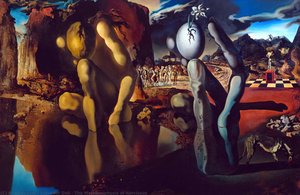
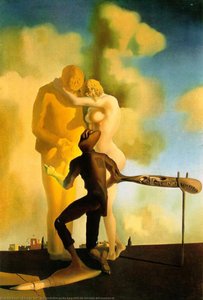
Dalí’s artistic trajectory was far from static; it was an expansive evolution that moved from the visceral explorations of Surrealism toward a more structured, almost classical, preoccupation with science and spirituality. In his earlier periods, the imagery is often characterized by a raw, hallucinogenic intensity, where the landscapes are desolate and the figures are profoundly distorted. Works such as Mediumnistic-Paranoic Image demonstrate this early, intense focus on the irrational and the mediumistic. However, as his career progressed, particularly in the post-war era, we observe a shift toward what some call his "Nuclear Mysticism." This period saw a fascinating integration of divine geometry and the discoveries of modern physics. His later works, such as The Sacrament of the Last Supper, exhibit a newfound preoccupation with symmetry, mathematical precision, and the intersection of the sacred and the scientific. The chaos of his early dreams began to be organized by a sense of cosmic order, creating a breathtaking synthesis of the classical tradition and the avant-garde that remains unparalleled in art history.The Intersection of Science and Freud: Physics, Biology, and the Uncanny
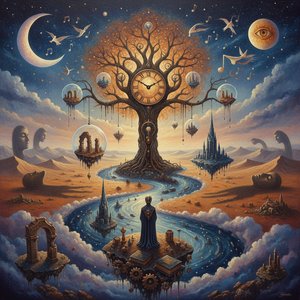
Dalí was an artist deeply attuned to the intellectual currents of his time, particularly the burgeoning field of psychoanalysis led by Sigmund Freud. The influence of Freudian theory is palpable throughout his work, as he utilized the canvas to explore the id, the ego, and the repressed desires of the human condition. His paintings act as clinical case studies in the manifestation of dreams and the architecture of neurosis, making him a bridge between the world of fine art and the burgeoning science of the mind. Yet, his curiosity was not limited to psychology; he was equally captivated by the mysteries of the physical universe. The advent of quantum mechanics and the study of atomic structures profoundly impacted his later compositions. He became obsessed with the idea that matter is not solid, but composed of dancing particles, a concept he translated into paintings where objects appear to be suspended in a state of molecular disintegration or divine suspension. This intersection of the biological, the psychological, and the physical creates a multidimensional experience for the viewer, where the boundaries between the microscopic and the macroscopic are perpetually blurred.Curating the Dreamscape: Integrating Surrealist Masterpieces into Modern Collections
For the serious collector, acquiring works that evoke the spirit of Dalí is an exercise in curating atmosphere and intellectual depth. Integrating Surrealist-inspired art into a contemporary collection requires a sophisticated understanding of scale, texture, and emotional resonance. A single, powerful piece—perhaps a high-quality oil reproduction that captures the tactile impasto and luminous glazes of the original—can serve as a profound focal point in a room, challenging the stillness of modern interiors with its inherent dynamism. When selecting pieces to complement a collection of Surrealist influence, one must consider the interplay of light and shadow. The dramatic chiaroscuro found in Dalinian imagery demands spaces that allow for depth and nuance. Whether through large-scale multi-panel works that transform a wide wall into a panoramic dreamscape, or through more intimate studies of symbolic objects, the goal is to create an environment of contemplation. Ultimately, collecting such art is about more than prestige; it is about surrounding oneself with the profound, beautiful, and unsettling questions that Dalí so masterfully posed to the world.Discover the extraordinary at ArtsDot.com. From museum-quality hand-painted oil reproductions of the Old Masters to bespoke commissions that reimagine your personal history through the lens of art history, we provide an unparalleled service for the discerning collector. Our artists, trained in the finest academies, bring the texture and soul of the masters to your walls with a 100% satisfaction guarantee. Explore our vast library of over 465,000 paintings and find the piece that speaks to your unique vision.