

 Preview
 Send
Send Share
Share
 Details

 Download
 Similars
 X-Ray
X-Ray Diaporama
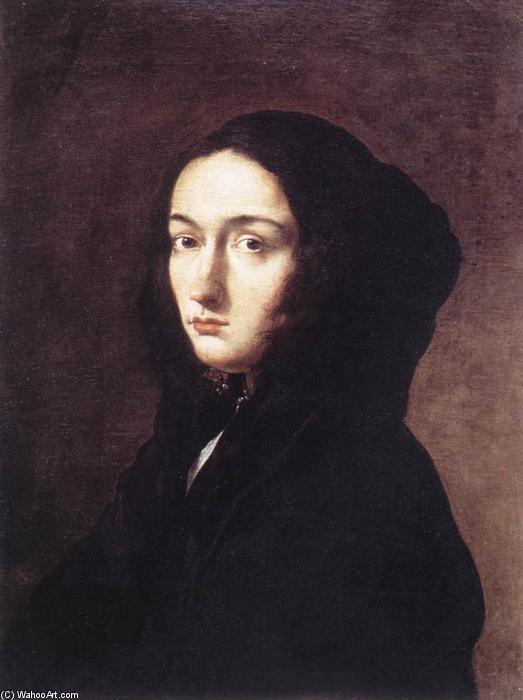
Portrait of the Artist's Wife Lucrezia
 Oil
Oil- WallArt
- Baroque Painting
 1657
1657- Early Modern
 66.0 x 50.0 cm
 Galleria Nazional d Art Antica
 Read More
Purchase a high-resolution, enhanced digital image, far superior to the online preview.
Each file is meticulously prepared by our in-house specialists using advanced tools and expert manual retouching. We ensure every image has exceptional clarity, precise color accuracy, and fine detail.
The final file is delivered via email within 72 hours, optimized for immediate use in professional, editorial, and print environments. This is the same quality trusted by top-tier design studios, publishers, and galleries.
Digital Image
Download a high-resolution file for personal display, printing, and creative projects. ( Buy Print Buy Hand Made Painting)
Included in Every Digital Image Order
Expert Digital Delivery, Guaranteed
When you choose ArtsDot.com, you're not just getting an image - you're receiving a professionally enhanced digital artwork, crafted with precision and backed by a satisfaction guarantee. Here's everything that comes with your order, automatically:

Fast Email Delivery
Your high-resolution digital image file will be emailed to you within 72 hours of ordering - ready for immediate use.

AI-Enhanced Digital File
Your artwork is professionally optimized using advanced AI tools and manual editing, ensuring maximum detail, clarity, and color accuracy.

Free Lifetime Re-Delivery
Accidentally deleted or lost your file? No worries - we'll resend it to you anytime, free of charge.

No Import Fees - Ever
Enjoy your artwork instantly with zero customs, duties, or delivery fees - digital downloads are always tax-free.

Color Accuracy Guarantee
We ensure your digital image reflects the original colors as closely as possible using professional tools and color management.

60-Day Satisfaction Guarantee
If you're not satisfied with your digital image, we'll revise it or refund 100% within 60 days - no questions asked.

100% Money-Back Guarantee
Not satisfied? Get a full refund within 60 days of receiving your digital file - no questions asked.

Bulk Order Discounts
Buy 3 images, save 10% - Buy 5, save 15% - Buy 10+, save 20%. Great for creative projects, galleries, and agencies.
A Glimpse into the Baroque Soul
In the quiet intimacy of Salvator Rosa’s Portrait of the Artist's Wife, Lucrezia, we encounter more than just a likeness; we enter a profound moment of shared history and silent emotion. Painted in 1657, this masterpiece serves as a window into the private world of one of the Italian Baroque’s most rebellious and enigmatic figures. The subject, Lucrezia, is captured from the chest up, her presence emerging from a deep, velvety darkness that swallows the background, forcing the viewer to confront the luminous reality of her face. There is an undeniable gravity to her gaze—a contemplative, slightly averted look that suggests a mind lost in thought, perhaps reflecting the turbulent and philosophical spirit of her husband’s era.
The composition is a masterclass in the use of chiaroscuro, the dramatic interplay of light and shadow that defined the 17th-century aesthetic. Light falls softly across Lucrezia’s features, highlighting the delicate contours of her cheekbones and the subtle texture of her skin, while plunging her high-collared black garment into mysterious obscurity. This technique does more than create a three-dimensional effect; it imbues the portrait with a sense of psychological depth, making the subject feel palpably alive yet eternally poised in a moment of quiet reflection.
Technique and the Hand of the Master
To observe this work is to witness the virtuosity of Rosa’s brushwork. The artist does not shy away from texture; instead, he celebrates it. One can trace the deliberate, visible strokes that define the cascading waves of Lucrezia’s dark hair, lending it a tactile, organic quality. The rendering of her clothing, though somber in color, is rich with detail, as the light catches the subtle folds and heavy fabric of her attire, suggesting a formal dignity befitting her station. This meticulous attention to realism is balanced by a painterly freedom that prevents the portrait from feeling static or overly clinical.
For the discerning collector or interior designer, this piece offers an unparalleled sense of historical prestige. The presence of Rosa’s signature in the lower right corner serves as a poignant reminder of the artist's identity—a man known for his fierce independence and his refusal to conform to the rigid academic standards of his time. Bringing a reproduction of this caliber into a space introduces an element of intellectual sophistication and timeless elegance, making it a perfect centerpiece for a gallery-style study or a classic, moody salon.
An Enduring Legacy of Emotion
Beyond the technical brilliance, the true power of Portrait of the Artist's Wife Lucrezia lies in its emotional resonance. There is a certain melancholy inherent in the portrait, a characteristic often found in Rosa’s more personal works. It captures the duality of the Baroque period: the tension between the visible world and the unseen, the physical beauty of the subject and the ephemeral nature of time. As a piece of art, it invites conversation and introspection, acting as an anchor of stillness in a modern, fast-paced environment.
Whether you are drawn to the dramatic lighting that evokes the atmosphere of a Caravaggio or the intimate connection to the artist's personal life, this portrait stands as a testament to the enduring allure of 17th-century portraiture. It is an investment in beauty, history, and the profound human capacity to capture the fleeting essence of a soul on canvas.
Related Artworks
Artist Biography
**early life and training**
salvator rosa, an italian baroque painter, poet, and printmaker, was born in arenella, naples, on either june 20 or july 21, 1615. his mother, giulia greca rosa, was a member of one of the greek families of sicily. despite his father's wishes for him to become a lawyer or priest, salvator showed a preference for the arts from an early age.**artistic career**
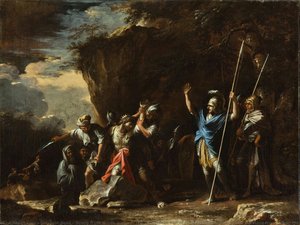
salvator rosa's artistic career was marked by his unorthodox and extravagant style, which set him apart from his contemporaries. he was active in naples, rome, and florence, and his work was influenced by the naturalism of ribera and the classicism of poussin. however, he refused to be tied down by any particular style or movement.- pythagoras emerging from the underworld (kimbell art museum, fort worth, united states), one of his most famous works, showcases his unique blend of philosophical and artistic themes.
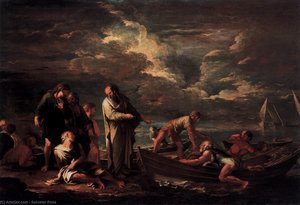
- his the baptism of the eunuch (chrysler museum of art, norfolk, united states) demonstrates his ability to infuse high drama into even minor bible stories.
**influences and legacy**
salvator rosa's work had a significant impact on the development of baroque art. his influence can be seen in the works of later artists, such as luca giordano, who continued to push the boundaries of artistic expression. **important links:** salvator rosa's profile on ArtsDot wikipedia: salvator rosa pythagoras emerging from the underworld on ArtsDot**conclusion**
salvator rosa's life and work continue to fascinate art lovers and historians alike. his unorthodox style and perpetual rebellion against the norms of his time have cemented his place in the annals of baroque art. as a painter, poet, and printmaker, he remains an enigmatic figure, and his work continues to inspire new generations of artists and art enthusiasts.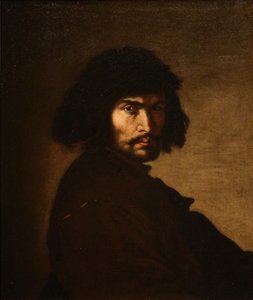
Salvator Rosa
1615 - 1673 , Italy
Quick Facts
- Artistic Movement Or Style: Baroque art
- Artists Or Movements Influenced By This Artist: ['Luca Giordano']
- Artists Who Influenced This Artist: ['José de Ribera']
- Date Of Birth: June 20, 1615
- Full Name: Salvator Rosa
- Nationality: Italian
- Notable Artworks:
- View of the Gulf of Salerno
- Study for 'Il Genio di Rosa
- Grotto with Cascades
- Place Of Birth: Arenella, Sicily

