 Preview
 Send
Send Share
Share
 Details

 Download
 Similars
 X-Ray
X-Ray Diaporama
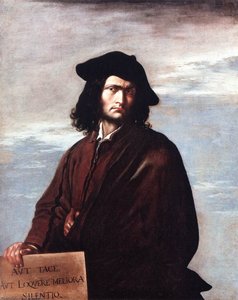
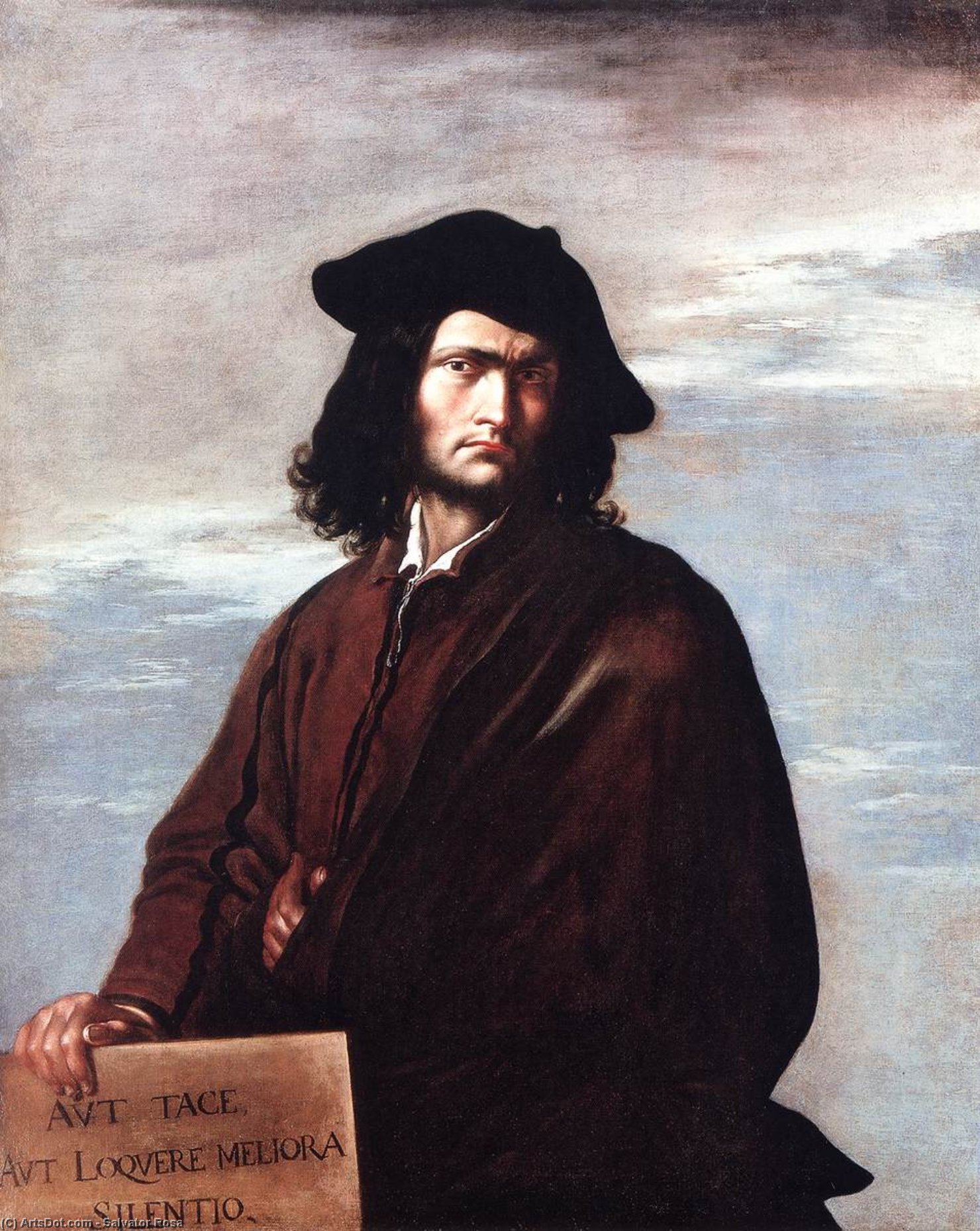
Self-Portrait as Philosopher of Silence
 Acrylic On Canvas
- WallArt
- Baroque Romanticism
 1641
1641 116.0 x 94.0 cm
 National Gallery
 Read More
Hand Made Oil Reproduction
Hand-painted oil on canvas in your size and frame, made to order by our artists. ( Buy Print Buy Image)




P118B $10

P118H $10

P118W $10

P438Z $10

P508JH $12

P508YH $12

P805H $10

P805Z $10

P919BZ $10

P919G $10

P919XJ $10

P959ZH $10

P968JZ $12

W106C $8

W218G $10

W218JH $8

W218Y $10

W307PJ $10

W316G $10

W316PJ $8

W316Y $10

W398PJ $8

W4111J $10

W500HY $15

W500JH $15

W692G $12

W849H $8

W940BG $15

W953PJ $8




Pick from our preset sizes that match the artwork's original proportions.

You may enter your own dimensions to fit a specific frame or space. If your selected size does not match the original image's proportions, we will either crop the artwork or extend the painting with additional hand-painted elements. A digital mockup will be sent for your approval before production begins.
Please note that the on-screen preview does not reflect the actual cropping or extension. Only the mockup will accurately show the final composition.
While custom sizes are available, we recommend selecting a dimension from the predefined list to preserve the original proportions.
After order, ArtsDot.com team will email client for instructions and provide a mockup preview
Worldwide Delivery () in 3/4 weeks instead of standard 5 weeks. (16 August). No compromise on quality.

Free Worldwide Express Shipping

High-Quality Linen Canvas

Full Shipping Insurance

Customs Tax Refund Guarantee

True Color Matching Guarantee

60-Day Return Policy (Defects Only)

100% Money-Back Guarantee

Bulk Discount Offer
 Glass option is only available in size under 110 CM

Self-Portrait as Philosopher of Silence
Reproduction Medium
Reproduction Size
-


Total Price
$ 263
Artwork Description
Salvator Rosa’s Silent Reflection: An Exploration of Philosophy and Landscape
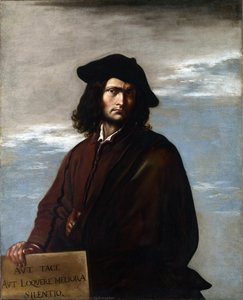
Salvator Rosa stands apart from his contemporaries as an artist who defied convention and embraced the raw beauty of nature alongside profound philosophical contemplation. Born in Arenella, Naples, in 1615, Rosa's artistic journey was marked by a rebellious spirit that challenged established aesthetic norms—a characteristic that earned him both admiration and censure within the intellectual circles of his time. He cultivated an extraordinary versatility, mastering painting, printmaking, poetry, acting, and music, cementing his legacy as one of Italy’s most multifaceted creative figures. Rosa's distinctive style is instantly recognizable: he eschewed polished surfaces and idealized forms in favor of dramatic landscapes imbued with turbulent skies and rugged terrain—a stylistic choice that reflects his fascination with the untamed wilderness and its capacity to inspire awe and introspection. Influenced by artists like Ribera and Poussin, Rosa nevertheless forged a path uniquely his own, prioritizing emotional intensity over formal adherence to classical ideals. This approach is vividly demonstrated in works such as “Torture of Prometheus,” where he depicts Zeus’s cruel punishment of the Titan Prometheus with unflinching realism—a testament to his commitment to portraying human suffering and moral dilemmas with uncompromising honesty. The painting "Self-Portrait as Philosopher of Silence," created around 1645, exemplifies Rosa's artistic vision perfectly. It is a masterful depiction of himself standing against a stormy sky, holding aloft a tablet inscribed with the Latin phrase “Aut tace / Aut Loquere meliora / Silentiio” (“Either be silent or say something better than silence”). This enigmatic maxim encapsulates Rosa’s philosophical stance—a belief that true wisdom lies in restraint and thoughtful deliberation. The artist's gaze is directed downwards, conveying a solemn seriousness as he confronts the viewer with an expression of melancholy contemplation. Rosa’s meticulous technique—characterized by rapid brushstrokes and a masterful manipulation of light and shadow—contributes significantly to the painting’s emotional impact. He employs a palette dominated by muted browns and greys, mirroring the bleakness of the landscape and reinforcing the pervasive sense of sorrow that permeates the composition. The inclusion of a skull symbolizes mortality and serves as a poignant reminder of the ephemeral nature of human existence—a theme recurrent throughout Rosa's oeuvre. “Self-Portrait as Philosopher of Silence” is more than just a depiction of an individual; it’s a meditation on the relationship between silence and eloquence, between contemplation and action. Rosa invites us to consider the profound wisdom inherent in quiet reflection—a perspective that aligns with Stoic philosophy and underscores the importance of inner resilience amidst external adversity. This artwork continues to resonate with audiences today, offering a timeless message about confronting existential anxieties with courage and grace.- Artist: Salvator Rosa
- Born Year: 1615
- Death Year: 1673
- Birth City: Arenella
- Birth Country: Italy
- Style: Baroque
- Technique: Oil on Canvas
- Size: 116 x 94 cm
- Date: 1641
- Historical Context: Seventeenth-Century Italy – Artistic Rebellion and Philosophical Inquiry
- Symbolism: Skull (Mortality), Tablet (“Silence”), Cypress wreath (Mourning)
- Emotional Impact: Contemplation, Sorrow, Resilience
- Further Research Links:
- Self-Portrait as Philosopher of Silence
- Torture of Prometheus (Salvator Rosa)
- Salvator Rosa - Self-Portrait
- Additional Resources:
- Salvator Rosa
- Salvator Rosa: A Baroque Rebel’s Vision of Landscape, Allegory & the Human Condition
- ArtsDot.com Reproduction Availability:
- High-Quality Hand-Painted Reproductions Available
Related Artworks
Artist Biography
**early life and training**
salvator rosa, an italian baroque painter, poet, and printmaker, was born in arenella, naples, on either june 20 or july 21, 1615. his mother, giulia greca rosa, was a member of one of the greek families of sicily. despite his father's wishes for him to become a lawyer or priest, salvator showed a preference for the arts from an early age.**artistic career**
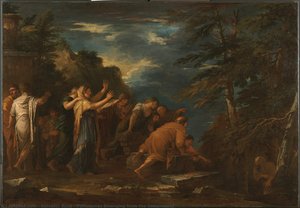
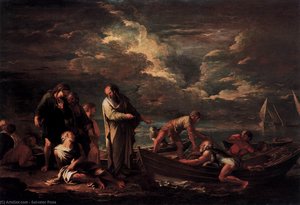
salvator rosa's artistic career was marked by his unorthodox and extravagant style, which set him apart from his contemporaries. he was active in naples, rome, and florence, and his work was influenced by the naturalism of ribera and the classicism of poussin. however, he refused to be tied down by any particular style or movement.- pythagoras emerging from the underworld (kimbell art museum, fort worth, united states), one of his most famous works, showcases his unique blend of philosophical and artistic themes.
- his the baptism of the eunuch (chrysler museum of art, norfolk, united states) demonstrates his ability to infuse high drama into even minor bible stories.
**influences and legacy**
salvator rosa's work had a significant impact on the development of baroque art. his influence can be seen in the works of later artists, such as luca giordano, who continued to push the boundaries of artistic expression. **important links:** salvator rosa's profile on ArtsDot wikipedia: salvator rosa pythagoras emerging from the underworld on ArtsDot**conclusion**
salvator rosa's life and work continue to fascinate art lovers and historians alike. his unorthodox style and perpetual rebellion against the norms of his time have cemented his place in the annals of baroque art. as a painter, poet, and printmaker, he remains an enigmatic figure, and his work continues to inspire new generations of artists and art enthusiasts.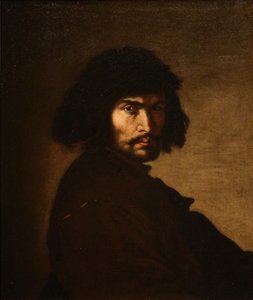
Salvator Rosa
1615 - 1673 , Italy
Quick Facts
- Artistic Movement Or Style: Baroque art
- Artists Or Movements Influenced By This Artist: ['Luca Giordano']
- Artists Who Influenced This Artist: ['José de Ribera']
- Date Of Birth: June 20, 1615
- Full Name: Salvator Rosa
- Nationality: Italian
- Notable Artworks:
- View of the Gulf of Salerno
- Study for 'Il Genio di Rosa
- Grotto with Cascades
- Place Of Birth: Arenella, Sicily
Related Articles
Salvator Rosa: A Baroque Rebel's Vision of Landscape, Allegory & the Human Condition
Explore the captivating world of Salvator Rosa, a rebellious Baroque master. Discover his dramatic landscapes, allegorical paintings & lasting influence on Romanticism. Hand-painted reproductions available at ArtsDot.

Baroque Drama: Bringing Opulence & Emotion into Contemporary Interiors
Explore the opulent world of Baroque interior design! Discover key elements, modern applications & how to bring dramatic elegance into your home with 's authentic reproductions.

Baroque Masterpieces: 10 Paintings That Defined an Era |
Journey through the drama & grandeur of Baroque art! Explore 10 masterpieces by Caravaggio, Rembrandt, Rubens & more. Discover stunning oil paintings, rich colors & timeless stories. Find museum-quality reproductions at .

The Visceral Stage: Exploring Dramatic Narratives & Emotional Intensity in Baroque Art
Explore the dramatic world of Baroque art! Discover iconic masters like Caravaggio & Rembrandt, their techniques, and the movement's lasting impact. Expert insights for collectors & enthusiasts at ArtsDot.
Simon Vouet: A Baroque Master's Journey from Italian Influence to French Classicism
Explore the life & art of Simon Vouet, a pivotal French Baroque painter who introduced Italian styles to France. Discover his masterpieces and lasting influence on 17th-century art.