

 Preview
 Send
Send Share
Share
 Details

 Download
 Similars
 X-Ray
X-Ray Diaporama
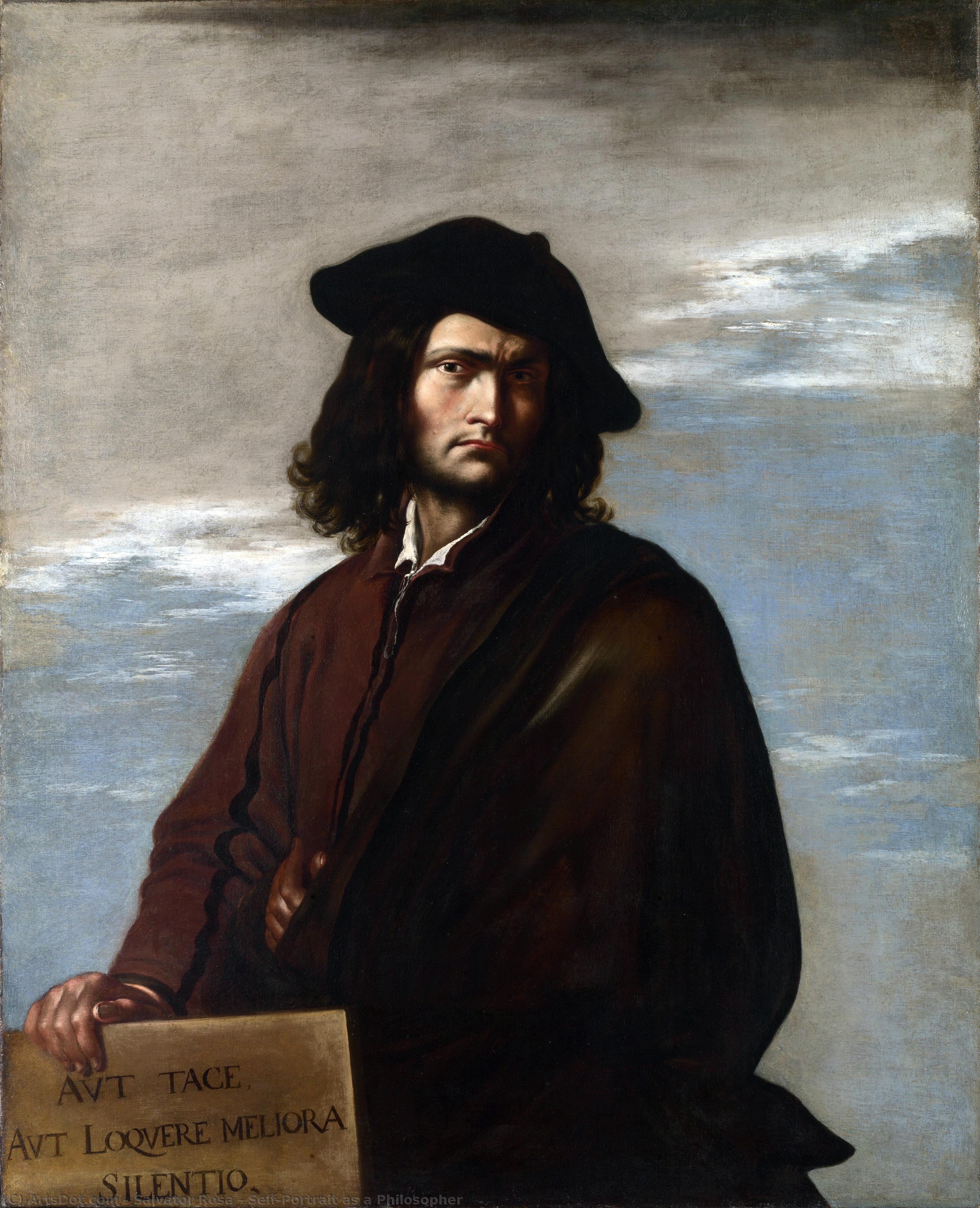
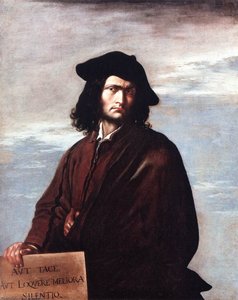
Self-Portrait as a Philosopher
 Oil On Canvas
- WallArt
- Baroque
 1645
1645- Renaissance
 94.0 x 116.0 cm
 The National Gallery
 Read More
Purchase a high-resolution, enhanced digital image, far superior to the online preview.
Each file is meticulously prepared by our in-house specialists using advanced tools and expert manual retouching. We ensure every image has exceptional clarity, precise color accuracy, and fine detail.
The final file is delivered via email within 72 hours, optimized for immediate use in professional, editorial, and print environments. This is the same quality trusted by top-tier design studios, publishers, and galleries.
Digital Image
Download a high-resolution file for personal display, printing, and creative projects. ( Buy Print Buy Hand Made Painting)
Included in Every Digital Image Order
Expert Digital Delivery, Guaranteed
When you choose ArtsDot.com, you're not just getting an image - you're receiving a professionally enhanced digital artwork, crafted with precision and backed by a satisfaction guarantee. Here's everything that comes with your order, automatically:

Fast Email Delivery
Your high-resolution digital image file will be emailed to you within 72 hours of ordering - ready for immediate use.

AI-Enhanced Digital File
Your artwork is professionally optimized using advanced AI tools and manual editing, ensuring maximum detail, clarity, and color accuracy.

Free Lifetime Re-Delivery
Accidentally deleted or lost your file? No worries - we'll resend it to you anytime, free of charge.

No Import Fees - Ever
Enjoy your artwork instantly with zero customs, duties, or delivery fees - digital downloads are always tax-free.

Color Accuracy Guarantee
We ensure your digital image reflects the original colors as closely as possible using professional tools and color management.

60-Day Satisfaction Guarantee
If you're not satisfied with your digital image, we'll revise it or refund 100% within 60 days - no questions asked.

100% Money-Back Guarantee
Not satisfied? Get a full refund within 60 days of receiving your digital file - no questions asked.

Bulk Order Discounts
Buy 3 images, save 10% - Buy 5, save 15% - Buy 10+, save 20%. Great for creative projects, galleries, and agencies.
Collectible Description
Salvator Rosa’s Philosophical Portrait: A Meditation on Silence and Wisdom
Salvator Rosa’s “Self-Portrait as Philosopher,” painted around 1645, stands as a testament to the artist's profound engagement with philosophical thought and his distinctive Baroque style. More than just a depiction of his physical appearance—though meticulously rendered—the painting embodies themes of silence, wisdom, and mortality—a poignant meditation on human existence that continues to resonate with viewers today. Rosa’s artistic vision sought to elevate painting beyond mere representation, aiming instead for an expression of inner contemplation and intellectual rigor, aligning him squarely with the burgeoning spirit of Romanticism.- Subject Matter: The portrait captures Rosa himself in a contemplative pose against a stormy grey sky, emphasizing his solemn gaze and conveying a sense of profound seriousness. He is dressed in dark attire typical of the Baroque period, reflecting the artistic sensibilities of the time.
- Style & Technique: Executed in oil on canvas, “Self-Portrait” exemplifies Rosa’s masterful Baroque technique—characterized by dramatic chiaroscuro (contrast between light and shadow)—which powerfully illuminates his face and contributes to the painting's overall mood of solemn reflection. The artist skillfully employs shading to sculpt the contours of Rosa’s features, creating a palpable sense of depth and realism.
- Symbolism: Several symbolic elements enrich the portrait’s meaning. Rosa wears a black scholar’s cap—a deliberate gesture signifying intellectual pursuits—and grips a scroll inscribed with the Latin phrase “Aut tace, aut loquere meliora silentio,” which translates to “Be silent, unless what you have to say is better than silence.” This quote encapsulates Rosa's belief in the power of contemplative reflection and underscores the painting’s philosophical core.
- Historical Context: Painted during a period marked by intellectual ferment—the Renaissance and Baroque eras—Rosa’s work reflects the humanist ideals prevalent at the time, emphasizing human reason and moral virtue. It aligns with the broader artistic movement that sought to explore profound psychological states and grapple with existential questions.
- Emotional Impact: “Self-Portrait” evokes a powerful emotional response in viewers—a sense of melancholy contemplation mingled with an appreciation for Rosa’s artistic skill. The painting's subdued palette and masterful use of light contribute to its contemplative atmosphere, inviting introspection and prompting reflection on the nature of wisdom and silence.
Provenance & Recognition
Rosa’s “Self-Portrait” holds a significant place in art history—recognized as one of his most innovative landscapes and a precursor to Romanticism. It was presented to Henry Petty-Fitzmaurice, 6th Marquess of Lansdowne, in memory of his father, the 5th Marquess, who had died in 1927. Subsequently, it entered the collection of Rev. John Sanford at Bowood House before finding its way into the Wadsworth Atheneum in 1956—a testament to its enduring artistic merit and historical importance. Recent scholarship has affirmed Rosa’s pioneering role as a landscape painter and his influence on Romantic artists like Turner and Constable, cementing his legacy as one of the Baroque period's most visionary figures.Further Exploration
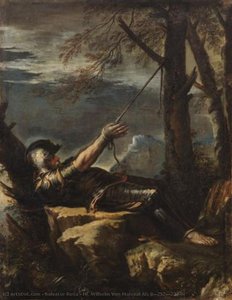
To delve deeper into Salvator Rosa’s artistic oeuvre and philosophical convictions, consider examining his other paintings—particularly “Torture of Prometheus,” which showcases his dramatic flair and masterful use of color—and exploring biographical accounts detailing his life and artistic journey. Examining Rosa's engagement with humanist philosophy illuminates the intellectual currents shaping Baroque art and underscores the artist’s commitment to conveying profound psychological states through visual imagery.Reproductions & Artistic Inspiration
High-quality reproductions of “Self-Portrait as Philosopher” offer an opportunity to appreciate Rosa’s artistic brilliance and immerse oneself in the contemplative atmosphere of his masterpiece. Collectors and interior designers alike can draw inspiration from this iconic artwork—recognizing its enduring relevance as a symbol of intellectual integrity and serene contemplation.Related Artworks
Artist Biography
**early life and training**
salvator rosa, an italian baroque painter, poet, and printmaker, was born in arenella, naples, on either june 20 or july 21, 1615. his mother, giulia greca rosa, was a member of one of the greek families of sicily. despite his father's wishes for him to become a lawyer or priest, salvator showed a preference for the arts from an early age.**artistic career**
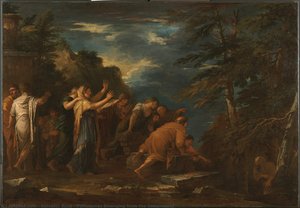
salvator rosa's artistic career was marked by his unorthodox and extravagant style, which set him apart from his contemporaries. he was active in naples, rome, and florence, and his work was influenced by the naturalism of ribera and the classicism of poussin. however, he refused to be tied down by any particular style or movement.- pythagoras emerging from the underworld (kimbell art museum, fort worth, united states), one of his most famous works, showcases his unique blend of philosophical and artistic themes.
- his the baptism of the eunuch (chrysler museum of art, norfolk, united states) demonstrates his ability to infuse high drama into even minor bible stories.
**influences and legacy**
salvator rosa's work had a significant impact on the development of baroque art. his influence can be seen in the works of later artists, such as luca giordano, who continued to push the boundaries of artistic expression. **important links:** salvator rosa's profile on ArtsDot wikipedia: salvator rosa pythagoras emerging from the underworld on ArtsDot**conclusion**
salvator rosa's life and work continue to fascinate art lovers and historians alike. his unorthodox style and perpetual rebellion against the norms of his time have cemented his place in the annals of baroque art. as a painter, poet, and printmaker, he remains an enigmatic figure, and his work continues to inspire new generations of artists and art enthusiasts.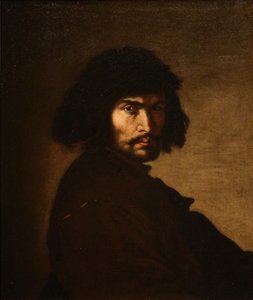
Salvator Rosa
1615 - 1673 , Italy
Quick Facts
- Artistic Movement Or Style: Baroque art
- Artists Or Movements Influenced By This Artist: ['Luca Giordano']
- Artists Who Influenced This Artist: ['José de Ribera']
- Date Of Birth: June 20, 1615
- Full Name: Salvator Rosa
- Nationality: Italian
- Notable Artworks:
- View of the Gulf of Salerno
- Study for 'Il Genio di Rosa
- Grotto with Cascades
- Place Of Birth: Arenella, Sicily

