 Preview
 Send
Send Share
Share
 Details

 Download
 Similars
 X-Ray
X-Ray Diaporama
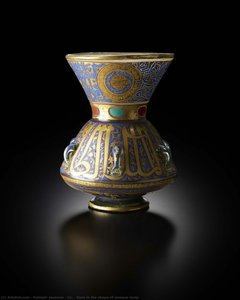
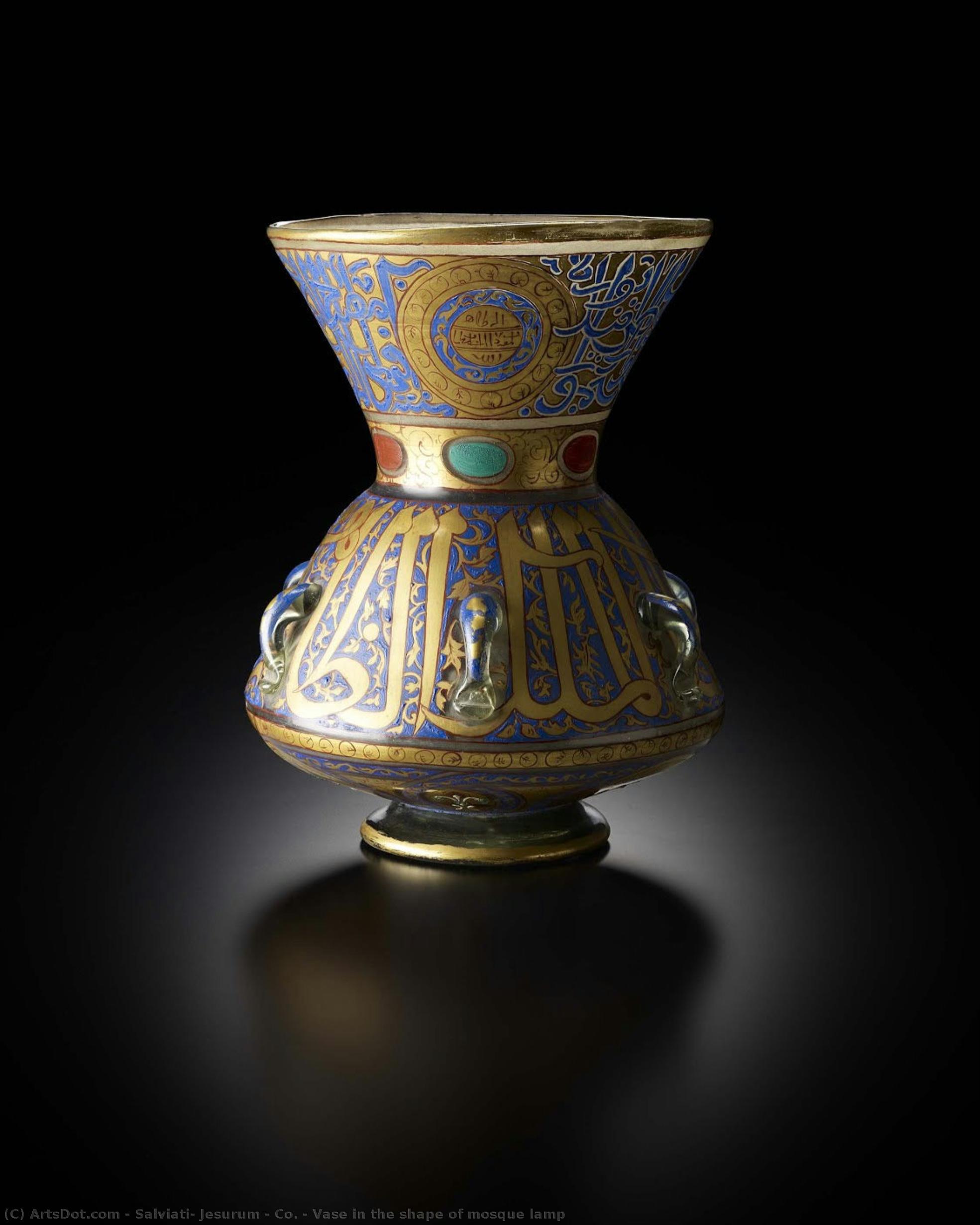
Vase in the shape of mosque lamp

 Read More
Giclée / Art Print
Museum-quality giclée or canvas print with fast production and flexible finish options. ( Buy Hand Made Painting Buy Image)




































Pick from our preset sizes that match the artwork's original proportions.

You may enter your own dimensions to fit a specific frame or space. If your selected size does not match the original image's proportions, we will either crop the artwork or extend the image with a mirrored or solid-fill edge. A digital mockup will be sent for your approval before production begins.
Please note that the on-screen preview does not reflect the actual cropping or extension. Only the mockup will accurately show the final composition.
While custom sizes are available, we recommend selecting a dimension from the predefined list to preserve the original proportions.
Worldwide Delivery () in 2 weeks instead of standard 4/5 weeks. (2 September)

Free Worldwide Express Shipping

High-Quality Linen Canvas

Full Shipping Insurance

Customs Tax Refund Guarantee

True Color Matching Guarantee

60-Day Return Policy (Defects Only)

100% Money-Back Guarantee

Bulk Discount Offer
 Glass option is only available in size under 110 CM

Vase in the shape of mosque lamp
Giclée / Art Print
Reproduction Size
-


Total Price
$ 63
A Glimpse into Venetian Opulence: The Salviati Vase
This exquisite "Vase in the shape of mosque lamp," crafted by Salviati, Jesurum & Co., represents a pinnacle of 19th-century Murano glass artistry. More than just a decorative object, it's a testament to Venetian craftsmanship and a fascinating intersection of cultures.
Style and Technique: Mannerism Meets Glassblowing
The vase embodies the spirit of Mannerism, an artistic movement that flourished in 16th-century Italy. While not directly attributable to a single painter, the design echoes the elongated forms, dynamic compositions, and decorative flourishes characteristic of Mannerist art. Salviati & Co., renowned for their innovative techniques, employed layered glassblowing and intricate gilding to achieve this stunning effect. The vibrant blue hue, achieved through complex chemical processes unique to Murano glassmakers, is complemented by the rich gold accents that highlight the vase's elaborate details. The shape itself – resembling a mosque lamp – speaks to the company’s engagement with global influences and their willingness to incorporate diverse motifs into their designs.
Historical Context: The Renaissance of Murano Glass
Salviati & Co. emerged during a crucial period in Venetian history. Founded in 1859, the company played a vital role in revitalizing the Murano glass industry after a period of decline. The mid-19th century saw a renewed interest in Italian art and craftsmanship across Europe, fueled by movements like Neoclassicism and Romanticism. Salviati capitalized on this trend, producing luxurious pieces for discerning clientele including royal families and wealthy collectors. Their work adorned prestigious locations such as the Palace of Westminster, Westminster Abbey, and even the Paris Opera House, solidifying Murano glass’s reputation as a symbol of luxury and artistic excellence. The incorporation of motifs from different cultures, like the mosque lamp design, reflects this era's growing global awareness and trade.
Symbolism and Emotional Impact
The vase’s form, inspired by Islamic architecture, suggests a dialogue between East and West – a common theme in Venetian art due to its historical role as a major trading hub. The intricate patterns likely hold symbolic meaning rooted in both Venetian and Islamic traditions, though specific interpretations remain open to scholarly debate. Regardless of the precise symbolism, the vase evokes a sense of opulence, refinement, and timeless beauty. Its vibrant colors and meticulous craftsmanship create an emotional response – a feeling of awe at human artistry and appreciation for the enduring allure of handcrafted luxury.
A Timeless Treasure
This "Vase in the shape of mosque lamp" by Salviati, Jesurum & Co., is more than just a decorative object; it's a window into 19th-century Venetian artistry and a testament to the enduring power of Murano glass. Owning a hand-painted reproduction allows you to bring this piece of history and beauty into your own home, enriching your space with its vibrant colors and intricate details.
Related Artworks
Artist Biography
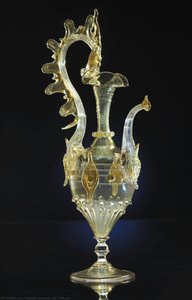
The Renaissance of Venetian Splendor: The Legacy of Salviati & Co.
In the mid-19th century, as the echoes of the Napoleonic Wars still lingered over the Adriatic, the storied workshops of Murano faced a period of profound uncertainty. It was within this atmosphere of transition that Antonio Salviati, a visionary lawyer from Vicenza, embarked on a mission to reclaim the lost glory of Venetian glassmaking. Established in 1859, Salviati & Co. was far more than a mere commercial enterprise; it was a cultural crusade. By partnering with the talented Giuseppe Jesurum, Salviati breathed new life into ancient traditions, transforming a declining industry into a global beacon of artistic excellence. This era marked the beginning of a profound revival, where the delicate art of glassblowing met the bold ambitions of the Victorian age, propelling Venetian craftsmanship back onto the world stage.
The brilliance of Salviati & Co. lay in their ability to harmonize historical reverence with daring innovation. While their roots were firmly planted in the venerable techniques of Murano, their spirit was inherently progressive. The company became a laboratory for experimentation, mastering complex processes such as enameling and fusing to create pieces that felt both timeless and avant-garde. Their work often drew inspiration from the Mannerist movement, echoing the elongated forms and dynamic, theatrical compositions of 16th-century Italy. This stylistic bridge allowed them to produce objects like their exquisite mosque-lamp-shaped vases, which utilized layered glassblowing and rich gold accents to create a mesmerizing intersection of Eastern motifs and Western luxury.
Mastery in Mosaic and the Global Impression
While their glassware captured the intimate light of private salons, Salviati & Co. achieved architectural immortality through their masterful mosaic artistry. Their ability to manipulate vibrant colors and intricate designs allowed them to decorate some of the most sacred and prestigious spaces in the Western world. The company’s mosaics became a silent language of prestige, adorning the hallowed halls of Westminster Abbey, the solemn grandeur of St Paul’s Cathedral, and the majestic Palace of Westminster. From the civic monuments of Birmingham to the historic structures of Lisbon, their work served as a vibrant thread connecting Venetian heritage to the global architectural landscape.
The significance of their contribution extends beyond mere decoration; it was an act of cultural preservation. Through their meticulous craftsmanship, they ensured that the specialized skills of Murano artisans were not lost to history but were instead celebrated in the most prominent cathedrals and palaces of Europe and America. Their work embodied a unique brand of Venetian Opulence, characterized by:
- Technical Innovation: The development of complex chemical processes to achieve unparalleled hues, such as their signature deep blues.
- Cultural Synthesis: An adventurous approach to design that integrated diverse global influences, from Islamic-inspired shapes to Renaissance flourishes.
- Artistic Durability: A commitment to quality that allowed their mosaics to endure as permanent fixtures in the world's most significant historical monuments.
Today, the name Salviati & Co. remains synonymous with an era of unparalleled elegance. They did not merely manufacture objects; they crafted legacies. By blending the ancient soul of Murano with a modern, cosmopolitan vision, Antonio Salviati and his collaborators ensured that the shimmering light of Venetian artistry would continue to illuminate the world for generations to come.
salviati, jesurum & co.
Italy
Quick Facts
- Artistic Movement Or Style: Murano Glass Art
- Artists Or Movements Influenced By This Artist: ['']
- Artists Who Influenced This Artist: ['']
- Full Name: Salviati & Co.
- Nationality: Italian
- Notable Artworks:
- Vase in the shape of mosque lamp
- Pitcher
- Goblet
- Place Of Birth: Venice, Italy
Related Articles

Slate Blue Masterpieces: 10 Iconic Paintings & Timeless Home Decor Ideas
Immerse yourself in the captivating world of slate blue! Explore 10 iconic paintings by Monet, Van Gogh & Renoir. Discover their stories, techniques & find museum-quality art reproductions for your home at .

Serene Blue Backgrounds: Discover Soulful Art to Transform Your Space with Timeless Elegance
Transform your home with soulful blue art. From serene Monet impressions to modern textured sculptures, discover curated masterpieces designed to inspire calm. Explore expert art consultations and bespoke hand-painted reproductions to create your personal sanctuary.
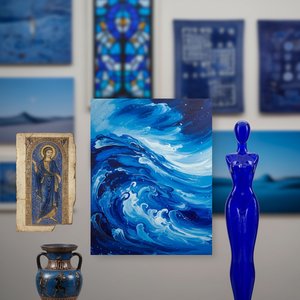
The Allure of Azure: Exploring the Symbolic & Aesthetic Depths of Blue in Art History
Explore the rich history of blue in art! Discover its symbolism, from ancient pigments to modern masterpieces by Kandinsky & Seurat. Uncover the psychological impact and cultural meanings behind this captivating hue.

Jacopo Tintoretto's Masterpieces: 25 Paintings That Define Venetian Drama | ArtsDot
Explore 25 breathtaking masterpieces by Jacopo Tintoretto, the Venetian master of drama and light. Discover the stories behind iconic Renaissance paintings & find museum-quality art reproductions to elevate your home decor on ArtsDot.com.

Azure Visions: Exploring Representations of the Blue Dress in Western Art History
Explore the rich history of the blue dress in Western art! Discover its symbolism, from Renaissance masterpieces to modern interpretations by artists like Martin & Schiele. Uncover cultural meanings and artistic techniques.