 Preview
 Send
Send Share
Share
 Details

 Download
 Similars
 X-Ray
X-Ray Diaporama
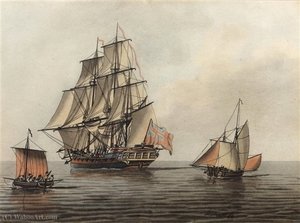
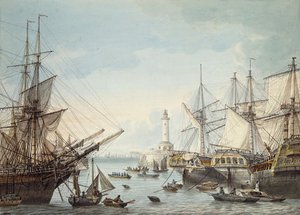
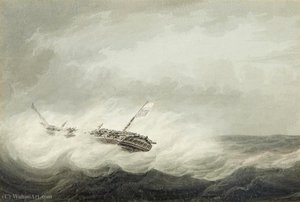
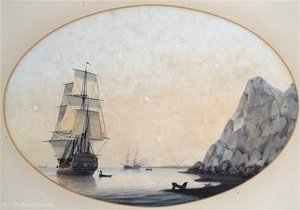
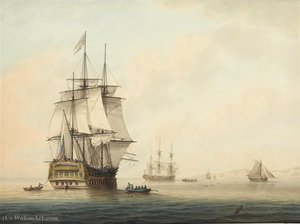
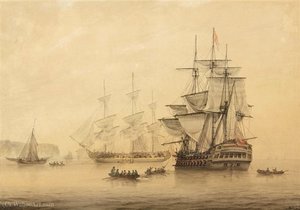
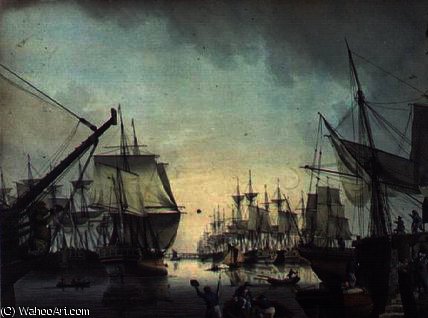
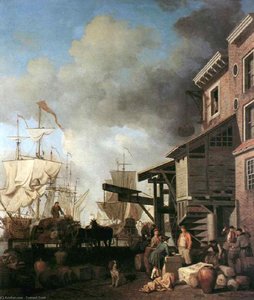
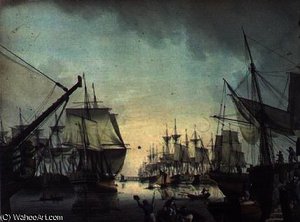
A View of the Pool, Below London Bridge

 Read More
Giclée / Art Print
Museum-quality giclée or canvas print with fast production and flexible finish options. ( Buy Hand Made Painting Buy Image)




































Pick from our preset sizes that match the artwork's original proportions.

You may enter your own dimensions to fit a specific frame or space. If your selected size does not match the original image's proportions, we will either crop the artwork or extend the image with a mirrored or solid-fill edge. A digital mockup will be sent for your approval before production begins.
Please note that the on-screen preview does not reflect the actual cropping or extension. Only the mockup will accurately show the final composition.
While custom sizes are available, we recommend selecting a dimension from the predefined list to preserve the original proportions.
Worldwide Delivery () in 2 weeks instead of standard 4/5 weeks. (23 August)

Free Worldwide Express Shipping

High-Quality Linen Canvas

Full Shipping Insurance

Customs Tax Refund Guarantee

True Color Matching Guarantee

60-Day Return Policy (Defects Only)

100% Money-Back Guarantee

Bulk Discount Offer
 Glass option is only available in size under 110 CM

A View of the Pool, Below London Bridge
Giclée / Art Print
Reproduction Size
-


Total Price
$ 63
Related Artworks

Artist Biography
The Quiet Observer of the Eighteenth-Century Sea
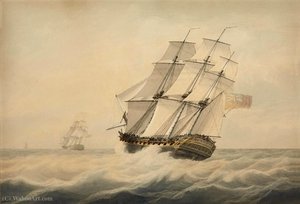
In the grand, often turbulent tapestry of British maritime art, certain voices emerge not through thunderous drama, but through a profound and steady clarity. Samuel Atkins, a painter whose career flourished between 1787 and 1808, belongs to this rare lineage of artists who favored truth over theatricality. Born around 1760 in England, Atkins emerged during an era defined by the dual spirits of maritime expansion and scientific curiosity. While his contemporaries often sought to capture the heroic struggle of man against the elements through sweeping, tempestuous compositions, Atkins turned his gaze toward the subtle nuances of the sea—the stillness of a becalmed vessel, the soft gradation of light upon a coastal horizon, and the meticulous reality of naval life.
His early professional identity was firmly rooted in the prestigious circles of the British art establishment. Between 1787 and 1796, Atkins contributed his works to the Royal Academy, a period that allowed him to refine his technical mastery of both oil and watercolor. This formative time in London placed him at the heart of an evolving artistic landscape, where the demand for accurate maritime depictions was rising alongside Britain's naval supremacy. His work from this era reflects a disciplined approach to composition, characterized by what historians often describe as a low tone—a preference for muted, naturalistic palettes that eschewed flamboyant color in favor of atmospheric accuracy.
A Journey Through the East Indies and Artistic Evolution
The trajectory of Atkins’ artistic vision underwent a profound transformation following his departure from England. From 1796 to 1804, he embarked on an expedition to the East Indies, a journey that would serve as both a geographical and aesthetic odyssey. This period of travel exposed him to exotic landscapes and maritime vistas far removed from the familiar waters of the English Channel. The encounter with new light, different atmospheric densities, and unfamiliar nautical scenery breathed a new vitality into his work, deepening his understanding of perspective and tonal subtlety.
Upon his return to England, Atkins did not merely revert to his previous style but instead integrated these newfound sensibilities into his continued exhibitions. His later works demonstrate an even more sophisticated command of the atmospheric perspective, where the distant horizon and the movement of sea spray are rendered with a quiet, almost meditative precision. This evolution ensured that his presence in the art market remained significant, as collectors increasingly valued the authentic, observational quality that he brought to the genre of marine painting.
Legacy and the Art of Truthful Representation
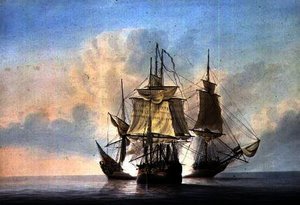
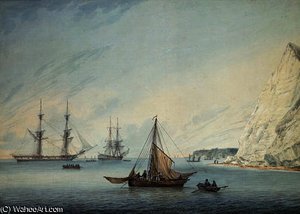
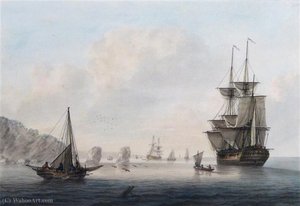
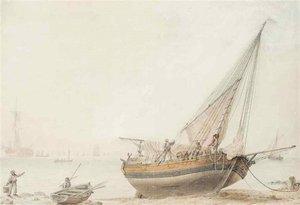
The enduring significance of Samuel Atkins lies in his commitment to a style that was quiet, truthful, and meticulously detailed. He did not seek to invent drama where none existed; rather, he sought to find the inherent beauty in the factual state of the sea. This dedication to realism is perhaps most evident in his watercolor mastery, a medium that allowed him to capture the fleeting, translucent qualities of water and sky with unparalleled delicacy. His ability to render scenes such as "Shipping becalmed off the Needles" or the bustling activity in "A View of the Pool, Below London Bridge" provides modern viewers with a window into the maritime soul of the late eighteenth century.
Today, the legacy of Atkins is preserved within some of the world's most esteemed institutions, ensuring that his understated elegance continues to resonate with those who appreciate the beauty of the natural world. His contributions can be found in:
- The British Museum: Housing exquisite examples of his watercolor precision.
- South Kensington Collections: Where his mastery of tone and maritime subject matter is celebrated.
- Historical Engravings: Such as the works of R. and D. Havell, which helped disseminate his vision to a wider public.
Ultimately, Samuel Atkins remains a singular figure—a painter who understood that the most profound stories are often told not through the roar of the storm, but through the silent, rhythmic pulse of the tide.
samuel atkins
1760 - 1808 , United Kingdom
Quick Facts
- Artistic Movement Or Style: Early British Marine Painting
- Artists Or Movements Influenced By This Artist: ['']
- Artists Who Influenced This Artist: ['']
- Date Of Death: 1808
- Full Name: Samuel Atkins
- Nationality: British
- Notable Artworks:
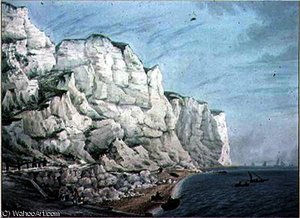
- Shakespeare's Cliff, Dover
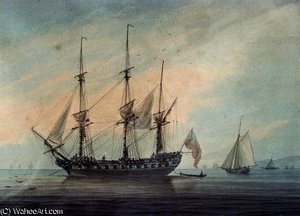
- Ships in sight of harbour
- A sea piece
- Place Of Birth: United Kingdom
Related Articles
Samuel Walters: Capturing Victorian Maritime Life with Precision & Artistry
Explore the exquisite maritime paintings of Samuel Walters (1811-1882). Discover his mastery of detail, historical scenes & influence on Victorian art. Learn about collecting his works and find high-quality reproductions at ArtsDot.

The Enduring Legacy of Oil on Canvas: Technique, History & Aesthetic Impact
Explore the rich history & techniques of oil painting – from Renaissance masters to Impressionism. Discover pigments, layering methods, and why this timeless medium endures. Expert insights for artists & art enthusiasts.

Oil on Canvas: A Historical & Technical Exploration of a Timeless Artistic Medium
Explore the rich history & enduring techniques of oil painting on canvas. Discover the science behind its longevity, conservation practices, and contemporary relevance. Expert insights for art enthusiasts.
Bring the Ocean Home: Captivating Maritime Paintings to Transform Your Space with Timeless Elegance
Transform your home with breathtaking maritime oil paintings. From serene seascapes to dramatic nautical scenes, discover hand-painted reproductions that bring the ocean's soul to your space. Expertly crafted for collectors seeking timeless elegance and coastal tranquility.

The Enduring Power of Painting: A Historical & Contemporary Exploration of Form and Emotion
Explore the rich history & enduring techniques of oil painting with ArtsDot. Discover masterpieces, learn about art collecting, and find authentic handmade reproductions crafted by skilled artists.