 Preview
 Send
Send Share
Share
 Details

 Download
 Similars
 X-Ray
X-Ray Diaporama
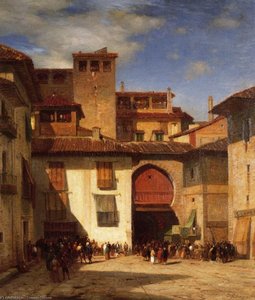
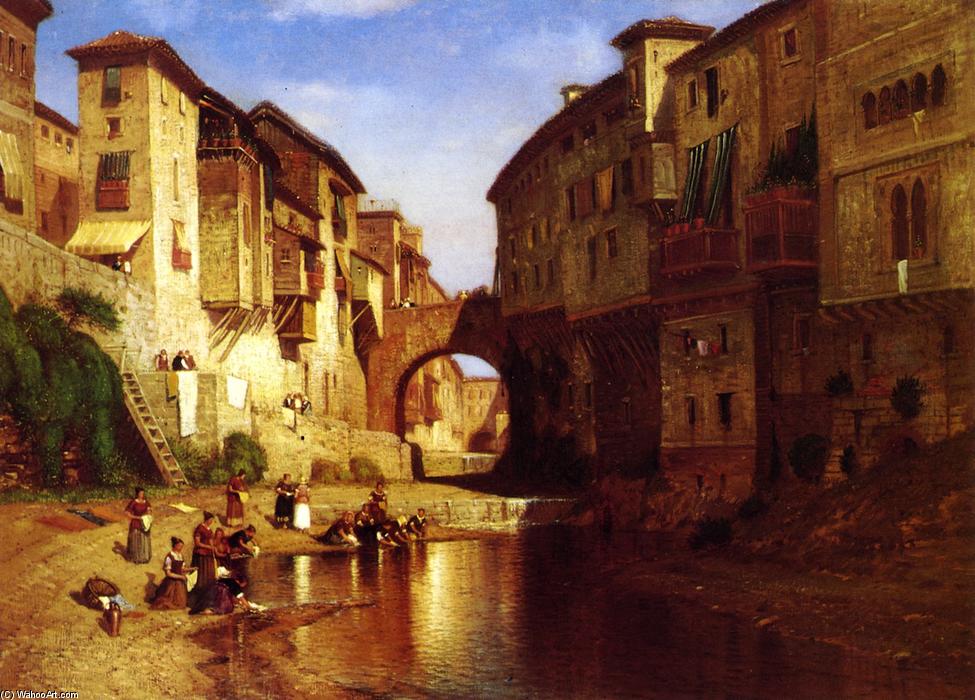
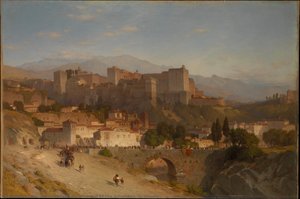
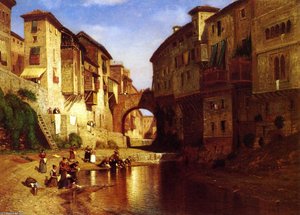
Washing Day, Granada
 1872
1872 30.0 x 42.0 cm
 Read More
Hand Made Oil Reproduction
Hand-painted oil on canvas in your size and frame, made to order by our artists. ( Buy Print Buy Image)




































Pick from our preset sizes that match the artwork's original proportions.

You may enter your own dimensions to fit a specific frame or space. If your selected size does not match the original image's proportions, we will either crop the artwork or extend the painting with additional hand-painted elements. A digital mockup will be sent for your approval before production begins.
Please note that the on-screen preview does not reflect the actual cropping or extension. Only the mockup will accurately show the final composition.
While custom sizes are available, we recommend selecting a dimension from the predefined list to preserve the original proportions.
After order, ArtsDot.com team will email client for instructions and provide a mockup preview
Worldwide Delivery () in 3/4 weeks instead of standard 5 weeks. (17 August). No compromise on quality.

Free Worldwide Express Shipping

High-Quality Linen Canvas

Full Shipping Insurance

Customs Tax Refund Guarantee

True Color Matching Guarantee

60-Day Return Policy (Defects Only)

100% Money-Back Guarantee

Bulk Discount Offer
 Glass option is only available in size under 110 CM

Washing Day, Granada
Reproduction Medium
Reproduction Size
-


Total Price
$ 263
Artwork Description
Artist Background
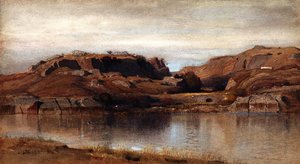
Samuel Colman was an American artist known for his landscapes and genre scenes. His work often featured everyday life, and Washing Day, Granada is a prime example of this. The painting depicts people washing clothes in a river, with a bridge and a boat adding depth to the scene.Style and Technique
The use of oil on canvas in Washing Day, Granada allows for a rich and vibrant color palette. The brushstrokes are bold and expressive, giving the painting a sense of energy and movement. As seen in other works by Samuel Colman, such as those found in the Brigham Young University Museum Of Art and the Smithsonian American Art Museum, his style is characterized by attention to detail and a focus on capturing the beauty of everyday life.Reproductions and Availability
For those interested in owning a piece of art history, ArtsDot.com offers handmade oil painting reproductions of Washing Day, Granada. These reproductions are created by skilled artists using high-quality materials and techniques. You can find more information on the reproduction process and available sizes on our website.- Visit Samuel Colman's page on ArtsDot.com to explore his other works.
- Learn more about the Tokyo National Museum and its collection of artworks on Wikipedia.
Discover the world of art and explore the works of renowned artists like Claude Monet and Henri Matisse on our website.
Related Artworks

Artist Biography
A Life Painted in Light: The World of Samuel Colman
Samuel Colman, born in Portland, Maine, in 1832, was a figure who gracefully navigated the evolving currents of 19th-century American art. He wasn’t simply a painter; he was an explorer of mediums, a keen observer of cultures, and ultimately, a polymath whose artistic pursuits extended far beyond the canvas. His early life, steeped in the literary atmosphere of his father's bookstore in New York City, undoubtedly fostered a sensibility that would inform his later work – a sensitivity to narrative, detail, and the power of visual storytelling. While he received foundational training under Asher Durand, a cornerstone of the Hudson River School, Colman quickly began forging his own path, one characterized by an insatiable curiosity and a willingness to embrace new influences.From American Landscapes to Global Visions
Colman’s initial artistic endeavors firmly placed him within the tradition of the Hudson River School. Paintings like “Meadows and Wildflowers at Conway” (1856) exemplify this early style – meticulous depictions of the American landscape, imbued with a romantic sensibility that celebrated the nation's natural beauty. However, unlike some of his contemporaries who remained devoted to purely domestic subjects, Colman possessed an adventurous spirit that propelled him across continents. His extensive travels throughout Europe in the 1860s and early 1870s – encompassing France, Spain, Italy, Morocco, Egypt, Holland, and Algeria – proved transformative. These journeys weren’t merely sightseeing expeditions; they were immersive studies of light, color, architecture, and culture. He began to incorporate architectural elements into his paintings—cityscapes, castles, bridges—reflecting a broadening artistic vision. This shift is evident in works depicting scenes from the Mediterranean, where he masterfully captured the interplay between ancient structures and vibrant local life. Later journeys to the American West further expanded his repertoire, yielding landscapes that rivaled those of Thomas Moran in scope and dramatic impact.A Champion of Watercolor and Beyond
Colman’s contributions weren't limited to oil painting. He was a passionate advocate for watercolor, recognizing its unique potential as a fine art medium. In 1866, he co-founded the American Watercolor Society, becoming its first president and tirelessly championing the cause of this often-underappreciated technique. His skill in watercolor is remarkable; his works demonstrate a delicate balance between spontaneity and control, capturing fleeting moments of light and atmosphere with breathtaking precision. Beyond painting, Colman was also an accomplished etcher, producing popular prints that further disseminated his artistic vision. But even as he excelled in these traditional mediums, his interests continued to diversify. In the 1880s, he transitioned into interior design, collaborating with Louis Comfort Tiffany on projects for prominent figures like Samuel Clemens (Mark Twain) and Henry and Louisine Havemeyer. This foray into design showcased his innate understanding of color, form, and spatial harmony.Scholarship, Geometry, and a Lasting Legacy
In the later years of his life, Colman’s intellectual curiosity led him down increasingly unconventional paths. He amassed an impressive collection of Asian decorative objects, demonstrating a deep appreciation for non-Western art forms. More remarkably, he dedicated himself to exploring the mathematical principles underlying artistic composition, culminating in the publication of two books: “Nature's Harmonic Unity” (1912) and “Proportional Form” (1920). These works reveal a profound belief that beauty is rooted in geometric harmony – a concept that informed his own artistic practice. Samuel Colman passed away in New York City in 1920, leaving behind a rich and varied body of work. His paintings are held in major museum collections, including The Metropolitan Museum of Art and the Smithsonian American Art Museum, ensuring his place as a significant figure in American art history. He stands as a testament to the power of artistic exploration, demonstrating that true creativity knows no boundaries—whether geographical, stylistic, or disciplinary. His legacy is not simply one of beautiful paintings, but of a life lived in pursuit of beauty and understanding.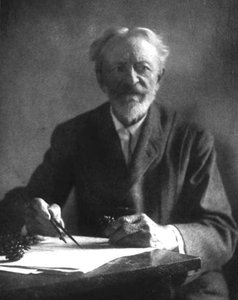
Samuel Colman
1832 - 1920 , United Kingdom
Quick Facts
- Artistic Movement Or Style: Hudson River School
- Artists Or Movements Influenced By This Artist: ['American Watercolor Society']
- Artists Who Influenced This Artist: ['Asher Durand']
- Date Of Birth: March 4, 1832
- Date Of Death: March 26, 1920
- Full Name: Samuel Colman
- Nationality: American
- Notable Artworks:
- Storm King on the Hudson
- Meadows and Wildflowers
- Ausable River
- Washing Day, Granada
- Place Of Birth: Portland, Maine
![Moorish Mosque of Sidi Halou Tlemcin [Tlemcen], Algeria](/media/artworks/images/thumbnails/74/d0/74d0163b04e247fd82e032e3c2eb154f.jpg)