

 Preview
 Send
Send Share
Share
 Details

 Download
 Similars
 X-Ray
X-Ray Diaporama
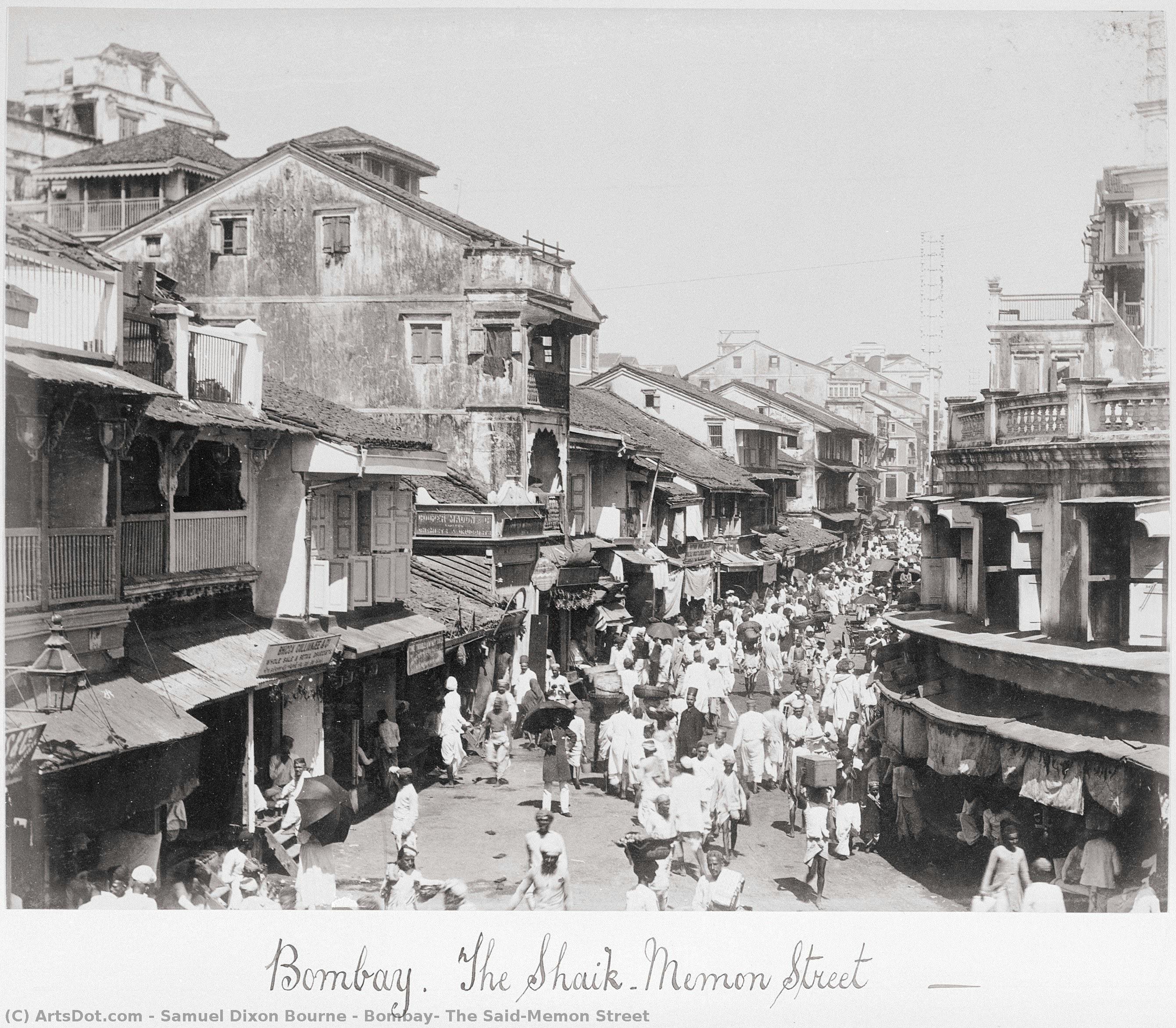
Bombay, The Said-Memon Street
 Acrylic On Canvas
- WallArt
- Documentary Photography
 1860
1860 17.0 x 22.0 cm
 Los Angeles County Museum of Art
 Read More
Purchase a high-resolution, enhanced digital image, far superior to the online preview.
Each file is meticulously prepared by our in-house specialists using advanced tools and expert manual retouching. We ensure every image has exceptional clarity, precise color accuracy, and fine detail.
The final file is delivered via email within 72 hours, optimized for immediate use in professional, editorial, and print environments. This is the same quality trusted by top-tier design studios, publishers, and galleries.
Digital Image
Download a high-resolution file for personal display, printing, and creative projects. ( Buy Print Buy Hand Made Painting)
Included in Every Digital Image Order
Expert Digital Delivery, Guaranteed
When you choose ArtsDot.com, you're not just getting an image - you're receiving a professionally enhanced digital artwork, crafted with precision and backed by a satisfaction guarantee. Here's everything that comes with your order, automatically:

Fast Email Delivery
Your high-resolution digital image file will be emailed to you within 72 hours of ordering - ready for immediate use.

AI-Enhanced Digital File
Your artwork is professionally optimized using advanced AI tools and manual editing, ensuring maximum detail, clarity, and color accuracy.

Free Lifetime Re-Delivery
Accidentally deleted or lost your file? No worries - we'll resend it to you anytime, free of charge.

No Import Fees - Ever
Enjoy your artwork instantly with zero customs, duties, or delivery fees - digital downloads are always tax-free.

Color Accuracy Guarantee
We ensure your digital image reflects the original colors as closely as possible using professional tools and color management.

60-Day Satisfaction Guarantee
If you're not satisfied with your digital image, we'll revise it or refund 100% within 60 days - no questions asked.

100% Money-Back Guarantee
Not satisfied? Get a full refund within 60 days of receiving your digital file - no questions asked.

Bulk Order Discounts
Buy 3 images, save 10% - Buy 5, save 15% - Buy 10+, save 20%. Great for creative projects, galleries, and agencies.
Collectible Description
Bombay, The Said-Memon Street – Samuel Dixon Bourne
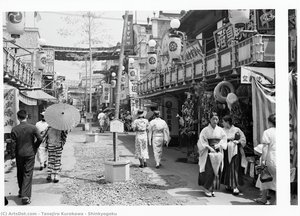
Samuel Dixon Bourne’s ‘Bombay, The Said-Memon Street,’ painted in 1860, stands as a remarkable testament to Victorian India and the burgeoning field of photographic art. Captured in exquisite black and white photogravure—a printing process that achieved unparalleled tonal depth and detail—the image transports viewers back to a bustling cityscape brimming with life and commerce. More than just a depiction of urban activity, it’s an artifact of its time, reflecting the ambitions and aesthetic sensibilities of a British Empire eager to document its dominion over the subcontinent. The photograph depicts a narrow street lined with densely packed buildings—a scene typical of Bombay (now Mumbai)—where a multitude of people navigate their daily routines. The composition prioritizes verticality, emphasizing the architectural grandeur of the structures and creating an immersive sense of spatial depth. Bourne’s keen eye for perspective subtly elevates the viewpoint, affording a panoramic vista of the street's vibrant pulse. This careful framing underscores not only the physical environment but also the social dynamics unfolding within it—a microcosm of colonial society striving to capture its essence. Bourne skillfully employs photographic techniques rooted in traditional methods, utilizing silver gelatin printing to achieve remarkable tonal accuracy and textural nuance. Lines dominate the image—straight and angular—mirroring the rigid geometry of the buildings and conveying a deliberate orderliness that contrasts with the chaotic movement of pedestrians. Shapes are largely geometric – rectangles representing the buildings and elongated forms embodying the flow of human traffic – contributing to an overall visual harmony. The subtle diffusion of light, characteristic of overcast conditions, lends a muted palette to the scene, enhancing its melancholic beauty and reinforcing its historical significance. Beyond mere representation, ‘Bombay, The Said-Memon Street’ carries symbolic weight. The crowded street embodies the density of urban life under British rule—a symbol of economic activity and social interaction. Simultaneously, it evokes a feeling of nostalgia for a bygone era, prompting contemplation on the passage of time and the indelible imprint of history upon the landscape. Bourne's artistic vision aligns with the documentary tradition of his time, prioritizing truthful portrayal over stylistic embellishment. It’s an image that invites viewers to consider not just what is seen but also what it signifies—a captivating glimpse into a pivotal moment in India’s colonial narrative. The artwork resides within the Los Angeles County Museum of Art (LACMA), showcasing its enduring appeal and scholarly importance. A high-quality reproduction offers collectors and interior designers alike an opportunity to experience Bourne's masterful artistry and immerse themselves in the atmosphere of Victorian Bombay.- Artist: Samuel Dixon Bourne
- Birth Year: 1834
- Death Year: 1912
- Birth City: Neasden
- Birth Country: United Kingdom
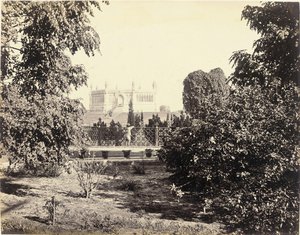
- Paigah Tomb
- Group of bhooteas, Darjeeling
- Interiors of Moti Masjid, Agra Fort
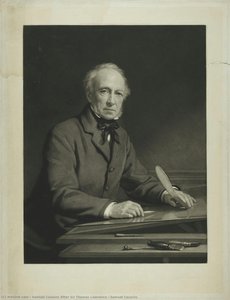
- Marochetti
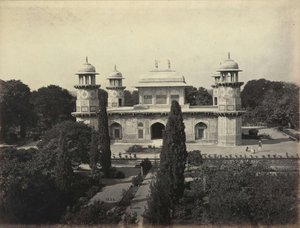
- Tomb of Itmad-ud Daulah
- Bombay, The Said-Memon Street
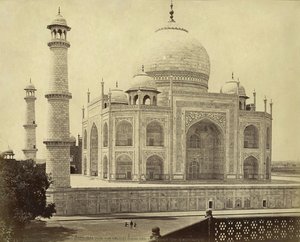
- The Taj Mahal from the corner of the quadrangle
Additional Research
This artwork is in the public domain. Explore artworks organized by themes, styles, and characteristics. Tell us about your project and our art experts will provide you with 3 personalized art suggestions. Let Us Curate 3 Options Just for You - Free!Related Artworks

Artist Biography
A Visionary Through the Lens: The Life of Samuel Dixon Bourne
Samuel Dixon Bourne (1834–1912) was far more than a mere chronicler of landscapes; he was a pioneer who redefined the visual vocabulary of an empire. Born in Neasden, United Kingdom, Bourne’s early life was shaped by the disciplined atmosphere of a classical education, yet his heart belonged to the burgeoning medium of photography. While his professional beginnings were rooted in the stable, predictable world of banking at Moore & Robinson’s Bank in Nottingham, the call of the visual arts proved irresistible. This transition from the ledger to the lens marked the beginning of a profound journey that would eventually lead him away from the comforts of England toward the sun-drenched, culturally rich expanses of the Indian subcontinent. As his technical mastery grew, so did his reputation as an educator and intellectual within the photographic community. Bourne was not simply a practitioner but a scholar of light and chemistry, contributing insightful discourse to the prominent journals of the Victorian era. His deep understanding of photographic techniques allowed him to move beyond simple documentation, seeking instead to capture the sublime essence of the natural world. This pursuit of the extraordinary eventually culminated in his transformative decision to abandon his banking career entirely, setting sail for India—a move that would forever alter the course of colonial photography.The Dawn of Bourne & Shepherd and the Indian Odyssey
Upon arriving in Calcutta in 1863, Bourne embarked on one of the most significant collaborative ventures in photographic history. Alongside Charles Shepherd, he established the legendary Bourne & Shepherd Studios, a partnership that would become synonymous with the visual identity of British India. Their operations were strategically brilliant, spanning from the misty, high-altitude retreats of Shimla to the bustling, humid streets of Calcutta. This dual presence allowed Bourne to explore two distinct yet equally captivating realms: the majestic, sweeping grandeur of the Himalayan landscapes and the intricate, human-centric architectural studies of the urban centers. His work during this period serves as a breathtaking window into a vanished era. Through his lens, the monumental scale of the Mughal Empire was rendered with both precision and poetic grace. One might gaze upon his formal architectural study, The Taj Mahal from the corner of the quadrangle, and witness the meticulous way he utilized light to highlight the intricate details of Mughal artistry. His ability to capture the interplay of shadow and stone transformed static monuments into living histories, making him a master of the photogravure process and a premier documentarian of the era's architectural splendor.Legacy of Light and the Documentation of a Civilization
Beyond the grand monuments, Bourne possessed a rare sensitivity for the pulse of everyday life. His photographic repertoire extended into the intimate corners of Indian urbanity, capturing the vibrant energy of streets such as Bombay, The Said-Memon Street. In these black and white compositions, the viewer is transported to the 1860s, witnessing the movement, commerce, and social fabric of colonial India. This ability to balance the epic with the intimate—to capture both the soaring peaks of the Himalayas and the quiet, spiritual stillness of a Christ statue in a peaceful setting—is what distinguishes his oeuvre from that of his contemporaries. The historical significance of Samuel Dixon Bourne cannot be overstated. He did not merely take photographs; he constructed a visual archive that remains an indispensable resource for historians, architects, and art lovers alike. His work stands as a testament to the power of the photographic medium to bridge distances and eras. Through his dedication to capturing the beauty, culture, and complexity of India, Bourne left behind a legacy of light that continues to illuminate our understanding of the nineteenth-century world, ensuring that the grandeur of the past remains eternally accessible to the present.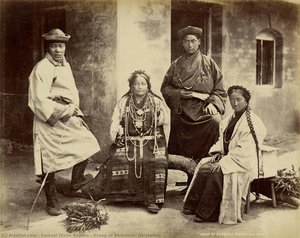
samuel dixon bourne
1834 - 1912 , United Kingdom
Quick Facts
- Artistic Movement Or Style: Victorian Landscape Photography
- Artists Or Movements Influenced By This Artist: ['Photogravure']
- Artists Who Influenced This Artist: ['William Henry Fox Talbot']
- Date Of Birth: 1834
- Date Of Death: 1912
- Full Name: Samuel Dixon Bourne
- Nationality: British
- Notable Artworks:
- Paigah Tomb
- Group of bhooteas, Darjeeling
- Interiors of Moti Masjid, Agra Fort
- Marochetti
- Tomb of Itmad-ud Daulah
- Bombay, The Said-Memon Street
- The Taj Mahal from the corner of the quadrangle
- Place Of Birth: Neasden, United Kingdom

