 Preview
 Send
Send Share
Share
 Details

 Download
 Similars
 X-Ray
X-Ray Diaporama
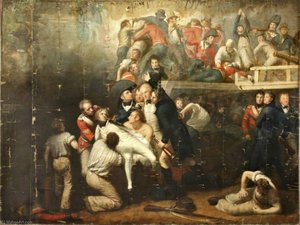
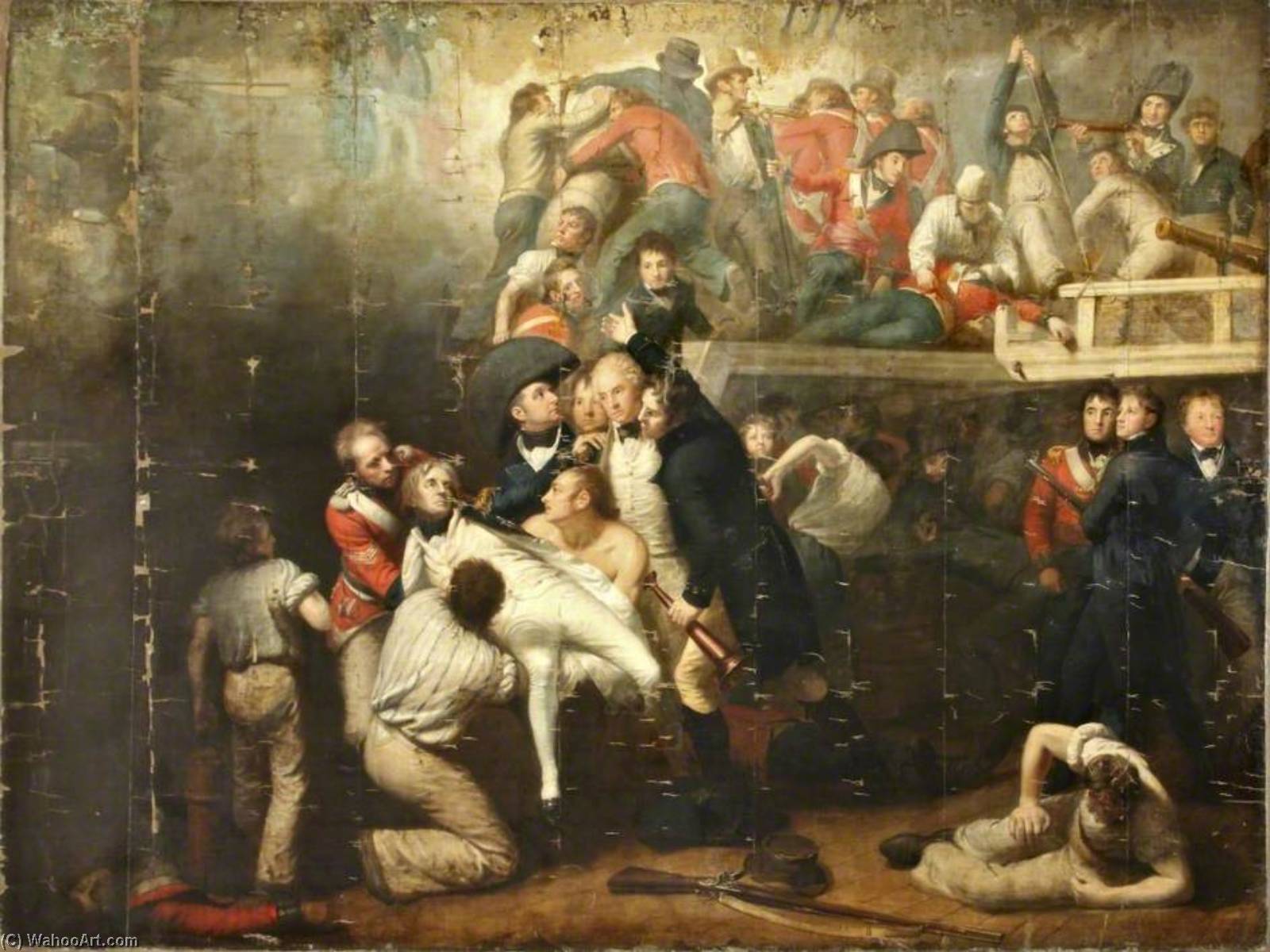
The Death of Nelson
 Romanticism
 1806
1806 133.0 x 160.0 cm
 The Nelson Museum
 Read More
Hand Made Oil Reproduction
Hand-painted oil on canvas in your size and frame, made to order by our artists. ( Buy Print Buy Image)




































Pick from our preset sizes that match the artwork's original proportions.

You may enter your own dimensions to fit a specific frame or space. If your selected size does not match the original image's proportions, we will either crop the artwork or extend the painting with additional hand-painted elements. A digital mockup will be sent for your approval before production begins.
Please note that the on-screen preview does not reflect the actual cropping or extension. Only the mockup will accurately show the final composition.
While custom sizes are available, we recommend selecting a dimension from the predefined list to preserve the original proportions.
After order, ArtsDot.com team will email client for instructions and provide a mockup preview
Worldwide Delivery () in 3/4 weeks instead of standard 5 weeks. (17 August). No compromise on quality.

Free Worldwide Express Shipping

High-Quality Linen Canvas

Full Shipping Insurance

Customs Tax Refund Guarantee

True Color Matching Guarantee

60-Day Return Policy (Defects Only)

100% Money-Back Guarantee

Bulk Discount Offer
 Glass option is only available in size under 110 CM

The Death of Nelson
Reproduction Medium
Reproduction Size
-


Total Price
$ 413
Artwork Description
The Historical Context
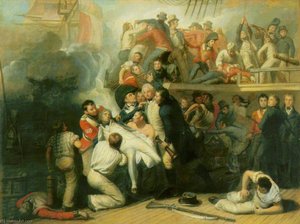
The Battle of Trafalgar in 1805 was a defining victory for the British Navy, but it came at a great cost: the life of Admiral Nelson. The news of his death sent shockwaves throughout the nation, and artists like Samuel Drummond were quick to respond with their own interpretations of this historic event. The painting is a large oil on canvas, measuring 133 x 160 cm, and is housed in the The Nelson Museum (Great Yarmouth, United Kingdom). It shows a group of people gathered around Nelson as he lays dying, with some standing closer to the foreground and others further back. The expressions on their faces convey sadness, shock, and concern for his well-being. Key aspects of the painting include:- The use of chiaroscuro to create a sense of drama and tension
- The attention to detail in the uniforms and equipment of the sailors
- The emotional intensity of the scene, which draws the viewer into the moment
The The Death of Nelson is a significant work in the history of British art, and its impact can still be felt today. As a masterpiece of emotional intensity and historical significance, it continues to captivate audiences and inspire new generations of artists and art lovers alike.
Related Artworks

Artist Biography
Jean-Marc Nattier: The Painter of Parisian Grace
Jean-Marc Nattier, born in Paris in 1685 and passing away in 1766, stands as a pivotal figure in the Rococo art movement. More than simply a portraitist, he became the court painter extraordinaire for Louis XV’s most fashionable ladies, crafting an image of refined elegance that defined Parisian society during his lifetime. His work offers a fascinating glimpse into the world of aristocratic leisure, blending classical mythology with contemporary life and showcasing a remarkable technical skill.
Nattier's early artistic training began under his father, Marc Nattier, a respected painter in his own right, and later with the renowned history painter Jean Jouvenet. He initially sought admission to the prestigious French Academy in Rome, a common path for aspiring artists, but ultimately chose to remain in Paris, establishing himself as the preferred artist for the royal court. This decision proved remarkably astute; Nattier’s style perfectly suited the tastes of the era, capturing the spirit of playful sophistication that characterized the Rococo period.
The Art of Allegory and Grace
Nattier's most celebrated work lies in his series of allegorical portraits. He masterfully transformed young women into goddesses from classical mythology – Venus, Minerva, Diana, and more – imbuing them with a captivating blend of beauty, innocence, and aristocratic bearing. These weren’t merely likenesses; they were carefully constructed narratives, each painting conveying a specific mood or theme. The key to his success was not simply replicating appearances but understanding the symbolic language of classical art and applying it to contemporary subjects.
His technique is characterized by an exquisite delicacy, often described as pastel-like in its softness. He employed loose brushstrokes and subtle color variations to create a luminous effect, particularly evident in his depictions of fabrics and textures. Nattier’s ability to capture the fleeting expressions and gestures of his sitters – their smiles, glances, and poses – added an element of realism that prevented his allegorical portraits from feeling overly artificial. He was adept at creating a sense of movement and vitality within each composition.
A Courtly World
Nattier’s career flourished during a period of immense social change in France. The opulent lifestyle of the French court, fueled by extravagant spending and elaborate rituals, provided ample subject matter for his art. He meticulously documented the daily routines and amusements of the ladies-in-waiting, capturing their games, dances, and conversations with remarkable detail. His paintings offer a valuable insight into the social dynamics and customs of the Parisian aristocracy.
His subjects were not simply passive models; Nattier actively engaged with them, encouraging natural expressions and gestures. He understood that true beauty lay in authenticity, and he skillfully captured this quality in his portraits. The women depicted under his brush weren’t idealized figures but rather vibrant individuals, radiating charm and intelligence.
Legacy and Influence
Despite facing criticism later in his career for a perceived decline in artistic rigor, Jean-Marc Nattier remains one of the most beloved portraitists of the Rococo era. His influence on subsequent generations of artists is undeniable, particularly in the development of the allegorical portrait genre. His meticulous attention to detail, his mastery of color and light, and his ability to capture the essence of his subjects have secured his place as a significant figure in French art history.
Today, Nattier’s paintings are treasured for their exquisite beauty and their evocative portrayal of a bygone era. They offer a captivating glimpse into the world of Louis XV's court – a world of grace, elegance, and playful sophistication, forever immortalized on canvas by one of France’s most celebrated artists.
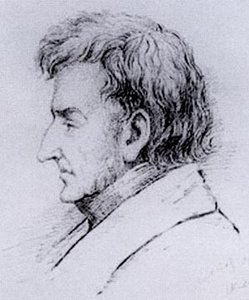
samuel drummond
1766 - 1844
Quick Facts
- Artistic Movement Or Style: Rococo
- Artists Or Movements Influenced By This Artist: ['Catharina Backer']
- Artists Who Influenced This Artist:
- Marc Nattier
- Jean Jouvenet
- Date Of Birth: 17 March 1685
- Date Of Death: 7 November 1766
- Full Name: Jean-Marc Nattier
- Nationality: French
- Notable Artworks:
- Battle of Pultawa
- Petrification of
- Mlle de Lambesc as Minerva
- Place Of Birth: Paris, France
Related Articles
Romantic Realism's Finest: 10 Masterpieces for Your Home | ArtsDot
Explore 10 defining masterpieces of Romantic Realism! Discover Courbet, Millet & Daumier's powerful paintings—capturing emotion and social realities. Find museum-quality reproductions for your home at ArtsDot.com.

John Varley I: Intimate Observation & the British Romantic Landscape
Explore the serene landscapes of John Varley I, a key figure in British Romanticism. Discover his unique watercolour style, collaboration with William Blake & lasting artistic legacy. Learn about collecting Varley's work.
Samuel Walters: Capturing Victorian Maritime Life with Precision & Artistry
Explore the exquisite maritime paintings of Samuel Walters (1811-1882). Discover his mastery of detail, historical scenes & influence on Victorian art. Learn about collecting his works and find high-quality reproductions at ArtsDot.
Stephen Bone: A Reassessment of Colour, Form & the British Neo-Romantic Landscape Tradition
Explore the vibrant world of Stephen Bone (1904-1958), a key figure in British Neo-Romanticism. Discover his captivating landscapes, impactful war art & unique artistic style. Learn about his life, influences & legacy.
British Museum Masterpieces: Explore 25 Iconic Artworks & Decor Inspiration
Journey through 25 iconic artworks at the British Museum, London! Explore masterpieces from Egyptian sculptures to Renaissance paintings & uncover their stories. Find museum-quality art reproductions and curated decor ideas on ArtsDot.com.