 Preview
 Send
Send Share
Share
 Details

 Download
 Similars
 X-Ray
X-Ray Diaporama
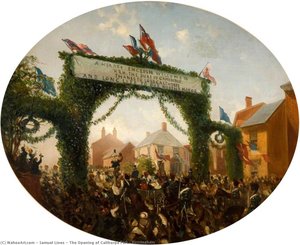
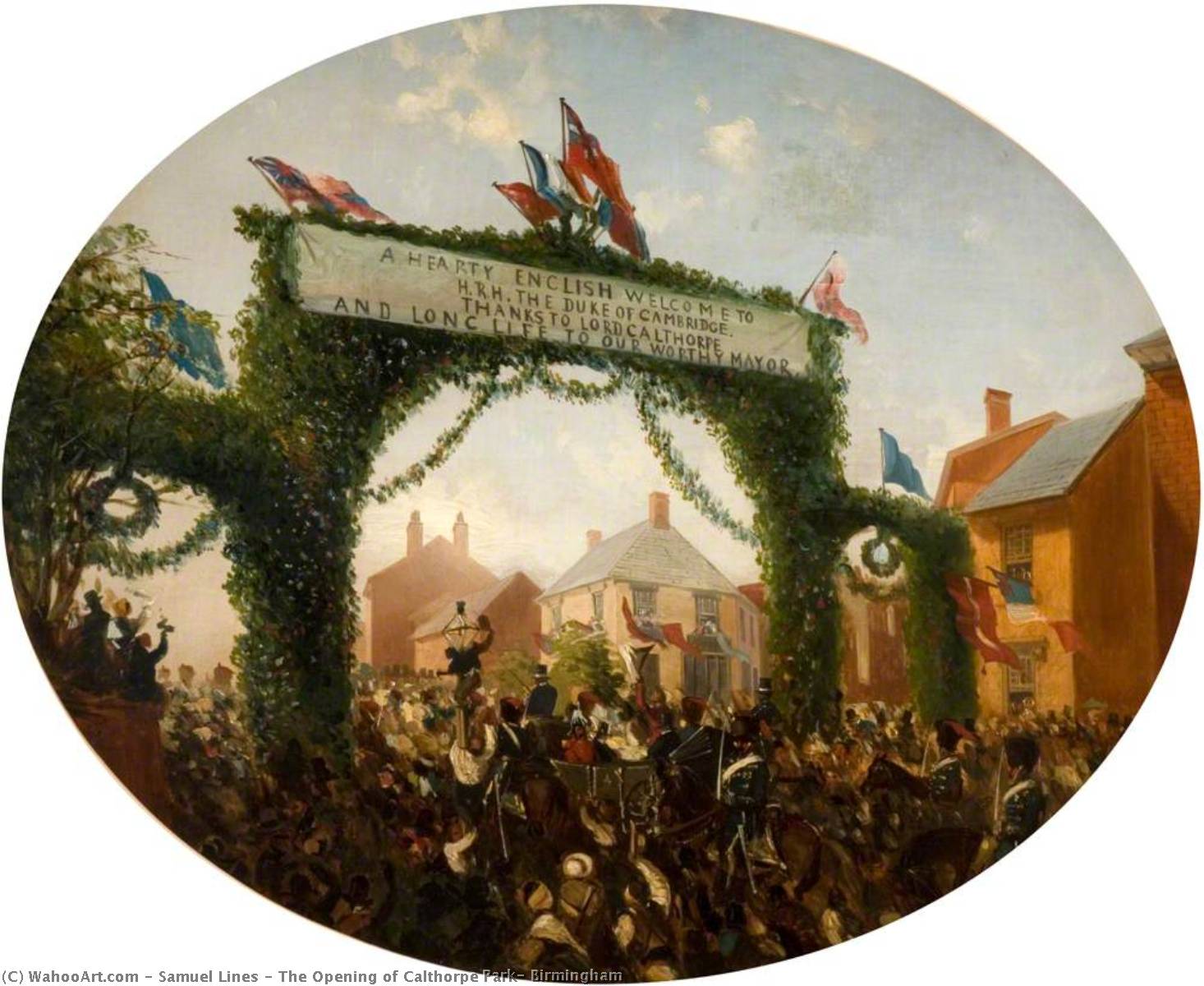
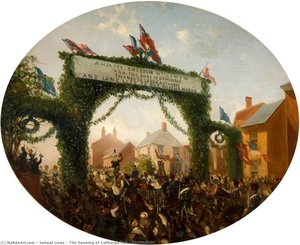
The Opening of Calthorpe Park, Birmingham
 1857
1857 63.0 x 76.0 cm
 Read More
Hand Made Oil Reproduction
Hand-painted oil on canvas in your size and frame, made to order by our artists. ( Buy Print Buy Image)




































Pick from our preset sizes that match the artwork's original proportions.

You may enter your own dimensions to fit a specific frame or space. If your selected size does not match the original image's proportions, we will either crop the artwork or extend the painting with additional hand-painted elements. A digital mockup will be sent for your approval before production begins.
Please note that the on-screen preview does not reflect the actual cropping or extension. Only the mockup will accurately show the final composition.
While custom sizes are available, we recommend selecting a dimension from the predefined list to preserve the original proportions.
After order, ArtsDot.com team will email client for instructions and provide a mockup preview
Worldwide Delivery () in 3/4 weeks instead of standard 5 weeks. (28 August). No compromise on quality.

Free Worldwide Express Shipping

High-Quality Linen Canvas

Full Shipping Insurance

Customs Tax Refund Guarantee

True Color Matching Guarantee

60-Day Return Policy (Defects Only)

100% Money-Back Guarantee

Bulk Discount Offer
 Glass option is only available in size under 110 CM

The Opening of Calthorpe Park, Birmingham
Reproduction Medium
Reproduction Size
-


Total Price
$ 263
Related Artworks









Artist Biography
The Architect of Birmingham’s Artistic Soul
In the heart of the industrial Midlands, amidst the rapid expansion and burgeoning energy of the early nineteenth century, one man labored to ensure that beauty would not be lost to the soot of progress. Samuel Lines (1778–1863) was far more than a mere painter; he was a visionary educator and a foundational pillar of the Birmingham School of landscape painters. Born in the quiet village of Allesley, Warwickshire, Lines’ early life was steeped in a culture of precision and discipline. Influenced by his mother, a dedicated schoolmistress, he developed an intellectual rigor that would later define his meticulous approach to the canvas. His journey into the fine arts began not with a brush, but with the delicate tools of a clockmaker, following an apprenticeship under Thomas Keeling. This early exposure to enameling and intricate design instilled in him a profound respect for detail—a quality that would become the hallmark of his later landscape masterpieces.
As Lines transitioned from the precision of craftsmanship to the fluidity of fine art, he sought mastery under Joseph Barber at the renowned Academy on Great Charles Street. It was here that the seeds of his pedagogical legacy were sown. Moving to Birmingham in 1794, Lines witnessed a city transforming into an industrial titan. Recognizing that such rapid growth required a corresponding cultural awakening, he established his own academy on Newhall Street in 1807. This institution was not merely a school but a crucible for talent, eventually evolving into the prestigious Royal Birmingham Society of Artists and the Birmingham School of Art. Through his teaching, Lines did more than impart technique; he cultivated a distinctive regional aesthetic that celebrated the English countryside through a lens of both Romantic grandeur and topographical accuracy.
A Legacy Written in Landscape and Light
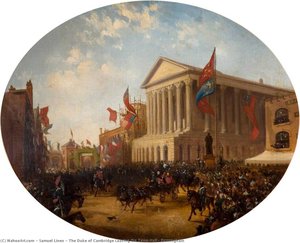
The work of Samuel Lines is characterized by an evocative ability to capture the atmospheric essence of the British landscape. His paintings often serve as windows into a bygone era, blending the meticulous observation of a designer with the expressive emotionality of the Romantic movement. Whether depicting the sweeping vistas of the English countryside or the civic pride of his adopted home, Lines utilized color and composition to convey a sense of permanence amidst change. One of his most profound achievements remains “The Duke of Cambridge,” an oil on canvas that captures a grand Birmingham procession. In this work, he masterfully balances the scale of military and civic ceremony with a Romantic sensibility, immortalizing a moment of historical significance through a lens of breathtaking grandeur.
Beyond his individual canvases, Lines’ influence radiated through a lineage of artists, many of whom were his own kin. His home was an artistic sanctuary where the next generation of the Birmingham School was forged. His sons became notable figures in their own right, contributing to the rich tapestry of British art:
- Henry Harris Lines: A gifted landscape artist and archaeologist whose work remains preserved in vital collections such as the Birmingham Museum and Art Gallery.
- Samuel Rostill Lines: A promising illustrator and painter who, despite a life cut short, achieved recognition at the Royal Academy.
- Frederick Thomas Lines: A master of the delicate medium of watercolor and a skilled portraitist.
The historical significance of Samuel Lines lies in his dual role as a creator and a catalyst. He provided the structural framework for art education in a city that was otherwise consumed by manufacturing. By fostering a community of painters, designers, and illustrators, he ensured that Birmingham would be remembered not just for its iron and steam, but for its enduring contribution to the visual language of England. His life remains a testament to the power of artistic mentorship and the profound impact one individual can have on the cultural identity of an entire region.
samuel lines
1778 - 1863
Quick Facts
- Artistic Movement Or Style: Birmingham School Landscape Painter
- Artists Or Movements Influenced By This Artist: Royal Birmingham Society of Artists
- Artists Who Influenced This Artist: Joseph Barber
- Date Of Death: 1863
- Full Name: Samuel Lines
- Nationality: English
- Notable Artworks: ['The Duke of Cambridge']
- Place Of Birth: Allesley, Warwickshire