 Preview
 Send
Send Share
Share
 Details

 Download
 Similars
 X-Ray
X-Ray Diaporama
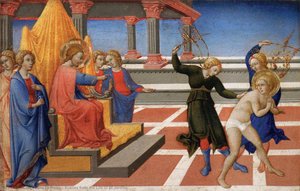
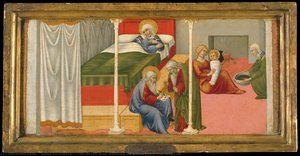
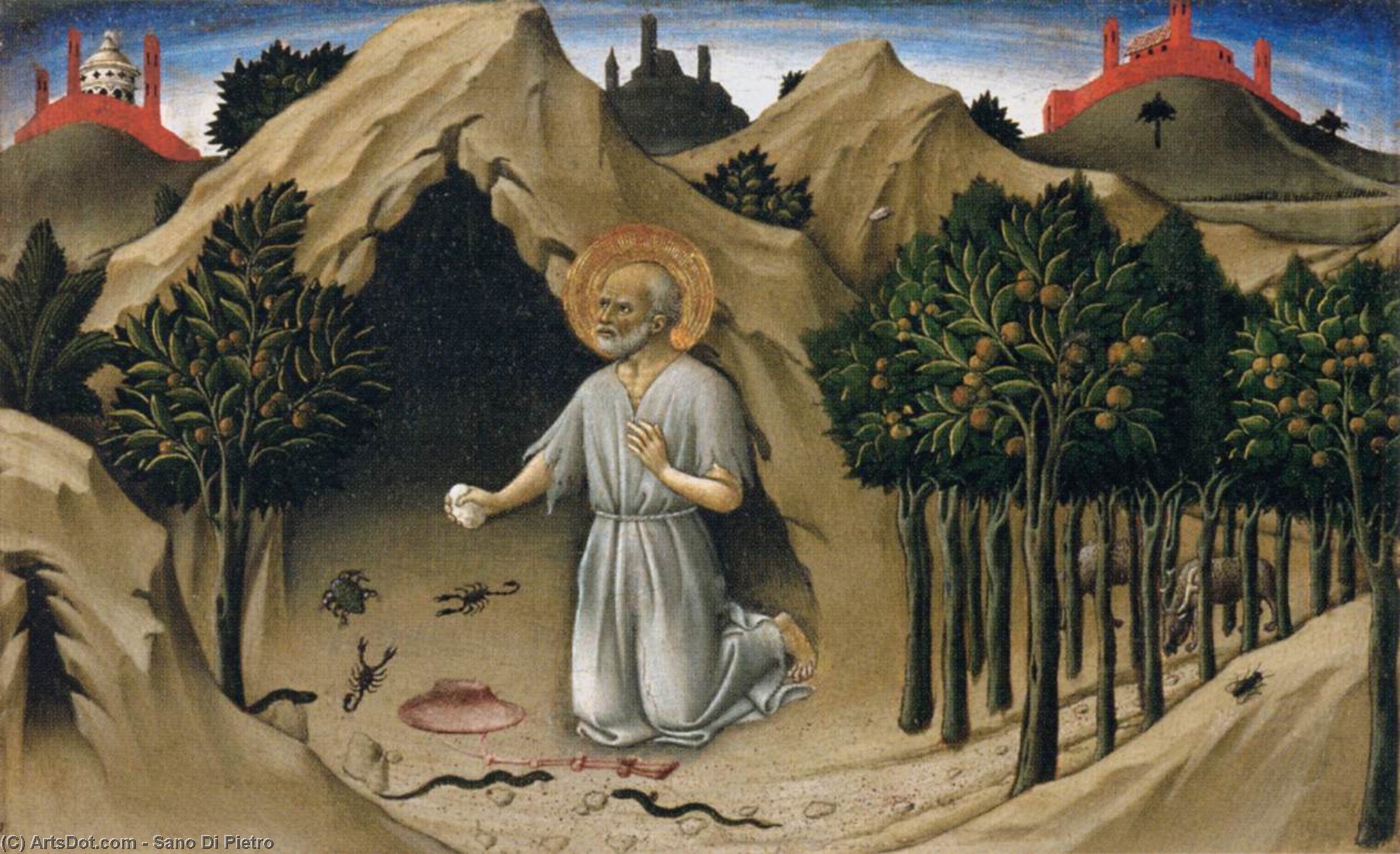
Scenes from the Life of St Jerome
 Acrylic On Canvas
- WallArt
- Early Gothic Revival
 1444
1444 23.0 x 36.0 cm
 The Louvre
 Read More
Hand Made Oil Reproduction
Hand-painted oil on canvas in your size and frame, made to order by our artists. ( Buy Print Buy Image)




P118B $10

P118H $10

P118W $10

P438Z $10

P508JH $12

P508YH $12

P805H $10

P805Z $10

P919BZ $10

P919G $10

P919XJ $10

P959ZH $10

P968JZ $12

W106C $8

W218G $10

W218JH $8

W218Y $10

W307PJ $10

W316G $10

W316PJ $8

W316Y $10

W398PJ $8

W4111J $10

W500HY $15

W500JH $15

W692G $12

W849H $8

W940BG $15

W953PJ $8




Pick from our preset sizes that match the artwork's original proportions.

You may enter your own dimensions to fit a specific frame or space. If your selected size does not match the original image's proportions, we will either crop the artwork or extend the painting with additional hand-painted elements. A digital mockup will be sent for your approval before production begins.
Please note that the on-screen preview does not reflect the actual cropping or extension. Only the mockup will accurately show the final composition.
While custom sizes are available, we recommend selecting a dimension from the predefined list to preserve the original proportions.
After order, ArtsDot.com team will email client for instructions and provide a mockup preview
Worldwide Delivery () in 3/4 weeks instead of standard 5 weeks. (25 August). No compromise on quality.

Free Worldwide Express Shipping

High-Quality Linen Canvas

Full Shipping Insurance

Customs Tax Refund Guarantee

True Color Matching Guarantee

60-Day Return Policy (Defects Only)

100% Money-Back Guarantee

Bulk Discount Offer
 Glass option is only available in size under 110 CM

Scenes from the Life of St Jerome
Reproduction Medium
Reproduction Size
-


Total Price
$ 263
Artwork Description
A Desert Vision: Exploring Sano di Pietro’s Scenes from the Life of St Jerome
Sano di Pietro (1405/06 – 1481), a name synonymous with the luminous Gothic spirit of Siena during the Quattrocento, remains an artist whose legacy continues to fascinate scholars and captivate admirers alike. Unlike many contemporaries drawn to the burgeoning Florentine Renaissance’s embrace of realism and humanist ideals—a movement prioritizing observation and intellectual discourse—Sano steadfastly championed the traditions of Siena's distinctive artistic heritage. This unwavering devotion resulted in canvases imbued with a spiritual resonance that firmly establishes him as one of the most original voices resonating from his era, distinguishing him from the prevailing trends of his time.The Gothic Soul of Siena: Artistic Context and Style
Sano’s stylistic choices reflect Siena's enduring connection to medieval piety and artistic conventions. He meticulously adhered to the mannerisms established by Sassetta, his influential predecessor, prioritizing expressive color palettes and meticulous detail—characteristics that define Sienese painting during this period. The altarpiece commissioned for the Jesuit church exemplifies this commitment to tradition; it’s a testament to Siena's spiritual fervor and artistic prowess. Unlike the polished surfaces favored in Florence, Sano’s canvases retain a palpable textural quality, conveying an immediacy of feeling that speaks directly to the viewer’s senses. This deliberate rejection of Florentine stylistic norms underscores Sano’s singular contribution to the artistic landscape of his time.A Detailed Examination: Composition and Technique
The painting depicts scenes from St Jerome's life—a narrative deeply rooted in Christian iconography—presented with remarkable precision. The central figure, St Jerome himself, is portrayed kneeling in prayer amidst a stylized desert landscape dominated by undulating sand dunes and sparse vegetation. Two additional figures flank him on either side, adding depth to the composition and enhancing its visual impact. Notably, a book rests upon the ground near St Jerome’s feet—a potent symbol representing his unwavering dedication to scripture and intellectual contemplation. Sano employed tempera paint on panel, a technique renowned for its luminosity and durability, allowing for subtle gradations of color and capturing the ethereal quality of light characteristic of Gothic art. The artist's meticulous attention to detail—evident in the rendering of drapery folds and facial expressions—further elevates the artwork’s expressive power.Symbolism and Spiritual Resonance
The desert setting serves as more than just a backdrop; it symbolizes Jerome’s ascetic life and spiritual pilgrimage – a journey toward divine grace amidst hardship and solitude. The birds scattered throughout the scene represent hope and divine providence, guiding St Jerome on his path. Furthermore, the book embodies intellectual enlightenment and faith—essential components of Jerome's character and the overarching narrative. Sano skillfully utilizes color to convey emotion; muted hues dominate the palette, reflecting the solemnity of prayer and the contemplative atmosphere of the desert landscape. The overall effect is one of profound spiritual contemplation, inviting viewers to contemplate themes of piety, perseverance, and divine grace.Emotional Impact: A Legacy of Gothic Beauty
“Scenes from the Life of St Jerome” transcends mere visual representation; it communicates a powerful emotional resonance that continues to captivate audiences centuries later. Sano’s masterful technique—combined with his unwavering adherence to Gothic artistic conventions—creates an immersive experience for the viewer, transporting them to the desolate yet spiritually enriching environment inhabited by St Jerome. The painting's enduring appeal lies in its ability to evoke feelings of reverence and contemplation—qualities that resonate deeply within the human spirit. It stands as a poignant reminder of Siena’s artistic heritage and Sano di Pietro’s singular contribution to the expressive traditions of his time, securing his place among the most influential artists of the Quattrocento.Related Artworks
Artist Biography
A Visionary of Siena’s Gothic Soul
Sano di Pietro, born around 1405/06, remains a name that resonates with the grandeur and ethereal beauty characteristic of Sienese painting during the Quattrocento. While much of the Italian art world was beginning to pivot toward the burgeoning Florentine Renaissance—a movement defined by rigorous realism and humanist ideals—Sano’s artistic vision clung steadfastly to the traditions of Siena's Gothic heritage. This commitment allowed him to imbue his canvases with a spiritual depth and a luminous quality that distinguishes him as one of the most original and enduring voices of his era. His life was deeply woven into the civic and spiritual fabric of Siena; beyond the studio, he served as the leader of the San Donato district and even acted as an arbitrator in disputes between fellow masters, proving himself to be a man of significant social standing and integrity.
The workshop established by Sano was a prolific engine of creativity, producing an astonishing array of artworks that spanned various media. He was not merely a painter of altarpiements; his mastery extended to the delicate art of miniatures, the expansive scale of frescoes, and even the intricate craft of book bindings. His distinctive style is immediately recognizable to any admirer of the Sienese school, characterized by vibrant, sumptuous colors juxtaposed with elegant, flowing draperies. These elements work in harmony to create compositions that seem to shimmer with an inner light. Much of this aesthetic sensibility can be traced back to the influence of Sassetta, whose innovative use of color and perspective provided a foundation upon which Sano built his own unique, devotional language.
Masterpieces of Devotion and Narrative
The breadth of Sano’s oeuvre offers a window into the profound religious narratives that defined the fifteenth century. His ability to translate complex biblical stories into accessible, emotive imagery is perhaps best seen in his various depictions of sacred figures. Some of his most notable achievements include:
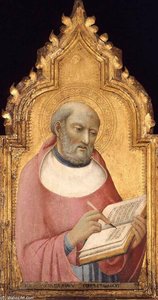
- St Jerome: A stunning portrayal of the biblical figure in his study, where Sano utilizes rich colors and intricate detail to create a masterpiece of devotional art that invites quiet contemplation.
- Assumption of the Virgin: A celestial vision from 1448, this work captures the Virgin Mary ascending amidst a host of angels, perfectly embodying the ethereal beauty and divine grace of the Gothic era.
- Scenes from the Life of St Jerome: These tempera panels showcase his ability to weave complex religious narratives through vibrant figures and a mastery of the Sienese tradition.
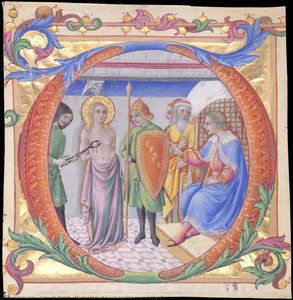
- Martyrdom of Saint Agatha: A poignant and luminous depiction within an initial, demonstrating his skill in the delicate realm of manuscript illumination.
Through these works, Sano di Pietro achieved a rare balance between the ornamental beauty of the Gothic style and a profound emotional resonance. His death in 1481 was marked by a moving tribute, noting him as "a famous painter and a man wholly dedicated to God." This epitaph serves as a fitting summary of his legacy—an artist whose life and work were inseparable from the spiritual devotion of Siena, leaving behind a luminous trail of art that continues to enchant the modern eye.
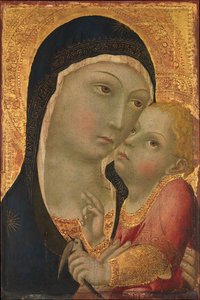
Sano di Pietro
1406 - 1481 , Italy
Quick Facts
- Artistic Movement Or Style: Sienese School
- Artists Who Influenced This Artist:
- Giovanni di Paolo
- Sassetta
- Date Of Birth: 1406
- Date Of Death: 1481
- Full Name: Sano di Pietro
- Nationality: Italian
- Notable Artworks:
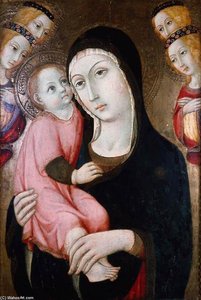
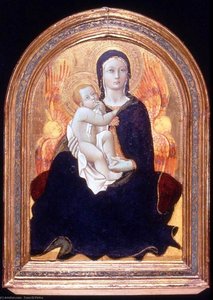
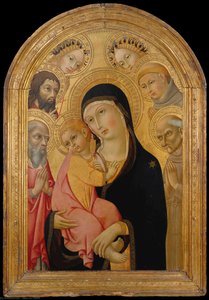
- Madonna and Child with Four Angels
- St Jerome
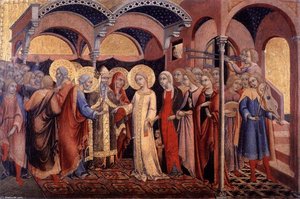
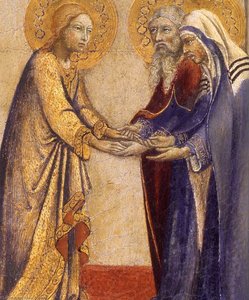
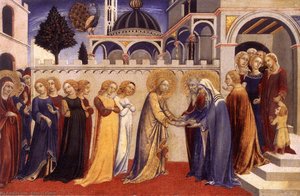
- Marriage of the Virgin
- Place Of Birth: Siena, Italy
Related Articles

Giotto's Masterpieces: 25 Renaissance Artworks for Your Home | ArtsDot
Explore 25 breathtaking artworks by Giotto di Bondone, a Renaissance master. Discover the stories behind iconic frescoes & paintings like the Scrovegni Chapel cycle. Find museum-quality Giotto reproductions and elevate your home decor with ArtsDot.com.
The Shadow of Faith: Exploring Gothic Art's Spiritual Intensity & Architectural Innovation
Explore the spiritual intensity & architectural innovation of Gothic art! Discover the symbolism behind cathedrals, stained glass & master artists like Giotto and Monet. A deep dive into medieval history & artistic expression.
The Radiant Dusk of Medieval Vision: Exploring Late Gothic Art's Synthesis of Faith, Form & Emotionality (c. 1300-1500)
Explore the exquisite beauty & spiritual depth of Late Gothic art (c. 1300-1500). Discover key artists, symbolism, and its lasting influence on the Renaissance. Expert insights at ArtsDot.
La Biennale's Masterpieces: 25 Artworks to Inspire Your Home | ArtsDot
Explore 25 iconic artworks from La Biennale di Venezia! Discover the stories behind masterpieces of Italian art, modernism & Renaissance paintings. Find museum-quality reproductions and elevate your home decor with ArtsDot.com. Explore the full collection online.
Beyond Borders: The Spiritual & Stylistic Innovations of International Gothic Art
Explore the exquisite beauty & spiritual depth of International Gothic art. Discover key artists like Simone Martini & Pol de Limbourg, its origins, symbolism, and lasting influence on European painting. Expert insights at ArtsDot.