

 Preview
 Send
Send Share
Share
 Details

 Download
 Similars
 X-Ray
X-Ray Diaporama
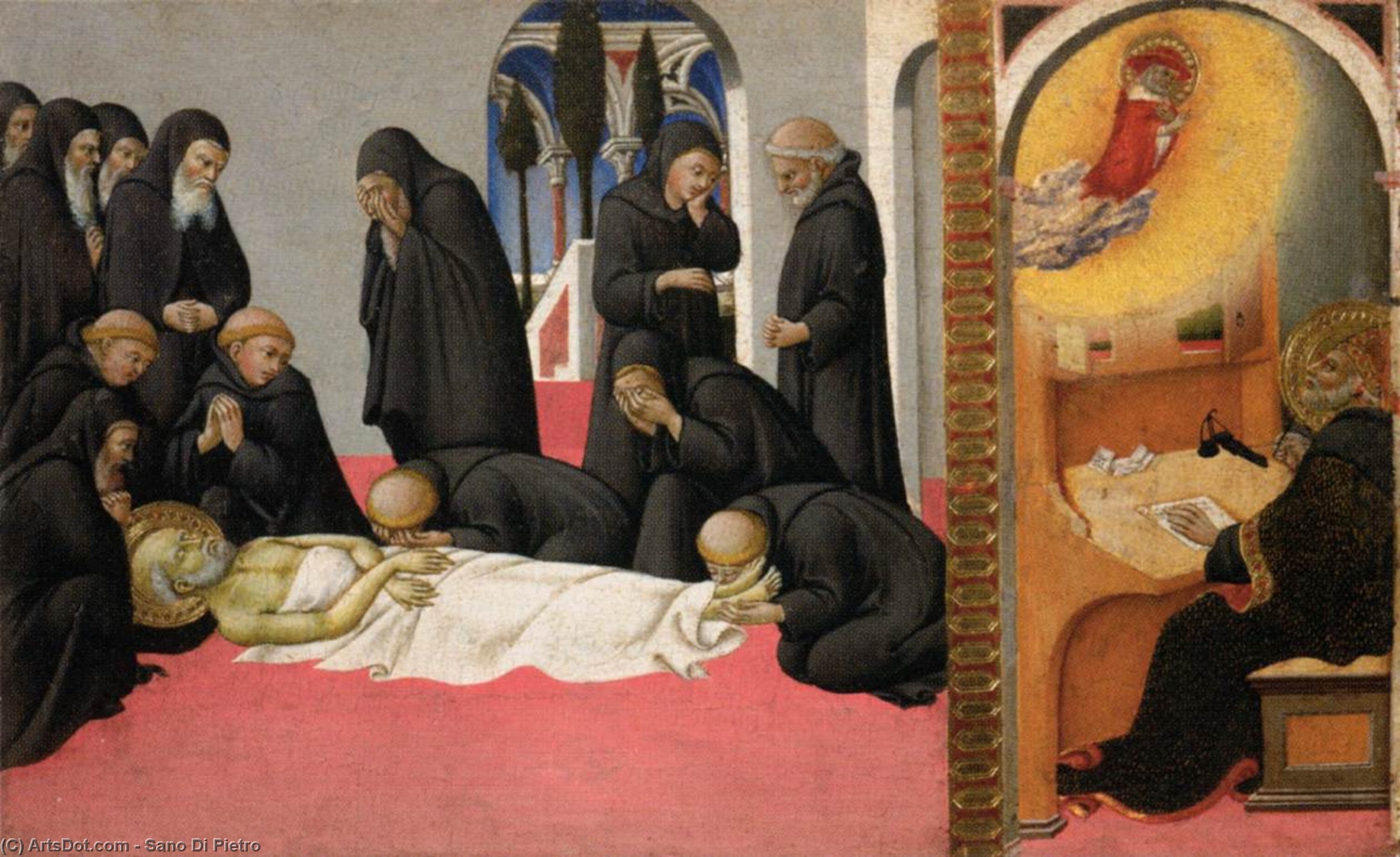
Scenes from the Life of St Jerome
 Oil On Panel
- Sienese Gothic Tradition
 1444
1444 23.0 x 37.0 cm
 The Louvre
 Read More
Purchase a high-resolution, enhanced digital image, far superior to the online preview.
Each file is meticulously prepared by our in-house specialists using advanced tools and expert manual retouching. We ensure every image has exceptional clarity, precise color accuracy, and fine detail.
The final file is delivered via email within 72 hours, optimized for immediate use in professional, editorial, and print environments. This is the same quality trusted by top-tier design studios, publishers, and galleries.
Digital Image
Download a high-resolution file for personal display, printing, and creative projects. ( Buy Print Buy Hand Made Painting)
Included in Every Digital Image Order
Expert Digital Delivery, Guaranteed
When you choose ArtsDot.com, you're not just getting an image - you're receiving a professionally enhanced digital artwork, crafted with precision and backed by a satisfaction guarantee. Here's everything that comes with your order, automatically:

Fast Email Delivery
Your high-resolution digital image file will be emailed to you within 72 hours of ordering - ready for immediate use.

AI-Enhanced Digital File
Your artwork is professionally optimized using advanced AI tools and manual editing, ensuring maximum detail, clarity, and color accuracy.

Free Lifetime Re-Delivery
Accidentally deleted or lost your file? No worries - we'll resend it to you anytime, free of charge.

No Import Fees - Ever
Enjoy your artwork instantly with zero customs, duties, or delivery fees - digital downloads are always tax-free.

Color Accuracy Guarantee
We ensure your digital image reflects the original colors as closely as possible using professional tools and color management.

60-Day Satisfaction Guarantee
If you're not satisfied with your digital image, we'll revise it or refund 100% within 60 days - no questions asked.

100% Money-Back Guarantee
Not satisfied? Get a full refund within 60 days of receiving your digital file - no questions asked.

Bulk Order Discounts
Buy 3 images, save 10% - Buy 5, save 15% - Buy 10+, save 20%. Great for creative projects, galleries, and agencies.
Collectible Description
A Window into Medieval Devotion: Sano di Pietro’s “Scenes from the Life of St. Jerome”
Sano di Pietro's "Scenes from the Life of St. Jerome," painted in 1444, is not merely a depiction of biblical narrative; it’s a profound meditation on faith, solitude, and the ascetic life, rendered with the distinctive visual language of Siena’s late Gothic tradition. This panel, measuring a modest 23 x 78 cm, offers a captivating glimpse into the spiritual heart of a city deeply rooted in religious fervor. The work, now housed within the Louvre Museum's collection, immediately draws the viewer into a scene brimming with quiet contemplation and symbolic weight.
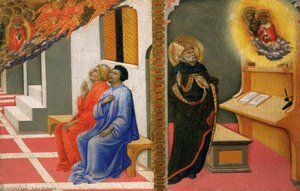
The composition unfolds as a series of vignettes illustrating key moments from St. Jerome’s life – his conversion, his struggles against worldly temptations, and his eventual embrace of monasticism. We see him initially wrestling with demons in a desolate landscape, a powerful image representing the internal battle between good and evil. Later scenes depict him receiving guidance from angels, meticulously copying manuscripts, and ultimately finding solace within the confines of his desert cell. The monks surrounding St. Jerome are not simply observers; they participate in his journey, embodying the communal aspect of faith and the shared dedication to a life of prayer and service.
The Siena Gothic Style: A Legacy of Spiritual Intensity
Sano di Pietro’s artistic approach is firmly anchored within the traditions of Sienese painting during the Quattrocento. Unlike the burgeoning Florentine Renaissance, which championed realism and humanism, Sano remained devoted to the expressive power and emotional depth characteristic of Siena's Gothic heritage. His style is marked by a rich, jewel-toned palette—deep reds, blues, and golds dominate—and an emphasis on decorative detail. The figures are rendered with a certain stylized elegance, their faces conveying a sense of solemnity and inner turmoil. He followed the manner of his master, Sassetta, evident in the meticulous attention to architectural details and the use of layered perspective.
The panel’s tempera on panel technique—a hallmark of Sienese painting at this time—allowed for vibrant colors and a luminous quality. The brushwork is deliberately textured, creating a sense of physicality and immediacy. Sano's skill lies not in photographic realism but in capturing the *feeling* of the scene – the weight of spiritual struggle, the promise of divine grace, and the quiet dignity of monastic life.
Symbolism and Spiritual Resonance
Every element within “Scenes from the Life of St. Jerome” is laden with symbolic meaning. The red carpet laid out for the monks signifies their dedication to a sacred space, while the desert landscape represents both isolation and spiritual purification. The act of copying manuscripts symbolizes intellectual devotion and the preservation of religious knowledge. The presence of angels underscores the divine guidance offered to those who choose a life of faith. Jerome himself, often depicted with a furrowed brow and an air of intense concentration, embodies the struggle for self-discipline and the pursuit of spiritual enlightenment.
The choice of depicting scenes from St. Jerome’s life is particularly significant given his role as the patron saint of scholars and librarians. His association with learning and intellectual pursuits resonated deeply within Siena's thriving scholarly community. The panel, therefore, can be interpreted as a celebration of both faith and intellect – two values held in high esteem by the city’s elite.
A Timeless Reflection on Faith and Human Experience
“Scenes from the Life of St. Jerome” transcends its historical context to offer a timeless reflection on the human condition. It speaks to our inherent struggles with temptation, our yearning for meaning and purpose, and our capacity for both profound suffering and enduring faith. The painting’s quiet intensity and evocative symbolism continue to resonate with viewers today, inviting us to contemplate the complexities of spiritual life and the enduring power of devotion. Reproductions of this remarkable work offer a beautiful and thought-provoking addition to any collection or interior space, bringing a touch of medieval piety and artistic mastery into the modern world.
Related Artworks
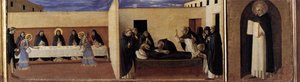
![Legend Of St Francis - [23] - St Francis Mourned By St Clare — Giotto Di Bondone, Gothic](/media/artworks/images-thumb/17/1c/171c284c41dc3ef8bca83e51c1e1e531.jpg)

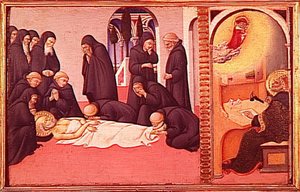
![Legend Of St Francis - [08] - Vision Of The Flaming Chariot — Giotto Di Bondone, Gothic And Proto-renaissance](/media/artworks/images-thumb/65/6e/656e345ff55e49ce2e4377a050b85aa1.jpg)
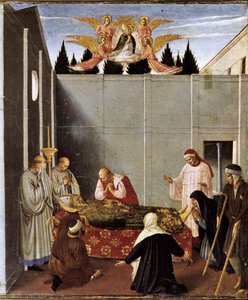
Artist Biography
A Visionary of Siena’s Gothic Soul
Sano di Pietro, born around 1405/06, remains a name that resonates with the grandeur and ethereal beauty characteristic of Sienese painting during the Quattrocento. While much of the Italian art world was beginning to pivot toward the burgeoning Florentine Renaissance—a movement defined by rigorous realism and humanist ideals—Sano’s artistic vision clung steadfastly to the traditions of Siena's Gothic heritage. This commitment allowed him to imbue his canvases with a spiritual depth and a luminous quality that distinguishes him as one of the most original and enduring voices of his era. His life was deeply woven into the civic and spiritual fabric of Siena; beyond the studio, he served as the leader of the San Donato district and even acted as an arbitrator in disputes between fellow masters, proving himself to be a man of significant social standing and integrity.
The workshop established by Sano was a prolific engine of creativity, producing an astonishing array of artworks that spanned various media. He was not merely a painter of altarpiements; his mastery extended to the delicate art of miniatures, the expansive scale of frescoes, and even the intricate craft of book bindings. His distinctive style is immediately recognizable to any admirer of the Sienese school, characterized by vibrant, sumptuous colors juxtaposed with elegant, flowing draperies. These elements work in harmony to create compositions that seem to shimmer with an inner light. Much of this aesthetic sensibility can be traced back to the influence of Sassetta, whose innovative use of color and perspective provided a foundation upon which Sano built his own unique, devotional language.
Masterpieces of Devotion and Narrative
The breadth of Sano’s oeuvre offers a window into the profound religious narratives that defined the fifteenth century. His ability to translate complex biblical stories into accessible, emotive imagery is perhaps best seen in his various depictions of sacred figures. Some of his most notable achievements include:
- St Jerome: A stunning portrayal of the biblical figure in his study, where Sano utilizes rich colors and intricate detail to create a masterpiece of devotional art that invites quiet contemplation.
- Assumption of the Virgin: A celestial vision from 1448, this work captures the Virgin Mary ascending amidst a host of angels, perfectly embodying the ethereal beauty and divine grace of the Gothic era.
- Scenes from the Life of St Jerome: These tempera panels showcase his ability to weave complex religious narratives through vibrant figures and a mastery of the Sienese tradition.
- Martyrdom of Saint Agatha: A poignant and luminous depiction within an initial, demonstrating his skill in the delicate realm of manuscript illumination.
Through these works, Sano di Pietro achieved a rare balance between the ornamental beauty of the Gothic style and a profound emotional resonance. His death in 1481 was marked by a moving tribute, noting him as "a famous painter and a man wholly dedicated to God." This epitaph serves as a fitting summary of his legacy—an artist whose life and work were inseparable from the spiritual devotion of Siena, leaving behind a luminous trail of art that continues to enchant the modern eye.
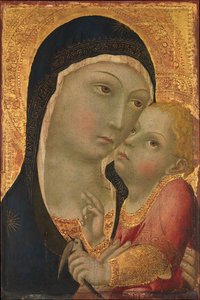
Sano di Pietro
1406 - 1481 , Italy
Quick Facts
- Artistic Movement Or Style: Sienese School
- Artists Who Influenced This Artist:
- Giovanni di Paolo
- Sassetta
- Date Of Birth: 1406
- Date Of Death: 1481
- Full Name: Sano di Pietro
- Nationality: Italian
- Notable Artworks:
- Madonna and Child with Four Angels
- St Jerome
- Marriage of the Virgin
- Place Of Birth: Siena, Italy

