 Preview
 Send
Send Share
Share
 Details

 Download
 Similars
 X-Ray
X-Ray Diaporama
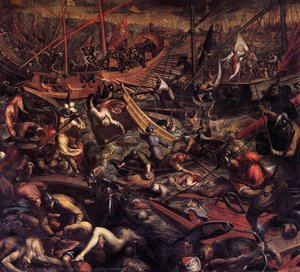
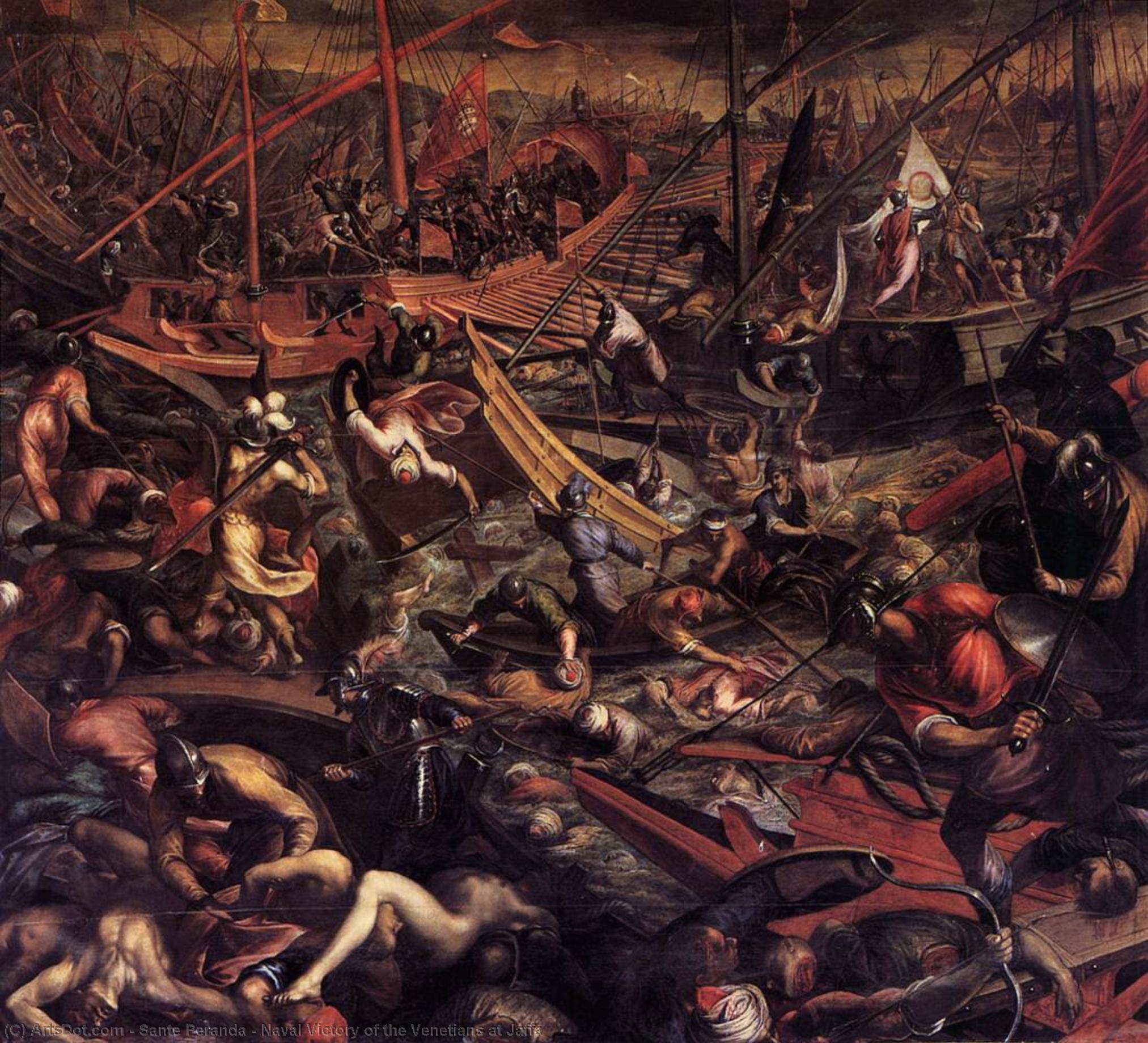
Naval Victory of the Venetians at Jaffa


 Read More
Giclée / Art Print
Museum-quality giclée or canvas print with fast production and flexible finish options. ( Buy Hand Made Painting Buy Image)




P118B $10

P118H $10

P118W $10

P438Z $10

P508JH $12

P508YH $12

P805H $10

P805Z $10

P919BZ $10

P919G $10

P919XJ $10

P959ZH $10

P968JZ $12

W106C $8

W218G $10

W218JH $8

W218Y $10

W307PJ $10

W316G $10

W316PJ $8

W316Y $10

W398PJ $8

W4111J $10

W500HY $15

W500JH $15

W692G $12

W849H $8

W940BG $15

W953PJ $8




Pick from our preset sizes that match the artwork's original proportions.

You may enter your own dimensions to fit a specific frame or space. If your selected size does not match the original image's proportions, we will either crop the artwork or extend the image with a mirrored or solid-fill edge. A digital mockup will be sent for your approval before production begins.
Please note that the on-screen preview does not reflect the actual cropping or extension. Only the mockup will accurately show the final composition.
While custom sizes are available, we recommend selecting a dimension from the predefined list to preserve the original proportions.
Worldwide Delivery () in 2 weeks instead of standard 4/5 weeks. (24 August)

Free Worldwide Express Shipping

High-Quality Linen Canvas

Full Shipping Insurance

Customs Tax Refund Guarantee

True Color Matching Guarantee

60-Day Return Policy (Defects Only)

100% Money-Back Guarantee

Bulk Discount Offer
 Glass option is only available in size under 110 CM

Naval Victory of the Venetians at Jaffa
Giclée / Art Print
Reproduction Size
-


Total Price
$ 63
Collectible Description
A Symphony of Chaos and Triumph
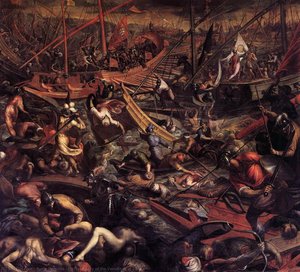
In the heart of the Venetian Renaissance, where the salt spray of the Adriatic meets the fervor of religious devotion, Sante Peranda captured a moment of unparalleled intensity in his 1590 masterpiece, Naval Victory of the Venetians at Jaffa. This large-scale oil painting is not merely a depiction of maritime conflict; it is a visceral, swirling vortex of motion that pulls the viewer directly into the center of a historical and mythological storm. The canvas vibrates with the energy of a thousand unseen struggles, presenting a scene where the boundaries between human warfare and divine intervention become beautifully blurred. As one gazes upon the crowded decks and splintering masts, there is an immediate sense of being swept up in a tide of history, making it a profound centerpiece for any collection that seeks to evoke drama and grandeur.
The technical mastery of Peranda is on full display through his sophisticated use of chiaroscuro, the dramatic interplay of light and shadow that defines the Mannerist style. He employs deep, somber tones—rich ochres, bruised blues, and blood reds—to create an atmosphere that feels both heavy with the scent of gunpowder and illuminated by a celestial presence. The artist utilizes an impasto technique, applying paint with enough thickness to give texture to the rugged armor of soldiers and the weathered wood of the Venetian galleys. This tactile quality adds a layer of realism to the stylized, elongated figures characteristic of his training under Palma il Giovane, ensuring that even amidst the chaotic composition, every blade of a sword and every ripple of a wave carries significant visual weight.
Symbolism and the Spirit of Venice
Beyond the immediate spectacle of battle, the painting serves as a profound allegorical vessel. While the subject matter celebrates a specific Venetian naval triumph, it is deeply infused with religious symbolism that would have resonated powerfully with a 16th-century audience. The composition subtly mirrors the legendary struggle of St. George against the dragon, positioning the Venetian victory as a metaphor for the triumph of good over evil and the protection of Christendom. This layer of spiritual meaning elevates the work from a mere historical record to a piece of profound theological storytelling. For the discerning collector or interior designer, this duality offers a rich narrative depth, allowing the artwork to serve as both a bold statement of strength and a contemplative piece on the eternal struggle between light and darkness.
Integrating such a powerful work into a curated space requires an appreciation for its emotional resonance. The painting’s flattened perspective and dense, almost claustrophobic arrangement of figures create a sense of overwhelming scale that commands attention in large galleries or grand halls. It is a piece designed to provoke conversation and inspire awe, offering a window into an era where art was the ultimate medium for expressing the heights of human courage and the depths of divine mystery. Whether viewed as a tribute to Venetian maritime heritage or as a masterclass in Mannerist technique, Naval Victory of the Venetians at Jaffa remains an enduring testament to the transformative power of the brush.
Related Artworks


Artist Biography
A Venetian Master of Dramatic Mannerism
Sante Peranda, a name synonymous with the twilight of the Venetian Renaissance, stands as a profound figure whose brush captured the very essence of spiritual fervor and stylistic transition. Born in Venice in 1566, Peranda emerged from an artistic landscape defined by both classical stability and the burgeoning, restless energy of Mannerism. His early journey was shaped by the humanist ideals of Leonardo Corona, a mentor who instilled in him a reverence for anatomical precision and the pursuit of idealized beauty. However, it was his subsequent apprenticeship under the legendary Palma il Giovane that truly forged his artistic identity. Under this guidance, Peranda mastered the sophisticated use of chiaroscuro—the dramatic interplay of light and shadow—and adopted a technique capable of rendering the most turbulent scenes with both visceral intensity and celestial grace.
The evolution of Peranda’s style is best observed through his ability to weave historical narrative with religious allegory. His work often functions as a swirling vortex of motion, pulling the viewer into the heart of conflict or divine revelation. In masterpieces such as Naval Victory of the Venetians at Jaffa, he transcends mere maritime documentation to create a symphony of chaos and triumph. Through thick, tactile applications of paint and a palette rich with bruised blues, deep ochres, and blood reds, he captures the splintering masts and the heavy atmosphere of battle, blurring the lines between human struggle and divine intervention. This ability to infuse historical events with a sense of mythological weight became a hallmark of his mature period.
Legacy of Devotion and Grandeur
Beyond the salt spray of naval battles, Peranda’s oeuvre is deeply rooted in the Catholic devotion that pulsed through the veins of Venice. His commissions for prestigious religious institutions allowed him to explore themes of martyrdom and miraculous providence with unparalleled emotional resonance. Whether depicting the Gathering of the Manna for the Church of San Bartolome or the somber gravity of a Descent from the Cross, Peranda utilized theatrical gestures and expressive countenances to evoke a palpable sense of awe in his audience. His compositions were never static; they were living, breathing entities designed to stir the soul and command the space of the altarpiece.
The historical significance of Sante Peranda lies not only in his individual achievements but also in his role as a bridge between eras and a teacher of future masters. His influence extended through his pupils, including Francesco Maffei, Matteo Ponzone, and Filippo Zaniberti, ensuring that the dramatic Venetian tradition would endure into the next generation. As he moved through the late 16th and early 17th centuries, securing monumental tasks for the Ducal Palace of Modena and various Venetian churches, Peranda solidified his place as a painter of grand scale and profound spiritual depth. His life, spanning from the height of the Renaissance to the dawn of the Baroque, remains etched in the vibrant, shadowed canvases that continue to haunt and inspire the halls of art history.
Sante Peranda
1566 - 1638 , Italy
Quick Facts
- Artistic Movement Or Style: Late Renaissance, Mannerism
- Artists Who Influenced This Artist:
- Leonardo Corona
- Palma il Giovane
- Date Of Birth: 1566 Venice Italy
- Date Of Death: 1638
- Full Name: Sante Peranda
- Nationality: Italian
- Notable Artworks:
- Naval Victory at Jaffa
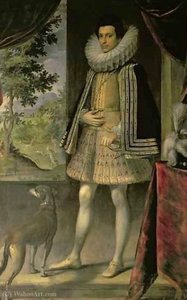
- Portrait of a Gentleman
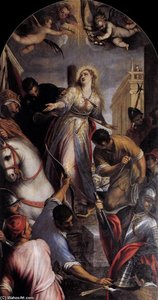
- Martyrdom Of St Christina
- Place Of Birth: Venice Italy
Related Articles

The Enduring Legacy of Oil on Canvas: Technique, History & Aesthetic Impact
Explore the rich history & techniques of oil painting – from Renaissance masters to Impressionism. Discover pigments, layering methods, and why this timeless medium endures. Expert insights for artists & art enthusiasts.

Oil on Canvas: A Historical & Technical Exploration of a Timeless Artistic Medium
Explore the rich history & enduring techniques of oil painting on canvas. Discover the science behind its longevity, conservation practices, and contemporary relevance. Expert insights for art enthusiasts.

The Enduring Power of Painting: A Historical & Contemporary Exploration of Form and Emotion
Explore the rich history & enduring techniques of oil painting with ArtsDot. Discover masterpieces, learn about art collecting, and find authentic handmade reproductions crafted by skilled artists.
The Golden Light of Innovation: Exploring the Venetian Renaissance Art Movement (1430–1580)
Explore the Golden Age of Venetian art (1430–1580). Discover Giorgione, Titian & Tintoretto's techniques, the 'colorito' revolution, and lasting influence. Expert insights for collectors & enthusiasts.

The Enduring Legacy of Oil on Canvas: Technique, History & Contemporary Practice
Explore the rich history & enduring techniques of oil painting on canvas. Discover the science behind its longevity, conservation practices, and contemporary relevance. Expert insights for art enthusiasts.