

 Preview
 Send
Send Share
Share
 Details

 Download
 Similars
 X-Ray
X-Ray Diaporama
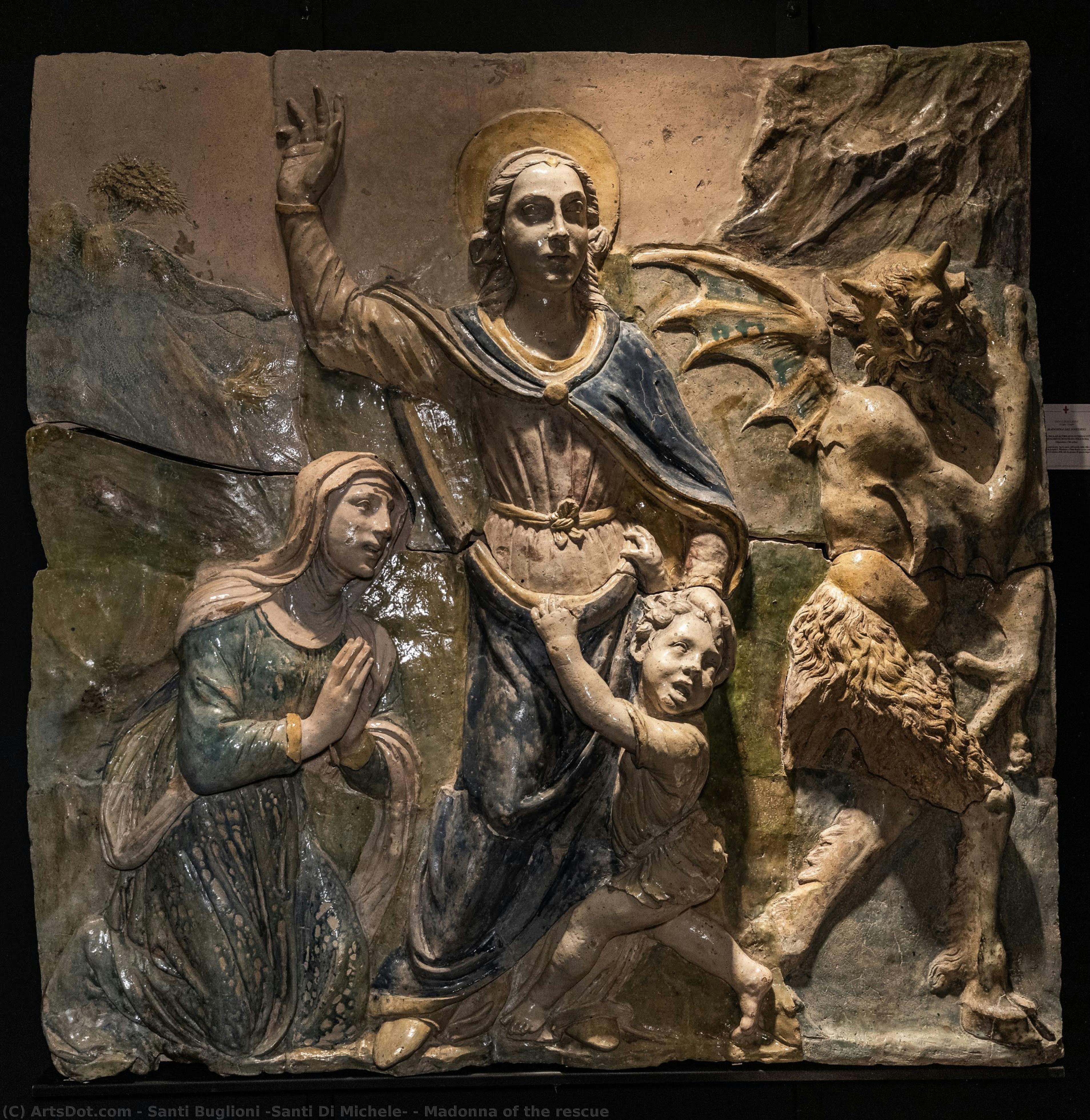
Madonna of the rescue
 Oil On Canvas
- WallArt
- Italian Renaissance
 Renaissance
 151.0 x 155.0 cm
 Biennale Internazionale dell'Antiquariato di Firenze
 Read More
Purchase a high-resolution, enhanced digital image, far superior to the online preview.
Each file is meticulously prepared by our in-house specialists using advanced tools and expert manual retouching. We ensure every image has exceptional clarity, precise color accuracy, and fine detail.
The final file is delivered via email within 72 hours, optimized for immediate use in professional, editorial, and print environments. This is the same quality trusted by top-tier design studios, publishers, and galleries.
Digital Image
Download a high-resolution file for personal display, printing, and creative projects. ( Buy Print Buy Hand Made Painting)
Included in Every Digital Image Order
Expert Digital Delivery, Guaranteed
When you choose ArtsDot.com, you're not just getting an image - you're receiving a professionally enhanced digital artwork, crafted with precision and backed by a satisfaction guarantee. Here's everything that comes with your order, automatically:

Fast Email Delivery
Your high-resolution digital image file will be emailed to you within 72 hours of ordering - ready for immediate use.

AI-Enhanced Digital File
Your artwork is professionally optimized using advanced AI tools and manual editing, ensuring maximum detail, clarity, and color accuracy.

Free Lifetime Re-Delivery
Accidentally deleted or lost your file? No worries - we'll resend it to you anytime, free of charge.

No Import Fees - Ever
Enjoy your artwork instantly with zero customs, duties, or delivery fees - digital downloads are always tax-free.

Color Accuracy Guarantee
We ensure your digital image reflects the original colors as closely as possible using professional tools and color management.

60-Day Satisfaction Guarantee
If you're not satisfied with your digital image, we'll revise it or refund 100% within 60 days - no questions asked.

100% Money-Back Guarantee
Not satisfied? Get a full refund within 60 days of receiving your digital file - no questions asked.

Bulk Order Discounts
Buy 3 images, save 10% - Buy 5, save 15% - Buy 10+, save 20%. Great for creative projects, galleries, and agencies.
A Vision of Divine Tenderness
In the quiet presence of Santi Buglioni’s “Madonna of the Rescue,” one is immediately enveloped by an atmosphere of profound sanctity and maternal warmth. This mid-16th-century masterpiece serves as a poignant window into the High Renaissance, capturing a moment that transcends time through its depiction of the Virgin Mary cradling the Christ child. The composition is not merely a religious icon but a deeply human narrative; the tender way the figures are positioned evokes an immediate emotional connection, inviting the viewer to contemplate the universal themes of protection, sacrifice, and unconditional love. As the eye wanders across the canvas, it encounters a scene populated by secondary figures that add layers of familial intimacy, suggesting a shared moment of grace that binds the divine to the earthly realm.
The technical mastery displayed in this work is a testament to Buglioni’s profound connection to the Florentine tradition. Heavily influenced by the monumental spirit of Michelangelo, the artist employs a sophisticated use of oil on canvas, utilizing delicate glazing techniques to achieve a luminous, ethereal quality. These translucent layers of pigment allow light to appear as if it is emanating from within the skin of the Madonna and the infant, creating a soft, radiant glow that defines the High Renaissance aesthetic. The meticulous attention to anatomical accuracy—a hallmark of Buglioni’s training—ensures that every gesture, from the gentle curve of a hand to the weight of the child in Mary's arms, possesses a palpable sense of realism and psychological depth.
Renaissance Splendor and Historical Resonance
To behold this painting is to step into the heart of 16th-century Florence, a period of immense cultural flowering amidst the shadows of the Protestant Reformation. During this era, the patronage of powerful families like the Medici fueled an artistic renaissance that sought to harmonize classical ideals with Christian devotion. Buglioni’s work embodies this duality perfectly; while the subject matter is deeply rooted in traditional iconography, the execution reflects the humanist pursuit of beauty, proportion, and naturalism. The painting does more than recount a biblical event; it captures the very soul of an era striving for spiritual clarity through aesthetic perfection.
For the discerning collector or interior designer, “Madonna of the Rescue” offers much more than mere decoration. It is a centerpiece of profound character, capable of anchoring a room with its historical gravity and serene elegance. Whether placed in a sunlit gallery or as a focal point in a sophisticated study, a high-quality reproduction of this work brings with it an aura of timelessness. The subtle tonal variations and the rich, emotive palette provide a sense of luxury and intellectual depth, making it an ideal choice for those looking to infuse their spaces with the enduring spirit of the Italian Renaissance.
Related Artworks


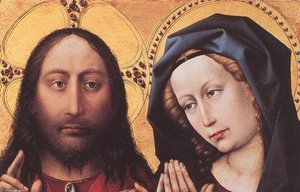
Artist Biography
Michelangelo Buonarroti: A Titan of the Renaissance
Michelangelo di Lodovico Buonarroti Simoni, born in Caprese (1494) and died in Rome (1564), stands as arguably the most influential artist of the High Renaissance. More than simply a painter or sculptor, he was a polymath—a master of architecture, poetry, and crucially, human anatomy. His work embodies the ideals of classical beauty and humanist thought, profoundly shaping Western art for centuries to come. Michelangelo’s life was one of intense dedication, often marked by personal struggles and creative conflicts, yet consistently producing masterpieces that continue to inspire awe and debate.
Michelangelo's early years were spent in Florence, where he apprenticed under Domenico Ghirlandaio, a prominent painter. However, his true passion lay in sculpture, and he quickly sought the tutelage of Bertoldo di Giovanni, sculptor to Lorenzo de’ Medici. This period instilled in him a deep understanding of classical forms and a commitment to anatomical accuracy. His early works, such as the *Battle of the Centaurs* (1492-93), already demonstrated his powerful draftsmanship and dramatic flair, foreshadowing the monumental scale and emotional intensity that would characterize his later achievements.
The Sculptor’s Vision: David and Pietà
Michelangelo's reputation as a sculptor solidified with the creation of *David* (1501-04), commissioned for Florence Cathedral. This colossal marble statue, depicting the biblical hero before his battle with Goliath, is a testament to Michelangelo’s mastery of human form—a figure of heroic strength and unwavering resolve. The sheer scale of the sculpture, combined with its remarkably lifelike detail and psychological depth, immediately established it as one of the greatest works of art ever created.
Perhaps even more profoundly moving is the *Pietà* (1498-99), sculpted for St. Peter’s Basilica in Rome. This depiction of Mary cradling the dead Christ is a masterpiece of emotional restraint and exquisite beauty. The figures are rendered with astonishing tenderness, conveying both sorrow and profound dignity. The *Pietà* exemplifies Michelangelo's ability to imbue inanimate stone with an almost palpable sense of humanity—a hallmark of his artistic genius.
Painting and Architecture: A Broadening Palette
While renowned primarily as a sculptor, Michelangelo’s talents extended significantly into the realms of painting and architecture. Pope Julius II commissioned him to paint the ceiling of the Sistine Chapel in Vatican City (1508-12), a project that consumed nearly four years of his life. The frescoes depict scenes from Genesis—the Creation, the Fall of Man, the Flood, and Noah’s Ark—executed with breathtaking scale, dynamism, and anatomical precision. The *Creation of Adam*, arguably the most famous image within the cycle, captures a moment of divine inspiration with unparalleled power.
Following the completion of the Sistine Chapel ceiling, Michelangelo turned his attention to designing the New Sacristy for St. Peter’s Basilica (1536-1541). This architectural masterpiece is characterized by its elegant proportions, intricate detailing, and harmonious integration with the surrounding basilica. The Sacistry showcases Michelangelo's understanding of classical architecture and his ability to create spaces that are both visually stunning and spiritually uplifting.
Mannerism and Legacy
As Michelangelo’s career progressed, his style evolved, reflecting the influence of the burgeoning Mannerist movement. His later works, such as *The Last Judgment* (1536-1541) on the altar wall of the Sistine Chapel and the Tomb of Pope Julius II, exhibit a greater emphasis on dramatic gesture, distorted perspective, and emotional intensity—a departure from the balanced harmony of his earlier work. Despite these stylistic shifts, Michelangelo’s commitment to anatomical accuracy, psychological depth, and expressive power remained unwavering.
Michelangelo's impact on Western art is immeasurable. His mastery of sculpture, painting, and architecture set a new standard for artistic excellence, inspiring generations of artists to strive for greater technical skill, emotional intensity, and intellectual rigor. His works continue to be studied, admired, and debated—a testament to the enduring power and timeless beauty of his genius. He remains not just an artist, but a symbol of human potential and creative achievement.
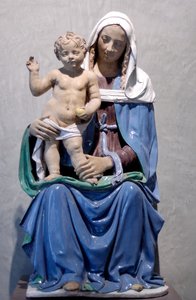
santi buglioni (santi di michele)
1494 - 1576 , Italy
Quick Facts
- Artistic Movement Or Style: High Renaissance, Early Mannerism
- Artists Or Movements Influenced By This Artist:
- Raphael
- Botticelli
- Artists Who Influenced This Artist:
- Donatello
- Leonardo da Vinci
- Date Of Birth: March 6, 1475
- Date Of Death: February 18, 1564
- Full Name: Michelangelo di Lodovico Buonarroti Simoni
- Nationality: Italian
- Notable Artworks:
- David
- Pietà
- The Last Judgment
- Place Of Birth: Caprese Michelangelo, Italy

