 Preview
 Send
Send Share
Share
 Details

 Download
 Similars
 X-Ray
X-Ray Diaporama
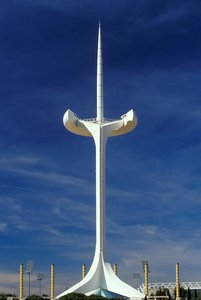
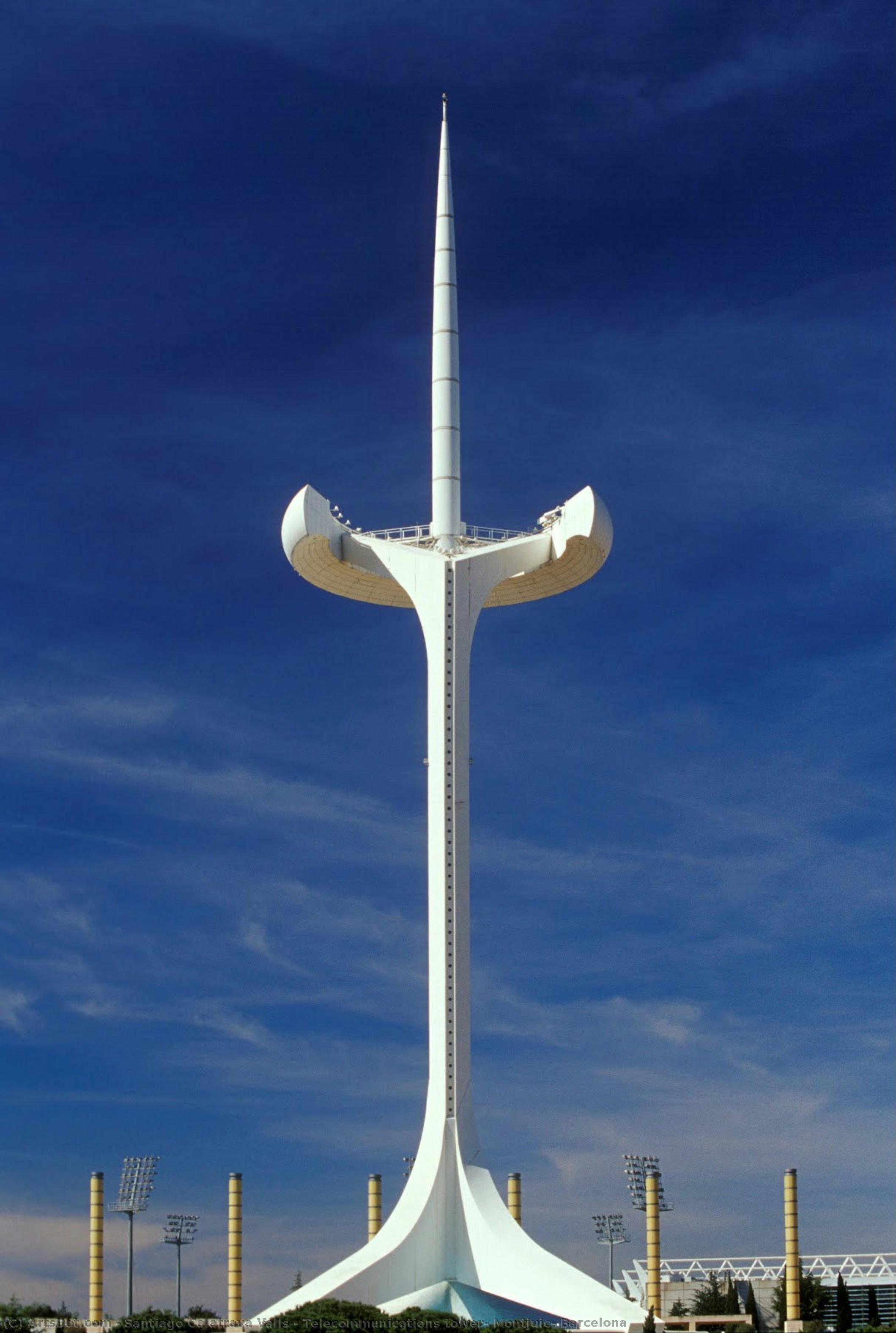
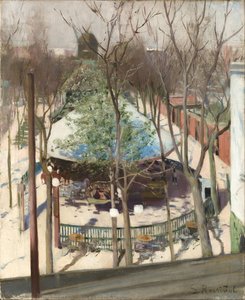
Telecommunications tower, Montjuic, Barcelona


 Read More
Hand Made Oil Reproduction
Hand-painted oil on canvas in your size and frame, made to order by our artists. ( Buy Print Buy Image)




P118B $10

P118H $10

P118W $10

P438Z $10

P508JH $12

P508YH $12

P805H $10

P805Z $10

P919BZ $10

P919G $10

P919XJ $10

P959ZH $10

P968JZ $12

W106C $8

W218G $10

W218JH $8

W218Y $10

W307PJ $10

W316G $10

W316PJ $8

W316Y $10

W398PJ $8

W4111J $10

W500HY $15

W500JH $15

W692G $12

W849H $8

W940BG $15

W953PJ $8




Pick from our preset sizes that match the artwork's original proportions.

You may enter your own dimensions to fit a specific frame or space. If your selected size does not match the original image's proportions, we will either crop the artwork or extend the painting with additional hand-painted elements. A digital mockup will be sent for your approval before production begins.
Please note that the on-screen preview does not reflect the actual cropping or extension. Only the mockup will accurately show the final composition.
While custom sizes are available, we recommend selecting a dimension from the predefined list to preserve the original proportions.
After order, ArtsDot.com team will email client for instructions and provide a mockup preview
Worldwide Delivery () in 3/4 weeks instead of standard 5 weeks. (27 August). No compromise on quality.

Free Worldwide Express Shipping

High-Quality Linen Canvas

Full Shipping Insurance

Customs Tax Refund Guarantee

True Color Matching Guarantee

60-Day Return Policy (Defects Only)

100% Money-Back Guarantee

Bulk Discount Offer
 Glass option is only available in size under 110 CM

Telecommunications tower, Montjuic, Barcelona
Reproduction Medium
Reproduction Size
-


Total Price
$ 263
Artwork Description
A Monumental Embrace of Light and Steel: Santiago Calatrava’s Telecommunications Tower
The Montjuïc Communications Tower stands as an arresting testament to the intersection of engineering prowess and artistic vision—a singular achievement by Spanish architect Santiago Calatrava Valls. Completed in 2005, this towering structure dominates the Barcelona skyline, not merely as a functional antenna but as a sculptural embodiment of Catalan identity and a celebration of modern architectural innovation. Its graceful curves defy gravity, mirroring the organic forms found in nature—a deliberate stylistic choice that elevates it beyond conventional communication infrastructure.Form Follows Function: Structural Elegance
Calatrava’s design philosophy centers on “form follows function,” prioritizing structural integrity while simultaneously pursuing aesthetic beauty. The tower’s skeleton is constructed primarily from steel, meticulously engineered to withstand seismic forces and achieve remarkable stability—a feat of structural engineering that speaks volumes about the ambition of its creators. However, it's the tower’s exterior cladding, composed of white ceramic panels arranged in a spiraling pattern, which truly captivates the eye. This innovative material choice contributes significantly to the building’s visual impact and reflects Calatrava’s fascination with biomimicry—drawing inspiration from natural structures like seashells and bones to achieve optimal structural efficiency and aesthetic appeal.Symbolism Rooted in Catalan Identity
More than just a communications hub, the tower carries symbolic weight within Barcelona and Catalonia. Situated atop Montjuïc Hill, overlooking the city’s historic center and harbor, it represents Catalonia's commitment to technological advancement while honoring its cultural heritage. The spiral motif—a recurring element throughout Calatrava’s oeuvre—symbolizes growth, dynamism, and ascension—reflecting Catalonia’s aspirations for progress and prosperity. Furthermore, the tower’s height serves as a visual declaration of Catalan pride, asserting its presence on the European stage.Technique: Precision Craftsmanship Meets Digital Innovation
The construction process demanded unparalleled precision and utilized cutting-edge digital modeling techniques. Calatrava employed parametric design—a computational method that allows architects to generate complex geometries based on mathematical algorithms—to optimize structural performance and achieve breathtaking sculptural forms. This approach necessitated meticulous calculations and simulations, demonstrating the transformative power of technology in shaping architectural creations. The ceramic panels were manufactured with exacting standards, ensuring flawless alignment and creating a mesmerizing ripple effect as sunlight dances across their surface.Emotional Resonance: Capturing Light and Movement
Ultimately, the Montjuïc Communications Tower transcends its utilitarian purpose to evoke profound emotional responses. Its soaring height inspires awe and wonder, while its graceful curves invite contemplation—creating an experience that is both intellectually stimulating and aesthetically rewarding. The interplay of light and shadow across the ceramic panels generates a mesmerizing visual spectacle, transforming the tower into a living sculpture that embodies the spirit of Catalan creativity and innovation. It’s a building designed not just to transmit signals but also to inspire – a lasting legacy of Santiago Calatrava's artistic vision.Related Artworks



Artist Biography
The Architect of Motion: The Visionary World of Santiago Calatrava Valls
To witness a structure by Santiago Calatrava Valls is to observe a moment of frozen movement. Born on July 28, 1951, in the Spanish town of Benimamet, near Valencia, Calatrava did not merely study architecture; he sought to master the very language of skeletal grace and structural tension. His journey began in the academic halls of the Polytechnic University of Valencia, where he earned his undergraduate degree in 1974. However, it was his subsequent pursuit of advanced studies at the Swiss Federal Institute of Technology (ETH) in Zürich that would fundamentally alter the trajectory of modern design. By earning a Ph.D. in technical sciences in 1979, with a thesis focused on the complex mathematics of space frames, Calatrava bridged the gap between the rigid precision of structural engineering and the fluid, emotive potential of fine art.
This rare duality—the mind of an engineer paired with the soul of a sculptor—became the cornerstone of his aesthetic revolution. His early career was defined by a profound exploration of how steel, concrete, and glass could mimic the organic rhythms found in nature. He looked toward the skeletal systems of animals, the delicate articulation of wings, and the rhythmic sway of branches to inform his monumental works. When he established his architectural atelier in Zürich in 1981, he brought with him a neo-futuristic sensibility that rejected the heavy, static blocks of traditional modernism in favor of asymmetrical, light-filled forms that seem to breathe within their urban environments.
Engineering as Poetry: The Sculptural Legacy
The true brilliance of Calatrava lies in his ability to elevate civil engineering from a functional necessity to a profound cultural landmark. His bridges, perhaps his most celebrated contribution to the global landscape, serve as connective tissue that is both physically and emotionally resonant. The Alamillo Bridge in Seville stands as a definitive testament to this approach; its dramatic, leaning pylon creates a visual tension that echoes the resilient spirit of the Andalusian landscape, transforming a simple river crossing into a sculptural icon. Similarly, his work on the Chords Bridge and various railway stations demonstrates a mastery of light and shadow, where the repetitive use of ribs and struts creates a sense of rhythmic, musical progression.
Beyond the realm of bridges, Calatrava’s architectural portfolio spans continents and disciplines, touching upon museums, airports, and sporting complexes. His designs often feature:
- Organic Fluidity: The use of sweeping, white curves that suggest the motion of a bird in flight or the undulating waves of the sea.
- Structural Transparency: A reliance on glass and skeletal frameworks to invite natural light, blurring the boundaries between interior sanctuary and exterior world.
- Kinetic Energy: Even in static structures, his use of tension and compression creates an illusion of potential movement, as if the building might unfold or shift at any moment.
From the ethereal beauty of the Milwaukee Art Museum’s Quadracci Pavilion to the futuristic grandeur of the City of Arts and Sciences in Valencia, Calatrava’s work challenges the observer to reconsider the limits of what a structure can be. He does not merely build shelters; he crafts landmarks that act as beacons of human ingenuity.
A Global Impression and Historical Significance
The historical significance of Santiago Calatrava Valls resides in his role as a pioneer of neo-futurism, an era where the boundaries between the built environment and biological form become increasingly porous. His influence is felt in the way contemporary architects approach large-scale infrastructure, moving away from purely utilitarian designs toward structures that possess a distinct, sculptural identity. Through his work, the heavy materials of the industrial age—steel and concrete—are reimagined as delicate, expressive mediums capable of conveying profound human emotions such as hope, strength, and transcendence.
As he continues to shape the skylines of cities from New York to Dubai, Calatrava’s legacy remains anchored in his fundamental belief that architecture should be a celebration of life's inherent dynamism. His ability to synthesize the rigorous logic of a Ph.D. engineer with the boundless imagination of a sculptor ensures that his structures will remain not just functional monuments of our time, but enduring works of art that continue to inspire awe for generations to come.
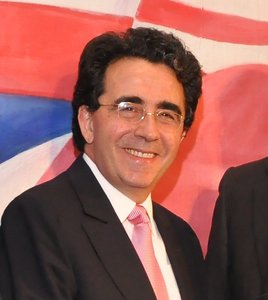
santiago calatrava valls
1951 - , Spain
Quick Facts
- Artistic Movement Or Style: Neo-futurism
- Artists Who Influenced This Artist:
- Felix Candela
- Antonio Gaudi
- Date Of Birth: July 28, 1951
- Full Name: Santiago Calatrava Valls
- Nationality: Spanish
- Notable Artworks:
- Alamillo Bridge
- Turning Torso
- Airport Railway Station Lyon
- Place Of Birth: Benimamet, Spain
Related Articles

Bronze Sculptures That Defined Art History | ArtsDot
Journey through art history with our Top 10 bronze sculptures! Explore masterpieces by Rodin, Michelangelo & more. Discover stories behind iconic statues and find museum-quality reproductions for your home decor at ArtsDot.com.

The Enduring Form: Exploring Themes & Techniques in Sculpture Across Historical Periods
Explore the rich history of sculpture from ancient masterpieces to contemporary innovations. Discover key techniques, influential artists & investment potential for discerning art collectors.

Bronze Age to Modern Masters: 10 Sculptures That Redefined Art | ArtsDot
Journey through art history with 10 legendary bronze sculptures – from Michelangelo's David to Rodin’s Thinker. Explore the stories, techniques & timeless beauty of these masterpieces. Find museum-quality reproductions & elevate your home decor on ArtsDot.com.

The Enduring Form: Sculpture Across History, Technique & Emotional Resonance
Explore the rich history of sculpture with ArtsDot. Discover key techniques, influential artists & investment potential for discerning collectors. Expert insights into valuing and collecting timeless masterpieces.
The Enduring Legacy of Bronze Sculpture: History, Techniques & Contemporary Interpretations
Explore the rich history & enduring appeal of bronze sculpture. Learn about casting techniques, iconic artists, collecting tips, & contemporary interpretations. Expert insights for discerning art collectors.