 Preview
 Send
Send Share
Share
 Details

 Download
 Similars
 X-Ray
X-Ray Diaporama
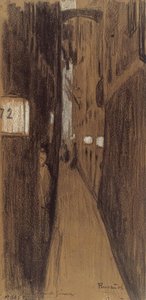
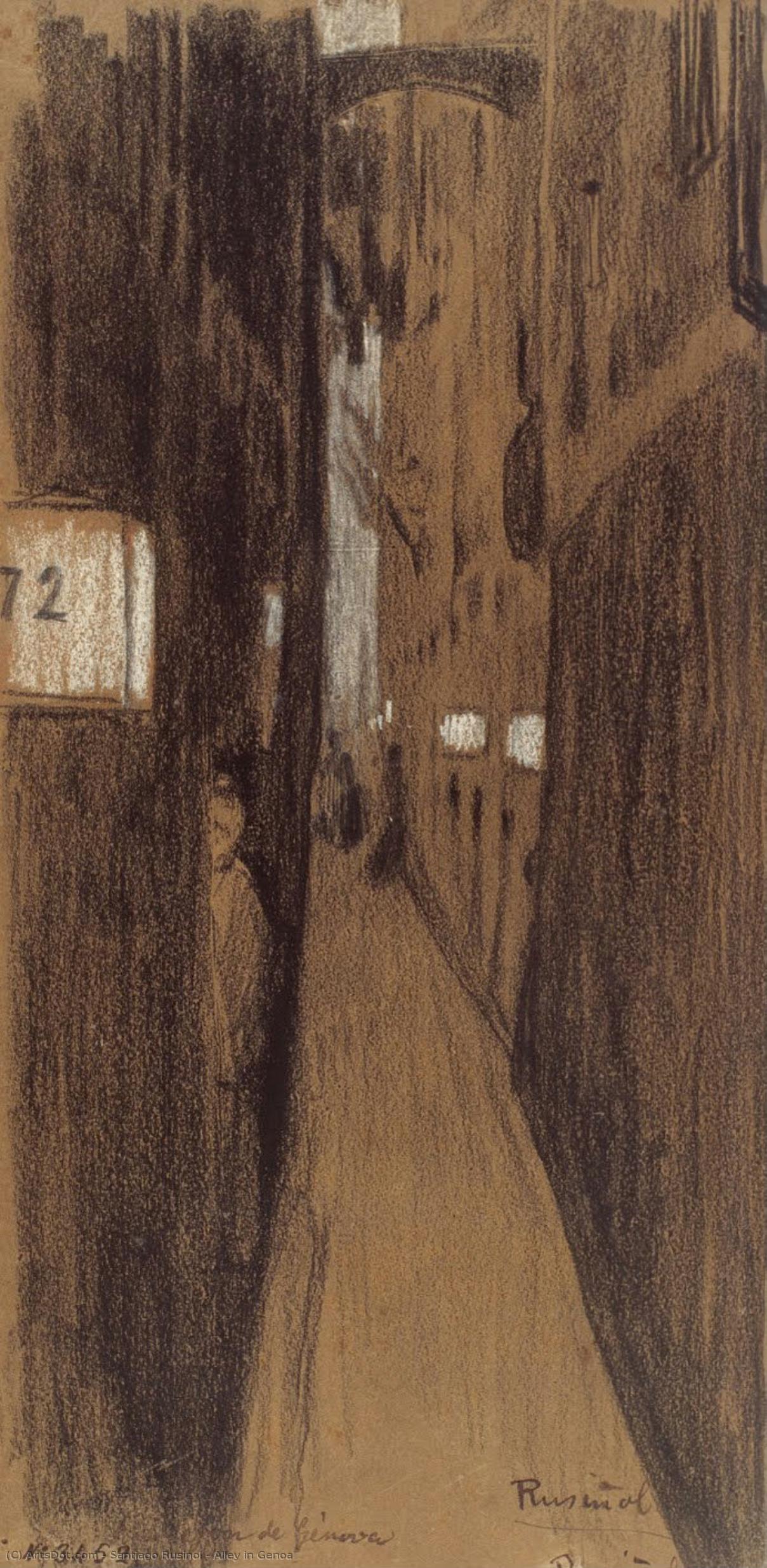
Alley in Genoa
 Acrylic On Canvas
- WallArt
- Catalan Modernisme
 1894
1894 127.0 x 255.0 cm
 Museu Nacional d'Art de Catalunya
 Read More
Hand Made Oil Reproduction
Hand-painted oil on canvas in your size and frame, made to order by our artists. ( Buy Print Buy Image)




P118B $10

P118H $10

P118W $10

P438Z $10

P508JH $12

P508YH $12

P805H $10

P805Z $10

P919BZ $10

P919G $10

P919XJ $10

P959ZH $10

P968JZ $12

W106C $8

W218G $10

W218JH $8

W218Y $10

W307PJ $10

W316G $10

W316PJ $8

W316Y $10

W398PJ $8

W4111J $10

W500HY $15

W500JH $15

W692G $12

W849H $8

W940BG $15

W953PJ $8




Pick from our preset sizes that match the artwork's original proportions.

You may enter your own dimensions to fit a specific frame or space. If your selected size does not match the original image's proportions, we will either crop the artwork or extend the painting with additional hand-painted elements. A digital mockup will be sent for your approval before production begins.
Please note that the on-screen preview does not reflect the actual cropping or extension. Only the mockup will accurately show the final composition.
While custom sizes are available, we recommend selecting a dimension from the predefined list to preserve the original proportions.
After order, ArtsDot.com team will email client for instructions and provide a mockup preview
Worldwide Delivery () in 3/4 weeks instead of standard 5 weeks. (17 August). No compromise on quality.

Free Worldwide Express Shipping

High-Quality Linen Canvas

Full Shipping Insurance

Customs Tax Refund Guarantee

True Color Matching Guarantee

60-Day Return Policy (Defects Only)

100% Money-Back Guarantee

Bulk Discount Offer
 Glass option is only available in size under 110 CM

Alley in Genoa
Reproduction Medium
Reproduction Size
-


Total Price
$ 263
Artwork Description
Santiago Rusiñol’s “Alley in Genoa”: A Glimpse of Urban Life and Catalan Modernisme
“Alley in Genoa,” painted in 1894 by Santiago Rusiñol, is more than just a depiction of a street scene; it's a poignant meditation on the rhythms of daily life within the burgeoning urban landscape of late 19th-century Catalonia. Rusiñol, a pivotal figure in the Catalan Modernisme movement, masterfully captures not only the visual details of Genoa’s narrow alleyways but also an underlying sense of melancholy and observation – qualities that define much of his oeuvre. The painting offers a window into a world where the mundane intersects with the profound, inviting viewers to contemplate the human experience within the confines of a bustling city.
A Study in Light and Shadow: Rusiñol’s Technique
Rusiñol's technique is characterized by a deliberate use of light and shadow, creating a dramatic interplay that draws the eye through the composition. He employs loose, expressive brushstrokes – a hallmark of Impressionism and Symbolism, both movements he embraced during his formative years in Paris – to render the figures and architecture with remarkable immediacy. Notice how the sunlight, filtering through the buildings, casts long shadows across the cobblestones, imbuing the scene with a sense of depth and atmosphere. The muted palette—primarily browns, ochres, and greys—further enhances this effect, lending the painting a somber yet captivating quality. The artist’s attention to detail is evident in the rendering of textures – the worn stone walls, the folds of clothing, and the subtle variations in skin tones – all contributing to the overall sense of realism while simultaneously conveying an emotional resonance.
Catalan Modernisme and the Urban Landscape
“Alley in Genoa” is deeply rooted within the context of Catalan Modernisme, a movement that sought to revitalize Catalan art and culture after decades of political repression. Rusiñol, along with other artists like Antoni Gaudí and Pau Olot, rejected academic traditions and embraced new forms of expression inspired by Impressionism, Symbolism, and Japanese prints. This period saw a renewed interest in depicting the realities of everyday life – particularly within Catalonia—often imbued with social commentary and a sense of national identity. The alleyway itself becomes symbolic; it represents not just a physical space but also the complexities of urban existence, reflecting both the energy and the isolation inherent in city life. The painting’s focus on ordinary people going about their business speaks to Modernisme's desire to elevate the commonplace to the level of art.
Symbolism and the Human Condition
Beyond its technical brilliance, “Alley in Genoa” resonates with symbolic depth. The solitary figure standing near the center of the painting—a man seemingly lost in thought—represents a universal theme: human isolation within the crowd. His posture and gaze suggest contemplation, perhaps even a sense of detachment from the surrounding activity. The blurred figures walking along the street further emphasize this feeling of anonymity and disconnection. Rusiñol wasn’t simply recording a scene; he was exploring the emotional landscape of modern life—the quiet moments of reflection amidst the relentless pace of urban existence. The painting invites us to consider our own place within the larger world, prompting questions about connection, identity, and the search for meaning.
A Legacy of Observation: Rusiñol’s Enduring Appeal
“Alley in Genoa” remains a powerful testament to Santiago Rusiñol's artistic vision. Its evocative atmosphere, masterful technique, and subtle symbolism continue to captivate viewers today. Reproductions of this work offer an accessible entry point into the world of Catalan Modernisme, allowing us to appreciate the artist’s keen eye for detail and his profound understanding of the human condition. It serves as a reminder that even in the most ordinary scenes, there lies the potential for beauty, contemplation, and enduring artistic expression.
Related Artworks
Artist Biography
Santiago Rusiñol: A Life in Art and Modernisme
- Born: February 25, 1861, Barcelona, Spain
- Died: June 13, 1931, Aranjuez, Spain
- Nationality: Spanish
- Movement: Catalan Modernisme, Symbolism, Impressionism
Early Life and Artistic Development
- Rusiñol was born into a family of textile industrialists in Manlleu, later moving to Barcelona. Despite familial expectations, he pursued his passion for art from a young age.
- He received initial training at the Centro de Acuarelistas de Barcelona under Tomás Moragas, focusing on watercolour techniques and Realist principles.
- Early works reflected Orientalist themes and historical subjects before transitioning to urban scenes and landscapes in the 1880s.
- His travels throughout Spain significantly influenced his artistic development, exposing him to diverse cultural and architectural settings.
Parisian Influences and Artistic Maturity
- In 1889, Rusiñol moved to Paris, a pivotal moment in his career. He lived in Montmartre alongside fellow artists like Ramon Casas and Ignacio Zuloaga.
- The Parisian art scene exposed him to Impressionism and Symbolism, profoundly shaping his artistic style. He was influenced by artists such as Edgar Degas and Pierre-Auguste Renoir.
- His paintings from this period often depicted urban life, capturing a sense of solitude and melancholy through loose brushstrokes and subdued tones.
- He became involved in literary circles, engaging with Symbolist poets and writers, further enriching his artistic vision.
Return to Catalonia and the Catalan Modernisme Movement
- Rusiñol's return to Catalonia in the 1890s marked a significant chapter in his career and the development of Catalan Modernisme.
- He settled in Sitges, transforming it into a cultural hub for artists and intellectuals. His home, Cau Ferrat, became a renowned artistic salon.
- Rusiñol played a key role in fostering the Modernist movement alongside figures like Pere Romeu and Miquel Utrillo.
- His paintings during this period increasingly focused on landscapes, gardens, and architectural themes, reflecting his deep connection with nature and Catalan identity.
Legacy and Historical Significance
- Santiago Rusiñol is recognized as a leading figure in Catalan Modernisme, significantly contributing to the movement's artistic and cultural development.
- His paintings are celebrated for their blend of Symbolist influences, Impressionistic techniques, and evocative depictions of landscapes and gardens.
- He left behind a legacy of modernist buildings in Sitges, further solidifying his impact on Catalan architecture and urban planning.
- Rusiñol's work continues to inspire artists and art enthusiasts alike, showcasing the beauty and cultural richness of Catalonia during the fin-de-siècle era.
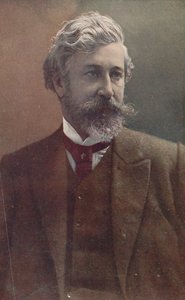
Santiago Rusiñol
1861 - 1931 , Spain
Quick Facts
- Artistic Movement Or Style: Catalan Modernisme, Symbolism
- Artists Or Movements Influenced By This Artist: ['Pablo Picasso']
- Artists Who Influenced This Artist:
- Edgar Degas
- James Abbot McNeil Whistler
- Date Of Birth: February 25, 1861
- Date Of Death: June 13, 1931
- Full Name: Santiago Rusiñol i Prats
- Nationality: Spanish
- Notable Artworks:
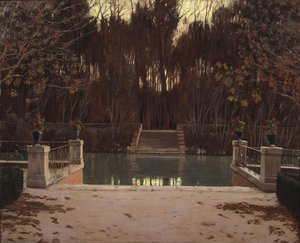
- Gardens of Aranjuez
- Portrait of Utrillo
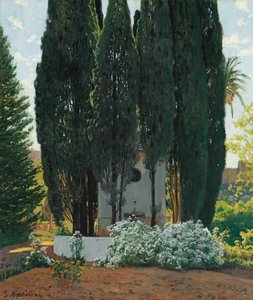
- Terraced garden in Mallorca
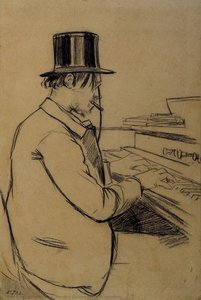
- Sketch of Erik Satie
- Place Of Birth: Barcelona, Spain
Related Articles

Emilio Grau Sala: A Catalan Colorist Between Modernisme & Symbolism
Explore the vibrant world of Emilio Grau Sala, a leading Catalan colorist influenced by Parisian Modernisme & Symbolism. Discover his captivating paintings, artistic techniques, and lasting legacy with ArtsDot.
Joaquim Mir: A Catalan Visionary – Exploring Symbolism, Landscape & Modernist Aesthetic
Explore the captivating world of Joaquim Mir, a pivotal Catalan Modernisme painter. Discover his vibrant landscapes, symbolic depth & lasting influence on Spanish art history. Learn more at ArtsDot.

Josep Mompou Dencausse: Exploring Intimacy & Catalan Identity Through Minimalist Expression
Explore the captivating world of Josep Mompou Dencausse, a master of Post-Impressionism whose intimate paintings reflect Catalan identity and minimalist beauty. Discover his life, style & legacy.
Beyond Graffiti: Exploring the Evolution & Cultural Impact of Street Art for Collectors
Explore the evolution of street art from rebellious origins to a respected fine art form. Discover key artists like Banksy & learn how to collect urban art with confidence. Expert insights for discerning investors.
Josep Cusachs i: Exploring Catalan Modernism Through Social Commentary & Artistic Innovation
Explore the captivating world of Josep Cusachs i, a key figure in Catalan Modernism. Discover his realist paintings, social commentary, and influence on 19th-century Spanish art. Hand-painted reproductions available at ArtsDot.