Early Life & Training: Barcelona Roots and Artistic Foundations
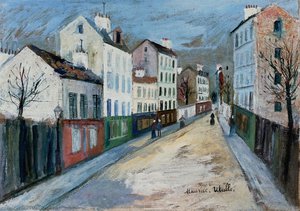
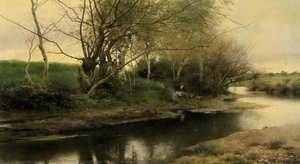
Emilio (Emi) Grau Sala (1911, Barcelona - 1975, Paris) was a Catalan painter. He studied at the sp:Escuela de Bellas Artes de Barcelona.
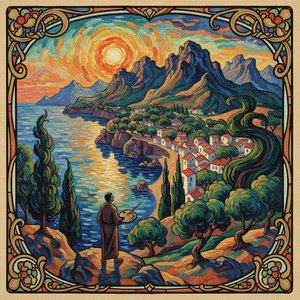
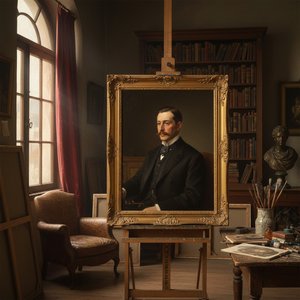
Emilio Grau Sala, born in Barcelona in 1911, emerged from a lineage steeped in artistic tradition—his father, Juan Grau Miró, was a respected draughtsman who instilled an early appreciation for visual expression. This formative period within the vibrant Catalan capital proved pivotal, laying the groundwork for a career that would beautifully synthesize local heritage with international influences. Barcelona at the turn of the 20th century was a crucible of creativity, experiencing a flourishing of artistic movements collectively known as Modernisme—a Catalan adaptation of Art Nouveau characterized by its organic forms, intricate detail, and fervent nationalism. While Grau Sala received formal training at the Escola de Bellas Artes de Barcelona, his burgeoning talent quickly steered him toward a more independent path, one that prioritized emotional resonance over strict academic adherence. The city’s atmosphere, brimming with architectural marvels like Gaudí's Sagrada Família and a growing sense of cultural identity, fostered an environment where artistic experimentation thrived.
Parisian Influences & The School of Paris: Embracing Colorism
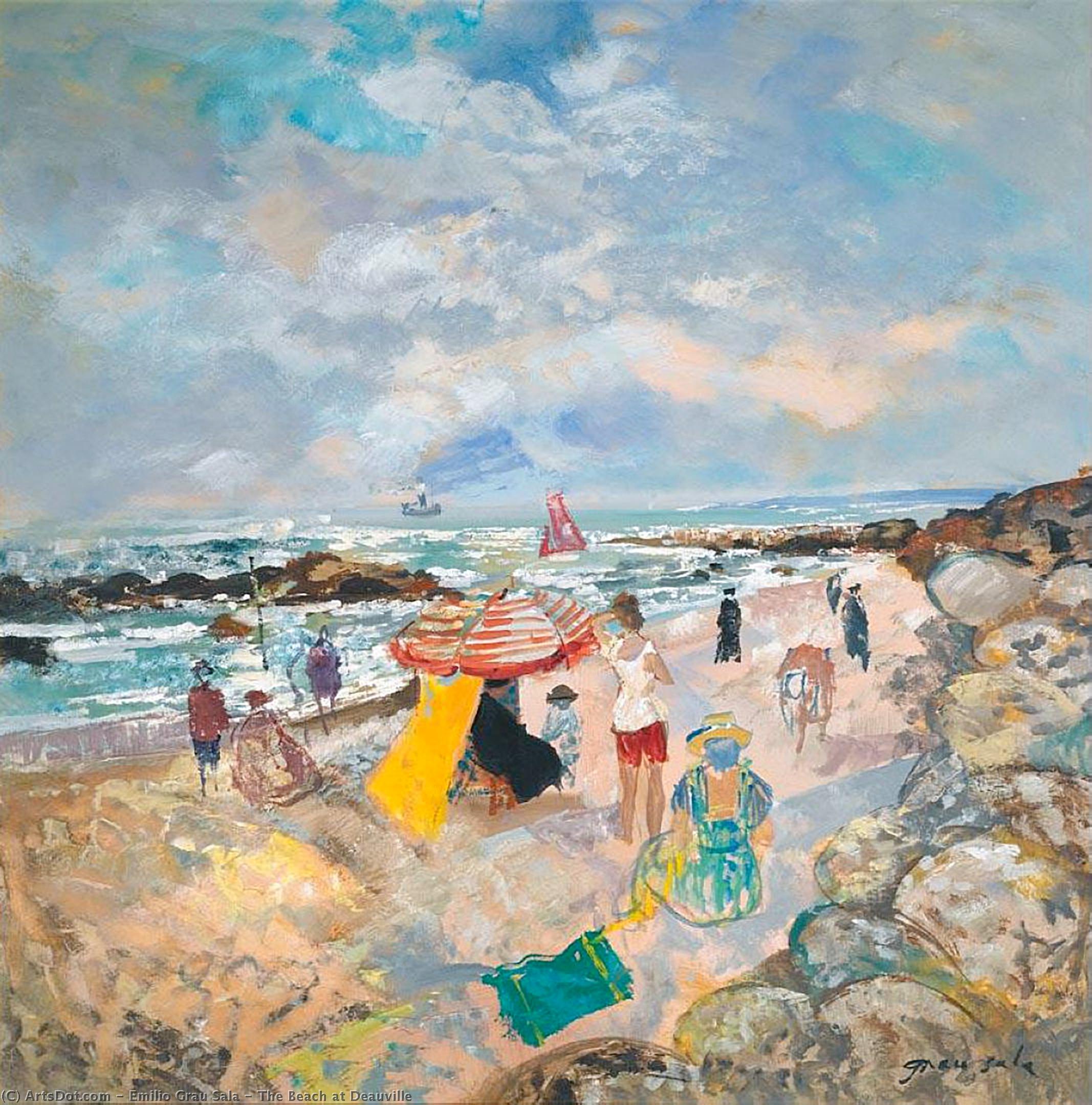 emilio grau sala
Discover Emilio Grau Sala's vibrant oil paintings & watercolors! A Catalan colorist influenced by Maurice Boitel, his work captures Parisian charm & Spanish heritage.
The outbreak of the Spanish Civil War in 1936 marked a turning point for Grau Sala. Alongside his wife, Ángeles Santos Torroella, he sought refuge in Paris, a city then serving as the epicenter of artistic innovation. This relocation proved transformative, immersing him within the dynamic milieu of the School of Paris—a loosely defined group of international artists who shared a commitment to figurative painting and a rejection of abstract trends. It was here that Grau Sala fully embraced colorism, a style emphasizing the expressive power of vibrant hues and nuanced tonal relationships. He found kinship with painters like Maurice Boitel, whose influence encouraged him to explore the possibilities of capturing light and atmosphere through bold brushwork and saturated palettes. The Parisian art scene offered not only technical refinement but also a platform for recognition; Grau Sala’s talent quickly garnered attention, culminating in his prestigious Carnegie Prize win in 1937—a testament to his burgeoning mastery.
The Catalan Identity in Grau Sala’s Work: Modernisme and Beyond
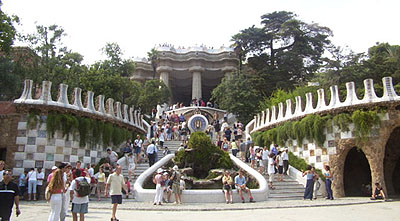 Wikipedia: Modernisme
Modernisme (Catalan pronunciation: [muðərˈnizmə], Catalan for "modernism"), also known as Catalan modernism and Catalan art nouveau, is the historiographic denomination given to an art and literature movement associated with the search of a new entit...
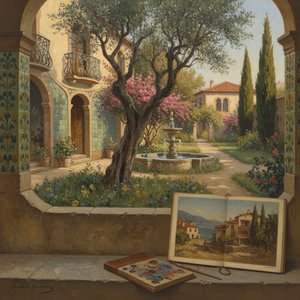
Despite his embrace of Parisian aesthetics, Grau Sala never fully severed ties with his Catalan roots. His paintings consistently reflect a deep-seated connection to the landscapes, people, and cultural traditions of his homeland. While not explicitly adhering to the architectural tenets of Modernisme, his work embodies its spirit—a celebration of Catalan identity and a desire for artistic autonomy. This is particularly evident in his depictions of everyday life: bustling marketplaces, intimate family portraits, and sun-drenched interiors that exude warmth and vitality. He skillfully captured the essence of Catalan character, portraying figures with a sense of dignity and authenticity. The influence of Modernisme can also be seen in his attention to detail and decorative elements, subtly woven into the fabric of his compositions. His art became a bridge between the local and the universal, showcasing the beauty and richness of Catalan culture to an international audience.
Symbolic Undercurrents & Emotional Resonance: Exploring Recurring Themes
Symbolist painting was one of the main artistic manifestations of symbolism, a cultural movement that emerged at the end of the 19th century in France and developed in several European countries. The beginning of this current was in poetry, especiall...
Beneath the vibrant surfaces of Grau Sala’s paintings lie layers of symbolic meaning and emotional depth. While not a strictly Symbolist painter in the manner of Gustave Moreau or Odilon Redon, his work shares an affinity with the movement's emphasis on subjectivity, introspection, and the exploration of inner states. Recurring themes—motherhood, domesticity, and fleeting moments of beauty—are imbued with a sense of melancholy and longing. His interiors, often bathed in soft light, evoke a feeling of nostalgia and quiet contemplation. The figures within his compositions are not merely representations of reality but rather vessels for conveying complex emotions and psychological states. Mothership, for example, is not simply a depiction of a family scene; it’s an exploration of the bonds between generations and the enduring power of love. Similarly, paintings like Clare de Lune transcend mere landscape depictions, becoming evocative meditations on memory and atmosphere.
Technique & Style: Brushwork, Composition, and the Pursuit of Light
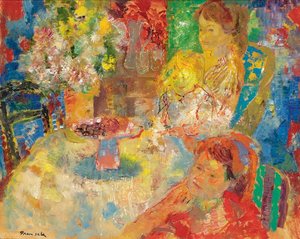
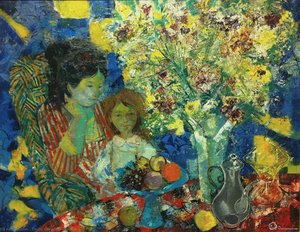 Mothership
Discover Emilio Grau Sala’s vibrant ‘Mothership’ oil painting! Explore its expressive brushwork, bold colors & dynamic composition – a captivating Catalan masterpiece.
Grau Sala’s distinctive style is characterized by a masterful command of oil painting technique. His brushwork is expressive yet controlled, creating a sense of texture and movement that brings his compositions to life. He employed a layering approach, building up color gradually to achieve nuanced tonal relationships and luminous effects. Compositionally, his paintings are often balanced and harmonious, drawing the viewer’s eye to focal points while maintaining a sense of overall unity. Light plays a crucial role in his work—he skillfully captured its fleeting qualities, using it to create atmosphere and evoke emotion. His watercolors demonstrate an equally impressive technical prowess, showcasing his ability to render delicate details and subtle gradations of color. Whether working with oil or watercolor, Grau Sala’s pursuit of light remained constant—a testament to his dedication to capturing the beauty and transience of the world around him.
Grau Sala's Legacy: A Lasting Impact on 20th-Century Painting
Emilio Grau Sala passed away in Paris in 1975, leaving behind a rich body of work that continues to captivate audiences today. His paintings are held in both private and public collections, recognized for their contribution to European modernism and their enduring appeal. While often categorized as a colorist, his art transcends simple labels—it’s a unique synthesis of Catalan heritage, Parisian influences, and personal vision. He successfully navigated the complexities of 20th-century artistic trends, remaining true to his own aesthetic principles while embracing innovation. His legacy lies not only in the beauty of his paintings but also in his ability to capture the essence of human experience—the joys, sorrows, and fleeting moments that define our lives. Discovering Grau Sala’s work is an invitation to immerse oneself in a world of vibrant color, emotional resonance, and artistic mastery – artworks available through ArtsDot.com.