 Preview
 Send
Send Share
Share
 Details

 Download
 Similars
 X-Ray
X-Ray Diaporama
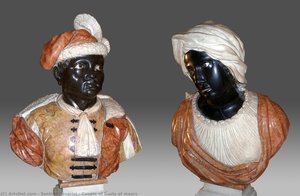
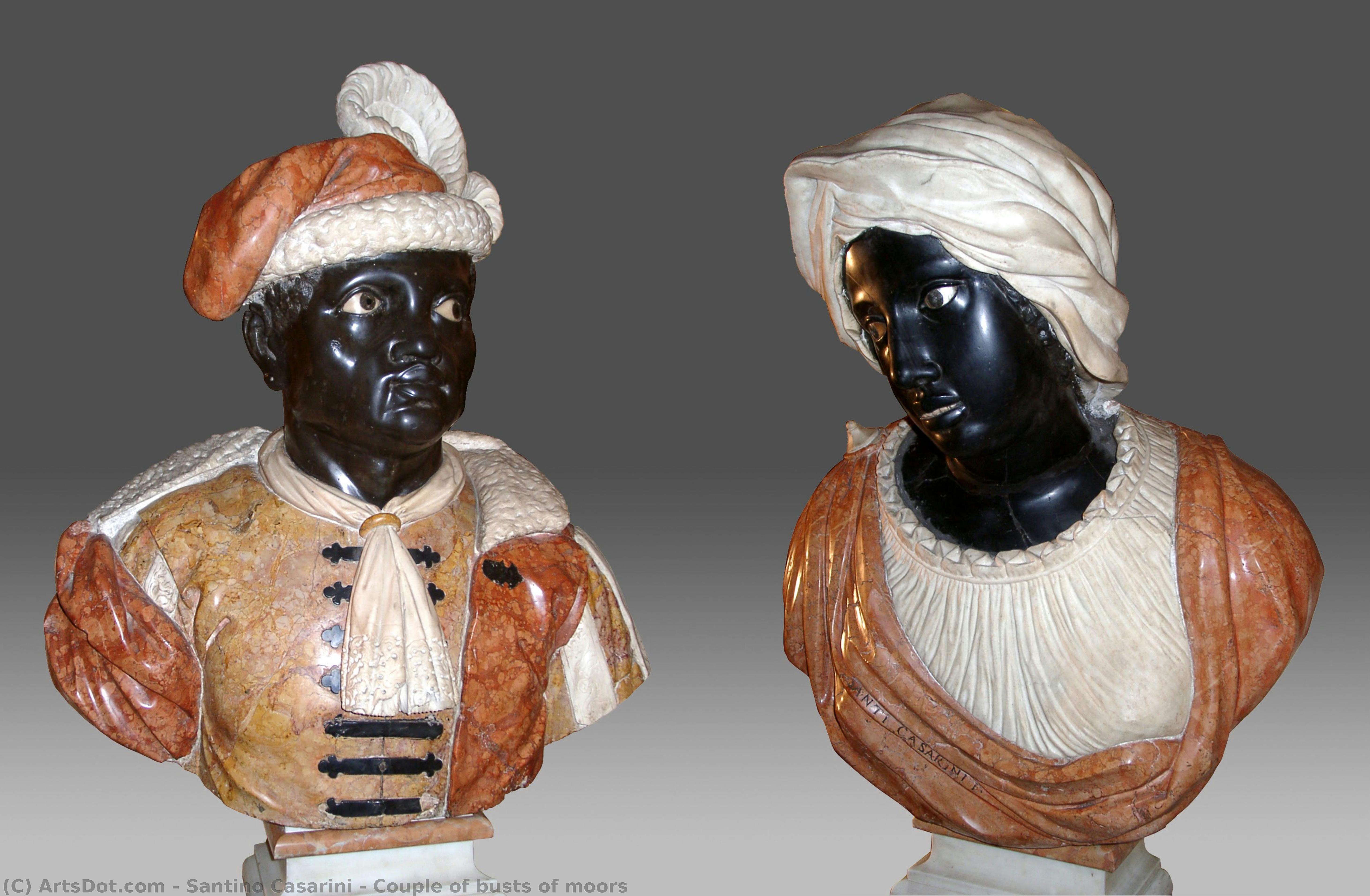
Couple of busts of moors
 5.0 x 93.0 cm
 Biennale Internazionale dell'Antiquariato di Firenze
 Read More
Hand Made Oil Reproduction
Hand-painted oil on canvas in your size and frame, made to order by our artists. ( Buy Print Buy Image)




































Pick from our preset sizes that match the artwork's original proportions.

You may enter your own dimensions to fit a specific frame or space. If your selected size does not match the original image's proportions, we will either crop the artwork or extend the painting with additional hand-painted elements. A digital mockup will be sent for your approval before production begins.
Please note that the on-screen preview does not reflect the actual cropping or extension. Only the mockup will accurately show the final composition.
While custom sizes are available, we recommend selecting a dimension from the predefined list to preserve the original proportions.
After order, ArtsDot.com team will email client for instructions and provide a mockup preview
Worldwide Delivery () in 3/4 weeks instead of standard 5 weeks. (5 September). No compromise on quality.

Free Worldwide Express Shipping

High-Quality Linen Canvas

Full Shipping Insurance

Customs Tax Refund Guarantee

True Color Matching Guarantee

60-Day Return Policy (Defects Only)

100% Money-Back Guarantee

Bulk Discount Offer
 Glass option is only available in size under 110 CM

Couple of busts of moors
Reproduction Medium
Reproduction Size
-


Total Price
$ 263
Related Artworks








Artist Biography
Grant Wood: A Portrait of Rural America
Grant Wood, born on February 13, 1891, in Anamosa, Iowa—a small town steeped in the traditions of the Midwest—was more than just an artist; he was a chronicler of his region’s soul. His life unfolded against the backdrop of a rapidly changing America, and his art became a poignant reflection of the values, beliefs, and landscapes that defined rural Iowa during the early 20th century. His father's untimely death in 1901 dramatically altered his trajectory, forcing his family to relocate to Cedar Rapids, a move that ultimately shaped his artistic vision and instilled within him a deep connection to the land and its people. Immediately following high school, Wood enrolled at the Minneapolis School of Design, Handicraft, and Normal Art, where he found mentorship in Ernest A. Batchelder, an advocate for the arts and crafts movement and art nouveau design. This early exposure to craftsmanship and decorative arts would profoundly influence his later work, imbuing it with a sense of meticulous detail and a reverence for traditional techniques. Further study at the University of Iowa and the School of Art in Chicago provided him with foundational skills, but it was his return to Iowa that truly ignited his artistic passion.The Regionalist Movement and Early Influences
Wood’s art emerged during a period of significant social and cultural upheaval in America—the rise of industrialization, urbanization, and the decline of traditional rural life. He became a central figure in the Regionalist movement, a distinctly American artistic style that rejected European influences and instead focused on depicting everyday scenes from rural America. This wasn’t simply a matter of recording landscapes; Wood sought to capture the essence of Midwestern identity—the stoicism, faith, and quiet dignity of its inhabitants. His early works, such as *Forces of Nature* (1926) and *Shine On, Harvest Moon* (1930), demonstrate this commitment to portraying the lives of farmers and rural communities with remarkable accuracy and empathy. These paintings weren’t romanticized; they presented a realistic, often austere, view of agricultural life, capturing both its hardships and its enduring spirit. The influence of artists like Paul Gauguin, particularly his exploration of primitive subjects and symbolic imagery, is evident in Wood's later work, though he adapted these techniques to suit the specific context of American rural life. The stark contrasts between the vibrant colors of Gauguin’s Tahiti and Wood’s muted palette reflect a deliberate choice to ground his subject matter firmly within the realities of Iowa.Iconic Works: *American Gothic* and Beyond
Perhaps Grant Wood's most famous work, *American Gothic* (1930), remains an enduring symbol of American culture—a complex and often debated image that has been endlessly reproduced and interpreted. Initially conceived as a satirical commentary on the perceived narrow-mindedness of rural America, the painting quickly transcended its initial intent to become a powerful representation of traditional values and family life. The stern farmer and his daughter, posed rigidly against the backdrop of their simple farmhouse, embody a sense of resilience and self-reliance—qualities that resonated deeply with audiences during the Great Depression. However, *American Gothic* is not simply a portrait; it’s a carefully constructed visual narrative, laden with symbolism. The pitchfork, for instance, represents both agricultural labor and defense, while the woman's dress suggests modesty and piety. Beyond *American Gothic*, Wood produced a remarkable body of work that included *The Cabinet of Americana* (1932), a series of paintings depicting rural life in Iowa, and *Shrine Quartet* (1939), a monumental mural commissioned for the Chicago World’s Fair. These works further solidified his reputation as a leading Regionalist artist and cemented his place in American art history.Collaboration with George C. Miller and the Associated American Artists
In 1935, Wood joined forces with fellow Iowa artist George C. Miller to form the Associated American Artists (AAA), a cooperative organization dedicated to promoting regionalist art throughout the United States. The AAA provided artists with opportunities for collaboration, exhibition, and publication—a vital lifeline during the economic hardships of the Depression era. Wood’s association with the AAA led to several significant commissions, including the *July Fifteenth* (1938) series, a group of lithographs depicting scenes from rural Iowa life. These works were produced in collaboration with Miller and distributed through the AAA's print shop, making them accessible to a wider audience. The AAA’s model of collective artistic production reflected Wood’s belief in the power of community and his commitment to fostering a shared regional identity.Legacy and Historical Significance
Grant Wood died in 1942, leaving behind a rich and enduring legacy as one of America's most important Regionalist artists. His work continues to be celebrated for its honest portrayal of rural life, its meticulous attention to detail, and its profound sense of place. Wood’s art served as a powerful counterpoint to the prevailing trends in American art at the time—the abstract expressionism and modernist innovations that dominated the post-World War II era. He is remembered not only for his artistic achievements but also for his unwavering commitment to documenting the lives and values of the people who shaped Iowa's identity. His paintings remain a poignant reminder of a bygone era, offering valuable insights into the complexities of American culture and the enduring spirit of rural America. His work continues to be studied and admired for its ability to capture both the beauty and the hardship of life on the land.
santino casarini
1891 - 1976 , Italy
Quick Facts
- Artistic Movement Or Style: Regionalism
- Artists Or Movements Influenced By This Artist: ['American Gothic']
- Artists Who Influenced This Artist: ['Paul Gauguin']
- Date Of Birth: February 13, 1891
- Date Of Death: 1976
- Full Name: Grant Wood
- Nationality: American
- Notable Artworks:
- Shrine Quartet
- July Fifteenth
- Tree Planting
- Place Of Birth: Anamosa, Iowa, USA