 Preview
 Send
Send Share
Share
 Details

 Download
 Similars
 X-Ray
X-Ray Diaporama
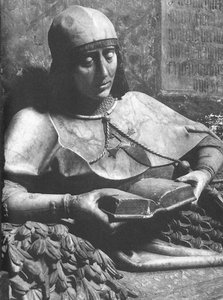
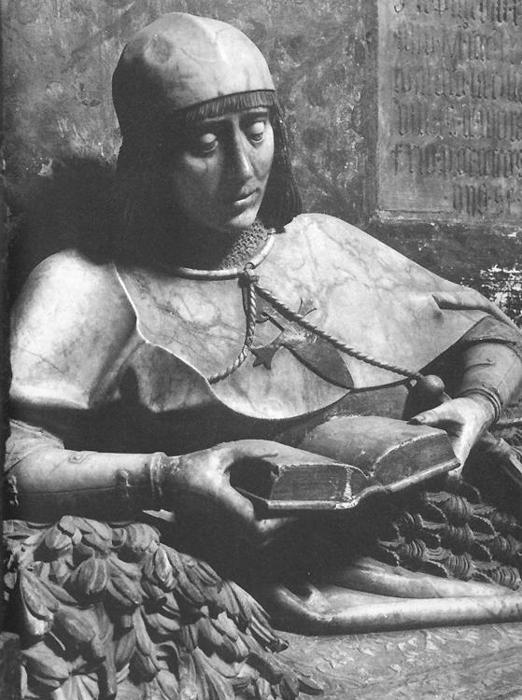
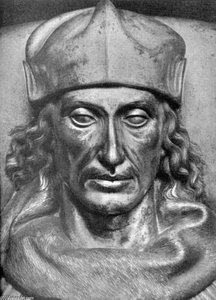
Tomb of Martin Vázquez (detail)


 Read More
Hand Made Oil Reproduction
Hand-painted oil on canvas in your size and frame, made to order by our artists. ( Buy Print Buy Image)




































Pick from our preset sizes that match the artwork's original proportions.

You may enter your own dimensions to fit a specific frame or space. If your selected size does not match the original image's proportions, we will either crop the artwork or extend the painting with additional hand-painted elements. A digital mockup will be sent for your approval before production begins.
Please note that the on-screen preview does not reflect the actual cropping or extension. Only the mockup will accurately show the final composition.
While custom sizes are available, we recommend selecting a dimension from the predefined list to preserve the original proportions.
After order, ArtsDot.com team will email client for instructions and provide a mockup preview
Worldwide Delivery () in 3/4 weeks instead of standard 5 weeks. (3 September). No compromise on quality.

Free Worldwide Express Shipping

High-Quality Linen Canvas

Full Shipping Insurance

Customs Tax Refund Guarantee

True Color Matching Guarantee

60-Day Return Policy (Defects Only)

100% Money-Back Guarantee

Bulk Discount Offer
 Glass option is only available in size under 110 CM

Tomb of Martin Vázquez (detail)
Reproduction Medium
Reproduction Size
-


Total Price
$ 263
Related Artworks





Artist Biography
Early Life and Formation in Spain
Sebastián de Almonacid, born around 1460 in Spain, remains a somewhat enigmatic figure within the pantheon of Baroque artists. Details surrounding his early life are scarce, yet it is understood he received his initial artistic training within the vibrant cultural landscape of Castile during a period of significant religious and political transition. The late 15th and early 16th centuries witnessed a flourishing of Spanish art, heavily influenced by both Gothic traditions and the burgeoning Renaissance ideals arriving from Italy. While specific mentors remain unknown, Almonacid’s later work suggests an immersion in the dramatic realism characteristic of Spanish painting at the time—a style deeply rooted in emotional intensity and spiritual fervor. This formative period undoubtedly instilled within him a profound understanding of religious iconography and narrative composition, elements that would become hallmarks of his mature oeuvre.A Journey to Italy and Roman Influences
Almonacid’s artistic trajectory took a pivotal turn with his relocation to Rome, likely sometime in the late 1480s or early 1490s. The Eternal City was then undergoing a remarkable transformation under the patronage of ambitious popes like Alexander VI and Julius II. This environment exposed Almonacid to the High Renaissance masters—Raphael, Michelangelo, and Leonardo da Vinci—whose groundbreaking innovations in perspective, anatomy, and naturalism were reshaping the artistic landscape. While he didn’t directly emulate their styles, the influence of Roman classicism is discernible in his evolving approach to form and composition. He absorbed the principles of balanced design and idealized beauty, integrating them with the existing Spanish penchant for emotional expression. This fusion created a unique aesthetic that distinguished him from both his Italian contemporaries and fellow Spanish artists who had traveled abroad.Years in Leipzig: A Northern Baroque Style
Around 1508, Almonacid accepted a commission to work at St. Thomas Church in Leipzig, Germany, under the patronage of Frederick III, Elector of Saxony. This move marked a significant shift in his artistic environment and style. The northern European context—with its emphasis on meticulous detail, realistic portraiture, and a more subdued color palette—profoundly impacted his later work. He became court painter to the Electors of Saxony, producing numerous portraits that captured the likenesses of prominent figures within the Saxon court. His religious paintings from this period demonstrate a growing Baroque sensibility, characterized by dynamic compositions, dramatic lighting effects (tenebrism), and an increased focus on emotional realism. The influence of Albrecht Dürer, whose prints were widely circulated throughout Europe, is also evident in Almonacid’s meticulous attention to detail and his exploration of psychological depth in portraiture.Major Achievements and Artistic Legacy
Almonacid's most celebrated works include the Tomb of Martin Vázquez (detail), a powerful example of his sculptural skill and dramatic composition, showcasing his ability to convey grief and spiritual contemplation through form and gesture. His portraits from the Leipzig period are particularly noteworthy for their psychological insight and realistic depiction of individual character. He skillfully blended Spanish emotional intensity with northern European realism, creating a unique style that resonated with the Saxon court. While he didn’t found a large school of followers, his work served as an important bridge between the Spanish Baroque tradition and the emerging artistic trends in Northern Europe. His paintings are testaments to his mastery of religious narrative, portraiture, and his ability to capture the complexities of human emotion.Historical Significance
Sebastián de Almonacid occupies a fascinating position within art history—a transitional figure who absorbed influences from diverse cultural contexts and synthesized them into a distinctive artistic voice. He exemplifies the international exchange of ideas that characterized the Renaissance and Baroque periods, demonstrating how artists traveled, learned, and adapted their styles to suit new environments and patrons. His work provides valuable insight into the evolving aesthetic preferences of both Spain and Northern Europe during a period of profound religious and political change. Though his biography remains incomplete, Almonacid’s paintings continue to captivate viewers with their emotional power, technical skill, and unique blend of artistic traditions—a testament to his enduring legacy as a master of the Baroque era. His work is a reminder that artistic innovation often arises from the intersection of cultures and the willingness to embrace new perspectives.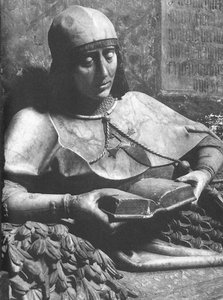
sebastián de almonacid
1460 - 1526
Quick Facts
- Artistic Movement Or Style: Baroque Painting
- Artists Or Movements Influenced By This Artist: ['Catholic Art Spain']
- Artists Who Influenced This Artist: ['El Greco']
- Date Of Death: 1526
- Full Name: Sebastián de Almonacid
- Nationality: Spanish
- Notable Artworks:
- Cristo Crucificado Almonacid I
- Cristo Crucificado Almonacid II
- Place Of Birth: Toledo, Spain