

 Preview
 Send
Send Share
Share
 Details

 Download
 Similars
 X-Ray
X-Ray Diaporama
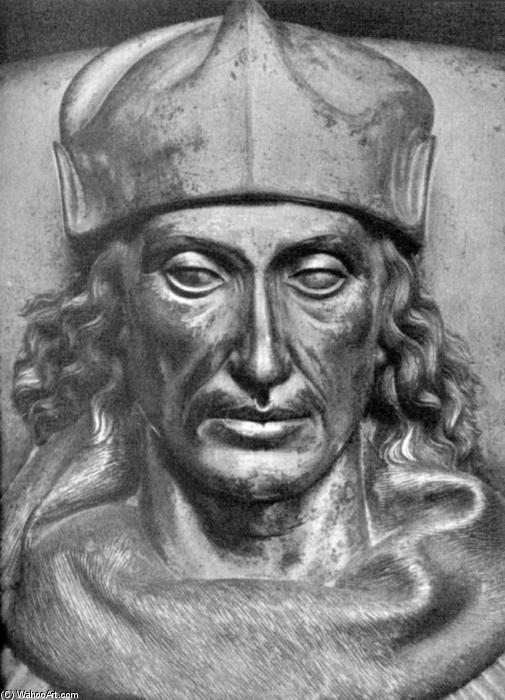
Monument to Henry VII (detail)


 Read More
Hand Made Oil Reproduction
Hand-painted oil on canvas in your size and frame, made to order by our artists. ( Buy Print Buy Image)




P118B $10

P118H $10

P118W $10

P438Z $10

P508JH $12

P508YH $12

P805H $10

P805Z $10

P919BZ $10

P919G $10

P919XJ $10

P959ZH $10

P968JZ $12

W106C $8

W218G $10

W218JH $8

W218Y $10

W307PJ $10

W316G $10

W316PJ $8

W316Y $10

W398PJ $8

W4111J $10

W500HY $15

W500JH $15

W692G $12

W849H $8

W940BG $15

W953PJ $8




Pick from our preset sizes that match the artwork's original proportions.

You may enter your own dimensions to fit a specific frame or space. If your selected size does not match the original image's proportions, we will either crop the artwork or extend the painting with additional hand-painted elements. A digital mockup will be sent for your approval before production begins.
Please note that the on-screen preview does not reflect the actual cropping or extension. Only the mockup will accurately show the final composition.
While custom sizes are available, we recommend selecting a dimension from the predefined list to preserve the original proportions.
After order, ArtsDot.com team will email client for instructions and provide a mockup preview
Worldwide Delivery () in 3/4 weeks instead of standard 5 weeks. (16 August). No compromise on quality.

Free Worldwide Express Shipping

High-Quality Linen Canvas

Full Shipping Insurance

Customs Tax Refund Guarantee

True Color Matching Guarantee

60-Day Return Policy (Defects Only)

100% Money-Back Guarantee

Bulk Discount Offer
 Glass option is only available in size under 110 CM

Monument to Henry VII (detail)
Reproduction Medium
Reproduction Size
-


Total Price
$ 263
Artwork Description
A Regal Gaze: Pietro Torrigiano’s Monumental Portrait of Henry VII
The image before us is more than just a sculpted head; it's a frozen moment of authority, a testament to the ambition and enduring legacy of Henry VII. Carved by the Florentine sculptor Pietro Torrigiano in 1512, this portrait offers a profound glimpse into the character of England’s first Tudor king – a man both formidable and subtly melancholic. The monochrome palette, achieved through meticulous stone carving and likely enhanced over centuries, immediately establishes a timeless quality, stripping away the distractions of color to focus entirely on form and texture.
Torrigiano's skill is evident in every meticulously rendered detail. The strong lines defining the face – the prominent brow, the firm jawline, the carefully sculpted lips – speak to a deliberate effort to convey strength and resolve. Yet, it’s not merely a portrait of power; there’s an underlying sense of weariness etched into the lines around the eyes and mouth, suggesting a life spent navigating treacherous political waters. The slight tilt of the head adds dynamism, drawing the viewer in for a closer examination of this complex figure.
Renaissance Realism and Florentine Influence
This sculpture is a prime example of Renaissance realism, reflecting Torrigiano’s training under the great masters of Florence. He brought with him the Italian emphasis on anatomical accuracy and naturalistic representation, which was relatively new to English art at the time. The level of detail – from the individual strands of hair to the subtle creases in the skin – demonstrates a profound understanding of human anatomy and a commitment to capturing the likeness of his subject with remarkable fidelity. The influence of Florentine sculpture is palpable; Torrigiano’s work shares a similar emphasis on conveying character through gesture and expression, moving beyond mere imitation to capture the essence of the individual.
A Royal Legacy: Symbolism and Context
Henry VII's tomb was intended as a monumental statement of royal power and legitimacy. Commissioned after his victory at Bosworth Field, it aimed to solidify his claim to the throne and establish a new dynasty. The crown or elaborate hat worn by the figure is not merely decorative; it’s a potent symbol of kingship, signifying authority, divine right, and the continuity of the monarchy. The aged features, despite their regal setting, subtly hint at the burdens of leadership – a reminder that even the most powerful rulers are subject to time and mortality. The sculpture was part of a larger complex designed to impress upon future generations the importance of the Tudor dynasty.
Craftsmanship and Technique: A Master’s Hand
Torrigiano worked primarily with marble, a material prized for its durability and ability to capture fine detail. The rough texture visible on the surface is not a flaw but rather a deliberate artistic choice – a testament to the sculpting process itself. The interplay of light and shadow, expertly rendered through the carving, creates a dramatic chiaroscuro effect, emphasizing the three-dimensionality of the sculpture and highlighting its textures. This masterful use of light and shadow brings the figure to life, revealing the subtle nuances of his expression and form. The scale of the piece – originally intended for a monumental tomb – further underscores Torrigiano’s ambition and technical prowess.
Collecting a Piece of History
Reproductions of this iconic portrait offer a remarkable opportunity to bring a touch of Tudor history into any setting. Whether displayed in a grand hall or a smaller room, this sculpture captures the essence of a pivotal moment in English history – a reminder of the ambition, power, and enduring legacy of Henry VII. Consider commissioning a hand-painted reproduction from ArtsDot.com to experience the artistry and craftsmanship of Torrigiano’s original work, ensuring that this regal gaze continues to inspire for generations to come.
Related Artworks
Artist Biography
Pietro Torrigiano: A Florentine Sculptor in England
- Born: Florence, Italy (1472)
- Died: 1528
Early Life and Training
Pietro Torrigiano was born in Florence in 1472. He emerged as a significant sculptor within the Florentine school of the Renaissance, known for introducing Italian artistic styles to England. His early training took place under the patronage of Lorenzo de' Medici, alongside other talented youths studying art at that time. A defining moment in his youth was a violent altercation with Michelangelo Buonarroti. While copying frescoes by Masaccio in the Carmine chapel, Torrigiano reportedly struck Michelangelo on the nose after a slighting remark, resulting in a permanent disfigurement. This incident led to his exile from Florence.
Career and Artistic Development
Following his expulsion from Florence, Torrigiano spent time as a hired soldier before finding patronage in Rome, assisting Pinturicchio with stucco decorations for the Apartamenti Borgia under Pope Alexander VI. His skills eventually brought him to England around 1507, where he gained royal commissions. He produced terracotta sculptures depicting Henry VII, Henry VIII, and John Fisher. A significant achievement was the creation of the intensely realistic funeral effigy of Henry VII.
Major Works and Royal Commissions
- Tomb of Lady Margaret Beaufort: Completed in 1510, this work established Torrigiano's reputation in England.
- Monument to Henry VII and Elizabeth of York: Located in the Henry VII Lady Chapel of Westminster Abbey, this magnificent effigial monument is considered "the finest Renaissance tomb north of the Alps." It showcases detailed modeling and a fine posthumous portrait of King Henry VII.
- Altar, Retable, and Baldacchino for Henry VII's Monument: Torrigiano was commissioned to create these elaborate additions to the Henry VII monument. While largely destroyed by Puritans in the 17th century, fragments remain, demonstrating his skill in marble and terra cotta work.
- Funerary Monument for Henry VIII: Commissioned but never completed, this project aimed to surpass the scale of the Henry VII monument. The bronze intended for its construction was melted down during the Commonwealth period.
- Monument to Dr John Yonge: Torrigiano contributed to the monument of Dr John Yonge, Master of the Rolls, in the Rolls Chapel.
- Tomb of John Colet: He may have been responsible for the tomb of John Colet, though it was lost in the 1666 Great Fire of London.
Influences and Historical Significance
Torrigiano's work demonstrates influences from earlier Renaissance masters like Masaccio and Bertoldo di Giovanni. His ability to introduce Italian Renaissance artistic techniques to England significantly impacted English art during the Tudor period. While his career was marked by a volatile temperament, his skill as a sculptor is undeniable, particularly evident in the realism and detail of his royal commissions. He stands out for being one of the first Italian sculptors to work extensively in England, bridging the gap between continental Renaissance styles and emerging English artistic traditions.
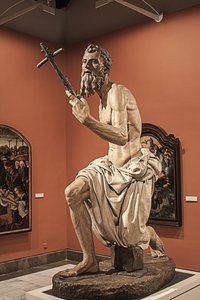
Pietro Torrigiano
1472 - 1528 , Italy
Quick Facts
- Artistic Movement Or Style: Florentine Renaissance
- Artists Who Influenced This Artist:
- Masaccio
- Michelangelo
- Bertoldo di Giovanni
- Date Of Birth: 1472
- Date Of Death: 1528
- Full Name: Pietro Torrigiano
- Nationality: Italian
- Notable Artworks:
- Henry VII tomb
- Henry VIII funerary monument
- Lady Margaret Beaufort's tomb
- Place Of Birth (City And Country): Florence, Italy
Related Articles
John Fulleylove: Evoking Rural England Through Watercolour & Oil
Explore the serene landscapes of John Fulleylove (1845-1908), a celebrated English artist. Discover his charming watercolours & oils, evocative travel illustrations, and lasting legacy. Learn about his life, exhibitions, and artistic style.
Thomas Sandby: Pioneering Watercolourist & Topographer of Georgian England
Explore the life & art of Thomas Sandby (1721-1798), a pioneering English watercolourist and architect. Discover his innovations, role in founding the Royal Academy, and lasting legacy at ArtsDot.
Hans Holbein the Younger: A Renaissance Portraitist's Mastery of Realism & Psychological Insight
Explore the life & art of Hans Holbein the Younger, a Renaissance master renowned for his strikingly realistic portraits and psychological insight. Discover iconic works like 'The Ambassadors' and delve into his lasting legacy.
The Enduring Legacy of Bronze Sculpture: History, Techniques & Contemporary Interpretations
Explore the rich history & enduring appeal of bronze sculpture. Learn about casting techniques, iconic artists, collecting tips, & contemporary interpretations. Expert insights for discerning art collectors.

Philip Connard: A Study in British Impressionism & the Evocation of Rural England
Explore the captivating world of Philip Connard (1875-1958), a leading British Impressionist painter renowned for his decorative landscapes and wartime artistry. Discover his life, legacy & available artworks at ArtsDot.

