 Preview
 Send
Send Share
Share
 Details

 Download
 Similars
 X-Ray
X-Ray Diaporama
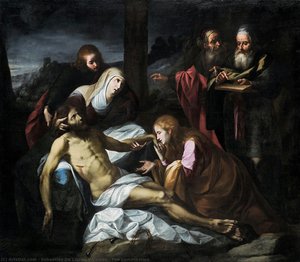
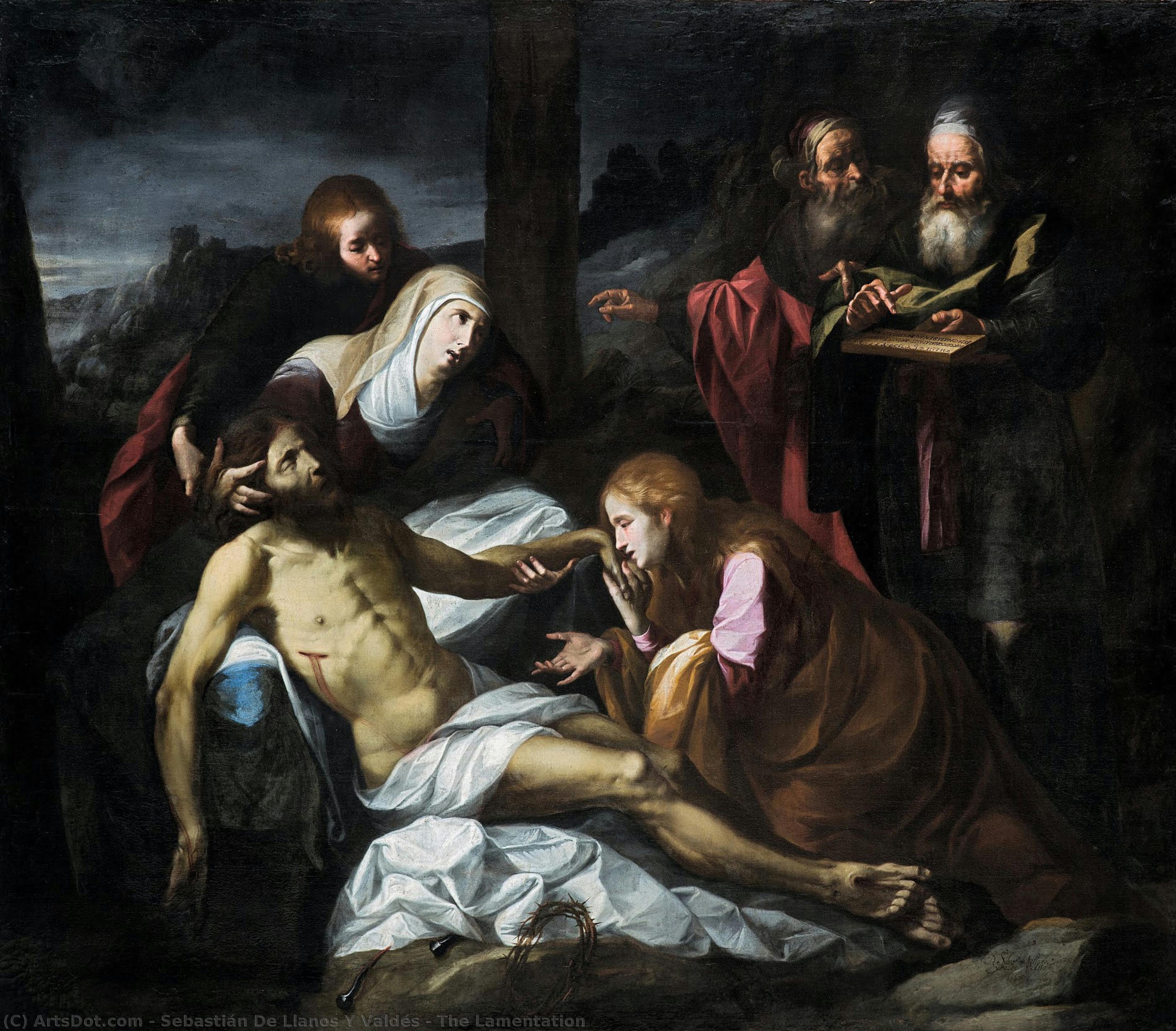
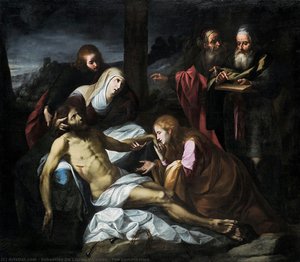
The Lamentation
 1667
1667 195.0 x 235.0 cm
 Museo de Arte de Ponce
 Read More
Giclée / Art Print
Museum-quality giclée or canvas print with fast production and flexible finish options. ( Buy Hand Made Painting Buy Image)




































Pick from our preset sizes that match the artwork's original proportions.

You may enter your own dimensions to fit a specific frame or space. If your selected size does not match the original image's proportions, we will either crop the artwork or extend the image with a mirrored or solid-fill edge. A digital mockup will be sent for your approval before production begins.
Please note that the on-screen preview does not reflect the actual cropping or extension. Only the mockup will accurately show the final composition.
While custom sizes are available, we recommend selecting a dimension from the predefined list to preserve the original proportions.
Worldwide Delivery () in 2 weeks instead of standard 4/5 weeks. (25 August)

Free Worldwide Express Shipping

High-Quality Linen Canvas

Full Shipping Insurance

Customs Tax Refund Guarantee

True Color Matching Guarantee

60-Day Return Policy (Defects Only)

100% Money-Back Guarantee

Bulk Discount Offer
 Glass option is only available in size under 110 CM

The Lamentation
Giclée / Art Print
Reproduction Size
-


Total Price
$ 63
Collectible Description
Related Artworks




Artist Biography
The Master of Seville: The Life and Legacy of Sebastián de Llanos y Valdés
In the vibrant, sun-drenched streets of seventeenth-century Seville, a period defined by the dramatic intensity of the Spanish Baroque, the name Sebastián de Llanos y Valdés resonates with the profound gravity of a true master. Born around 1605, Llanos emerged from the heart of Andalusia, a region then pulsating with religious fervor and artistic innovation. His early years were shaped by the rigorous traditions of the Sevillian school, and he found his formative guidance under the tutelage of the formidable Francisco Herrera the Elder. To study under Herrera was to embrace a style marked by vigorous brushwork and a certain raw, expressive energy—a foundation that would allow Llanadamente to navigate the complexities of light and shadow with unparalleled grace.
The life of Llanos was not merely one of quiet contemplation in a studio; it was a life lived amidst the turbulent passions of his era. History whispers of a man of character and resilience, noting even a dramatic encounter where he was wounded in a duel by the equally tempestuous artist Alonso Cano. Such anecdotes paint a portrait of an artist deeply embedded in the social and often volatile fabric of the Sevillian art community. Yet, despite these personal storms, his professional trajectory was marked by stability and immense respect. He moved beyond the role of a mere pupil to become a pillar of the artistic establishment, working extensively for private patrons who sought the spiritual depth and technical precision that only he could provide.
A Pillar of the Academy and Artistic Innovation
Beyond his individual canvases, Llanos played a pivotal role in the institutionalization of art in Spain. His commitment to the future of his craft was most visibly demonstrated through his collaboration with the legendary Bartolomé Esteban Murillo. In 1660, Llanos stood as a vital supporter in the founding of the Academia de Bellas and Artes (Academy of Art). His devotion to this institution went far beyond mere membership; he was a generous benefactor, frequently donating precious oils and essential materials to ensure that the next generation of students had the tools to flourish. This spirit of mentorship and communal growth saw him elected as the President of the Academy three times, specifically in 1666 and for two subsequent years, cementing his status as a leader of the Sevillian Baroque.
His technical evolution is best observed through the religious subjects that defined his oeuvre. Llanos possessed a remarkable ability to marry the dramatic chiaroscuro inherited from Herrera with a more refined, devotional tenderness. His works were not merely depictions of sacred events but were intended as conduits for prayer and contemplation. Notable among his achievements are:
- The Virgin of the Rosary: A breathtaking composition adored by both angels and patrons, created specifically for the College of San Tomas in Seville, showcasing his ability to evoke divine grace through soft light and delicate textures.
- The Magdalen: A profound work executed for the Convent Recoletas in Madrid, which demonstrates his mastery of psychological depth and the portrayal of penitence.
- The Lamentation: A poignant exploration of grief and human vulnerability, utilizing the dramatic contrasts characteristic of the Spanish Baroque to stir the emotions of the faithful.
Historical Significance and the Baroque Spirit
The historical significance of Sebastián de Llanos y Valdés lies in his role as a bridge between the rugged, early Baroque styles of the late sixteenth century and the more polished, lyrical period epitomized by Murillo. He carried the torch of Herrera’s expressive power while nurturing the institutional structures that allowed Spanish art to achieve international prestige. His life, spanning from the dawn of the seventeenth century until his death in 1677, encapsulates the very essence of the Spanish Golden Age—a period where art served as the ultimate language of faith, power, and human emotion.
Today, when we look upon the remnants of his work, we see more than just paint on canvas; we see the enduring legacy of a man who helped shape the visual identity of Seville. Through his patronage, his leadership in the Academy, and his profound religious imagery, Llanos ensured that the shadows and lights of the Baroque would continue to illuminate the halls of art history for centuries to come.
sebastián de llanos y valdés
1677 , Spain