 Preview
 Send
Send Share
Share
 Details

 Download
 Similars
 X-Ray
X-Ray Diaporama
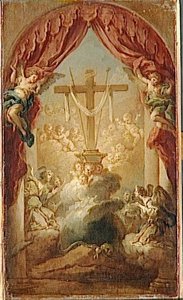
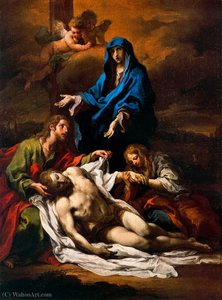
Esquisse pour les sépulchres


 Read More
Hand Made Oil Reproduction
Hand-painted oil on canvas in your size and frame, made to order by our artists. ( Buy Print Buy Image)




P118B $10

P118H $10

P118W $10

P438Z $10

P508JH $12

P508YH $12

P805H $10

P805Z $10

P919BZ $10

P919G $10

P919XJ $10

P959ZH $10

P968JZ $12

W106C $8

W218G $10

W218JH $8

W218Y $10

W307PJ $10

W316G $10

W316PJ $8

W316Y $10

W398PJ $8

W4111J $10

W500HY $15

W500JH $15

W692G $12

W849H $8

W940BG $15

W953PJ $8




Pick from our preset sizes that match the artwork's original proportions.

You may enter your own dimensions to fit a specific frame or space. If your selected size does not match the original image's proportions, we will either crop the artwork or extend the painting with additional hand-painted elements. A digital mockup will be sent for your approval before production begins.
Please note that the on-screen preview does not reflect the actual cropping or extension. Only the mockup will accurately show the final composition.
While custom sizes are available, we recommend selecting a dimension from the predefined list to preserve the original proportions.
After order, ArtsDot.com team will email client for instructions and provide a mockup preview
Worldwide Delivery () in 3/4 weeks instead of standard 5 weeks. (17 August). No compromise on quality.

Free Worldwide Express Shipping

High-Quality Linen Canvas

Full Shipping Insurance

Customs Tax Refund Guarantee

True Color Matching Guarantee

60-Day Return Policy (Defects Only)

100% Money-Back Guarantee

Bulk Discount Offer
 Glass option is only available in size under 110 CM

Esquisse pour les sépulchres
Reproduction Medium
Reproduction Size
-


Total Price
$ 438
Artwork Description
A Sketch for Sepulchers: Conca’s Baroque Vision of Mortality
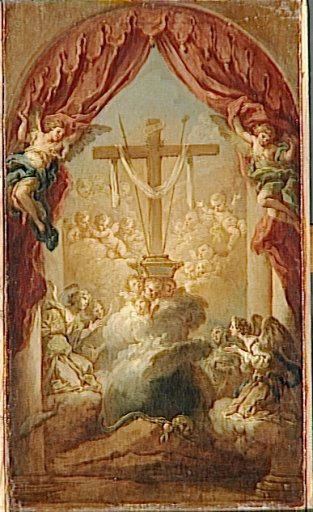
Sebastiano Conca's "Esquisse pour les sépulchres" – a preliminary study for funerary monuments – offers a captivating glimpse into the artist’s meticulous process and profound engagement with themes of death, faith, and the passage of time. Born in Gaeta in 1680, Conca emerged from the fertile artistic environment of Naples, deeply influenced by the masterful techniques of Francesco Solimena, a leading figure of Neapolitan Baroque painting. This formative period instilled within him an understanding of dramatic composition, dynamic movement, and rich color palettes – elements that would become cornerstones of his distinctive style. The sketch itself isn’t merely a preparatory drawing; it's a fully realized miniature world brimming with symbolic weight and technical brilliance, hinting at the grandeur of the final work it intended to inform.
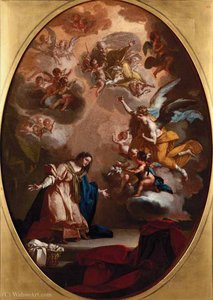
The composition immediately draws the eye towards a central arched structure, reminiscent of a niche or doorway, within which a prominent cross dominates. This vertical axis anchors the scene, drawing the viewer’s gaze upwards toward a celestial realm suggested by the arrangement of angels flanking the archway. Below the cross, a carefully orchestrated group of figures – likely representing mourners or perhaps symbolic representations of souls – cluster around a draped form, its details obscured yet undeniably evocative of mortality. The overall effect is one of restrained drama, characteristic of Conca’s approach to depicting religious subjects. The loose, expressive lines and washes of diluted paint—likely watercolor or oil—suggest an immediacy and spontaneity that belies the sketch's status as a foundational study.
Color, Line, and Light: A Baroque Draftsmanship
Conca’s palette is deliberately muted, dominated by earthy tones – ochre, brown, and reddish-pink – creating a sense of solemnity and gravitas. The limited use of vibrant colors reinforces the sketch's preliminary nature, emphasizing its role as a study for a more fully realized painting. The artist skillfully employs washes to build depth and volume, particularly in the rendering of the angels’ wings and halos, which appear almost luminous against the darker background. Lines are loose and expressive, capturing movement and gesture with remarkable fluidity. The archway itself provides a strong vertical element, contrasting with the flowing lines of the figures below. Circular shapes—a recurring motif in Baroque art—are prominently featured in the depiction of angels’ wings and halos, adding to the composition's dynamic energy.
Symbolism and Spiritual Depth
“Esquisse pour les sépulchres” is rich with religious symbolism. The cross, of course, represents Christ’s sacrifice and offers a pathway to salvation. The angels, positioned as guides and messengers, embody divine presence and offer solace in the face of death. The draped form below the cross likely symbolizes mortality itself – a poignant reminder of human vulnerability and the inevitability of passing. The overall scene speaks to the Baroque fascination with both earthly suffering and spiritual transcendence, inviting contemplation on themes of faith, hope, and the afterlife. Conca’s ability to distill these complex ideas into a single, evocative sketch is a testament to his artistic skill and profound understanding of religious iconography.
A Window into an Artist's Process
This sketch offers a rare opportunity to witness Sebastiano Conca at work – a master craftsman meticulously planning a monumental composition. The unfinished quality of the drawing—the visible brushstrokes, the areas of diluted paint—reveals the artist’s process and invites us to imagine the final painting taking shape. The piece exemplifies the Baroque tradition of preparatory studies, which were often considered as important as the finished artwork itself. Conca's "Esquisse pour les sépulchres" is not simply a sketch; it’s a miniature masterpiece in its own right, offering a compelling glimpse into the mind and hand of one of Italy’s most celebrated Baroque painters.
Related Artworks
Artist Biography
Early Life and Artistic Formation
Sebastiano Conca emerged into the vibrant artistic landscape of late 17th-century Italy, born in Gaeta, a coastal city within the Kingdom of Naples, in 1680. His initial exposure to the world of art came through his apprenticeship with Francesco Solimena, a leading figure of Neapolitan painting. This formative period deeply ingrained in Conca an understanding of Baroque principles – dramatic compositions, dynamic movement, and rich color palettes that would become hallmarks of his early style. Solimena’s influence provided a solid foundation upon which Conca would build his own unique artistic voice, one that would eventually bridge the gap between the grandeur of the High Baroque and the more delicate sensibilities of the Rococo era. The young artist absorbed not only technical skills but also an appreciation for narrative storytelling within painting, a talent he would hone throughout his prolific career.Roman Ascendancy and Patronage
In 1706, Conca embarked on a pivotal journey to Rome alongside his brother Giovanni, who served as a valuable assistant in his artistic endeavors. The Eternal City proved to be the crucible where Conca’s talent truly blossomed. Initially, he dedicated himself to mastering drawing, diligently practicing with chalk and honing his observational skills. This period of focused study soon attracted attention, leading to patronage from Cardinal Ottoboni, a powerful figure who facilitated introductions to Pope Clement XI. Commissions followed swiftly – notably “Jeremiah” and the “Assunta,” works that were well-received and established Conca’s reputation within Roman artistic circles. Recognition came in the form of knighthood bestowed by the Pope himself, solidifying his position as an artist of considerable promise. A significant milestone arrived with his collaboration on the "Coronation of Santa Cecilia" (1721–24) alongside Carlo Maratta, a project that showcased Conca’s ability to work within a larger artistic vision while contributing his own distinctive style. His standing within the Roman art community was further cemented by multiple terms as director of the Accademia di San Luca (1729–1731 and 1739–1741), demonstrating both his artistic prowess and leadership qualities.A Synthesis of Styles: Influences and Artistic Development
Conca’s artistic style was not born in a vacuum; it represented a careful synthesis of influences, most notably the dramatic flair of Luca Giordano. The vibrant colors, energetic compositions, and theatrical lighting characteristic of Giordano's work are readily apparent in Conca’s earlier paintings. However, as his career progressed, Conca’s aesthetic sensibilities began to evolve, embracing elements of the emerging Rococo style. This transition manifested in lighter tones, more graceful figures, and an increased emphasis on decorative details. A recurring motif throughout his oeuvre is the use of allegorical figures – particularly *putti*, or cherubic beings – employed not merely as ornamentation but as vehicles for conveying deeper symbolic meanings. Critics have occasionally noted a tendency towards elaborate detail and sometimes overwrought allegory, even within more intimate scenes, suggesting a desire to imbue every aspect of his work with significance. This meticulous approach, while sometimes criticized, speaks to Conca’s intellectual engagement with the subject matter and his commitment to creating paintings that were both visually stunning and conceptually rich.Major Commissions and Enduring Legacy
Throughout his career, Sebastiano Conca enjoyed widespread official acclaim and secured prestigious commissions from a diverse range of patrons. His talents were sought after by the Savoy family in Turin, where he undertook projects including the Oratory of San Filippo and Santa Teresa in Venaria (1721–1725) and the Basilica di Superga (1726). He also left his mark on Siena with frescoes at the Ospedale di Santa Maria della Scala, depicting “Probatica” (Pool of Siloam), a testament to his skill in large-scale decorative painting. In Genoa, he created expansive allegorical canvases for Palazzo Lomellini-Doria (1738–1740), showcasing his mastery of composition and narrative storytelling. Upon returning to Naples in 1752 under the patronage of Charles III, Conca produced significant works such as frescoes at the Church of Santa Chiara (1752–1754) and canvases for Caserta Palace, further solidifying his reputation as one of Italy’s leading artists. Beyond his paintings, Conca's influence extended to education; he mentored numerous aspiring artists, including Pompeo Battoni, Andrea Casali, and Corrado Giaquinto, shaping the next generation of Italian painters. His “Ammonimenti” (Admonishments), published in 1739, offered valuable insights into his artistic philosophy and techniques, providing a lasting contribution to art theory. Sebastiano Conca’s ability to navigate the complex world of patronage while consistently producing works of exceptional quality cemented his place as a pivotal figure bridging the late Baroque and Rococo periods, leaving an indelible mark on Italian art history.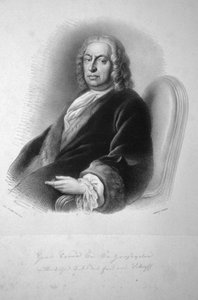
Sebastiano Conca
1680 - 1764 , Italy
Quick Facts
- Artistic Movement Or Style: Baroque, Rococo
- Artists Or Movements Influenced By This Artist:
- Pompeo Battoni
- Andrea Casali
- Artists Who Influenced This Artist:
- Luca Giordano
- Francesco Solimena
- Date Of Birth: 1680
- Date Of Death: 1764
- Full Name: Sebastiano Conca
- Nationality: Italian
- Notable Artworks:
- Allegoria della Renommee
- The Fame
- Annunciation of Mary
- Place Of Birth: Gaeta, Italy
Related Articles
Celestial Messengers: Angels in Painting – A Historical & Artistic Exploration
Explore the captivating history of angels in painting! Discover symbolism, iconic Renaissance & Byzantine masterpieces, and renowned artists. Expert insights for art lovers & collectors at ArtsDot.
Celestial Messengers: A Comprehensive Exploration of Angelic Representation in Art History
Explore the captivating history of angels in art! Discover symbolism, iconic Renaissance masterpieces & renowned artists. Expert insights for art lovers & collectors at ArtsDot.

The Dramatic Flourish: Exploring the Baroque Movement's Enduring Legacy in Art History
Explore the dramatic world of Baroque art! Discover iconic artists like Caravaggio & Rubens, defining techniques, and its lasting impact on art history. Expert insights for collectors & enthusiasts at ArtsDot.

Baroque Masterpieces: 10 Paintings That Defined an Era |
Journey through the drama & grandeur of Baroque art! Explore 10 masterpieces by Caravaggio, Rembrandt, Rubens & more. Discover stunning oil paintings, rich colors & timeless stories. Find museum-quality reproductions at .

The Visceral Stage: Exploring Dramatic Narratives & Emotional Intensity in Baroque Art
Explore the dramatic world of Baroque art! Discover iconic masters like Caravaggio & Rembrandt, their techniques, and the movement's lasting impact. Expert insights for collectors & enthusiasts at ArtsDot.