

 Preview
 Send
Send Share
Share
 Details

 Download
 Similars
 X-Ray
X-Ray Diaporama
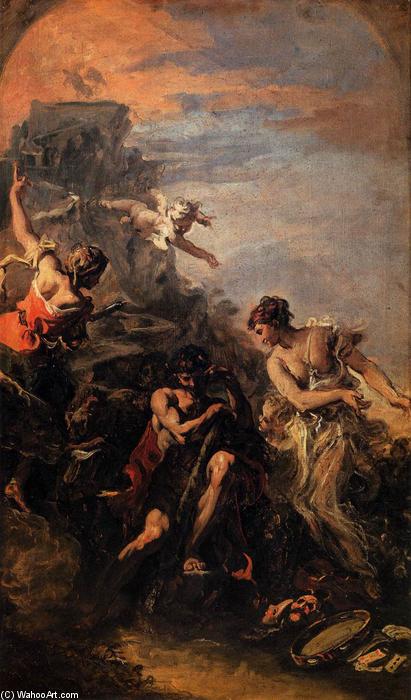
Hercules at the Crossroad
 Oil On Canvas
- WallArt
- Baroque
 1706
1706 65.0 x 38.0 cm
 Galleria degli Uffizi
 Read More
Purchase a high-resolution, enhanced digital image, far superior to the online preview.
Each file is meticulously prepared by our in-house specialists using advanced tools and expert manual retouching. We ensure every image has exceptional clarity, precise color accuracy, and fine detail.
The final file is delivered via email within 72 hours, optimized for immediate use in professional, editorial, and print environments. This is the same quality trusted by top-tier design studios, publishers, and galleries.
Digital Image
Download a high-resolution file for personal display, printing, and creative projects. ( Buy Print Buy Hand Made Painting)
Included in Every Digital Image Order
Expert Digital Delivery, Guaranteed
When you choose ArtsDot.com, you're not just getting an image - you're receiving a professionally enhanced digital artwork, crafted with precision and backed by a satisfaction guarantee. Here's everything that comes with your order, automatically:

Fast Email Delivery
Your high-resolution digital image file will be emailed to you within 72 hours of ordering - ready for immediate use.

AI-Enhanced Digital File
Your artwork is professionally optimized using advanced AI tools and manual editing, ensuring maximum detail, clarity, and color accuracy.

Free Lifetime Re-Delivery
Accidentally deleted or lost your file? No worries - we'll resend it to you anytime, free of charge.

No Import Fees - Ever
Enjoy your artwork instantly with zero customs, duties, or delivery fees - digital downloads are always tax-free.

Color Accuracy Guarantee
We ensure your digital image reflects the original colors as closely as possible using professional tools and color management.

60-Day Satisfaction Guarantee
If you're not satisfied with your digital image, we'll revise it or refund 100% within 60 days - no questions asked.

100% Money-Back Guarantee
Not satisfied? Get a full refund within 60 days of receiving your digital file - no questions asked.

Bulk Order Discounts
Buy 3 images, save 10% - Buy 5, save 15% - Buy 10+, save 20%. Great for creative projects, galleries, and agencies.
Collectible Description
The Dramatic Crossroads of Hercules
Sebastiano Ricci’s “Hercules at the Crossroads,” painted in 1706, is more than just a depiction of a mythological hero; it's a profound meditation on choice, virtue, and the perilous path to glory. Housed within the Galleria degli Uffizi in Florence, this monumental canvas—measuring an impressive 65 x 38 cm—captures a pivotal moment from Greek legend: Hercules standing poised at a literal and metaphorical crossroads, contemplating two distinct futures offered by Virtue and Vice.
Ricci, a leading figure of the late Baroque school in Venice, masterfully employs the dramatic chiaroscuro technique characteristic of the era. Deep shadows engulf much of the composition, drawing the viewer’s eye directly to Hercules himself, whose dynamic pose—a powerful lean forward, his gaze fixed downwards—conveys both determination and uncertainty. The artist's skillful use of light highlights the figures of Virtue and Vice, emphasizing their contrasting allure. Ricci’s Venetian training is evident in the luminous quality of the colors and the fluid handling of paint, creating a sense of movement and immediacy that transcends mere representation.
Symbolism Woven into the Narrative
The painting's symbolism is rich and layered. Hercules, son of Zeus and mortal Alcmene, embodies strength, courage, and divine lineage—qualities inextricably linked to his legendary labors. However, Ricci doesn’t present him as an invincible hero; instead, he depicts a moment of profound deliberation. The two figures flanking Hercules are not merely decorative elements but potent symbols representing the opposing forces vying for his allegiance. On the left stands Virtue, clad in pristine white, radiating purity and righteousness—a beacon guiding towards a path of honor and self-discipline. Conversely, on the right, Vice is shrouded in dark hues, embodying temptation, indulgence, and the seductive allure of easy gratification.
The landscape behind Hercules further reinforces this duality. The rocky terrain beneath a dramatic sky suggests the arduous journey ahead, while the palm tree reaching upwards symbolizes the ultimate reward—victory and immortality—but only attainable through unwavering virtue. The inclusion of Pegasus, the winged horse associated with divine inspiration, subtly hints at the heroic destiny awaiting Hercules if he chooses the path of righteousness.
A Window into 18th-Century Venice
“Hercules at the Crossroads” offers a valuable glimpse into the artistic and intellectual climate of 18th-century Venice. Ricci’s work reflects the influence of both classical antiquity, particularly the Roman concept of virtue, and the dramatic intensity of Caravaggio's tenebrism. The painting also aligns with the broader trend in Venetian art during this period—a shift towards greater dynamism and emotional expression, moving away from the more static formality of earlier Baroque styles. Ricci’s uncle, Marco Ricci, was a key innovator in landscape painting, and Sebastiano clearly absorbed some of his mentor's techniques.
The painting’s commission by Cardinal Odoardo Farnese underscores its significance within the context of Venetian courtly art. The choice of Hercules as the central figure likely served to embody the virtues expected of a noble leader—strength, justice, and piety. Ricci's ability to capture both the heroic grandeur and the internal struggle of the mythological hero cemented his reputation as one of Venice’s most accomplished painters.
A Timeless Exploration of Human Choice
“Hercules at the Crossroads” remains a compelling work of art centuries after its creation. It is not simply a historical record or a technical demonstration of artistic skill; it's an enduring exploration of fundamental human themes—the tension between ambition and morality, the allure of temptation and the rewards of virtue. Its dramatic composition, evocative symbolism, and masterful execution continue to captivate viewers, inviting them to contemplate their own choices and the paths they choose to follow.
Related Artworks


Artist Biography
biography of a vigorous and luminous painter
sebastiano ricci, an italian painter from belluno, was born on august 1, 1659, and passed away on may 15, 1734. he was a prominent figure in the late baroque school of venice, known for his grand manner fresco painting style.
early life and training
ricci's artistic journey began at a young age. in 1671, he was apprenticed to federico cervelli of venice. however, some sources claim that his first master was sebastiano mazzoni.
notable works and commissions
* bacchus and ariadne (national gallery, london, united kingdom), a painting showcasing ricci's mastery of the baroque style. * memorial to admiral sir clowdisley shovell (oil on canvas), a testament to his ability to capture the essence of a moment. * the decoration of the oratory of the madonna of the seraglio (1685-1687) in collaboration with ferdinando galli-bibiena, receiving a payment of 4,482 lira.
artistic style and influences
ricci's work was influenced by giovanni gioseffo dal sole's style during his time in bologna. his paintings often featured grand, luminous, and vigorous themes, making him a representative of the late baroque school of venice.
legacy and later life
ricci's artistic career was marked by periods of turmoil, including imprisonment and scandals. however, he continued to produce notable works, such as venus takes leave from adonis, which showcased his skill in capturing heavenly depictions. he ultimately accepted foreign patronage in london, working on a commission for lord burlington.
- view sebastiano ricci's artwork on ArtsDot.com
- explore more about the baroque school of venice and its influences on wikipedia
- discover other notable artists from the same period, such as luigi bonazza, on ArtsDot.com
important: this article is based on the available information from ArtsDot.com and may be subject to change as more data becomes available.
Sebastiano Ricci
1659 - 1734 , Italy
Quick Facts
- Artistic Movement Or Style: Late Baroque
- Artists Or Movements Influenced By This Artist: ['Marco Ricci']
- Artists Who Influenced This Artist: ['Giovanni Gioseffo dal Sole']
- Date Of Birth: August 1, 1659
- Date Of Death: May 15, 1734
- Full Name: Sebastiano Ricci
- Nationality: Italian
- Notable Artworks:
- Bacchus and Ariadne
- Venus takes leave
- Dream of Aesculapius
- Place Of Birth: Belluno, Italy

