 Preview
 Send
Send Share
Share
 Details

 Download
 Similars
 X-Ray
X-Ray Diaporama
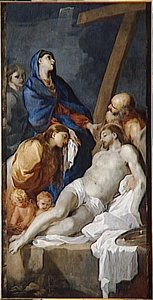
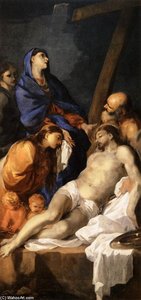
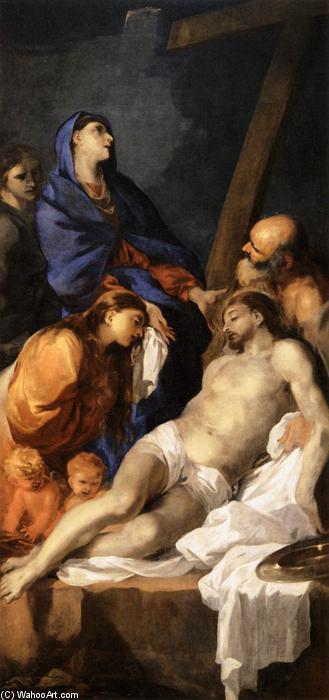
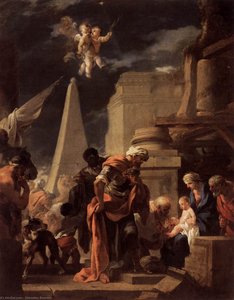
The Deposition
 Oil On Canvas
- WallArt
- Baroque
 1650
1650 303.0 x 157.0 cm
 The Louvre
 Read More
Hand Made Oil Reproduction
Hand-painted oil on canvas in your size and frame, made to order by our artists. ( Buy Print Buy Image)




P118B $10

P118H $10

P118W $10

P438Z $10

P508JH $12

P508YH $12

P805H $10

P805Z $10

P919BZ $10

P919G $10

P919XJ $10

P959ZH $10

P968JZ $12

W106C $8

W218G $10

W218JH $8

W218Y $10

W307PJ $10

W316G $10

W316PJ $8

W316Y $10

W398PJ $8

W4111J $10

W500HY $15

W500JH $15

W692G $12

W849H $8

W940BG $15

W953PJ $8




Pick from our preset sizes that match the artwork's original proportions.

You may enter your own dimensions to fit a specific frame or space. If your selected size does not match the original image's proportions, we will either crop the artwork or extend the painting with additional hand-painted elements. A digital mockup will be sent for your approval before production begins.
Please note that the on-screen preview does not reflect the actual cropping or extension. Only the mockup will accurately show the final composition.
While custom sizes are available, we recommend selecting a dimension from the predefined list to preserve the original proportions.
After order, ArtsDot.com team will email client for instructions and provide a mockup preview
Worldwide Delivery () in 3/4 weeks instead of standard 5 weeks. (17 August). No compromise on quality.

Free Worldwide Express Shipping

High-Quality Linen Canvas

Full Shipping Insurance

Customs Tax Refund Guarantee

True Color Matching Guarantee

60-Day Return Policy (Defects Only)

100% Money-Back Guarantee

Bulk Discount Offer
 Glass option is only available in size under 110 CM

The Deposition
Reproduction Medium
Reproduction Size
-


Total Price
$ 263
Artwork Description
The Profound Grief of "The Deposition": A Baroque Masterpiece
Sébastien Bourdon’s “The Deposition,” painted in 1650, is not merely a depiction of a biblical scene; it's a visceral exploration of sorrow and the profound weight of loss. Housed within the hallowed halls of the Louvre Museum in Paris, this oil-on-canvas work transcends its historical context to resonate with viewers centuries later through its masterful use of light, color, and emotional intensity. Bourdon, a pivotal figure in the development of Baroque art in France, expertly channels the dramatic sensibilities of his era, creating an image that is both deeply moving and technically brilliant.
The painting immediately draws the eye to the central figure – Christ, lying serenely on a simple linen cloth. His posture exudes a quiet dignity, yet it’s impossible to ignore the stark reality of his lifeless form. The artist's skill lies in capturing not just the physical details but also the palpable sense of grief surrounding him. The figures gathered around are rendered with an astonishing level of realism and emotional depth. To Christ’s left, a woman, likely Mary Magdalene, weeps openly, her face etched with anguish; her blue cloak and crimson garment provide a striking contrast against the muted tones of the scene. Beside her stands another woman, equally draped in blue and red, offering a gesture of concern – a poignant tableau of mourning. On the right, two men are depicted carefully removing Christ’s body, their expressions conveying a mixture of sorrow and duty.
A Symphony of Light and Shadow: Bourdon's Baroque Technique
Bourdon’s mastery is evident in his skillful manipulation of *chiaroscuro*, a technique central to the Baroque style. Dramatic contrasts between light and dark are used to heighten the emotional impact, drawing attention to Christ’s body while simultaneously enveloping the scene in an atmosphere of somber contemplation. The lighting isn't uniform; it seems to emanate from an unseen source, casting long shadows that accentuate the figures’ forms and adding a sense of depth and drama. The artist employs earth tones – browns, ochres, and grays – as the dominant palette, reinforcing the painting’s mournful mood. These colors are subtly layered, creating a rich tapestry of texture and visual interest.
Furthermore, Bourdon's attention to detail is remarkable. The folds of the cloths, the textures of the fabrics, and the subtle nuances of facial expressions are all rendered with meticulous precision. This commitment to realism serves not only to enhance the painting’s visual impact but also to deepen its emotional resonance. The composition itself is carefully balanced, guiding the viewer's eye through the scene and emphasizing the central figures while maintaining a sense of harmony and order.
Historical Context and Symbolic Resonance
"The Deposition" reflects the religious fervor and artistic innovation of 17th-century France. Bourdon’s work aligns with the broader Baroque movement, which sought to evoke strong emotions through dramatic imagery and theatrical composition. The subject matter – the deposition of Christ – was a common theme in art during this period, often used to explore themes of sacrifice, redemption, and human suffering. Beyond its religious significance, the painting can be interpreted as an allegory for mortality and the universal experience of loss. The figures’ gestures and expressions speak volumes about the profound grief that accompanies death.
A Timeless Masterpiece: Reproduction and Legacy
Originally created in 1650, “The Deposition” remains a powerful testament to Bourdon's artistic genius. Its enduring appeal lies in its ability to capture the raw emotion of a pivotal moment in Christian history while simultaneously demonstrating the artist’s technical skill and profound understanding of human nature. Today, reproductions of this iconic work are available through platforms like ArtsDot.com, offering art enthusiasts the opportunity to experience the beauty and emotional depth of Bourdon's masterpiece firsthand. Whether displayed as a centerpiece in a grand salon or a contemplative addition to a smaller space, “The Deposition” continues to inspire awe and reflection.
Related Artworks
Artist Biography
A Master of Light and Versatility: The Life of Sébastien Bourdon
Sébastien Bourdon (1616–1671) remains one of the most captivating and multifaceted figures of the seventeenth-century French Baroque. Born in Montpellier into a family of Protestant artists, his early life was shaped by the vibrant, yet often turbulent, artistic traditions of southern France. His journey from a young apprentice to a foundational member of the Académie Royale de Peinture et de Sculpture is a testament to a profound, restless intellect and an unparalleled ability to absorb the stylistic currents of Europe. After early training in Paris, Bourdon’s path led him through Bordeaux and Toulouse before reaching the spiritual and artistic heart of the continent: Rome. It was in Italy that his talent truly ignited, as he immersed himself in the works of masters like Caravaggio, Nicolas Poussin, and Claude Lorrain. This period of intense study allowed him to develop a unique visual language—one that could pivot from the gritty, dramatic realism of the Caravaggisti to the luminous, classical elegance of the Venetian school.The Evolution of Style and Technique
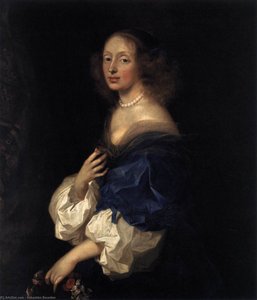
What truly distinguishes Bourdon’s oeuvre is its remarkable stylistic fluidity, a quality that sometimes drew both admiration and criticism from his contemporaries. His development was marked by a series of transformative encounters with different European traditions. Following a pivotal visit to Venice, his palette underwent a profound metamorphosis; the starker contrasts of his early training gave way to a richer, more atmospheric use of color inspired by the Venetian masters. This evolution allowed him to masterfully navigate between disparate genres. In his portraiture, he often adopted a Rubensian approach or favored intimate, bust-length compositions that captured the psychological depth and elegance of his subjects, such as the Swedish noblewoman in Countess Ebba Sparre. Conversely, his religious works utilized a dramatic chiaroscuro to evoke spiritual awe, most notably in his monumental masterpiece, The Crucifixion of St. Peter, created for the cathedral of Notre Dame.Legacy and Historical Significance
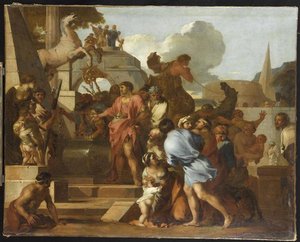
Beyond his individual canvases, Bourdon played a crucial role in the institutionalization of French art. As a co-founder of the Royal Academy in 1648, he helped establish the standards of excellence that would define French painting for generations. His career was also characterized by an extraordinary breadth of service; his reputation as a premier portraitist led him to the court of Queen Christina of Sweden, where he served as court painter, bringing the sophisticated aesthetics of Paris and Rome to Stockholm. Whether depicting the harrowing tension of Moses and the Brazen Serpent or the serene grandeur of classical landscapes, Bourdon’s work embodies the dual spirit of the Baroque era: the intense emotional drama of the human condition and the balanced, intellectual pursuit of classical beauty. His ability to synthesize the naturalist traditions of France with the monumental styles of Italy ensures his enduring place in the pantheon of European art history.
sébastien bourdon
1616 - 1671 , France
Quick Facts
- Artistic Movement Or Style: Baroque
- Artists Or Movements Influenced By This Artist: ['French Baroque Art']
- Artists Who Influenced This Artist:
- Nicolas Poussin
- Claude Lorrain
- Caravaggio
- Date Of Birth: February 2, 1616
- Date Of Death: May 8, 1671
- Full Name: Sébastien Bourdon
- Nationality: French
- Notable Artworks:
- The Crucifixion of St. Peter
- The Deposition
- Place Of Birth: Montpellier, France
Related Articles

The Dramatic Flourish: Exploring the Baroque Movement's Enduring Legacy in Art History
Explore the dramatic world of Baroque art! Discover iconic artists like Caravaggio & Rubens, defining techniques, and its lasting impact on art history. Expert insights for collectors & enthusiasts at ArtsDot.

Baroque Drama: Bringing Opulence & Emotion into Contemporary Interiors
Explore the opulent world of Baroque interior design! Discover key elements, modern applications & how to bring dramatic elegance into your home with 's authentic reproductions.

The Visceral Stage: Exploring Dramatic Narratives & Emotional Intensity in Baroque Art
Explore the dramatic world of Baroque art! Discover iconic masters like Caravaggio & Rembrandt, their techniques, and the movement's lasting impact. Expert insights for collectors & enthusiasts at ArtsDot.

Baroque Masterpieces: 10 Paintings That Defined an Era |
Journey through the drama & grandeur of Baroque art! Explore 10 masterpieces by Caravaggio, Rembrandt, Rubens & more. Discover stunning oil paintings, rich colors & timeless stories. Find museum-quality reproductions at .

The Enduring Power of Painting: A Historical & Contemporary Exploration of Form and Emotion
Explore the rich history & enduring techniques of oil painting with ArtsDot. Discover masterpieces, learn about art collecting, and find authentic handmade reproductions crafted by skilled artists.