

 Preview
 Send
Send Share
Share
 Details

 Download
 Similars
 X-Ray
X-Ray Diaporama
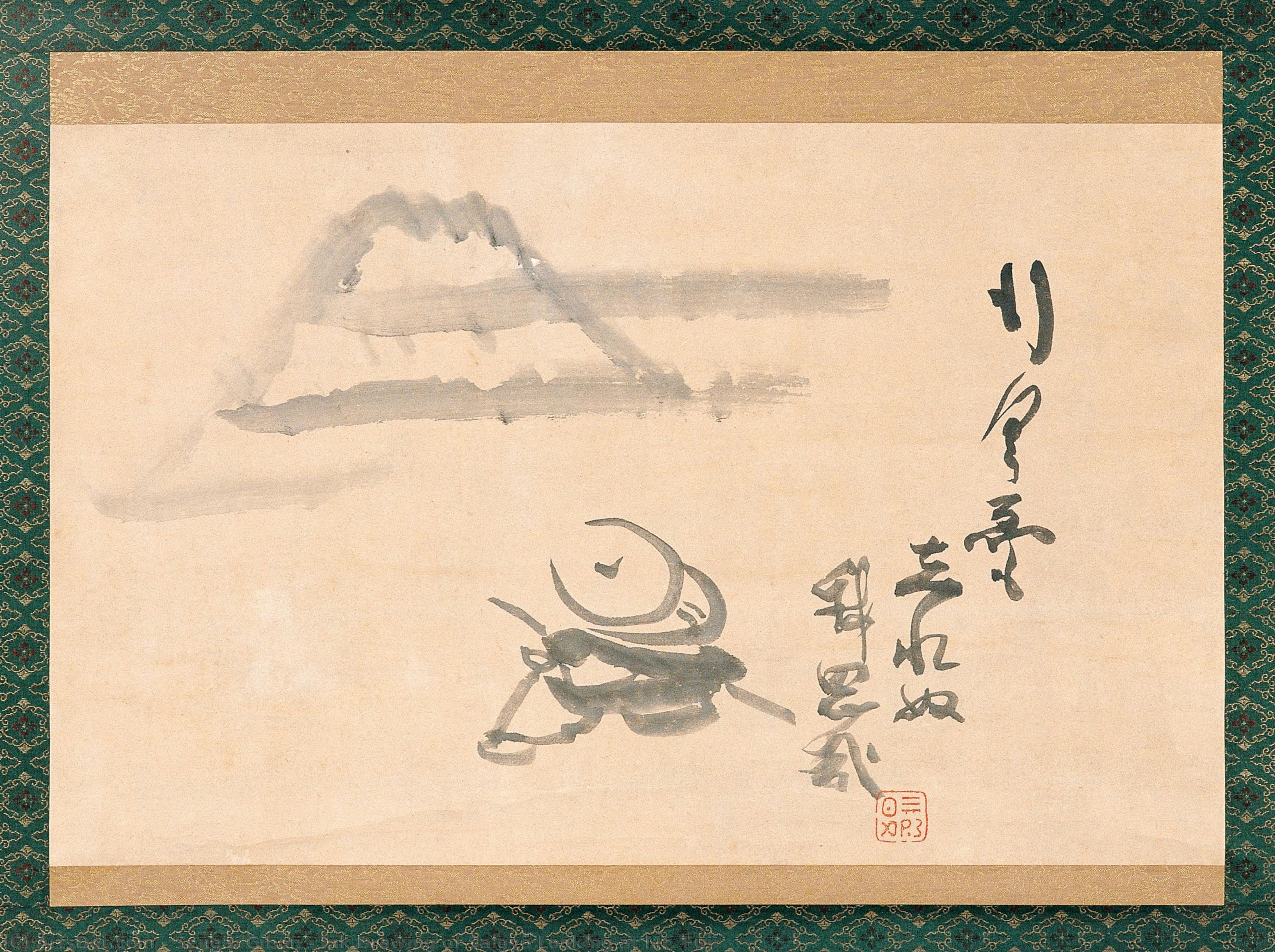
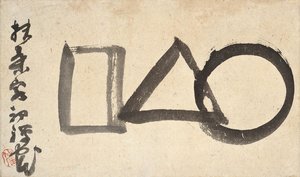
Ink Drawing of Saigyō Looking at Mt. Fuji

 Read More
Purchase a high-resolution, enhanced digital image, far superior to the online preview.
Each file is meticulously prepared by our in-house specialists using advanced tools and expert manual retouching. We ensure every image has exceptional clarity, precise color accuracy, and fine detail.
The final file is delivered via email within 72 hours, optimized for immediate use in professional, editorial, and print environments. This is the same quality trusted by top-tier design studios, publishers, and galleries.
Digital Image
Download a high-resolution file for personal display, printing, and creative projects. ( Buy Print Buy Hand Made Painting)
Included in Every Digital Image Order
Expert Digital Delivery, Guaranteed
When you choose ArtsDot.com, you're not just getting an image - you're receiving a professionally enhanced digital artwork, crafted with precision and backed by a satisfaction guarantee. Here's everything that comes with your order, automatically:

Fast Email Delivery
Your high-resolution digital image file will be emailed to you within 72 hours of ordering - ready for immediate use.

AI-Enhanced Digital File
Your artwork is professionally optimized using advanced AI tools and manual editing, ensuring maximum detail, clarity, and color accuracy.

Free Lifetime Re-Delivery
Accidentally deleted or lost your file? No worries - we'll resend it to you anytime, free of charge.

No Import Fees - Ever
Enjoy your artwork instantly with zero customs, duties, or delivery fees - digital downloads are always tax-free.

Color Accuracy Guarantee
We ensure your digital image reflects the original colors as closely as possible using professional tools and color management.

60-Day Satisfaction Guarantee
If you're not satisfied with your digital image, we'll revise it or refund 100% within 60 days - no questions asked.

100% Money-Back Guarantee
Not satisfied? Get a full refund within 60 days of receiving your digital file - no questions asked.

Bulk Order Discounts
Buy 3 images, save 10% - Buy 5, save 15% - Buy 10+, save 20%. Great for creative projects, galleries, and agencies.
Related Artworks



Artist Biography
The Poet of Simplicity: The Life and Spirit of Sengai Gibon
In the quiet, ink-washed landscapes of the late Edo period, few figures cast a shadow as profound yet as gentle as Sengai Gibon. A Rinzai Zen monk born in 1750, Sengai was not merely a practitioner of spiritual discipline but a master of visual wit, an artist who transformed the austere tenets of Buddhism into a playful, accessible dialogue with the world. While many of his contemporaries sought to capture the sublime through intricate detail or grandiosity, Sengai found the infinite within the infinitesimal. His life, spanning from the bustling port era of Nagata to the meditative seclusion of Shōfuku-ji temple in Fukuoka, was a continuous exercise in radical humility. He famously eschewed the trappings of high-ranking clergy, refusing the prestigious purple robes of his station to remain clothed in the simple black robe of an ordinary monk, a choice that mirrored the very essence of his brushwork: unpretentious, direct, and stripped of all unnecessary ego.
Sengai’s artistic journey was inextricably linked to his spiritual formation. Having spent much of his early life near Yokohama before dedicating himself to the monastic life at Shōfuku-ji—the first Zen temple established in Japan—his work became a vessel for making the often impenetrable teachings of the Rinzai sect palpable to the common person. He possessed a rare gift for zenga, or Zen painting, using the medium not as a decorative tool, but as a form of visual koan. His style was characterized by a deceptive simplicity; what appeared to be a spontaneous, almost childlike stroke often contained deep layers of philosophical complexity. To look upon a Sengai painting is to encounter a mind that viewed the universe through a lens of lightheartedness and self-mocking humor, yet remained anchored in a profound understanding of the void.
The Geometry of the Infinite
Perhaps no work encapsulates Sengai’s genius more perfectly than his most iconic creation, often referred to as Marusankakushikaku or "The Universe." In this breathtakingly minimalist composition, the vastness of existence is reduced to three fundamental shapes: a circle, a triangle, and a square. There is no title, no elaborate inscription—only the raw presence of form. Through these simple geometries, Sengai communicated the interconnectedness of all things, bridging the gap between spiritual truth and the mathematical harmony found in nature. This approach resonated deeply with the cultural zeitgeist of the Edo period, echoing the fascination with wasan, Japan’s native mathematics, where complex truths were often explored through elegant, geometric patterns.
His technique relied heavily on the mastery of sumi-e, the art of ink wash painting. By manipulating the density of black ink against the starkness of paper, he could evoke weight, movement, and breath with a single, decisive motion. His brushwork was never static; it possessed a rhythmic vitality that suggested the flow of qi or life force. In works such as his depictions of the Bodhisattva Monju riding a lion, Sengai utilized a narrative charm to convey complex moral lessons. He would often pair his imagery with inscriptions that cautioned against the pitfalls of excessive knowledge or rigid adherence to rules, reminding his viewers that true wisdom lies in an intuitive grasp of reality rather than the accumulation of intellectual data.
A Legacy of Wit and Wisdom
The historical significance of Sengai Gibon lies in his ability to democratize the profound. At a time when Zen teachings could feel distant or esoteric, he used humor, wit, and a "playful" approach to art to invite everyone—from wealthy merchants to humble children—into the fold of spiritual contemplation. He did not seek to impress with technical virtuosity but to enlighten through spontaneous expression. His legacy is found in the way he blurred the boundaries between calligraphy and painting, creating a new visual language that defied categorization. As he famously remarked, his work was neither purely calligraphy nor purely painting, yet it captured the essence of both.
Today, Sengai remains a towering figure in Japanese art history, celebrated for an aesthetic that anticipates modern minimalism while remaining deeply rooted in ancient tradition. His life serves as a testament to the power of simplicity and the enduring strength of a spirit that finds joy in the mundane. Through his ink-stained legacy, we are reminded that the most profound truths are often found not in the complex or the ornate, but in the humble circle, the steady triangle, and the grounded square.
Sengai Gibon
1750 - 1837 , Japan
Quick Facts
- Artistic Movement Or Style: Sumi-e
- Date Of Birth: 1750
- Full Name: Sengai Gibon
- Nationality: Japanese
- Notable Artworks:
- Maru Sankaku Shikaku
- Ink Drawing of Saigyō Looking at Mt. Fuji
- Place Of Birth: Nagata, Japan

